
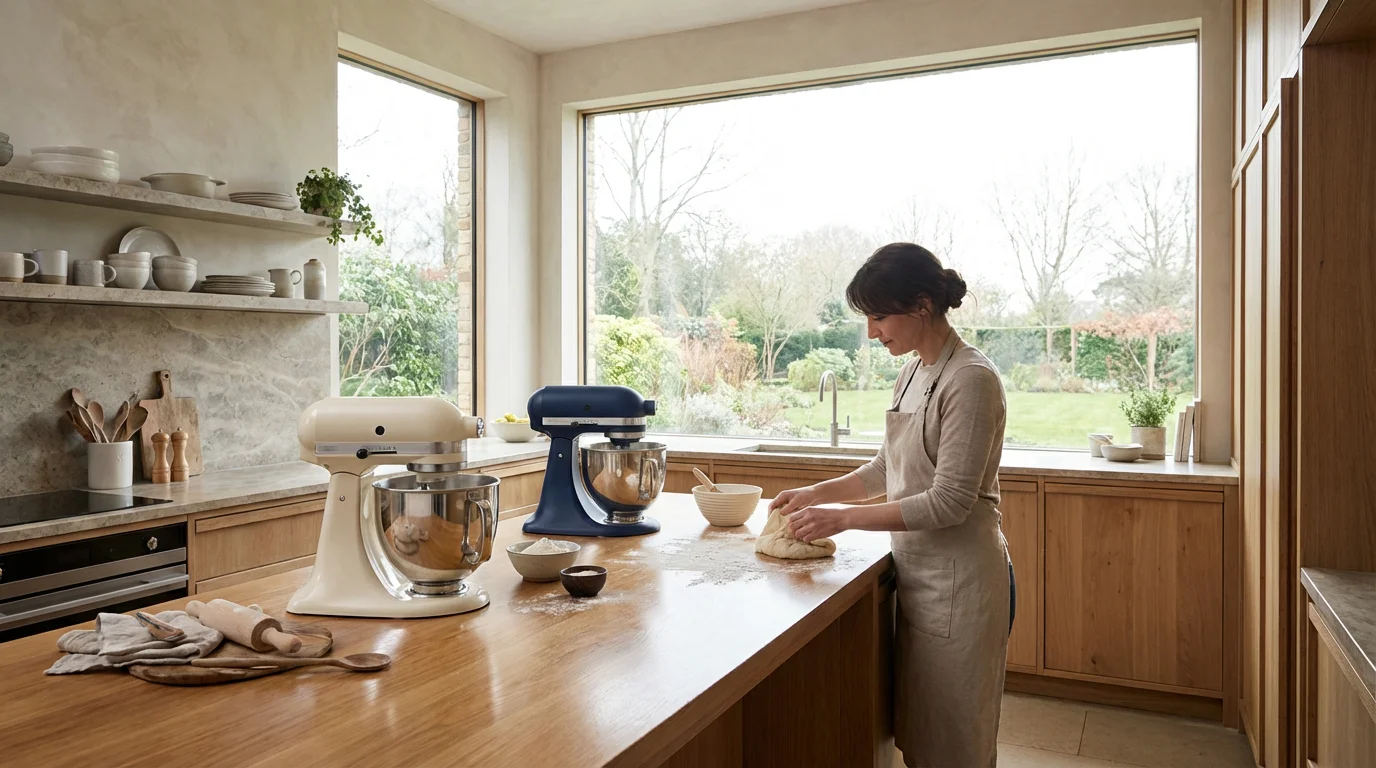
Purchasing a major kitchen appliance requires careful consideration. Among the array of small appliances available, the stand mixer often represents a significant investment, both in terms of cost and the counter space it occupies. For many home bakers, the question remains: is a stand mixer truly worth the expenditure, or can simpler tools suffice? This article provides a comprehensive look at stand mixers, helping you determine if this powerful baking appliance fits your needs, cooking style, and kitchen.
Understanding Stand Mixers: More Than Just a Mixer
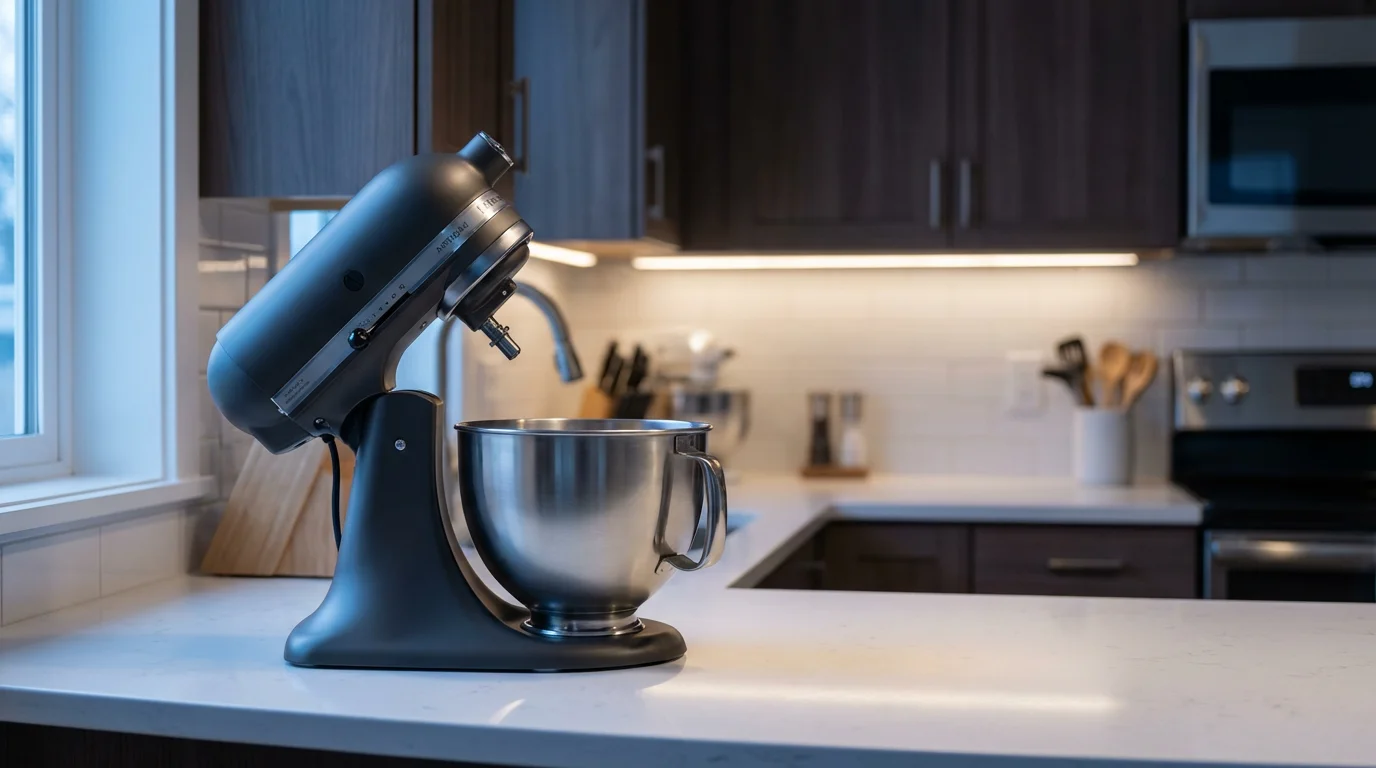
A stand mixer is a stationary kitchen appliance that uses a gear-driven motor to rotate an attachment within a stationary bowl. This design allows you to mix ingredients hands-free, freeing you to perform other tasks while the machine works. Unlike a hand mixer, which requires constant manual manipulation, a stand mixer provides consistent power and thorough mixing for a wide range of recipes.
At its core, a stand mixer automates strenuous kitchen tasks like kneading bread dough, whipping meringues, and creaming butter and sugar. Its robust motor and sturdy construction handle jobs that would quickly fatigue you or overwhelm smaller appliances. If you frequently bake, prepare large batches, or tackle recipes requiring significant mixing time, a stand mixer becomes an indispensable tool. It transforms your baking process, offering efficiency and superior results.
Types of Stand Mixers: Tilt-Head vs. Bowl-Lift
Stand mixers primarily come in two design types: tilt-head and bowl-lift. Understanding the differences helps you choose the right model for your specific needs.
Tilt-Head Stand Mixers:
If your primary goal is specifically making loaves with minimal effort, you might also compare these mixers to the best bread machines designed for automated baking.
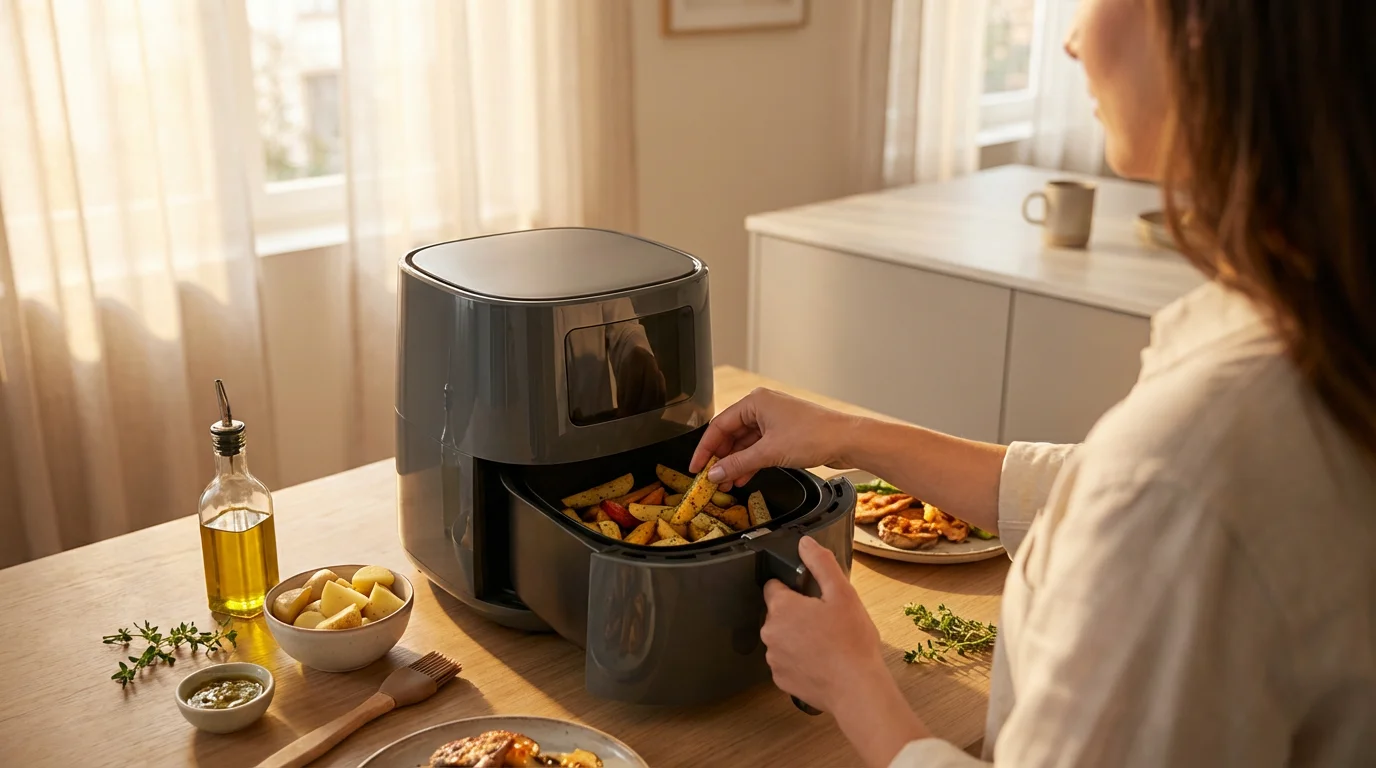
Much like the recent surge in popularity for air fryer basics, the stand mixer has become a centerpiece of the modern functional kitchen.
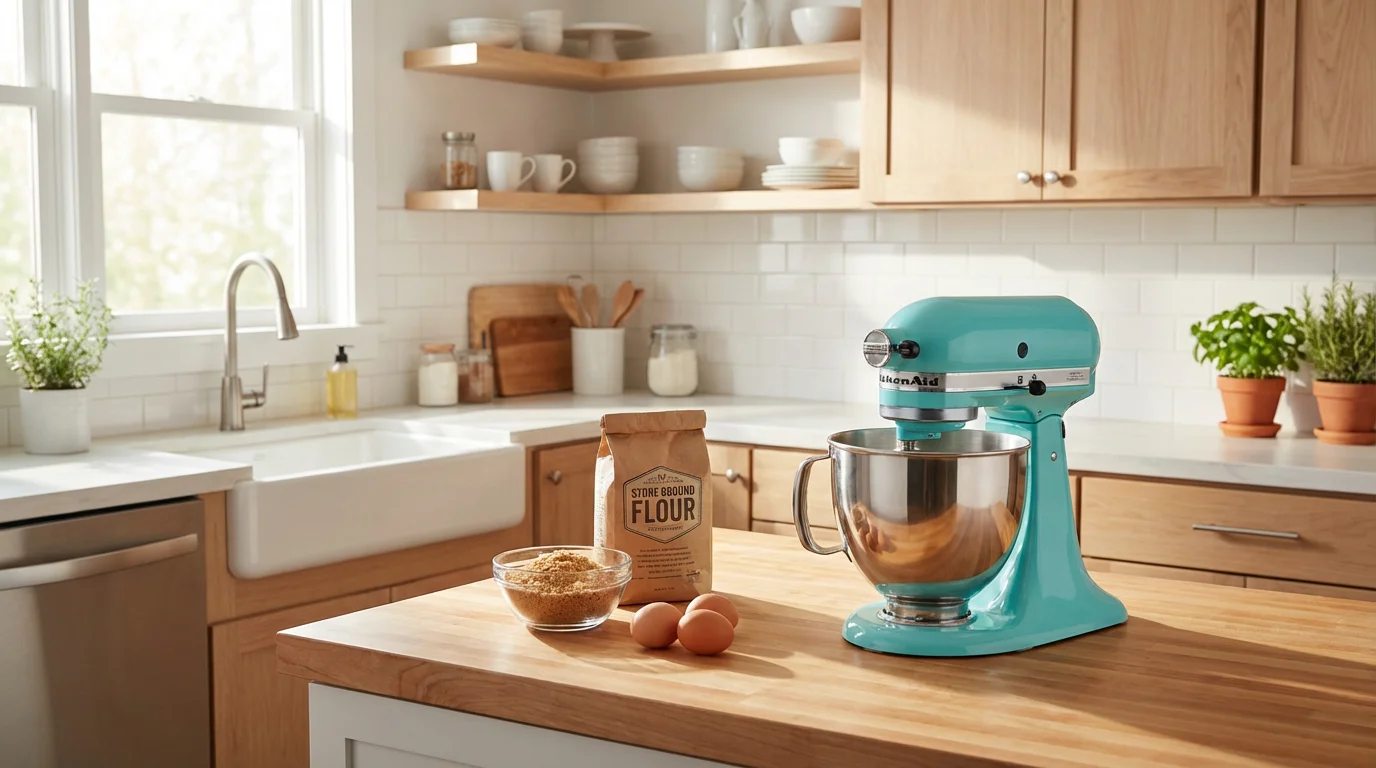
These models feature a hinged head that tilts back, allowing you to easily access the mixing bowl and attachments. They typically come in smaller to medium capacities, often ranging from 3.5 to 5 quarts. The tilt-head design is generally more compact and fits better under upper kitchen cabinets, making it a popular choice for home kitchens with limited vertical space.
- Pros: Easier access to the bowl and attachments, simpler to add ingredients, more compact height when stored, often more color choices.
- Cons: Less stable for very stiff doughs due to the hinge, typically lower `wattage` (how much power an appliance uses), which means less power for heavy-duty tasks.
- Best For: Light to moderate baking, regular cookie and cake batters, whipping creams, and smaller batches of bread dough.
Bowl-Lift Stand Mixers:
Bowl-lift models feature a fixed head, with the bowl attaching to arms that you manually raise or lower into position. These mixers are generally larger, offering capacities from 5 to 7 quarts, and boast higher `wattage` motors. Their robust design provides greater stability and power, making them ideal for heavy-duty tasks.
- Pros: Greater stability and power for large or dense mixtures like multiple loaves of bread dough, higher `wattage` motors for demanding tasks, larger `quart capacity` (how much the appliance holds).
- Cons: Taller footprint requires more vertical counter space, less convenient to add ingredients once the bowl is locked in place, can feel more cumbersome to operate.
- Best For: Serious home bakers, making large batches, frequent bread baking, and challenging doughs.
Your choice between a tilt-head and bowl-lift stand mixer depends largely on the volume and type of baking you do. Consider your most frequent recipes and the physical space available in your kitchen before making a decision.
Key Features and Specifications to Consider
When evaluating a stand mixer, several technical specifications and design features directly impact its performance and suitability for your needs.
Wattage and Motor Power:
While the paddle attachment handles heavy batters, liquid-based tasks like smoothies are still best left to the best blenders available for home use.
The `wattage` of a stand mixer’s motor directly correlates to its power and ability to handle dense mixtures. For light baking, a motor with 250-300 watts may suffice. However, if you plan to frequently knead heavy bread dough or make large batches, look for mixers with 325 watts or more. Professional-grade machines can reach 500 watts or higher, providing exceptional torque for the toughest jobs. A higher wattage motor handles demanding tasks more efficiently and with less strain on the machine, contributing to its longevity.
Quart Capacity:
The `quart capacity` of the mixing bowl dictates the maximum volume of ingredients you can process.
- 3.5-5 Quarts: Ideal for individuals or small families, handling a single batch of cookies or a loaf of bread. A 4-quart capacity allows you to mix dough for about 2-3 loaves of standard bread.
- 5-7 Quarts: Suitable for larger families, frequent entertaining, or avid bakers. These accommodate double batches of most recipes and are perfect for `best stand mixer for bread dough` tasks, handling 3-5 loaves.
- 7+ Quarts: Reserved for professional use or very large-scale home baking.
Consider the typical batch size you prepare to select an appropriate capacity. Overfilling a bowl can lead to messy splatters and inefficient mixing, while an oversized bowl for small tasks might hinder proper incorporation of ingredients.
Attachments and Accessories:
Most stand mixers come standard with three essential attachments:
- Flat Beater (Paddle Attachment): Used for normal to heavy mixtures, such as cakes, cookies, mashed potatoes, and icings.
- Wire Whip (Whisk): Ideal for incorporating air into mixtures, creating meringues, whipped cream, and light batters.
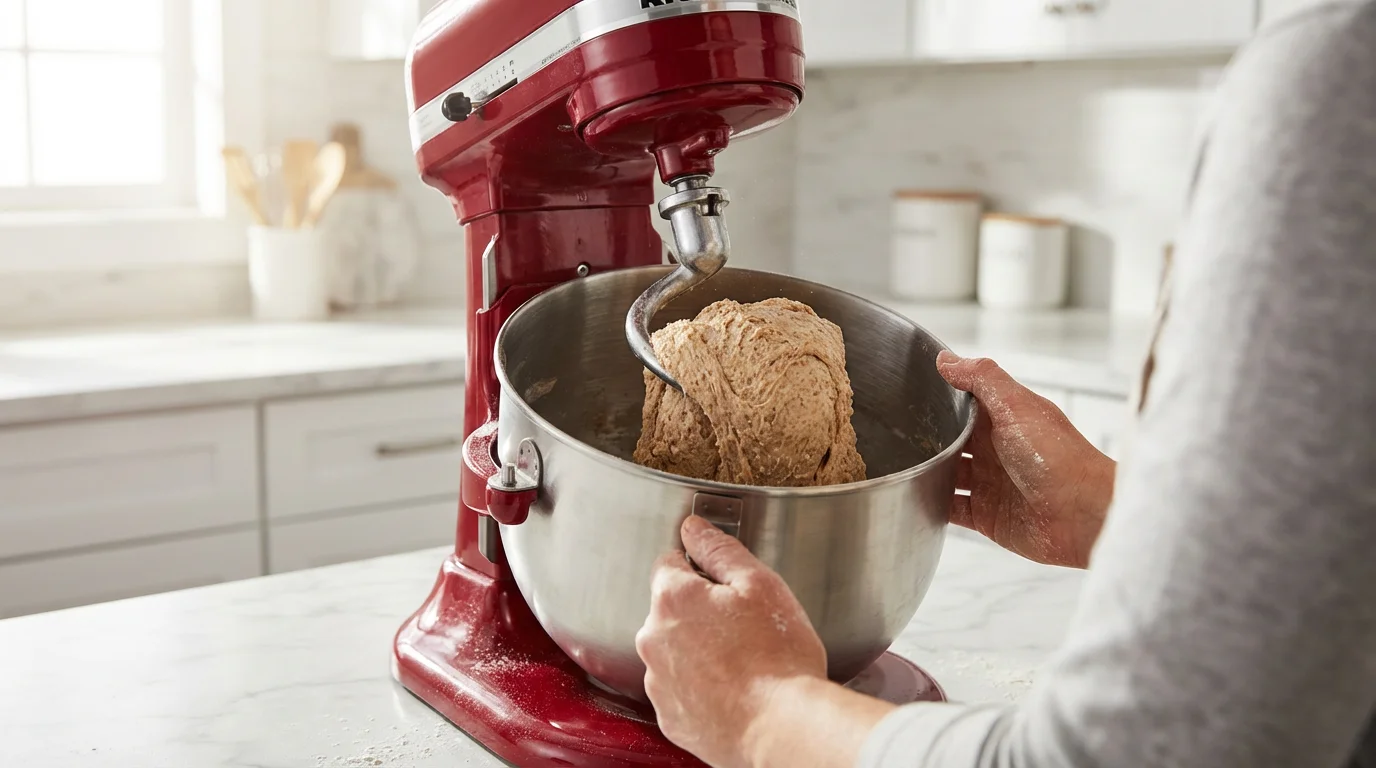
- Dough Hook: Specifically designed for kneading yeast doughs like bread, pizza, and pasta dough. Its spiral or C-shape efficiently works the gluten in the flour.
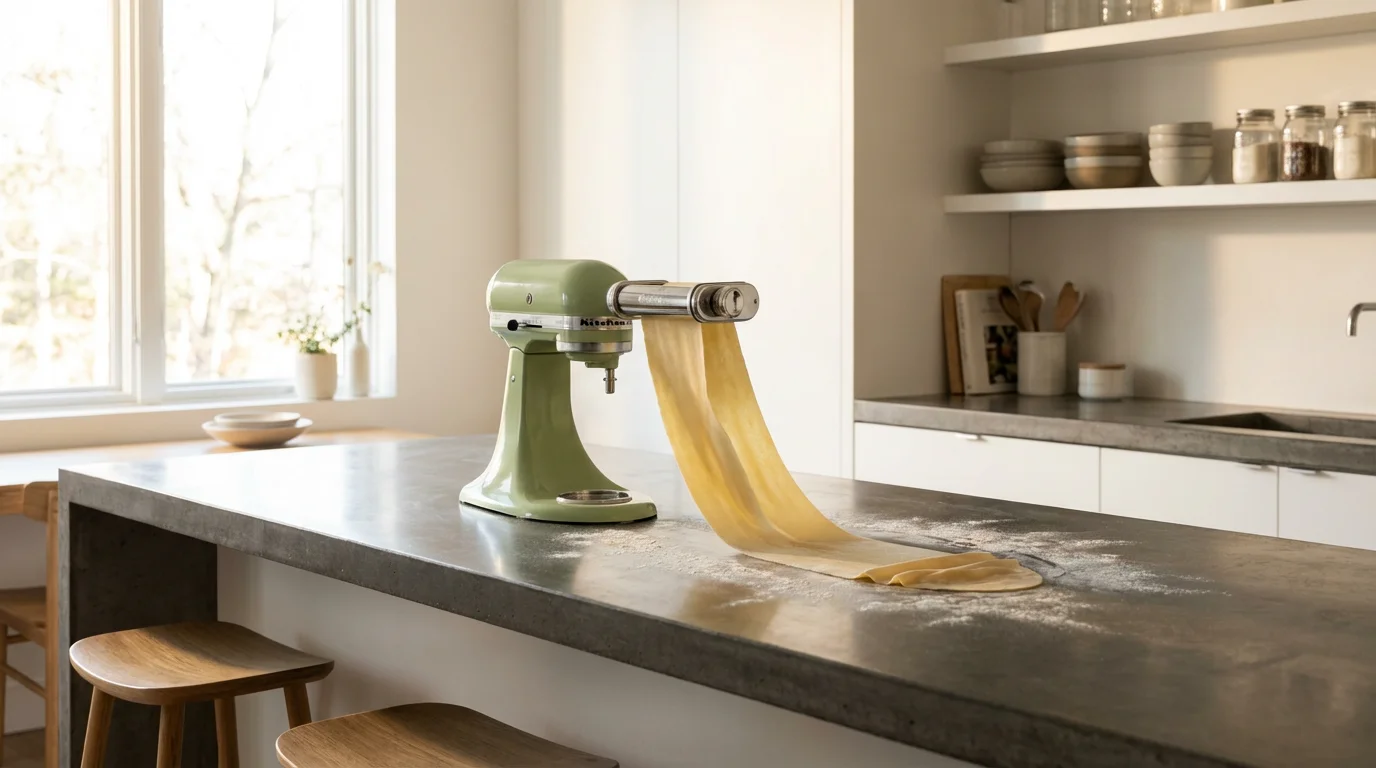
Many brands, especially `KitchenAid`, offer a vast array of optional attachments that connect to a power hub on the mixer. These can transform your stand mixer into a versatile multi-tasker, including pasta makers, meat grinders, spiralizers, food processors, and ice cream makers. The availability and variety of these attachments significantly increase the overall utility and value of your `baking appliance`.
Speed Settings:
Most stand mixers offer multiple speed settings, typically ranging from 6 to 12 or more, allowing for precise control over the mixing process. A “soft start” or “fold” setting helps prevent splattering when you begin mixing or incorporate delicate ingredients. Look for models with a broad range of speeds to handle everything from gentle folding to high-speed whipping.
Construction and Materials:
Durability is key for a long-term investment. Look for models with sturdy metal construction, especially in critical components like the planetary gears. Stainless steel bowls are common and easy to clean, but glass or ceramic bowls offer aesthetic appeal and can be useful for melting ingredients in the microwave. High-quality construction ensures your stand mixer withstands years of heavy use.
To give you a clearer picture, here is a comparison of some popular KitchenAid stand mixer models:
| Model | Design Type | Quart Capacity | Wattage (approx.) | Dimensions (HxWxD) | Weight (approx.) | Typical Price Range (USD) |
|---|---|---|---|---|---|---|
| KitchenAid Artisan Series | Tilt-Head | 5 quarts | 325 watts | 14″ x 9″ x 14″ | 26 lbs | $380 – $450 |
| KitchenAid Professional 5 Plus | Bowl-Lift | 5 quarts | 450-575 watts | 16.5″ x 11.3″ x 14.6″ | 29 lbs | $400 – $500 |
| KitchenAid Pro Line Series (7 Qt) | Bowl-Lift | 7 quarts | 1.3 HP (approx. 970 watts equivalent) | 16.4″ x 13.3″ x 14.6″ | 30 lbs | $600 – $800 |
| KitchenAid Mini Stand Mixer | Tilt-Head | 3.5 quarts | 250 watts | 12.3″ x 7.8″ x 12.3″ | 18 lbs | $280 – $350 |
“Choosing the right stand mixer involves balancing your baking ambitions with practical kitchen realities. Prioritize power and capacity if you’re a serious baker, but don’t overlook a smaller model if counter space is truly at a premium. The goal is an appliance you use consistently, not one that intimidates or collects dust.” — Home Baking Expert
Stand Mixer vs. Hand Mixer: Which One Do You Need?
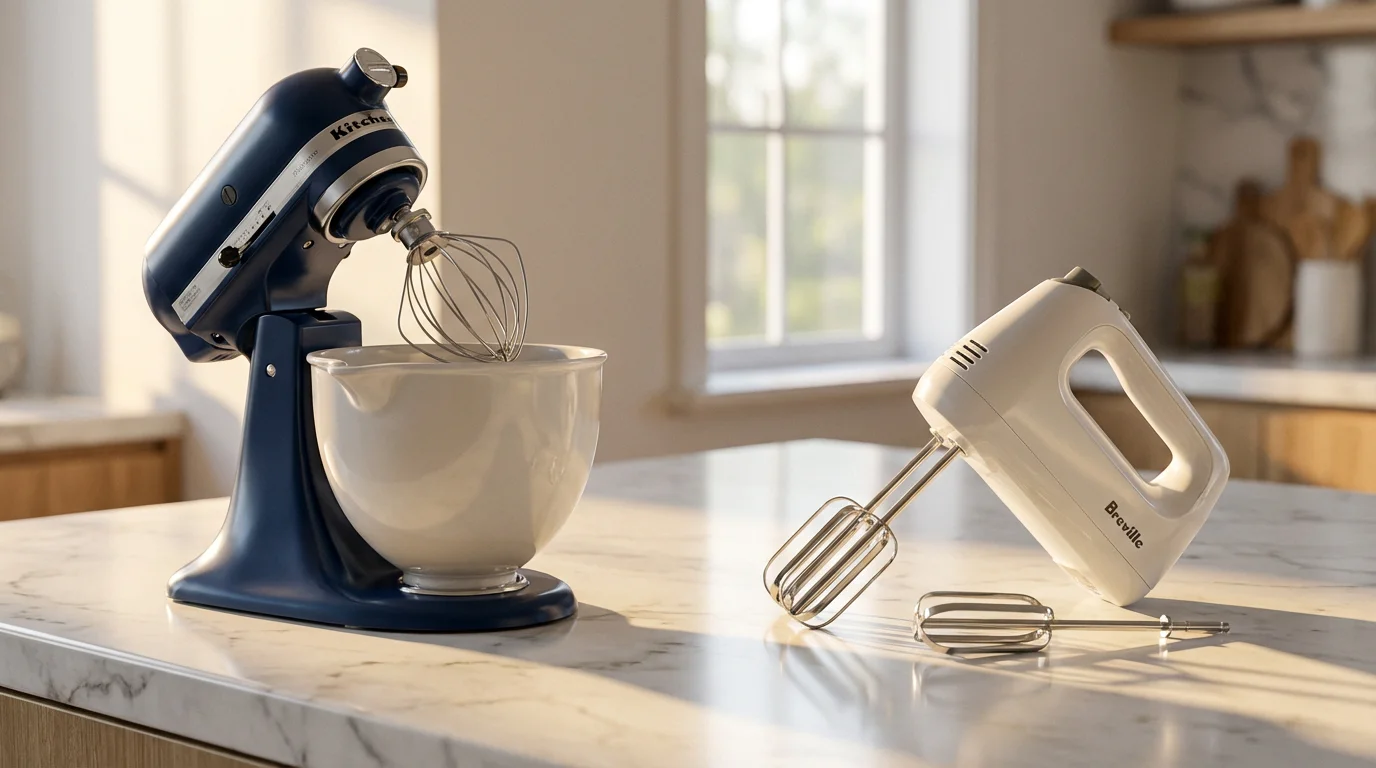
The choice between a `stand mixer` and a `hand mixer` often boils down to frequency of use, types of recipes, and budget. While both serve to mix ingredients, their capabilities and convenience differ significantly.
A hand mixer is lightweight, portable, and considerably less expensive. It performs well for occasional tasks like whipping cream, mixing simple batters, or mashing potatoes. Its compact size makes it easy to store in a drawer, saving valuable counter space. However, a hand mixer requires you to hold it throughout the mixing process, which can become tiring for longer tasks or thicker doughs. Its motor is also less powerful, meaning it struggles with heavy-duty kneading and can overheat with prolonged use.
In contrast, a stand mixer provides hands-free operation and superior power. It effortlessly handles dense doughs, large batches, and tasks requiring extended mixing times. The consistency and efficiency of a stand mixer deliver better results for complex baking projects, such as artisan breads or delicate meringues. Its stability and array of attachments further expand its utility beyond basic mixing.
For the casual baker who occasionally whips up a batch of cookies, a hand mixer may suffice. However, if you regularly bake, enjoy making bread, or appreciate the convenience of a hands-free, powerful `baking appliance` that can take on multiple roles with attachments, a stand mixer is the clear winner. The investment pays off in time saved, reduced effort, and consistently high-quality results.
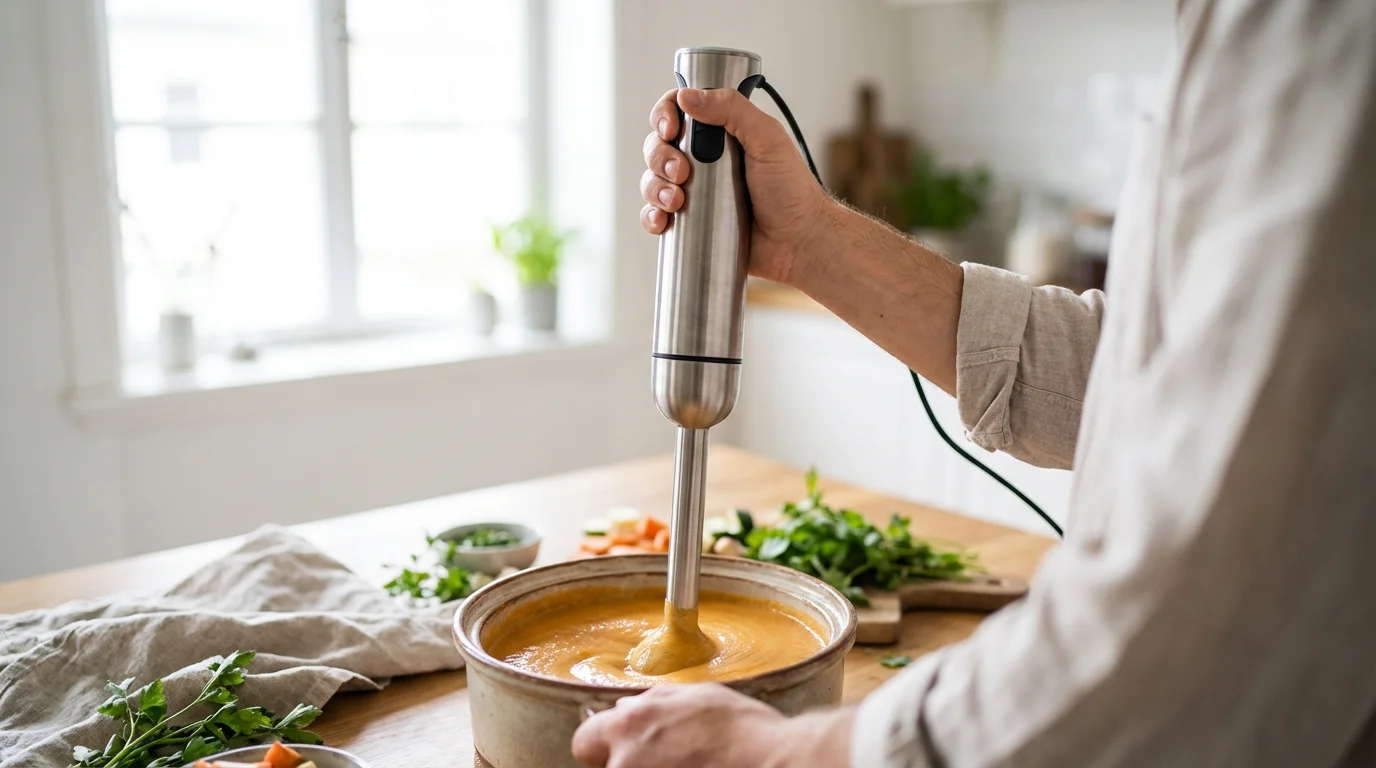
For home cooks who only need to blend small batches of soup or sauce, immersion blenders offer a more compact and affordable alternative to larger mixing stations.
Calculating Your Investment Value: Is a Stand Mixer Worth It for Home Bakers?
Assessing whether a stand mixer is “worth it” involves more than just its upfront cost. You must consider its utility, time-saving potential, and the quality it brings to your baking.
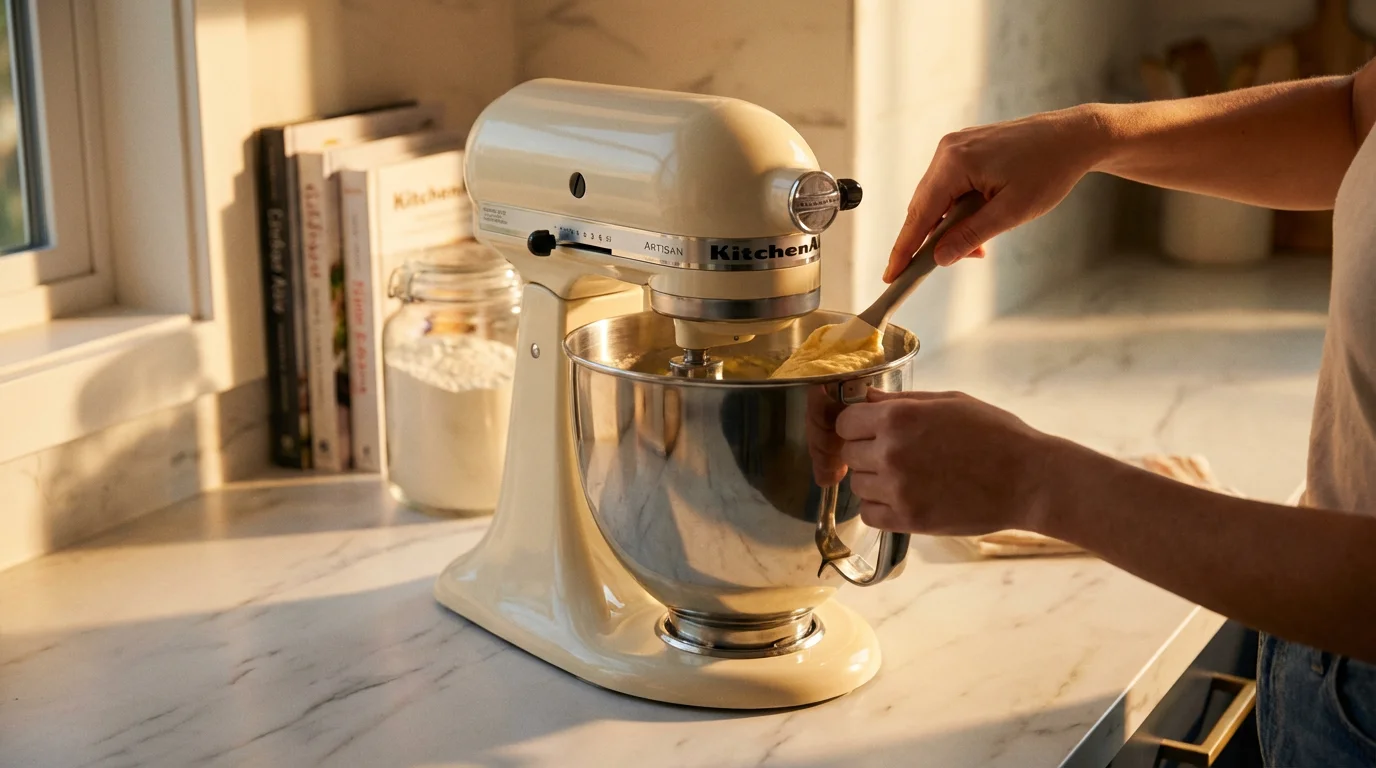
For a dedicated `home baker`, a stand mixer is an enabling tool. It opens up new recipes and techniques that are either impractical or impossible with a hand mixer or by hand. Think about creating fluffy brioche, chewy bagels, or delicate macarons. These often require precise and extensive mixing that a `stand mixer` handles with ease. This expanded culinary capability adds significant value.
The time-saving aspect is substantial. While a stand mixer mixes dough, you can prep other ingredients, clean up, or attend to other kitchen tasks. This efficiency transforms baking from a demanding chore into a more enjoyable and manageable activity. Over years of use, these small increments of saved time accumulate into many hours.
Quality of results also factors into the investment. Stand mixers provide consistent, even mixing, leading to more reliable and professional-quality baked goods. The powerful motor and specialized attachments, like the `best stand mixer for bread dough` hook, develop gluten structures far more effectively than manual kneading. This results in superior texture and rise for your breads. According to a review on Serious Eats’ equipment reviews, a good stand mixer is “indispensable for serious bakers who want consistent, professional-level results.”
Consider the longevity of a quality `stand mixer`. Brands like `KitchenAid` are known for their durability, with many units lasting decades. While the initial price might seem high, dividing that cost over 10, 15, or even 20 years of use reveals a surprisingly low annual investment. When you compare this to the cost of repeatedly buying store-bought baked goods, or the effort required to produce them manually, the `stand mixer` often proves to be a wise, long-term purchase for the active `home baker`.
Top Stand Mixer Brands and Models: Finding Your Match
When exploring stand mixers, `KitchenAid` dominates the market, but other reputable brands offer compelling alternatives.
KitchenAid: The Industry Standard
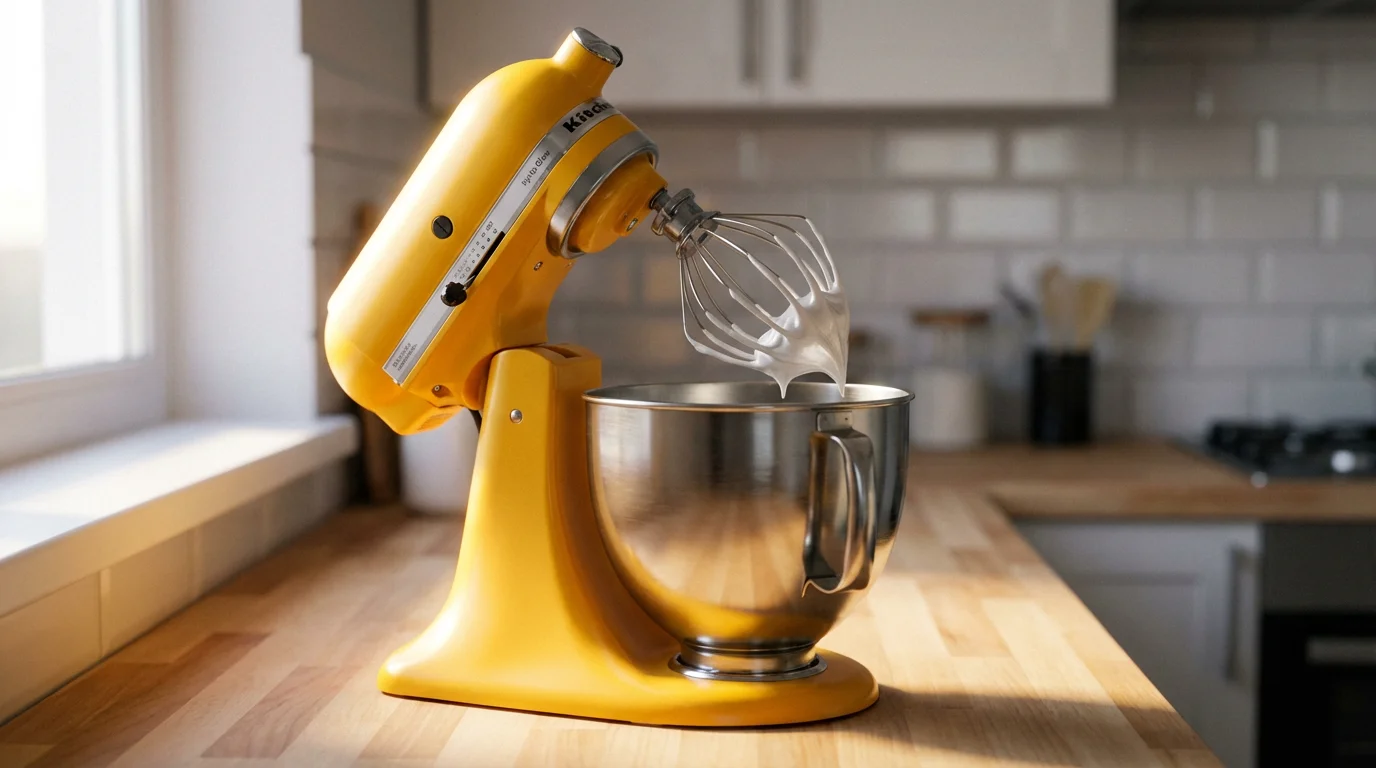
KitchenAid stand mixers are synonymous with quality, durability, and a vast ecosystem of attachments. Their iconic design and wide range of colors make them a kitchen staple. KitchenAid offers models from the compact Mini (3.5 quarts) to the powerful Pro Line Series (7 quarts).
- Artisan Series (Tilt-Head, 5 quarts): This is arguably their most popular model, balancing capacity, power, and a wide array of color options. It handles most home baking tasks with ease, making it a favorite for the everyday `home baker`.
- Professional Series (Bowl-Lift, 5-7 quarts): Designed for heavier use, these models feature more powerful motors and a sturdier bowl-lift design. They excel at kneading `best stand mixer for bread dough` and mixing large batches.
Consumer Reports often rates KitchenAid models highly for performance and reliability. For example, Consumer Reports’ small appliance ratings frequently highlight KitchenAid’s overall user satisfaction and durability.
Other Notable Brands:
- Cuisinart: Offers competitive stand mixers with strong motors and various features, often at a slightly lower price point than KitchenAid. Their models are known for solid performance and sometimes include extra features like countdown timers.
- Breville: While known for various kitchen appliances, Breville also produces stand mixers that often feature innovative designs and robust construction, appealing to tech-savvy bakers.
- Bosch: Famous for their unique bottom-drive design, Bosch mixers are powerful, often quieter, and excellent for bread dough, especially their Universal Plus series. Their design also allows for a relatively compact footprint despite large capacities.
- Ankarsrum: A premium, niche brand from Sweden, Ankarsrum mixers are known for their exceptional power, durability, and open-bowl design, which many bread bakers find superior for kneading. They come with a significantly higher price tag but represent a lifetime investment.
When choosing your `stand mixer`, consider not just the brand name, but the specific model’s `wattage`, `quart capacity`, and available attachments to ensure it aligns with your `baking appliance` needs.
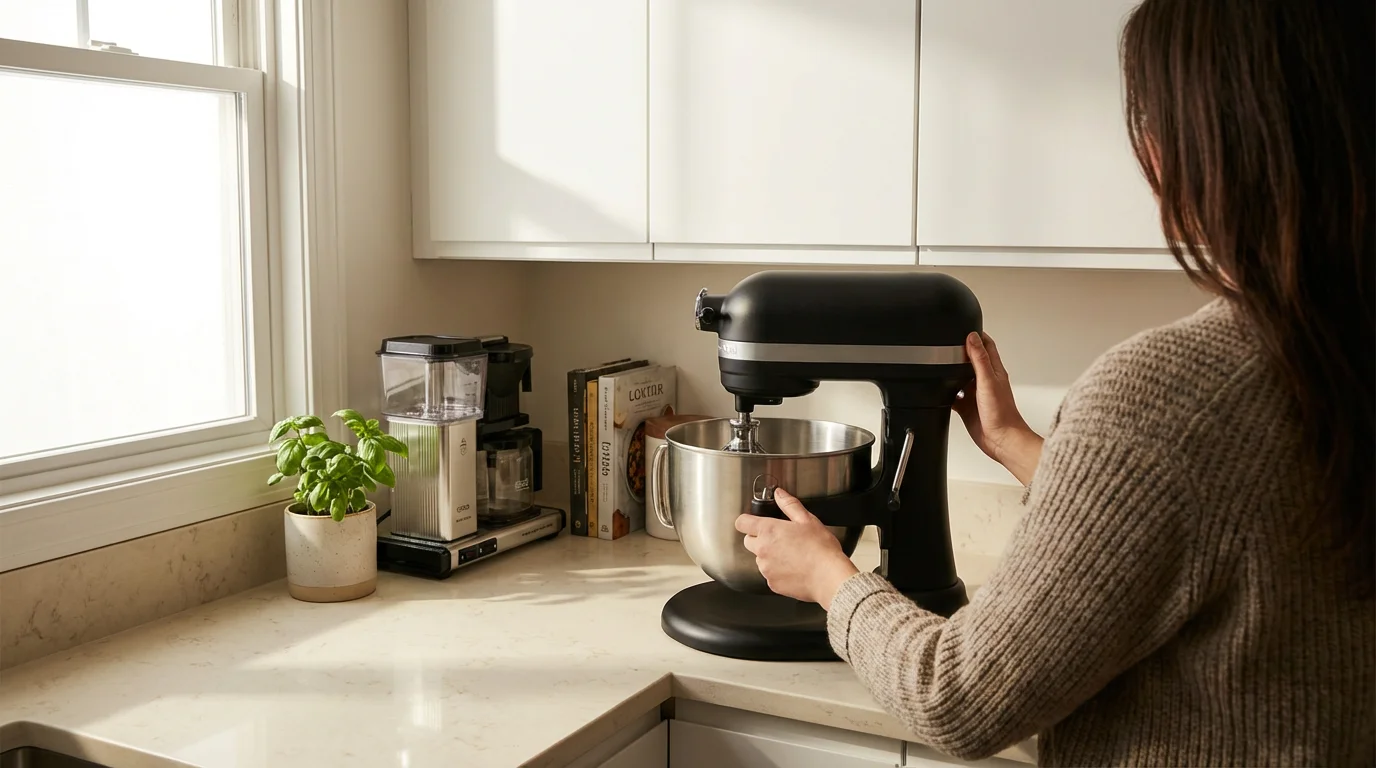
Fitting a Stand Mixer Into Your Kitchen: Counter Space and Storage
A `stand mixer` is not a small appliance. Its footprint and weight demand careful consideration, especially if you have a compact kitchen. Many home bakers find their stand mixer becomes a permanent fixture on the counter due to its weight and frequent use.
Most full-sized `stand mixer` models, like the KitchenAid Artisan, measure approximately 14 inches high, 9 inches wide, and 14 inches deep. Bowl-lift models can be taller, reaching 16 to 17 inches in height. Measure the space between your counter and upper cabinets to ensure a tilt-head model can fully open without obstruction, or that a bowl-lift model can fit comfortably. The KitchenAid Mini, at about 12.3 inches high, offers a solution for tighter spaces.
Weight is another factor. A typical 5-quart `stand mixer` weighs between 25 and 30 pounds. This makes it heavy to move repeatedly from a cabinet to the counter. If you cannot dedicate permanent counter space, consider an appliance garage, a sturdy kitchen cart, or a dedicated pantry shelf that you can pull out. The goal is to keep it accessible so you actually use it.
“Counter space is premium real estate in any kitchen. Before you buy any appliance, ask yourself: will I use this at least once a week? If not, a smaller, more easily storable option might be a better fit for your lifestyle and kitchen layout.” — Kitchen Design Consultant
When planning your layout, remember that a stand mixer occupies a similar footprint to many toaster ovens, so prioritize based on your most frequent cooking methods.
Think realistically about your kitchen’s layout and your habits. An appliance that is too cumbersome to access often ends up gathering dust, negating its investment value. Choose a size and design that complements your kitchen’s functionality and aesthetic.
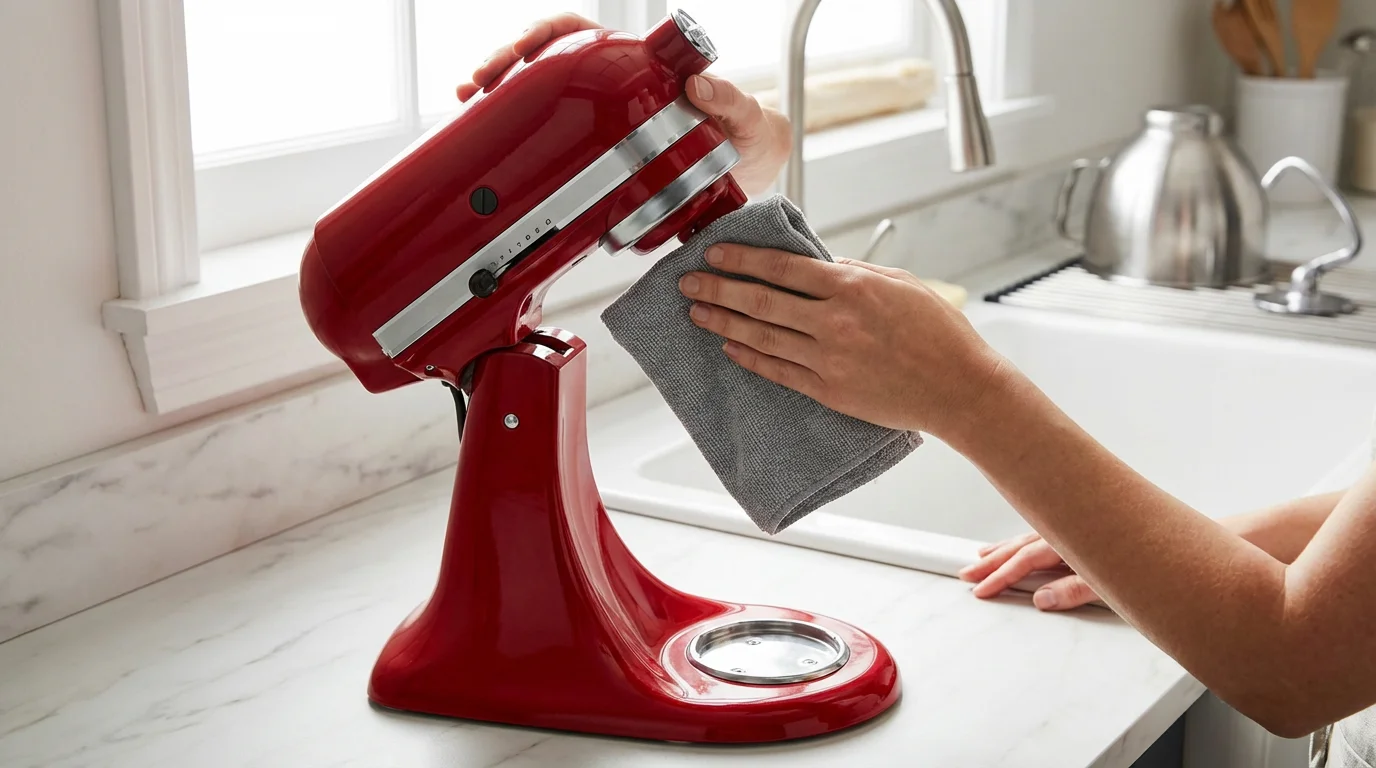
Maintenance and Longevity: Protecting Your Investment
Proper care and maintenance significantly extend the life of your `stand mixer` and ensure it continues to perform optimally. A well-maintained `baking appliance` delivers value for many years.
Cleaning:
Always unplug your mixer before cleaning. Most stainless steel bowls and attachments (flat beater, wire whip, dough hook) are dishwasher safe. Check your specific model’s manual for confirmation, as some older or specialty attachments may require handwashing to prevent corrosion or damage. Wipe the mixer head and base with a damp cloth, immediately drying to prevent water spots or residue buildup. Never submerge the mixer base in water.
Motor Care:
Avoid overloading the mixer with excessively stiff dough or ingredients beyond its rated capacity. This strains the motor and gears, potentially leading to overheating or premature wear. If the motor begins to sound strained or gets unusually warm, give it a break. Quality stand mixers often feature a thermal overload reset, which automatically shuts off the unit to prevent damage. Allow it to cool down before restarting.
Attachment Care:
Periodically check attachments for wear and tear. Over time, coatings on beaters can chip or wires on whisks can bend. Replacing damaged attachments ensures efficient mixing and prevents potential issues with your food. If you use the mixer heavily, consider having spare essential attachments.
Storage:
If you do not leave your stand mixer on the counter, store it in a cool, dry place. A dust cover protects it from grime, particularly if stored in an open area. Proper storage prevents accidental damage and keeps your mixer looking new.
By following these simple maintenance tips, you protect your `stand mixer` investment and ensure it remains a reliable partner in your kitchen for decades.
Frequently Asked Questions
Is a stand mixer worth it if I only bake occasionally?
For occasional bakers, the investment might be harder to justify. A hand mixer or even mixing by hand often suffices for simple batters or small batches. However, if “occasionally” means tackling more complex recipes like artisan bread or elaborate cakes a few times a month, a stand mixer greatly simplifies these tasks and improves results. Consider your definition of occasional and the ambition of your baking projects.
What’s the best stand mixer for bread dough?
For bread dough, prioritize mixers with a robust motor and a stable design. Bowl-lift models, especially those with 5 quarts or more capacity and higher `wattage` (325 watts minimum, 450+ preferred), excel at kneading. The `KitchenAid` Professional Series or Pro Line Series are excellent choices. Brands like Bosch and Ankarsrum also receive high praise specifically for their bread-making capabilities.
How much counter space does a stand mixer really need?
A typical 5-quart `stand mixer` occupies about a 9×14-inch footprint. Bowl-lift models are taller (around 16-17 inches high), while tilt-head models are shorter (around 14 inches) but require overhead clearance to tilt back. Measure your available counter space and the height under your cabinets before purchasing to ensure a comfortable fit and usability.
Are stand mixers noisy?
The noise level of a `stand mixer` varies by model and motor power. Generally, higher `wattage` motors and more robust designs can produce more noise, particularly when kneading thick dough. Older models or those struggling with heavy loads might also be louder. Many modern `KitchenAid` and Cuisinart models feature quieter operation compared to their predecessors, but none are entirely silent. You should expect a moderate mechanical hum during operation.
Disclaimer: Product prices, features, and availability change frequently. Prices shown were accurate at time of writing but may have changed. We may earn a small commission from purchases made through links on this site, at no extra cost to you. Always verify current pricing and specifications on the retailer’s website before purchasing.
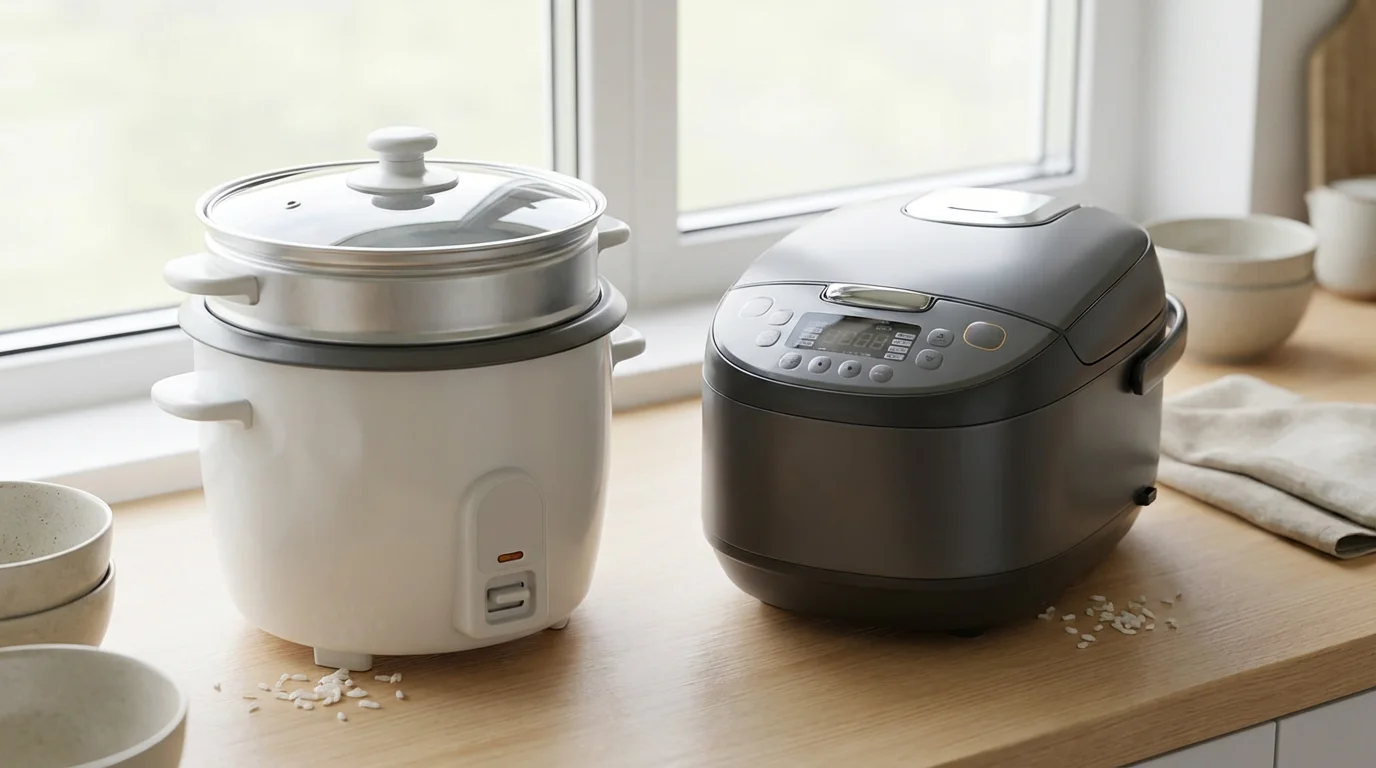
Just as with the Instant Pot vs slow cooker debate, choosing the right stand mixer is about identifying which tool will simplify your specific routine.




Leave a Reply