
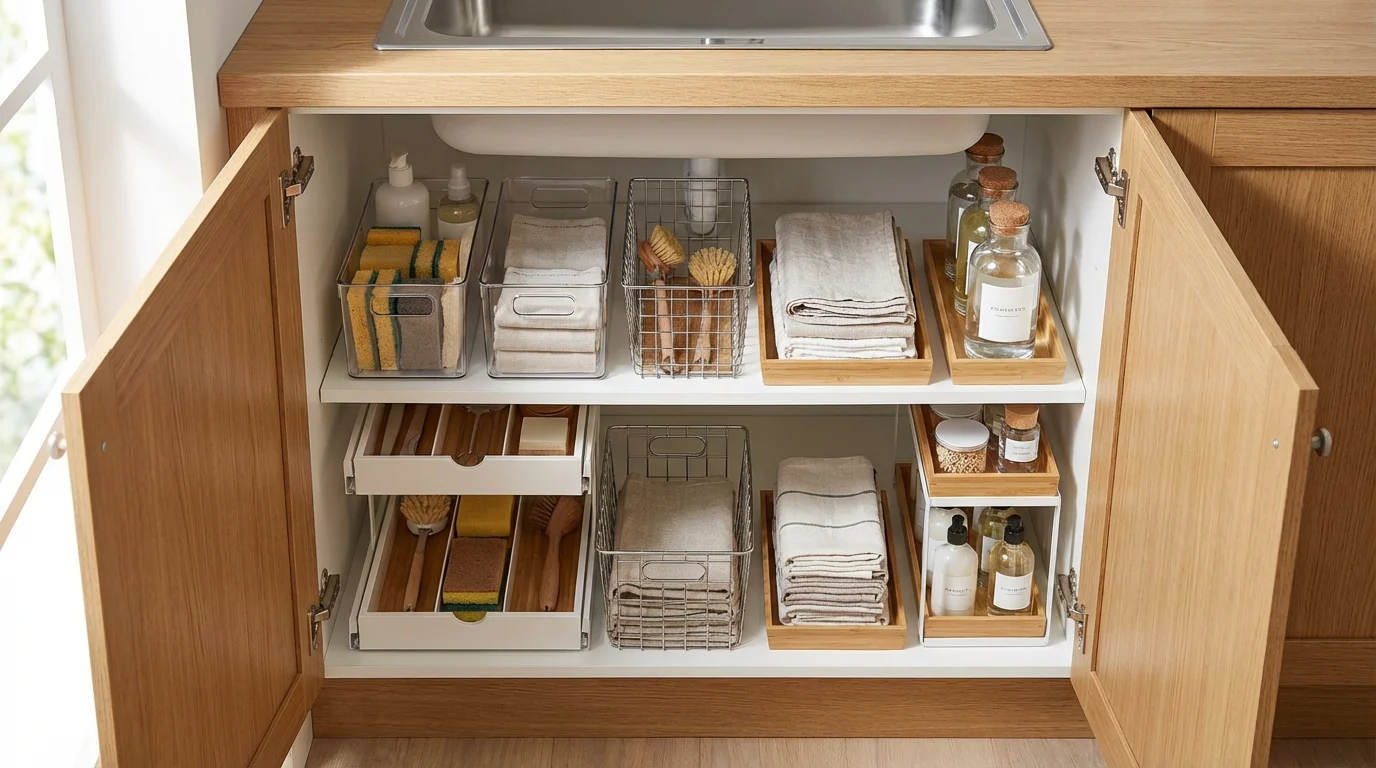
A cluttered under-sink cabinet can quickly become a source of daily frustration. You search for a bottle of cleaner, only to find a jumbled mess of half-empty sprays, sponges, and forgotten items. This often happens because the unique challenges of under-sink storage, such as plumbing obstructions and limited depth, create what appears to be unusable space. However, transforming this area from a chaotic void into a functional storage zone is entirely achievable. This guide delivers practical strategies and specific product recommendations to help you reclaim your under-sink area, maximizing every inch without the need for costly renovations. You will learn how to organize under your kitchen sink efficiently, creating a system that truly works for your home.
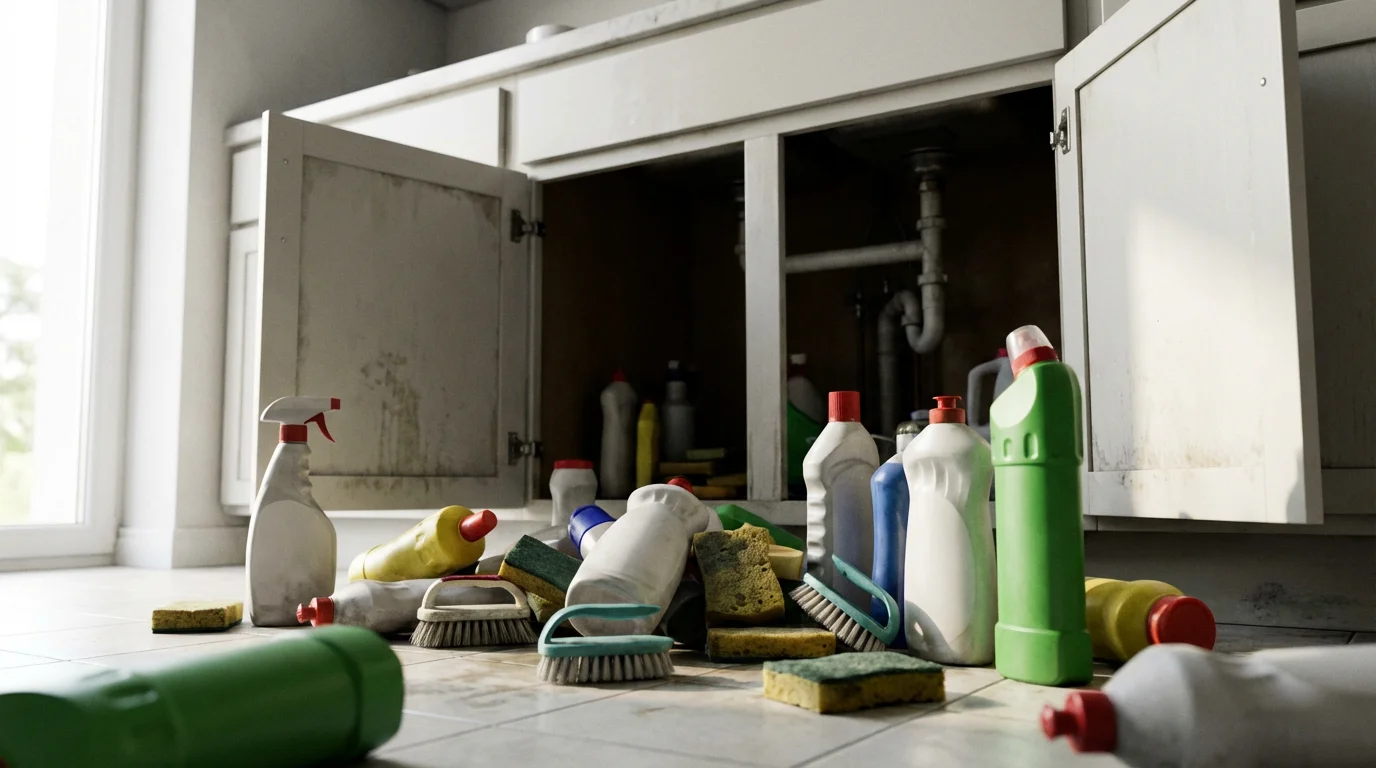
Assess Your Under-Sink Chaos: The First Step to Clarity
Before you implement any new organization system, you must understand the current state of your under-sink cabinet. Begin by completely emptying the cabinet. Remove every item, from cleaning sprays to garbage bags. This process allows you to see the true dimensions of your space and identify any hidden issues.
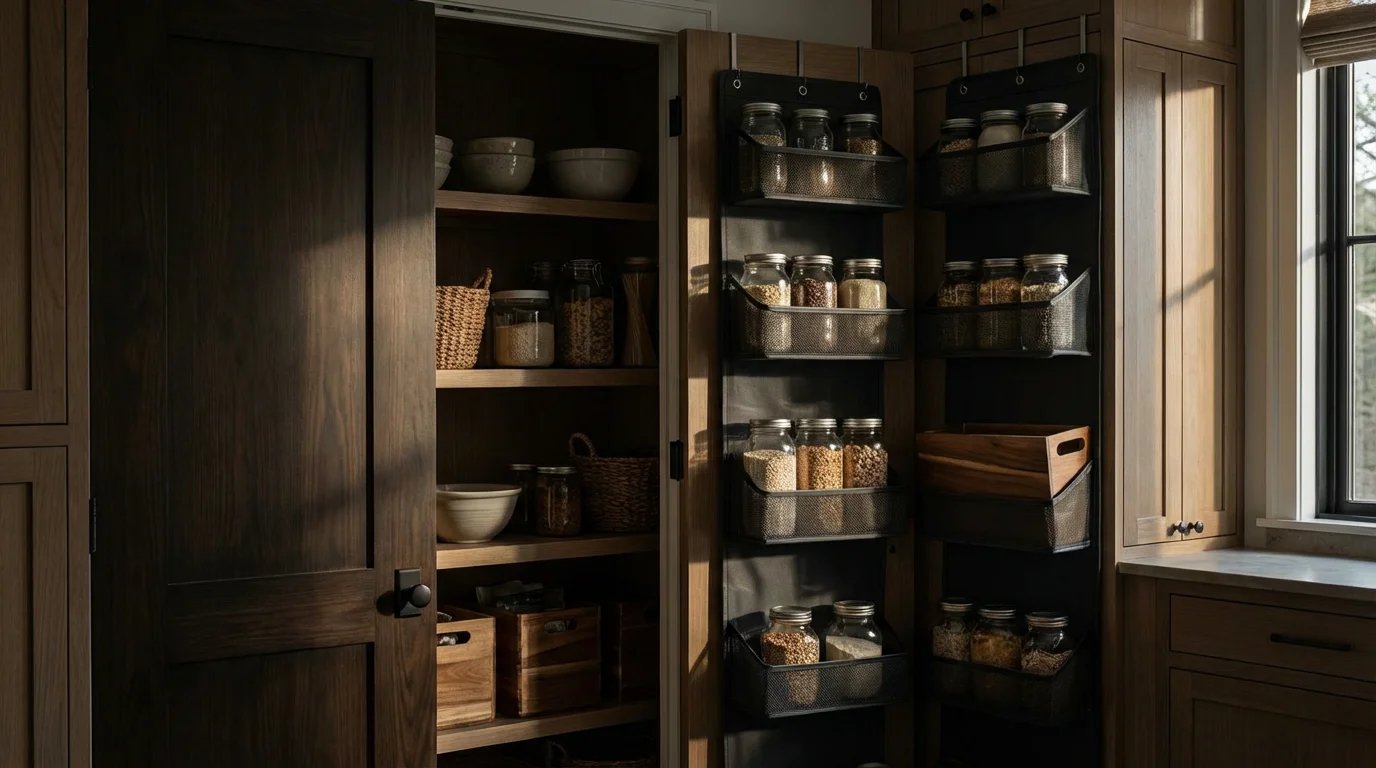
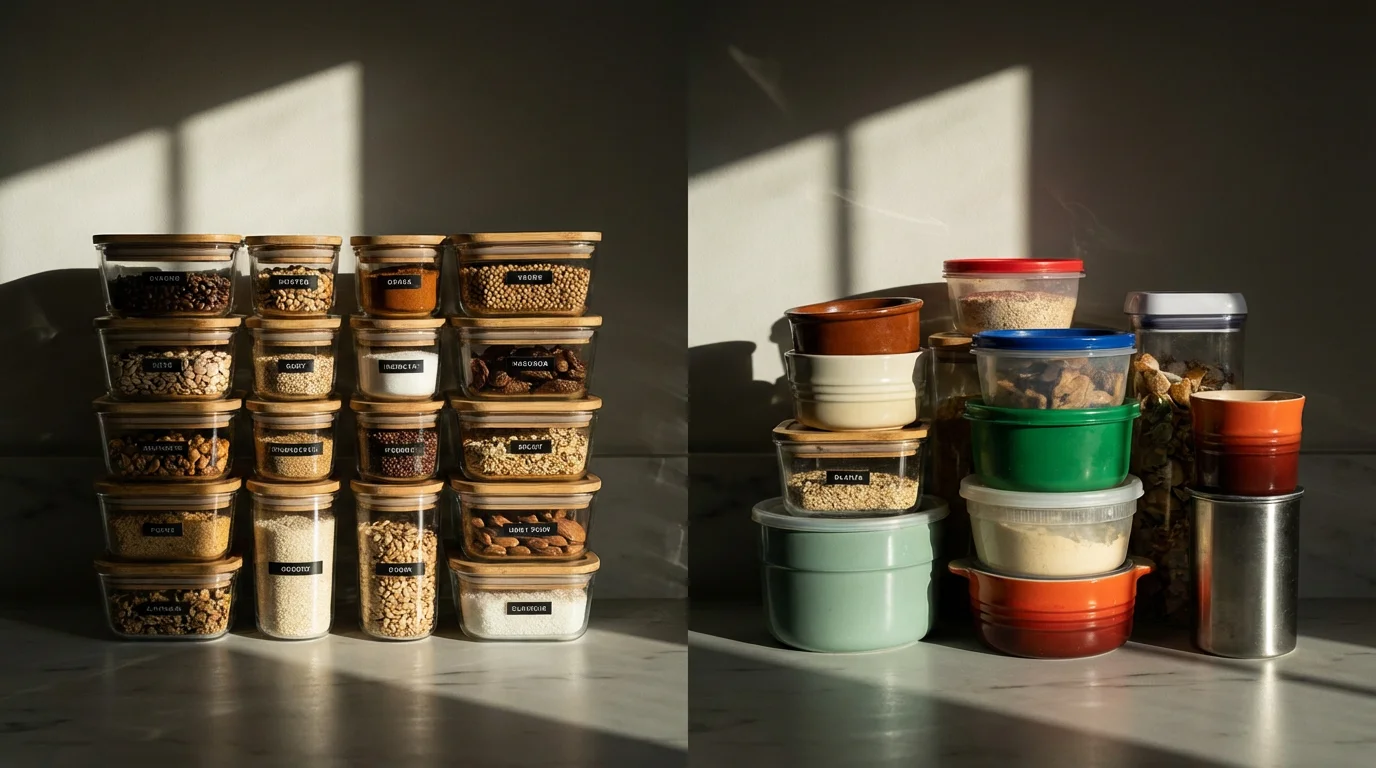
The same decluttering principles used here are also essential for pantry organization to maintain an efficient and stress-free kitchen.
As you remove items, sort them into three categories: keep, relocate, and discard. Keep only the items you regularly use under the sink, such as dish soap, dishwasher pods, and primary cleaning solutions. Relocate items that belong elsewhere, like spare lightbulbs or tools. Discard anything expired, broken, or items you no longer use. Check for leaks, mold, or moisture damage. Address these issues before placing any new organizers or items back into the cabinet. Clean the interior thoroughly with an all-purpose cleaner and allow it to dry completely. A clean slate provides the best foundation for effective organization.
“Effective organization starts with ruthless decluttering. You cannot organize clutter, you only move it around. Only keep items that serve a clear purpose and that you actually use.”
Measuring for Success: Knowing Your Space Limits
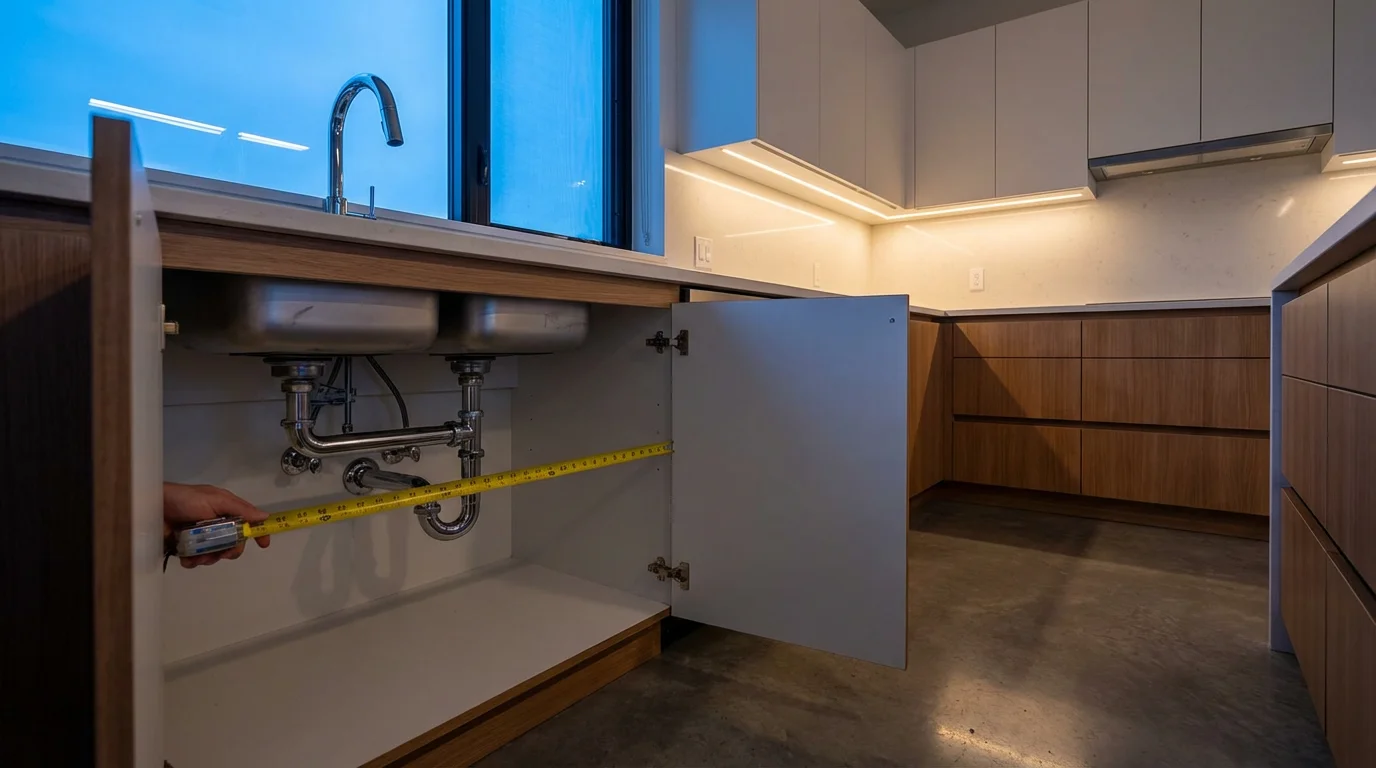
Accurate measurements are critical for selecting organizers that fit perfectly and maximize your space. Many standard kitchen base cabinets measure 36 inches wide, but the under-sink area often features unique obstructions.
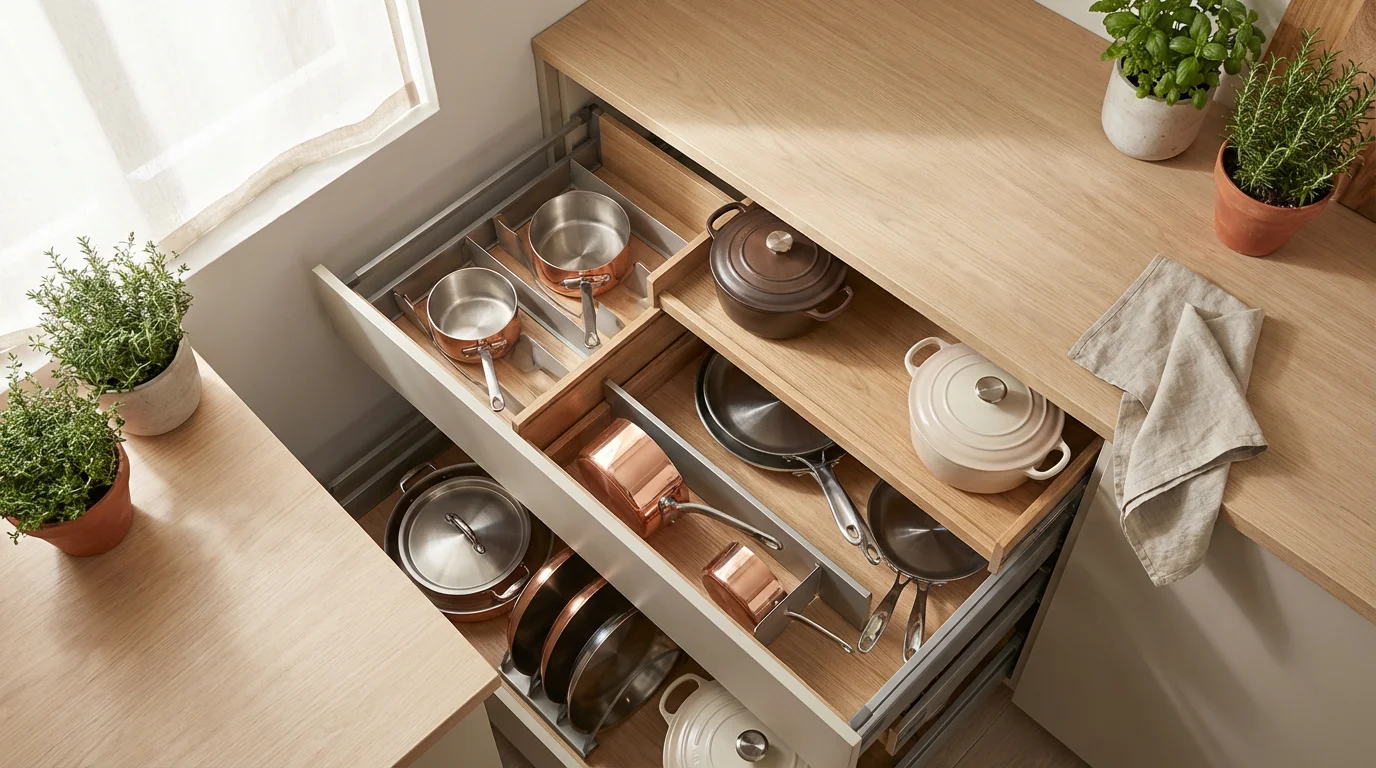
Once you have your cabinet dimensions, consider if you have room for other specialized solutions like lid organizers for pots and containers to maximize every available shelf.
Take these measurements carefully:
- Width: Measure the distance from the left interior wall to the right interior wall.
- Depth: Measure from the back of the cabinet to the front, just behind the door frame.
- Height: Measure from the cabinet floor to the top of the opening.
- Obstructions: Crucially, measure the exact location and dimensions of your plumbing pipes, garbage disposal unit, and hot water lines. These components often dictate the types of organizers you can use. For example, a pipe running through the middle might require a U-shaped organizer, while a large disposal unit on one side limits storage options on that half.
Common under-sink cabinet dimensions might allow for a full-width organizer on one side, but the other side could demand a narrower solution due to a garbage disposal. Knowing these specifics prevents frustration and wasted purchases. Standard pull-out organizers often require a minimum depth of 18 inches and a height of 15 inches for two-tier units. Always refer to product specifications and compare them against your unique measurements.
Master Your Cleaning Supplies with Pull-Out Organizers
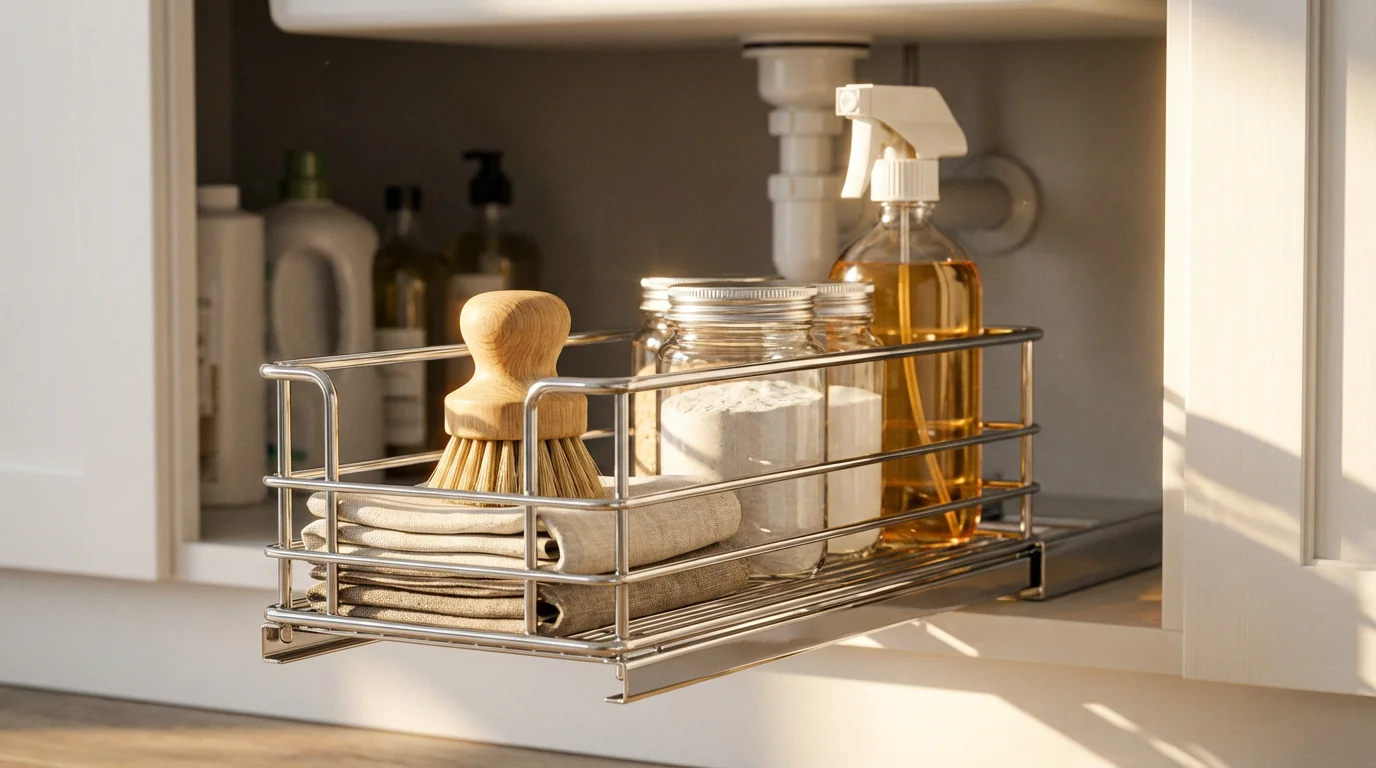
One of the most effective ways to manage your cleaning supplies and access everything easily is with a pull-out organizer. A pull-out organizer is a drawer or shelf that slides out of the cabinet for easy access, eliminating the need to reach deep into the cabinet. This solution makes it the best under sink organizer for cleaning supplies, keeping them visible and accessible.
Consider these options:
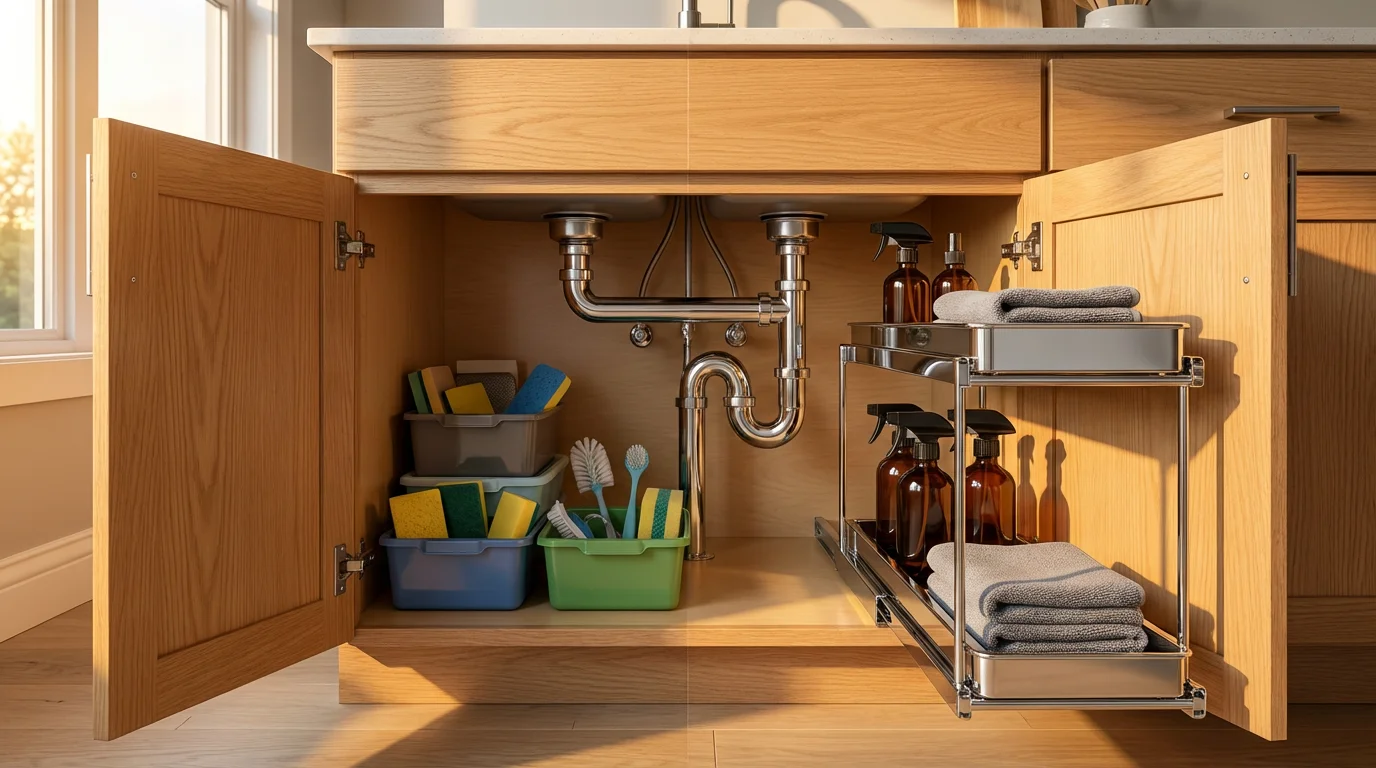
- Two-Tier Sliding Shelves: These units typically feature two baskets or shelves that slide independently or together. They utilize vertical space, effectively doubling your storage capacity. For example, a common two-tier unit measures approximately 11 inches wide, 18 inches deep, and 14 inches high, fitting well on one side of a standard 36-inch under-sink cabinet while leaving room for plumbing. Look for units made from heavy-gauge wire or durable plastic for longevity.
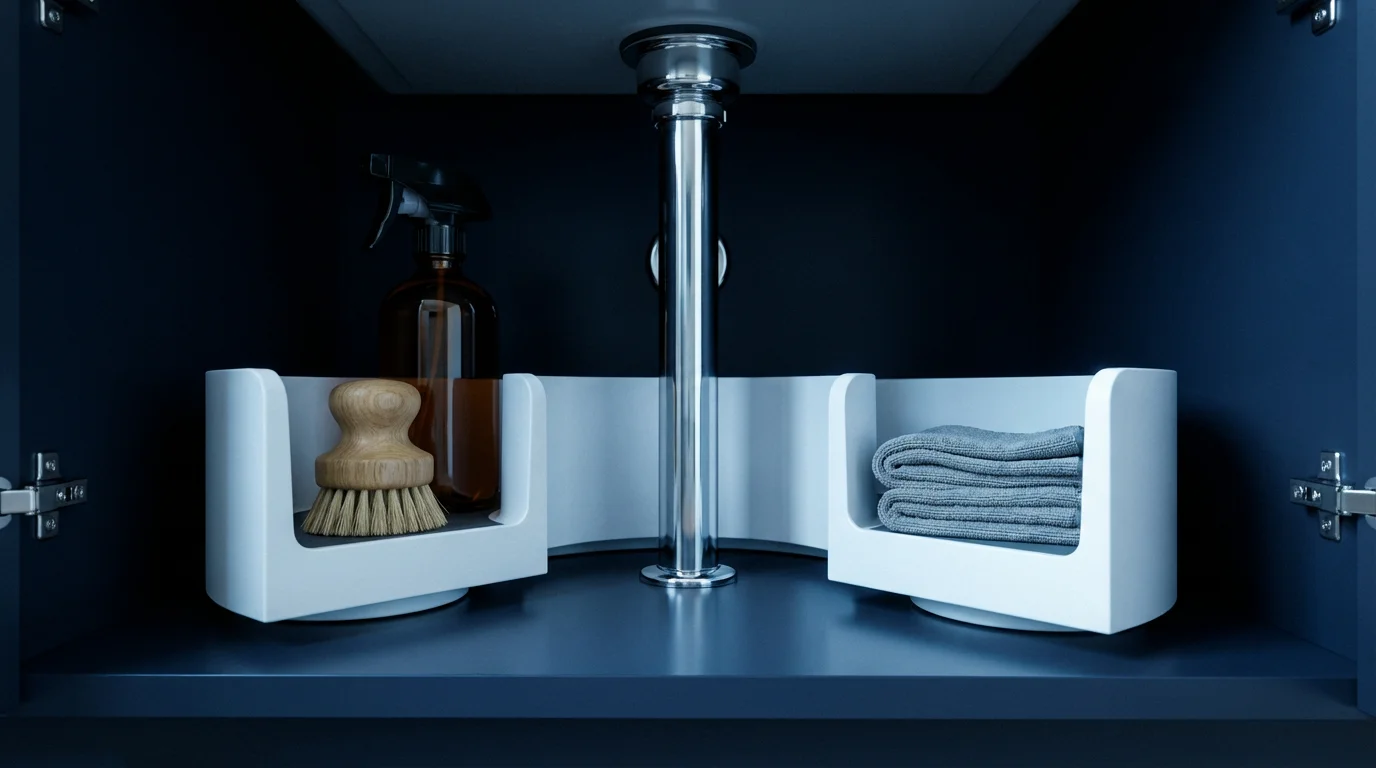
- U-Shaped or C-Shaped Organizers: These designs specifically accommodate the plumbing that runs down the center of your cabinet. They curve around the pipes, maximizing storage space on either side and in front. A U-shaped unit might measure 22 inches wide by 16 inches deep, with a cutout for pipes, often featuring adjustable shelves. These are ideal for central pipe obstructions, allowing you to store items directly beneath and around the plumbing without interfering.
Wirecutter, known for its thorough product testing, frequently recommends specific pull-out organizers for their durability and ease of installation. You can find their top picks and detailed reviews by visiting Wirecutter’s kitchen organization section. These organizers typically install with a few screws into the cabinet base, offering sturdy, long-lasting storage. For renters, adhesive-mounted options or freestanding pull-out bins are available, providing similar functionality without permanent alterations.
Maximize Door Space: Door-Mounted Racks and Storage
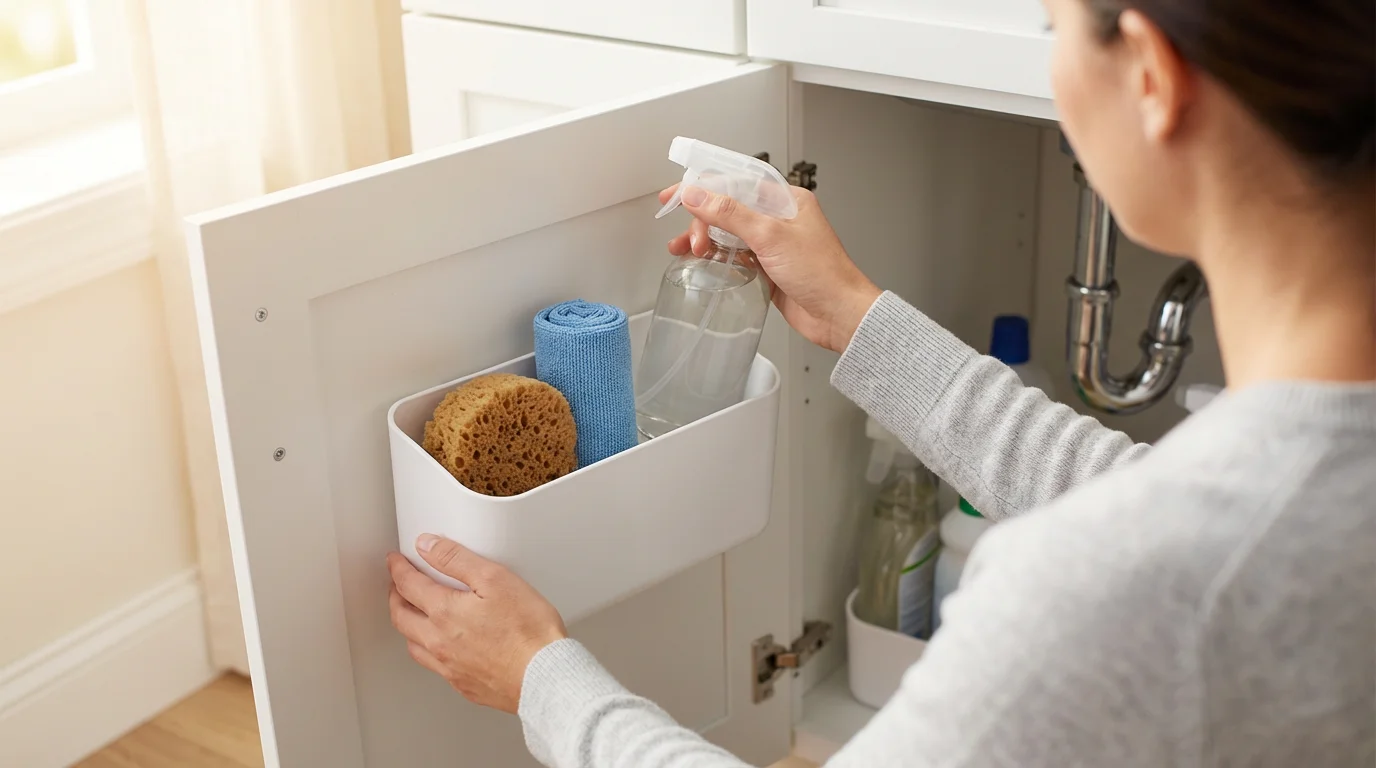
The inside of your cabinet doors offers valuable, often overlooked, storage potential. A door-mounted rack is storage that hangs on the inside of cabinet doors, providing immediate access to frequently used items. This solution transforms otherwise wasted space into a convenient storage zone.
These racks are perfect for:
- Sponges and scrub brushes
- Dishwashing gloves
- Small bottles of cleaner or air freshener
- Trash bag rolls
Typical dimensions for door-mounted racks range from 10 to 15 inches wide, 3 to 5 inches deep, and 12 to 20 inches high, depending on the number of tiers. Before purchasing, measure your cabinet door width and ensure the rack allows the door to close fully without hitting shelves or items inside the cabinet. Installation methods vary: some use strong adhesive strips, which are excellent for renters, while others screw directly into the door for a more permanent fixture. You can also find over-the-door hook designs that simply hang, requiring no tools for installation.
For example, a two-tier spice rack designed for cabinet doors (approximately 11 inches wide, 4 inches deep, 15 inches high) can effectively hold smaller cleaning sprays or even a collection of microfiber cloths. This approach leverages the vertical plane, adding significant storage without encroaching on the main cabinet floor space.
Contain the Clutter: Bins, Baskets, and Stackable Solutions
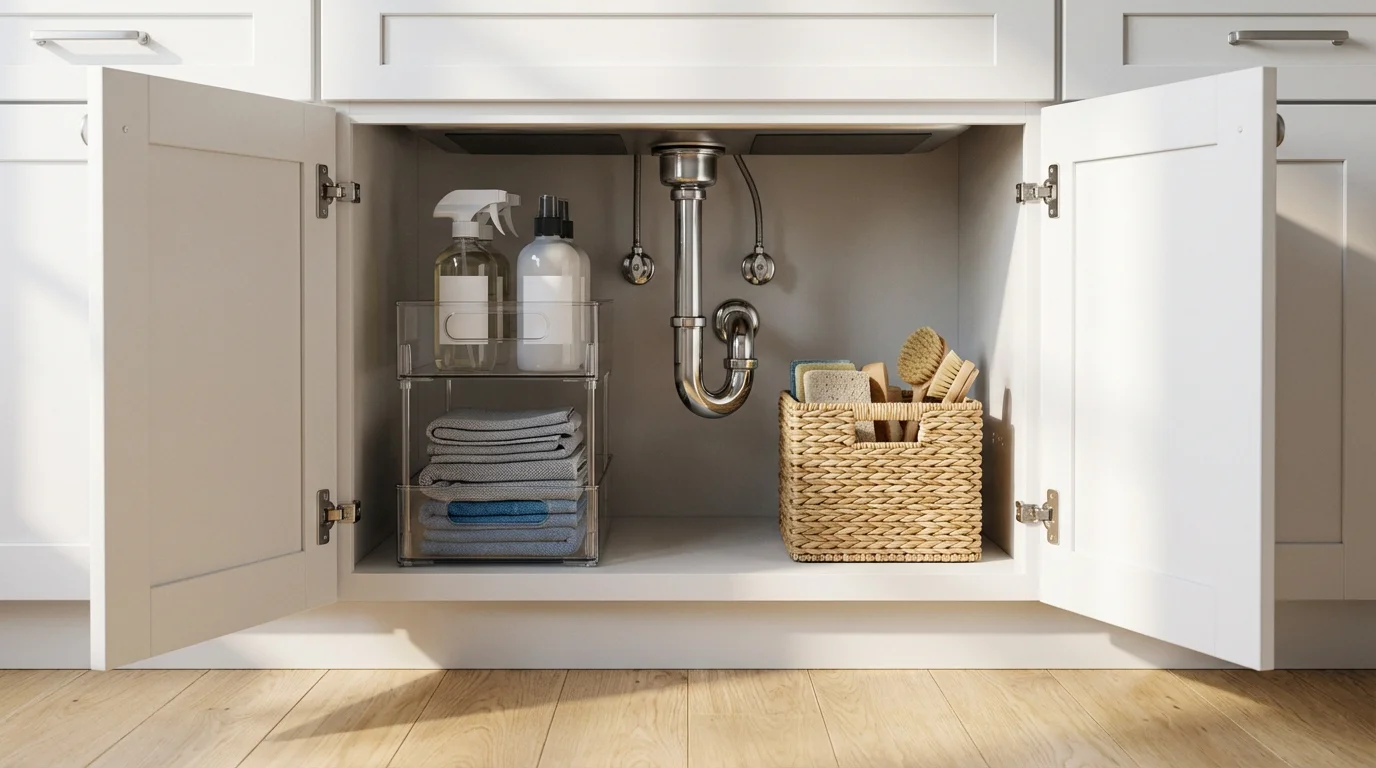
After you have addressed larger items with pull-out solutions and door racks, you still need to manage smaller items and group similar products together. Bins and baskets are essential for containing various items, ensuring that your cleaning storage remains tidy and functional. These tools also allow you to create modular systems.
In addition to bins, using specialized cabinet organizers for pots and pans in nearby cabinets can further streamline your workflow.
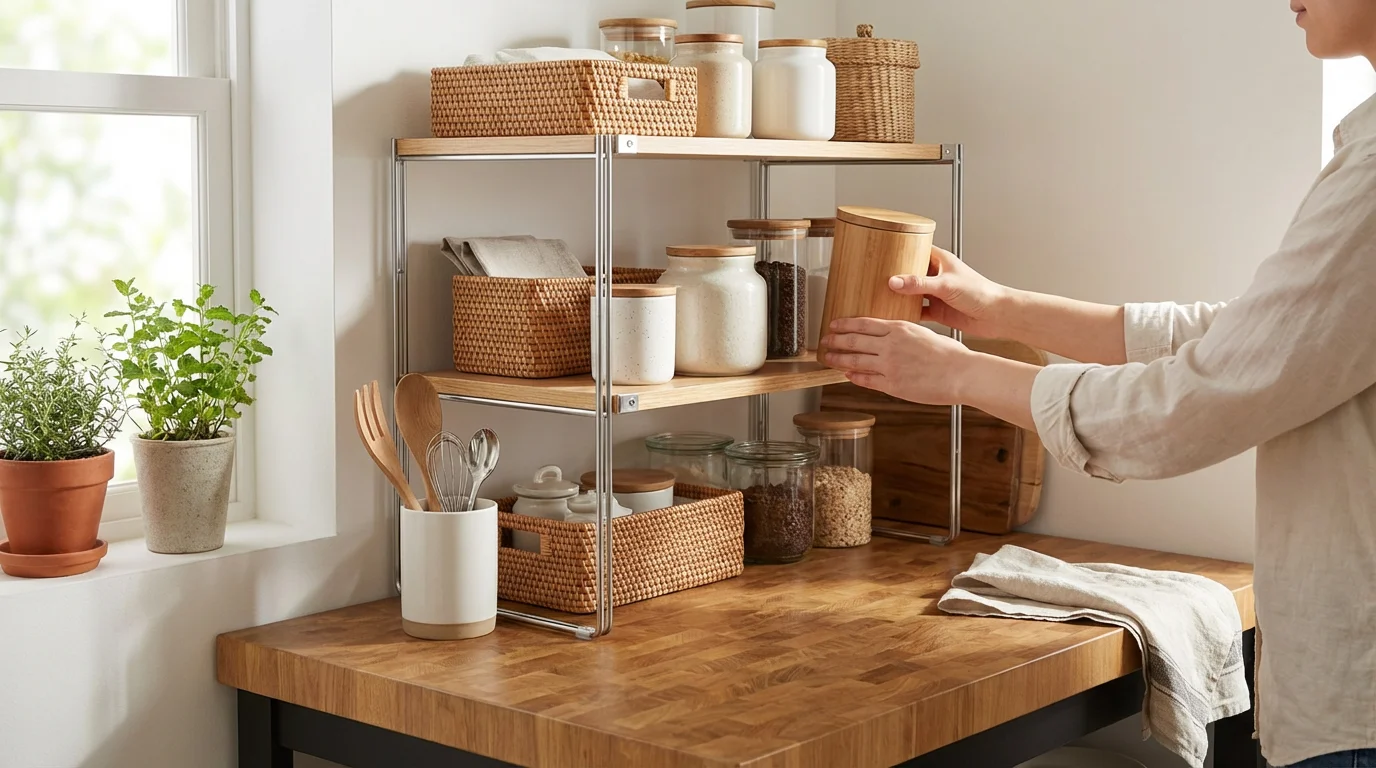
Stackable organizers are designed to safely pile on top of each other, maximizing vertical space within your cabinet. Modular pieces can be combined and configured in different ways, offering flexibility as your storage needs change. Using them keeps your under-sink area visually organized and prevents items from toppling over.
Consider these types of containers:
- Clear Plastic Bins: Clear bins (e.g., 8 inches wide, 12 inches deep, 6 inches high) allow you to see contents at a glance, eliminating the need to pull out every container to find what you need. Group similar items, such as “dishwasher essentials” or “surface cleaners,” into separate bins.
- Wire Baskets: These offer good ventilation, useful for items like wet sponges or rags that need to air dry. They come in various sizes and can add a sleek aesthetic.
- Stackable Drawers: Small, stackable plastic drawers (e.g., 9 inches wide, 14 inches deep, 7 inches high per drawer) provide enclosed storage for items you prefer to keep out of sight, like spare sponges, cleaning tablets, or small tools.
When selecting bins and baskets, ensure they fit within your measured space, accounting for any pipes or the garbage disposal unit. You can also use small caddies or totes. These allow you to pull out an entire set of cleaning supplies for a specific task, then easily return them to the cabinet. Labeling your bins ensures everyone knows where items belong, promoting long-term organization.
Reclaiming Dead Space: Specialty Organizers and Clever Tricks
The under-sink cabinet is notorious for its dead space, which refers to unused storage areas, often in corners, behind pipes, or above appliances. Innovative solutions directly address these challenging zones, ensuring you utilize every possible inch of your cabinet.
- U-Shaped or Adjustable Shelves: As mentioned, these shelves are specifically designed with cutouts to fit around your plumbing. Some models feature adjustable widths or heights, allowing you to customize them to your specific setup. A basic U-shaped shelf might provide a stable platform for bins, while multi-level adjustable shelves create tiered storage directly around pipes.
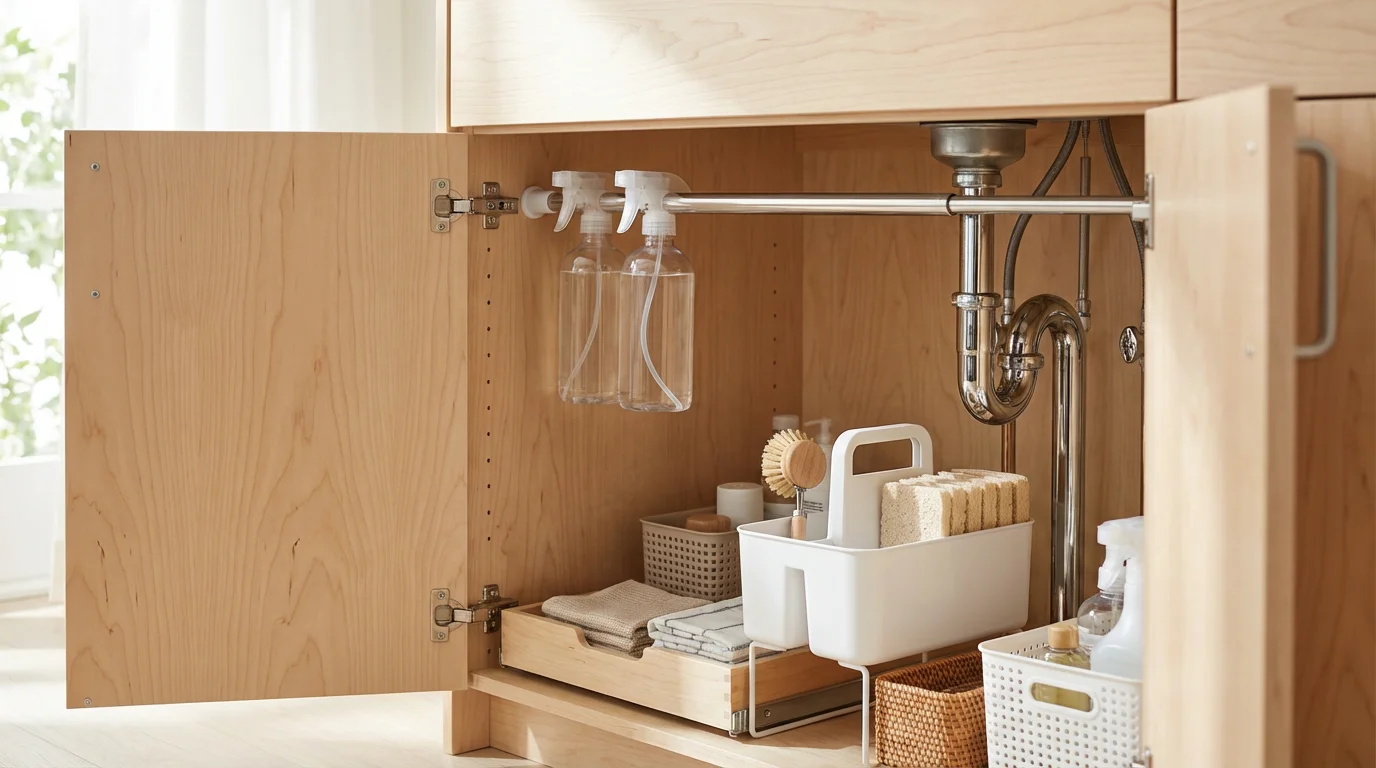
- Tension Rods: A simple tension rod, typically 18 to 30 inches long, can create a hanging bar across the top of your cabinet opening. You can hang spray bottles by their nozzles, freeing up valuable floor space. This is an excellent solution for keeping frequently used cleaners easily accessible and preventing them from cluttering the bottom of the cabinet.
- Magnetic Strips: Attach a strong magnetic strip to the inside wall or door of your cabinet. This provides an excellent spot to store small metal items like steel wool pads, small brushes with metal handles, or even cleaning clips, keeping them off the floor and within easy reach.
- Stackable Corner Shelves: While a traditional lazy susan (a rotating tray that makes corner cabinet items accessible) might not always fit well under a sink due to plumbing, small, stackable corner shelves can utilize those awkward back corner spaces. They elevate items, making them more visible and accessible.
The Spruce offers numerous creative ideas for maximizing kitchen space, including DIY solutions for tricky areas like under the sink. Explore their tips for clever hacks and product recommendations by visiting The Spruce’s kitchen organization section.
Budget-Friendly vs. Premium Solutions: Choosing What Works for You
Organizing your under-sink space does not require a significant financial investment, but understanding the differences between budget-friendly and premium options helps you make informed choices. Your budget impacts the materials, durability, and features of your chosen organizers.
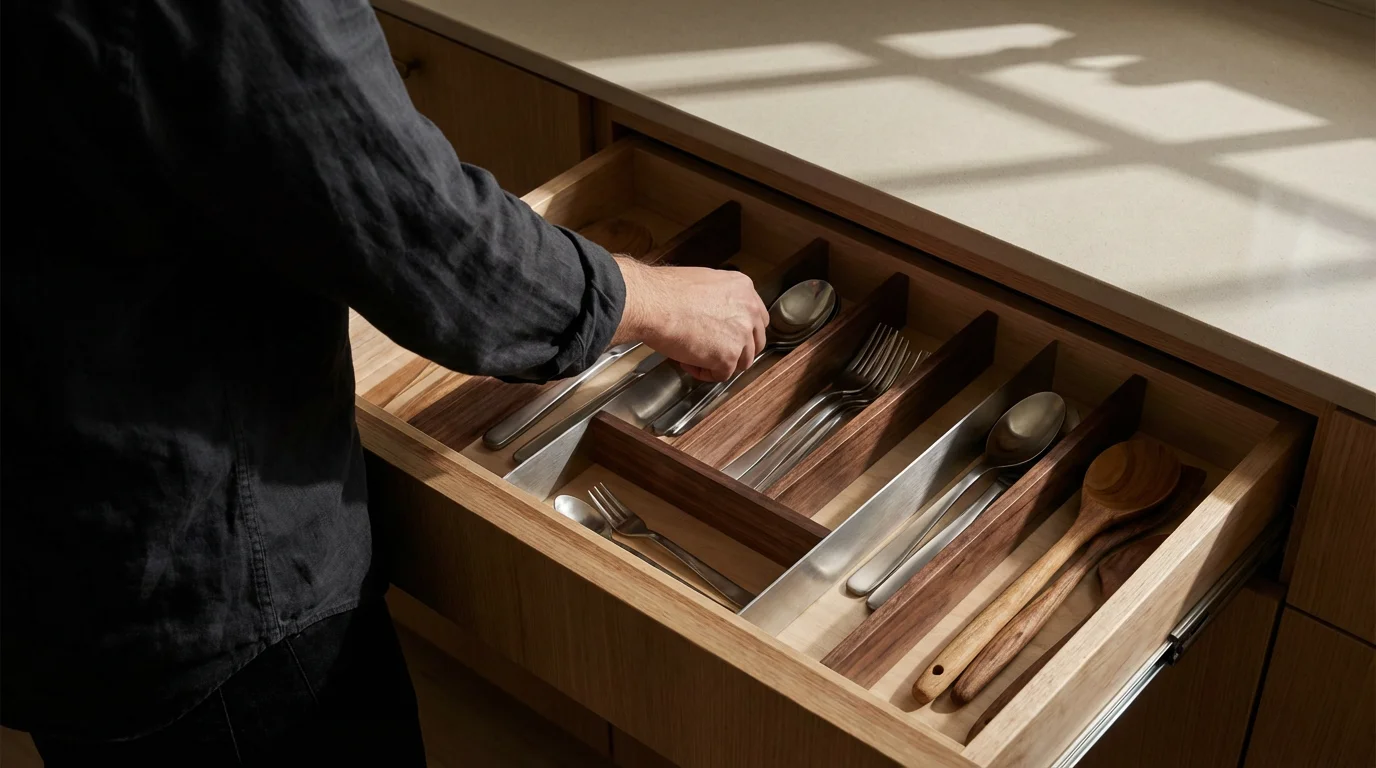
If you prioritize easy access and smooth-gliding parts, you might also be interested in the best drawer organizers for utensils to keep your cooking tools sorted.
| Feature | Budget-Friendly Options | Premium Options |
|---|---|---|
| Materials | Basic plastic bins, thin wire racks, adhesive hooks. | Heavy-gauge stainless steel, chrome-plated wire, clear acrylic, high-quality durable plastic, bamboo. |
| Durability | Generally less robust, may show wear faster, suitable for lighter items. | Built for longevity, resistant to rust and wear, can hold heavier items without warping. |
| Features | Basic functionality, non-adjustable, simple designs. | Smooth-gliding mechanisms, adjustable shelves, modular components, specific pipe cutouts, aesthetic designs. |
| Installation | Often freestanding, adhesive, or basic screw-in. | Secure screw-in mounts, robust glides, designed for seamless integration. |
| Price Range | Typically $5-$30 per item. | Ranges from $30-$100+ per item, especially for multi-tier pull-outs. |
| Best For | Renters, infrequent use, basic containment, testing layouts. | Homeowners, heavy daily use, long-term solutions, integrated look. |
For instance, a set of basic plastic bins from a discount store might cost $15 for three, offering simple containment. A premium two-tier chrome pull-out organizer, however, can cost $60-$80 but provides superior durability, smooth operation, and a higher weight capacity. Consider your frequency of use, the weight of the items you store, and your desired aesthetic when making your selection. Both categories offer valuable solutions, but the premium options typically deliver greater resilience and a more refined user experience over time.
Renter-Friendly Strategies: Organize Without Permanent Changes
If you rent your home, permanent modifications to your kitchen cabinets are usually not an option. However, many effective under-sink organization solutions exist that require no drilling or damage. These strategies allow you to create a highly functional space while adhering to your lease agreement.
- Freestanding Organizers: Opt for pull-out drawers or shelf units that sit directly on the cabinet floor rather than attaching to the walls or base. These offer the same benefits of accessibility and vertical storage without any installation. Look for compact, two-tier designs around 10-12 inches wide, 17-18 inches deep, and 14-16 inches high.
- Tension Rods: As mentioned, tension rods are perfect for hanging spray bottles. They install securely by pressure and remove without a trace.
- Adhesive Hooks and Racks: Many door-mounted racks and small hooks use strong, removable adhesive strips. Ensure you clean the surface thoroughly before application for the best hold. These are ideal for lightweight items like sponges, gloves, or small hand towels.
- Stackable Bins and Drawers: These are inherently renter-friendly as they simply stack on top of each other. Choose clear containers to maintain visibility.
- Plastic Caddies: Use caddies to group cleaning supplies. When you need to clean, grab the entire caddy. This keeps items contained and makes cleaning the cabinet floor much easier.
You can create a highly organized and efficient under-sink space as a renter. Focus on solutions that are easily removable and leave no impact on the existing cabinetry. Good Housekeeping provides a wealth of advice on home organization, including many tips applicable to renters who need clever, non-permanent storage solutions. Find more ideas at Good Housekeeping’s Home Organization section.
Long-Term Maintenance: Keeping Your Under-Sink Space Tidy
Implementing an organization system is a significant achievement, but maintaining it ensures your hard work pays off. Long-term organization requires consistent habits and periodic review. You will find it easier to keep your under-sink area functional with a few simple practices.
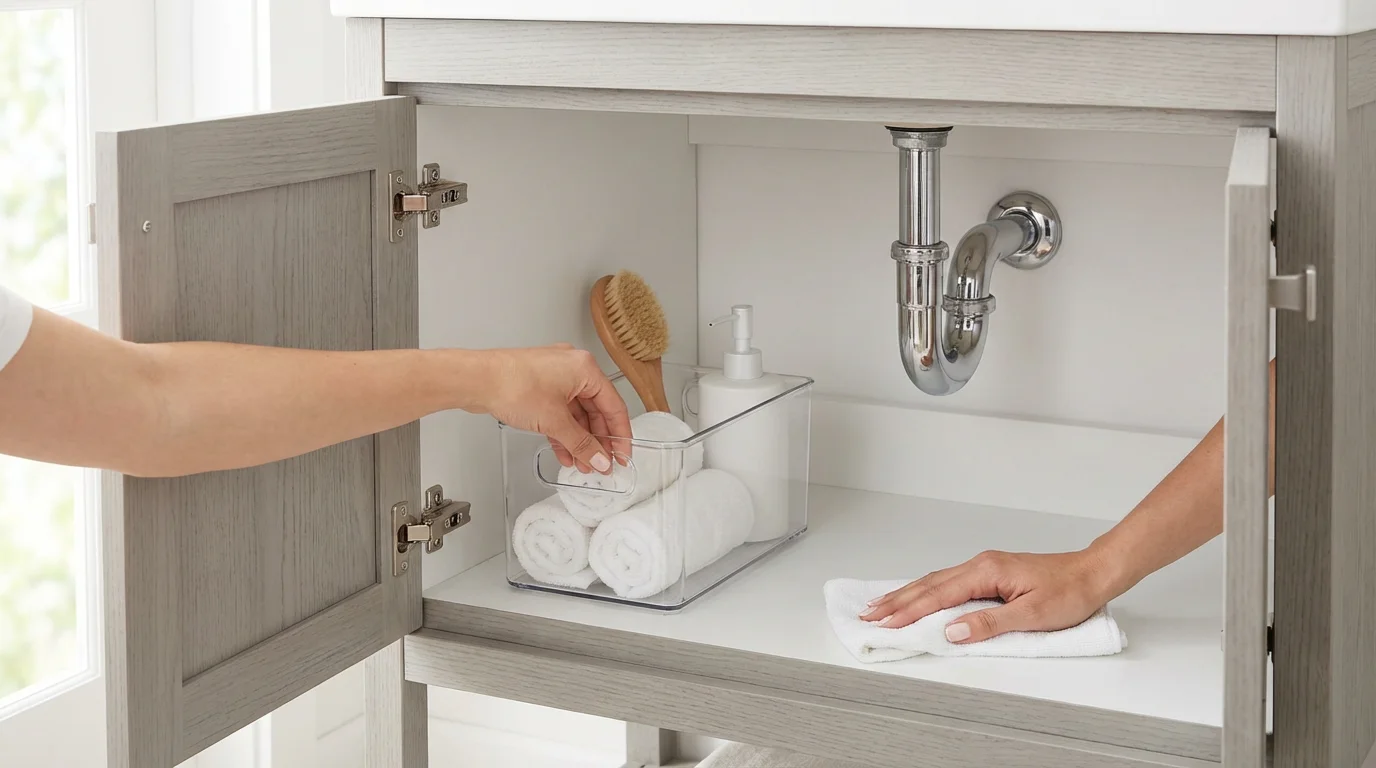
- Regular Decluttering: Schedule a quick check-in every three to six months. Remove everything, clean the surfaces, and discard or relocate items that no longer belong. This prevents accumulation and ensures your system continues to meet your needs.
- “One In, One Out” Rule: When you buy a new cleaning product, commit to finishing and discarding an old one before storing the new item. This prevents product overload.
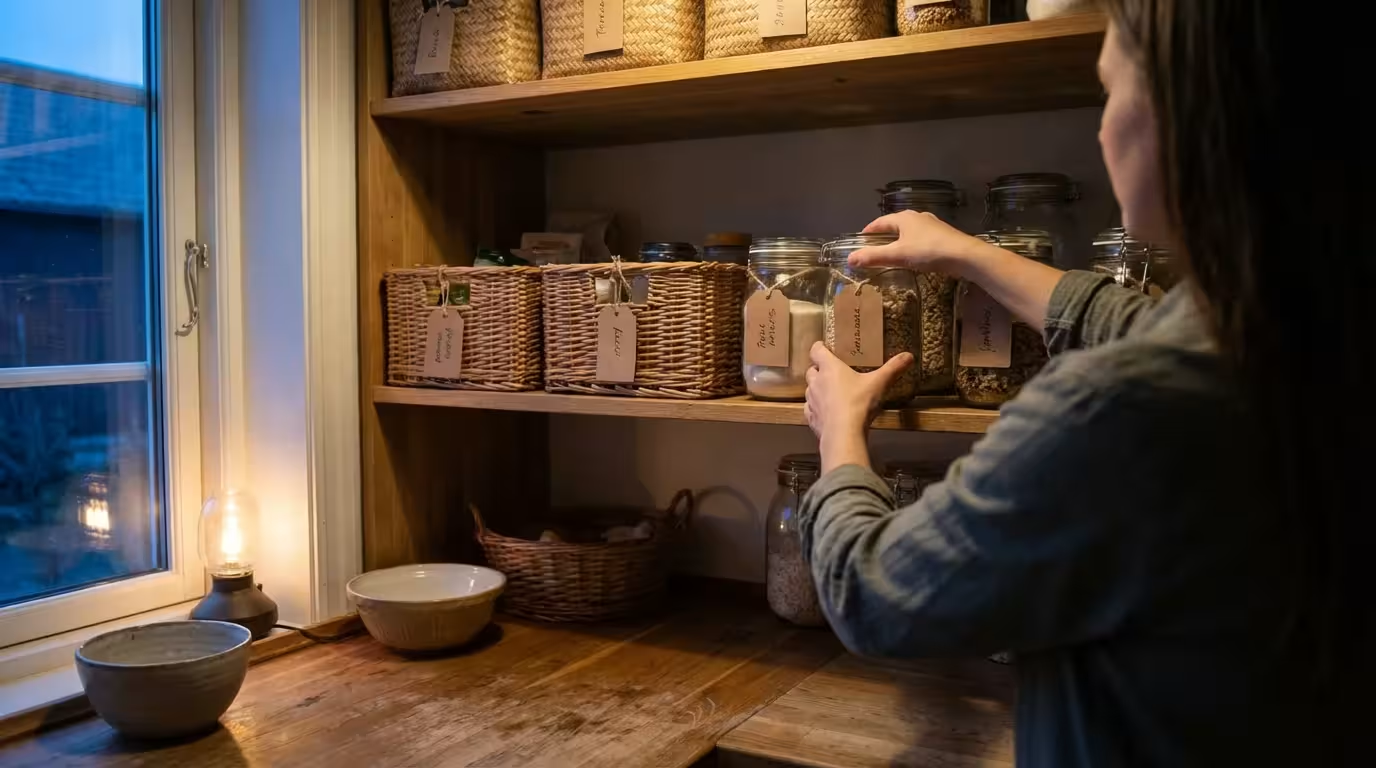
- Labeling: Clearly label bins and shelves. Labels serve as a visual reminder of where items belong, making it easier for everyone in the household to put things away correctly.
- Implement FIFO: If you store multiple bottles of the same product, practice FIFO, or “first in, first out.” Place new items behind older ones, ensuring you use the oldest products first. This prevents products from expiring and reduces waste.
- Immediate Wipe-Downs: Spills are inevitable in an under-sink cabinet. Address them immediately. A quick wipe-down prevents sticky residue, mold, and damage to the cabinet or your organizers.
By integrating these maintenance habits, your under-sink organization system will remain efficient, accessible, and free from clutter for years to come. Consistency is key to sustainable organization.
Frequently Asked Questions
What is the best way to organize cleaning supplies under the sink?
The best approach involves a combination of solutions. Start by decluttering and measuring your space accurately. Then, use pull-out organizers for larger bottles and frequently accessed items, door-mounted racks for sponges and small sprays, and stackable bins for grouping smaller items. Always account for plumbing obstructions with U-shaped organizers or tension rods.
How do I organize under my kitchen sink with a garbage disposal?
A garbage disposal unit significantly limits space on one side of your cabinet. Focus on maximizing the other side with a full-size pull-out organizer. For the disposal side, use narrow bins that fit around its base, or consider a U-shaped shelf specifically designed to curve around plumbing. Door-mounted racks are also excellent for utilizing vertical space, avoiding the disposal entirely.
What common items should I store under my kitchen sink?
Typically, you should store items directly related to kitchen cleaning and maintenance under the sink. This includes dish soap, dishwasher pods, all-purpose cleaner, glass cleaner, sponges, scrub brushes, rubber gloves, and trash bags. Avoid storing food items, combustible materials, or anything sensitive to temperature fluctuations.
How can I prevent water damage under my sink?
Regularly inspect your plumbing for leaks, drips, or signs of moisture. Place a waterproof mat or shelf liner on the cabinet floor to protect it from spills and potential small leaks. Store cleaning chemicals in sealed containers to prevent accidental spills. Addressing any moisture immediately helps preserve your cabinet and its contents.
Disclaimer: Product prices and availability change frequently. Prices shown were accurate at time of writing but may have changed. We may earn a small commission from purchases made through links on this site, at no extra cost to you. Always measure your space before purchasing organizers to ensure proper fit.
Leave a Reply