
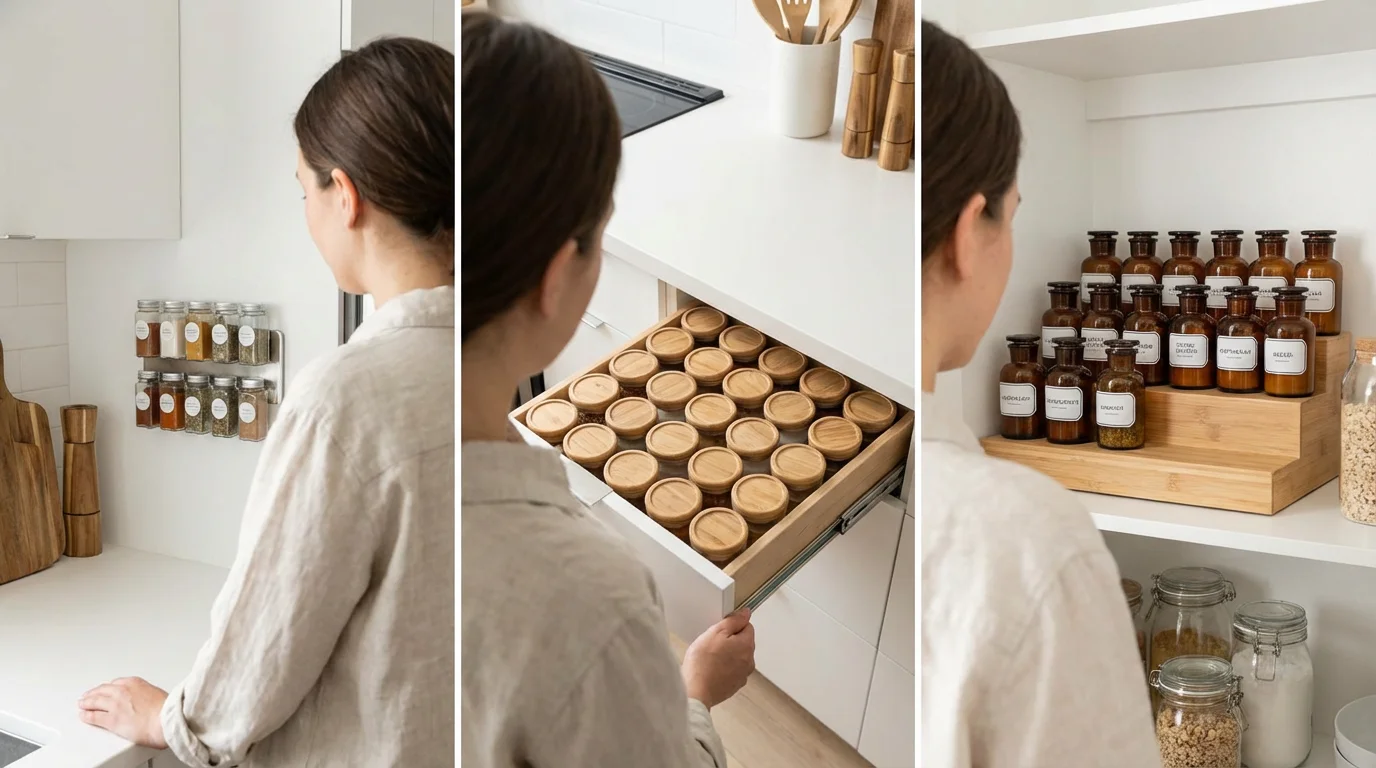
A disorganized spice collection frustrates any home cook. You fumble through a jumbled cabinet, searching for the elusive turmeric or a specific herb, often finding expired jars or duplicates you did not know you owned. This wastes time, money, and valuable kitchen space, regardless of your kitchen’s size. You deserve a kitchen where every spice is visible, accessible, and ready for use.
This guide provides practical, actionable insights for transforming your spice storage from chaotic to cohesive. We deliver solutions tailored to small, mid-sized, and large kitchens, helping you maximize every inch of your space with smart spice organizers. You will discover how to choose the best spice rack for your specific needs, supported by real-world examples and considerations for your budget and lifestyle.
The Essential First Step: Decluttering Your Spice Collection
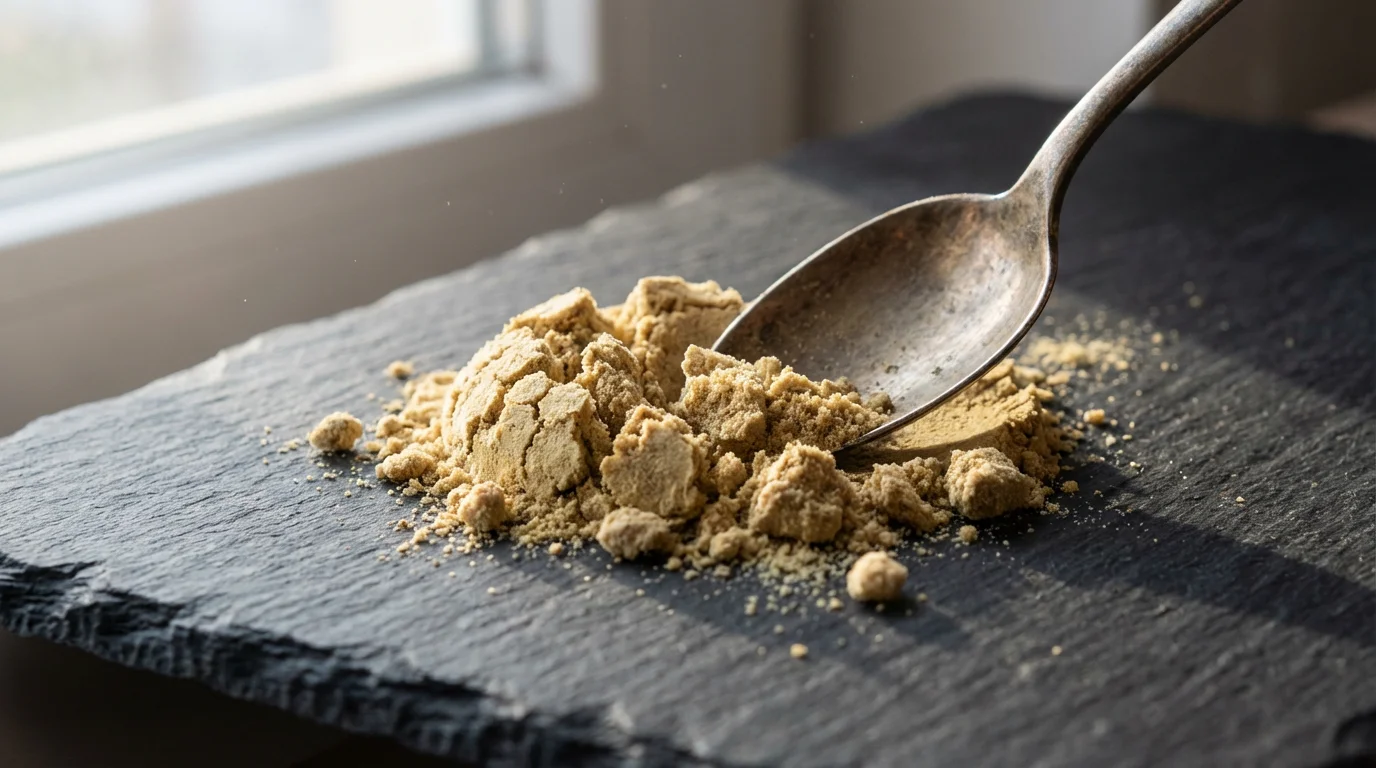
Before you buy a single organizer, decluttering your current spice collection is crucial. You cannot organize clutter effectively; you simply rearrange it. This foundational step ensures you only store what you actually use and need, making any organization system more efficient.
Begin by pulling every spice jar, container, and packet from your cabinets, drawers, and pantry shelves. Place them all on your counter or kitchen table. This visual inventory often reveals surprising duplicates and forgotten spices.
Now, examine each item with these criteria:
- Expiration Date: Most ground spices lose potency after 2-3 years, and whole spices last slightly longer, around 3-4 years. Check the date on the container. If no date exists, consider when you purchased it. If it smells bland or tasteless, it is likely past its prime. Discard any expired or aroma-less spices.
- Usage Frequency: Do you use this spice regularly? Or has it sat untouched for over a year? While you might keep a few specialty spices, eliminate those you rarely or never cook with.
- Duplicates: Consolidate open containers of the same spice into one. This immediately reduces clutter and frees up space.
- Container Condition: Transfer spices from torn packets or flimsy bags into airtight jars or containers. This preserves freshness and prevents spills.
This decluttering process might seem tedious, but it saves you money on future purchases and ensures your organized system serves your actual cooking habits. A study reported by Real Simple indicates that decluttering significantly reduces stress and improves efficiency in daily tasks, a benefit directly applicable to your kitchen.
Maximizing Space: Spice Racks for Small Kitchens
Small kitchens demand creative solutions to maximize every available inch. When counter space is precious and cabinet depth limited, you must utilize vertical areas, drawer interiors, and even cabinet doors. These solutions focus on compact footprints and smart design.
Drawer Spice Organizers
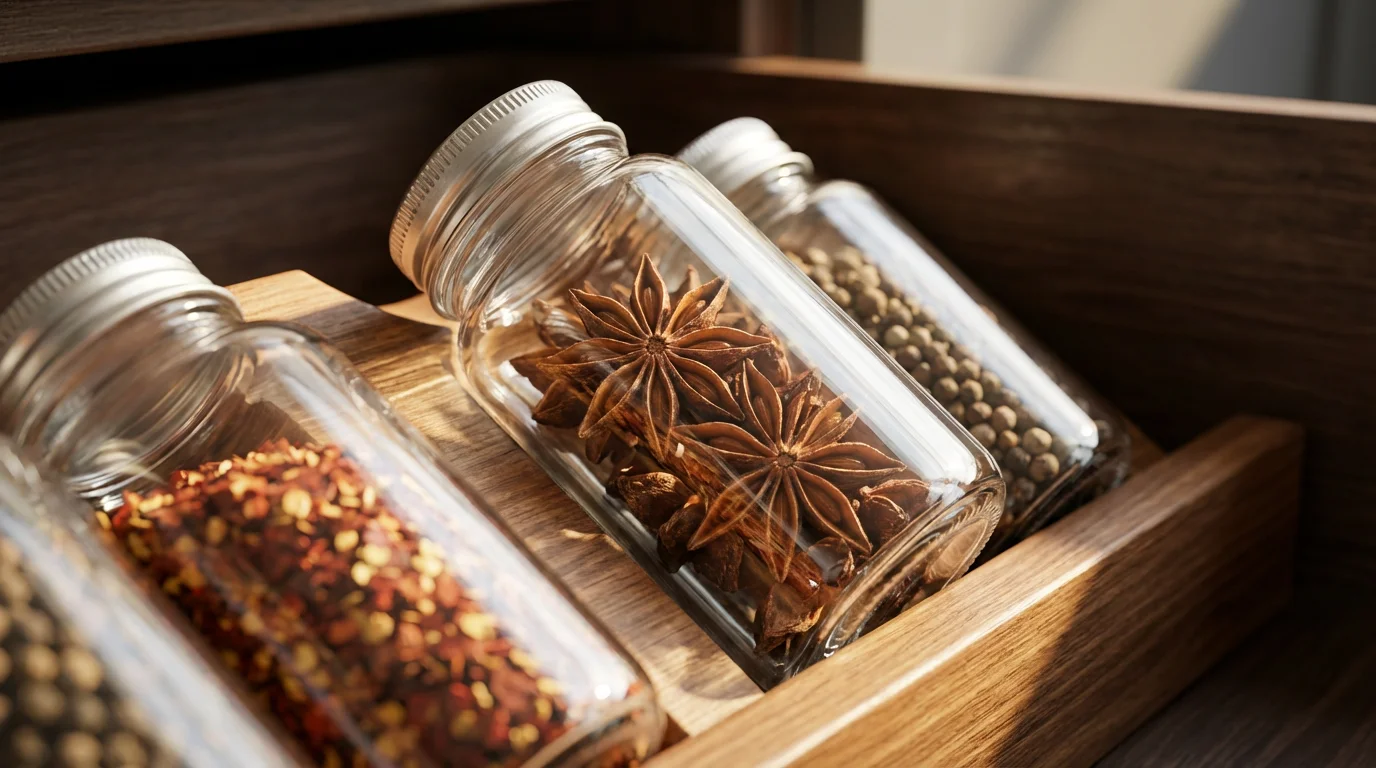
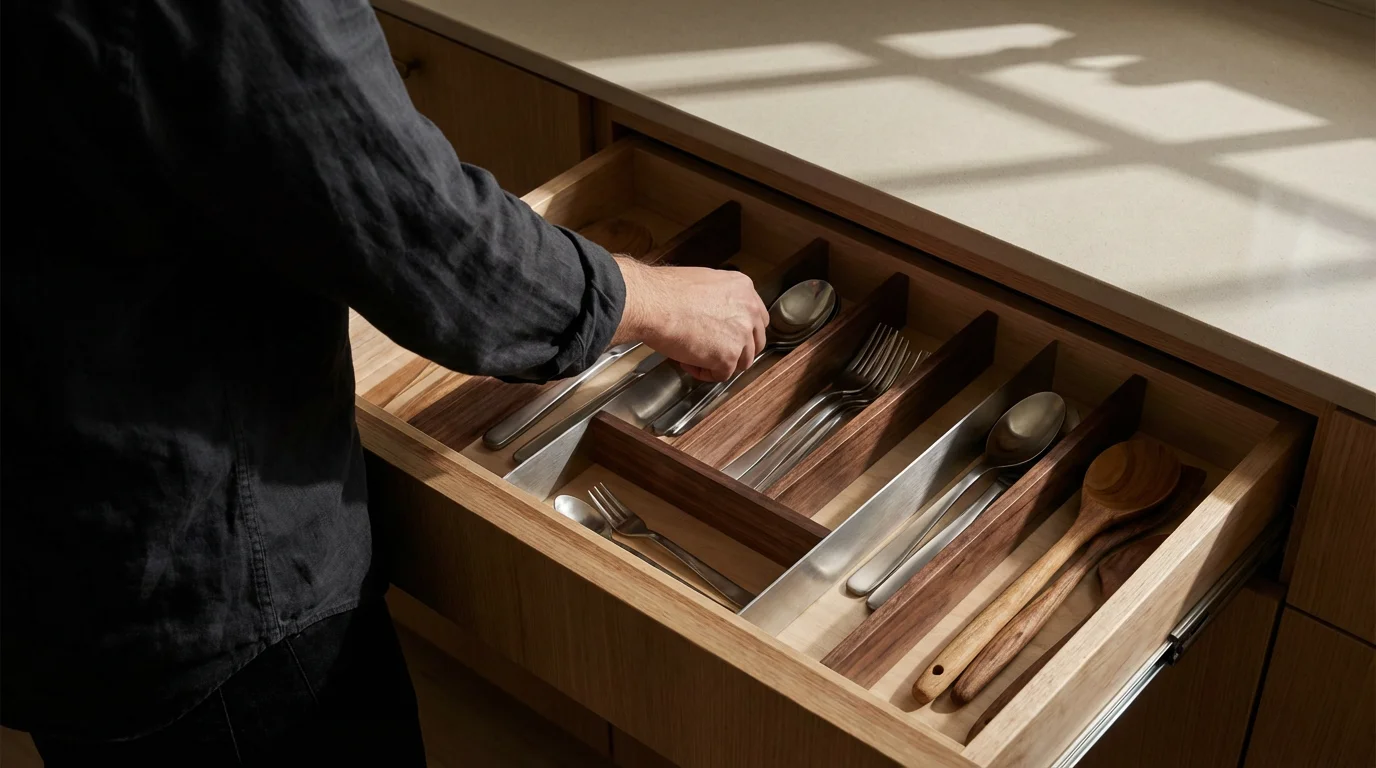
If you have a drawer that is at least 3 inches deep and 13 inches front-to-back, consider in-drawer spice organizers. These inserts lay flat or at an angle, allowing you to store spice jars horizontally with labels visible.
- Angled Tiered Inserts: These typically fit standard kitchen drawers that measure 13-14 inches deep. They come in various widths, from 8 inches to 24 inches, often expandable to fit snugly. For instance, an expandable bamboo insert might adjust from 12 inches to 20 inches wide, holding 18-24 standard spice jars. They keep jars from rolling and let you read labels instantly.
- In-Drawer Spice Trays: Simple, non-tiered trays hold jars upright or on their side. These are best for drawers deeper than 4 inches, as they prevent jars from tipping over.
These organizers are renter-friendly, requiring no installation beyond placing them in the drawer. They keep your spices out of sight, maintaining a clean countertop aesthetic.
Cabinet Door Organizers
The inside of your cabinet doors offers valuable, often overlooked, storage. A door-mounted rack, designed to hang over the top edge of a cabinet door or screw directly into it, utilizes this vertical space. These work well for shallow jars or spice packets.
- Over-the-Door Racks: These simply hook over the top of a cabinet door, making them ideal for renters as they require no drilling. Measure your cabinet door thickness (standard is 3/4 inch) to ensure a proper fit. They typically hold 10-15 jars and are about 10-12 inches wide and 2-3 inches deep.
- Screw-Mounted Racks: For homeowners, screw-mounted racks offer a more permanent and sturdy solution. These come in single-tier or multi-tier designs, often accommodating more weight and larger jars. Ensure you have at least 3 inches of clearance between the rack and any internal shelves to allow the door to close properly.
This solution keeps spices easily accessible while freeing up interior cabinet space.
Magnetic Spice Tins/Boards
For truly tiny kitchens, magnetic solutions can transform unused vertical surfaces into prime spice storage.
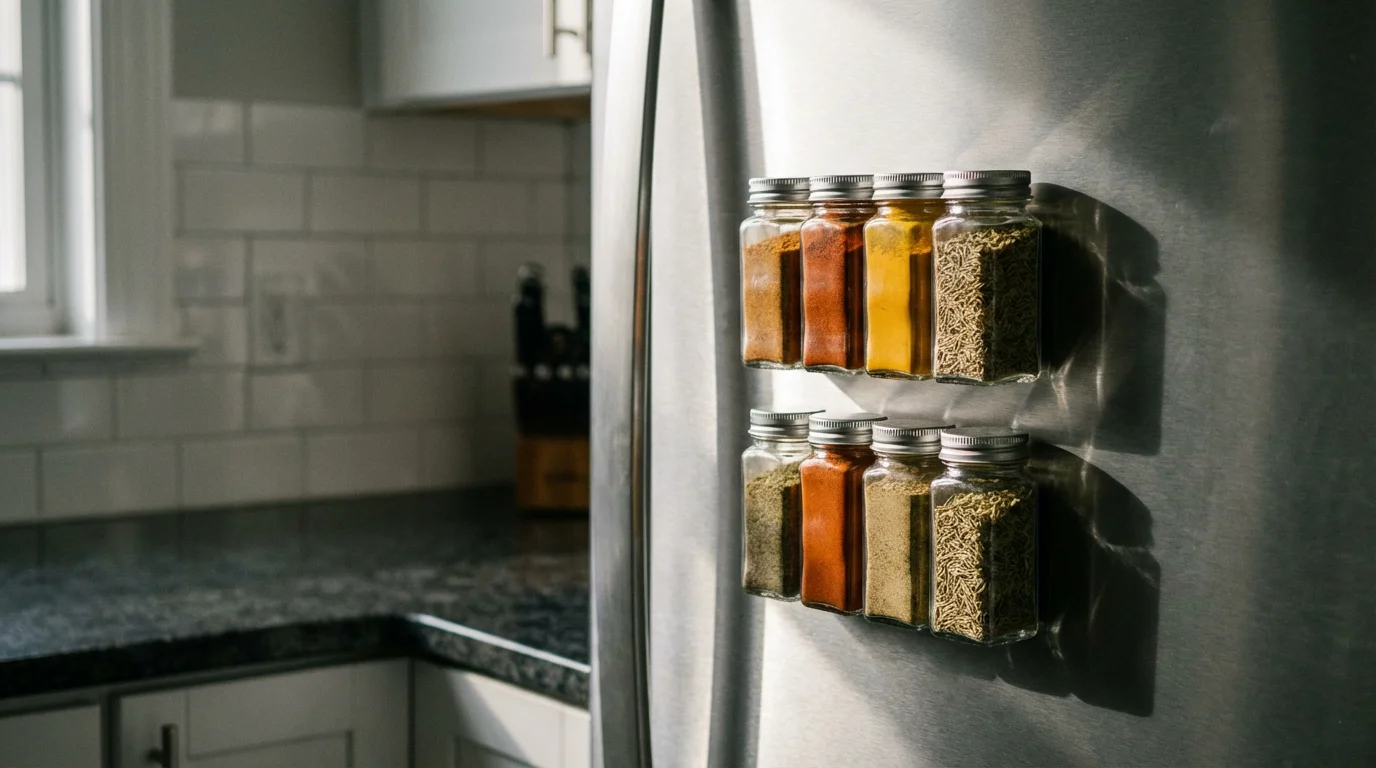
- Magnetic Tins on Refrigerator: Buy tins with clear tops and strong magnets. Fill them with your favorite spices and adhere them directly to the side of your refrigerator. This utilizes “dead space,” an unused storage area, making spices decorative and highly accessible. Ensure the tins are airtight to preserve freshness.
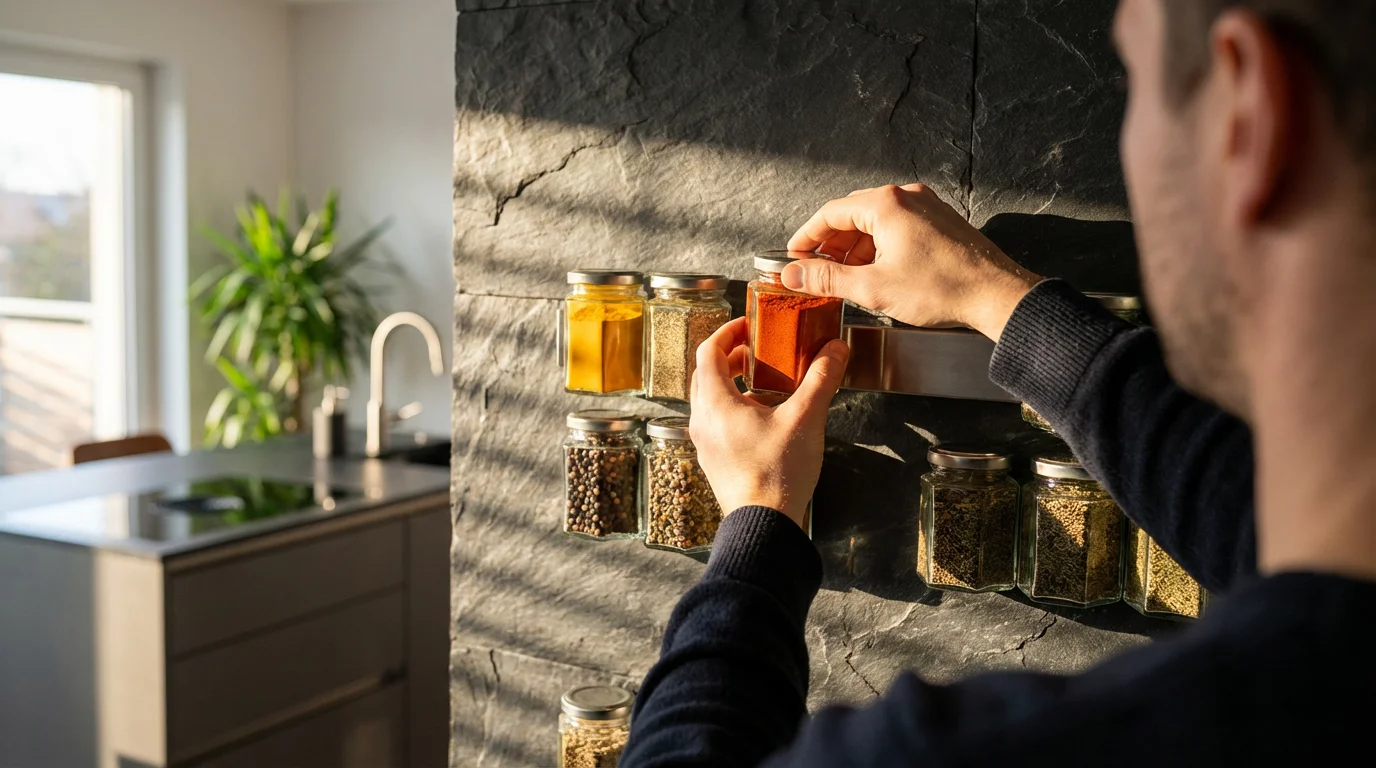
- Magnetic Wall-Mounted Boards: Install a magnetic strip or board on an empty wall space, backsplash, or the inside of a pantry door. Then attach magnetic spice tins. This creates a visually appealing and highly functional spice wall.
Magnetic systems are excellent for renters and provide an immediate visual cue for your spice inventory.
Compact Shelf Risers/Tiered Shelves
If your small kitchen primarily relies on cabinet storage, shelf risers can double your capacity. A shelf riser is a mini shelf that creates two levels of storage in one space. Place one or more shelf risers on an existing cabinet shelf.
- Single Shelf Risers: Typically 10-12 inches wide and 4-6 inches tall, these allow you to store shorter spice jars underneath and taller ones on top.
- Tiered Expanding Shelves: These step-like organizers expand in width and create 2-3 levels of display for your spice jars, making every bottle visible. They usually fit standard 10-12 inch deep cabinets and expand from 10 inches to 20 inches in width.
These inexpensive solutions are excellent for maximizing vertical space within existing cabinets without permanent installation.
Balanced Solutions: Spice Organizers for Mid-Sized Kitchens
Mid-sized kitchens offer more flexibility but still benefit immensely from thoughtful organization. Here, you can combine some smaller kitchen strategies with more robust options that offer greater capacity and convenience. The goal remains accessibility and efficient use of space, but with room for slightly larger systems.
Pull-Out Cabinet Organizers
For a dedicated spice cabinet or pantry section, a pull-out organizer provides exceptional accessibility. A pull-out organizer is a drawer or shelf that slides out for easy access to items stored deep within a cabinet.
- Narrow Base Cabinet Pull-Outs: These units install into existing base cabinets, typically in narrow sections like 6-9 inches wide. They slide out on smooth glides, revealing multiple tiers of spice storage. Expect units to be 20-22 inches deep to fit standard base cabinets. They transform previously awkward spaces into highly functional spice zones.
- Spice Racks Integrated into Larger Pull-Outs: If you have a larger pull-out pantry, look for models with dedicated spice shelves or baskets. These offer a comprehensive storage solution for spices alongside other pantry staples.
Installation usually requires a screwdriver, making them a more permanent option best suited for homeowners or long-term renters. The investment in a pull-out organizer significantly improves visibility and prevents forgotten spices.
Tiered Corner Cabinet Organizers (Lazy Susans)
Corner cabinets are notorious for becoming “dead space,” unused storage areas where items disappear into the back. A lazy susan, a rotating tray that makes corner cabinet items accessible, solves this problem perfectly for spices.
- D-Shaped Lazy Susans: These are designed specifically for corner base cabinets, typically 18-20 inches in diameter, and rotate to bring items from the back to the front. They efficiently use curved space.
- Full-Round Lazy Susans: Suitable for upper corner cabinets or deeper pantry shelves, these range from 9 inches to 16 inches in diameter. They are excellent for grouping baking spices or everyday seasonings.
Choose models with a slight lip to prevent jars from toppling off when rotated. They transform an inconvenient space into a highly functional spice hub. According to experts at Good Housekeeping, incorporating lazy susans in corners can increase usable storage by up to 30 percent.
Stackable Spice Racks and Modular Systems
When you have decent shelf space but need to maximize verticality, stackable spice racks offer flexibility. “Stackable” means designed to safely pile on top of each other. “Modular” means pieces that can be combined and configured different ways.
- Stackable Wire or Plastic Racks: These create multiple tiers on a single shelf. You can stack 2-3 units high, depending on your shelf height, to store many spices in a small footprint. Look for units that interlock securely.
- Modular Container Systems: These involve uniform spice jars that stack perfectly or fit into a modular tray. This creates a clean, uniform look and prevents wasted space between oddly shaped jars.
These options are highly adaptable. You can expand your system as your spice collection grows or reorganize it easily. They work well in pantries, upper cabinets, or even on open shelving.
Countertop Spice Racks (Strategic Use)
While small kitchens often avoid countertop clutter, mid-sized kitchens might accommodate a carefully selected countertop spice rack for frequently used items.
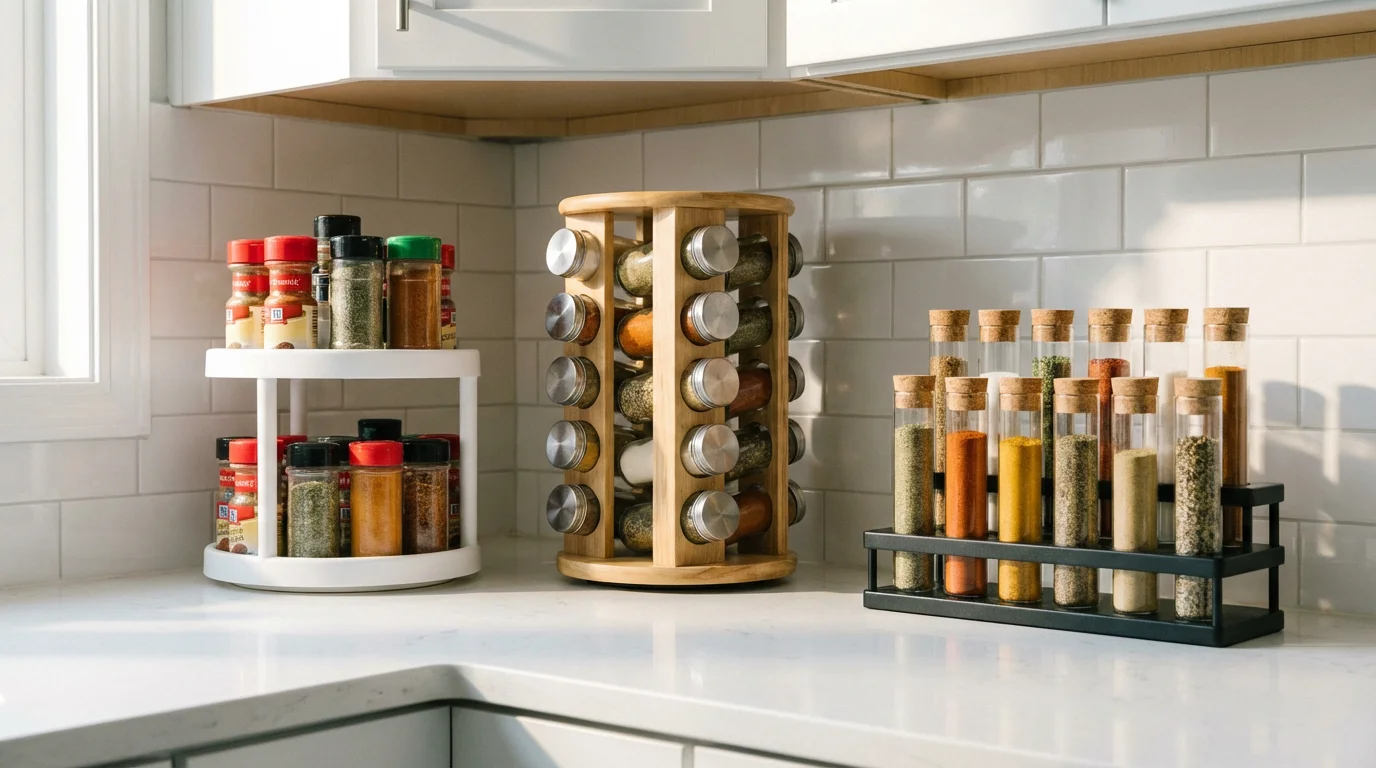
- Compact Revolving Racks: These typically hold 12-24 spice jars and rotate for easy access. They are usually around 6-8 inches in diameter and 10-12 inches tall. Place them in a designated, out-of-the-way corner.
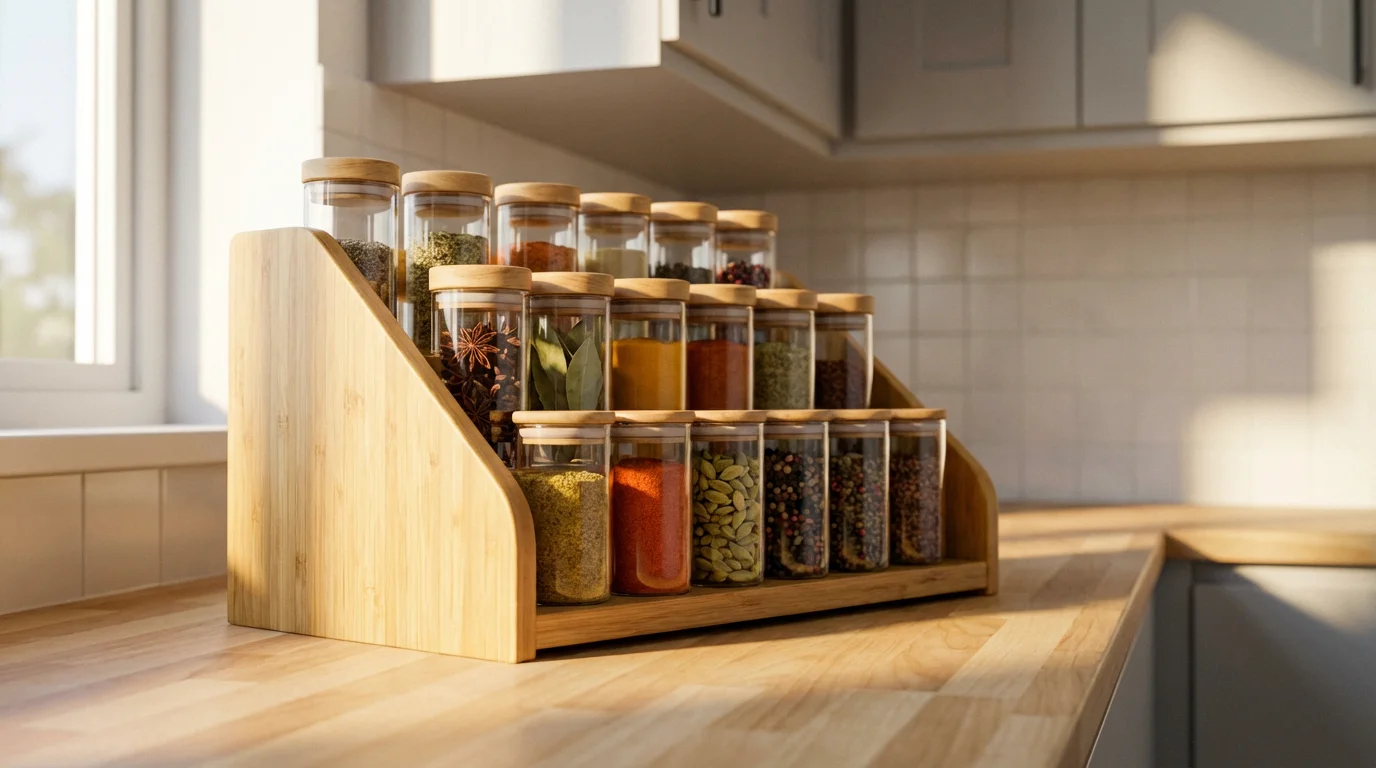
- Modern Tiered Racks: A sleek, multi-tier rack can hold 6-12 frequently used spices. Look for designs that complement your kitchen decor. They often have a footprint of 6-8 inches deep and 12-15 inches wide.
The key here is intentional placement. Avoid cluttering prime prep areas. Use them for your absolute daily essentials like salt, pepper, garlic powder, and onion powder, leaving less-used spices in cabinets or drawers.
“The goal isn’t a Pinterest-perfect pantry. It’s being able to find what you need in 10 seconds or less, consistently.” — The Spruce, Kitchen Organization
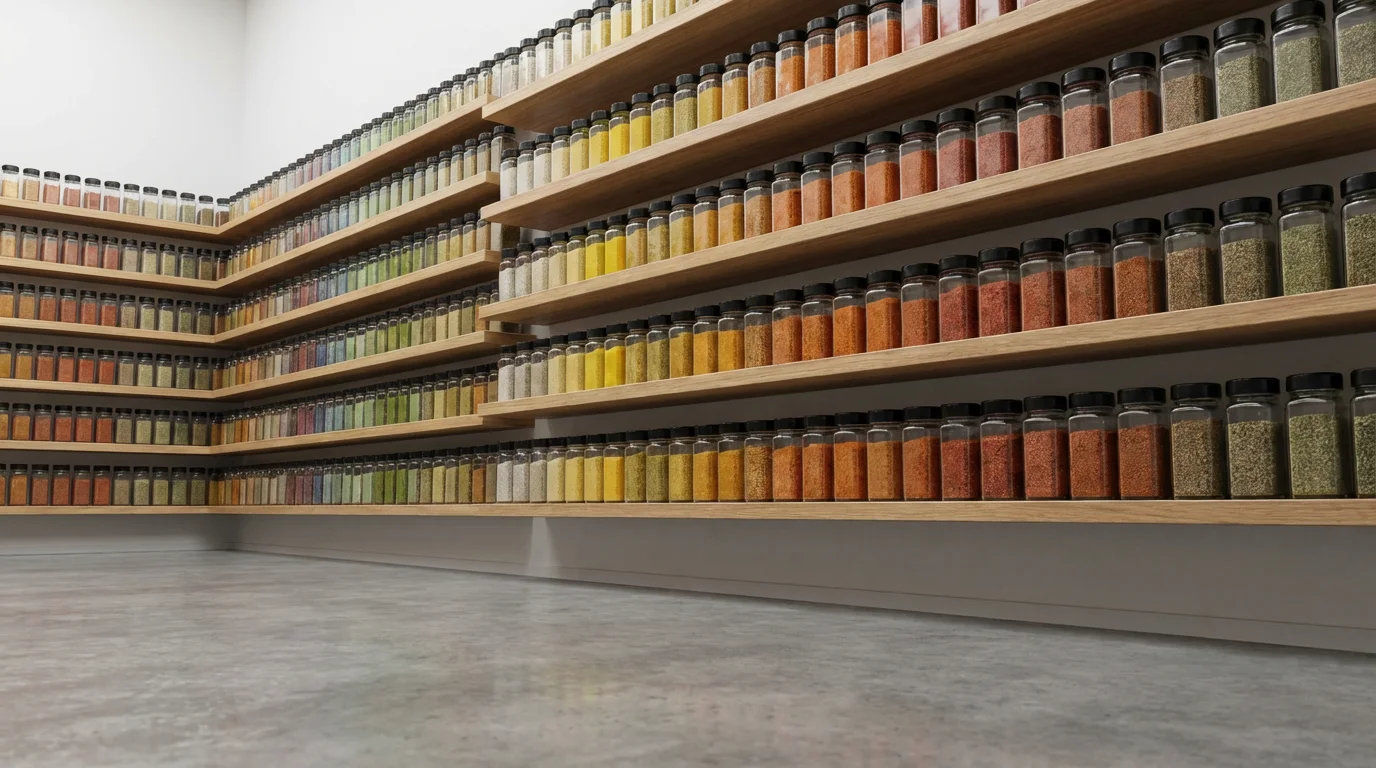
Expansive Storage: Spice Solutions for Large Kitchens and Pantries
Large kitchens and dedicated pantries provide the luxury of ample space, but even here, disorganized spices can create chaos. The challenge shifts from finding space to optimizing it for maximum visibility, inventory management, and ease of use. You can implement comprehensive systems that handle a substantial spice collection.
Dedicated Pantry Spice Storage
If you have a walk-in or deep reach-in pantry, you can create a dedicated spice zone.
- Deep Shelf Organizers: Utilize tiered expanding shelves on pantry shelves. These can be larger than cabinet versions, often extending 15-18 inches wide and 12-14 inches deep, to accommodate numerous jars.
- Wall-Mounted Pantry Systems: For ultimate customization, install pegboards or track systems on an empty pantry wall. You can then add hooks, shelves, and baskets to create a flexible, visually open spice display. This solution offers robust support for a large collection and allows for future expansion.
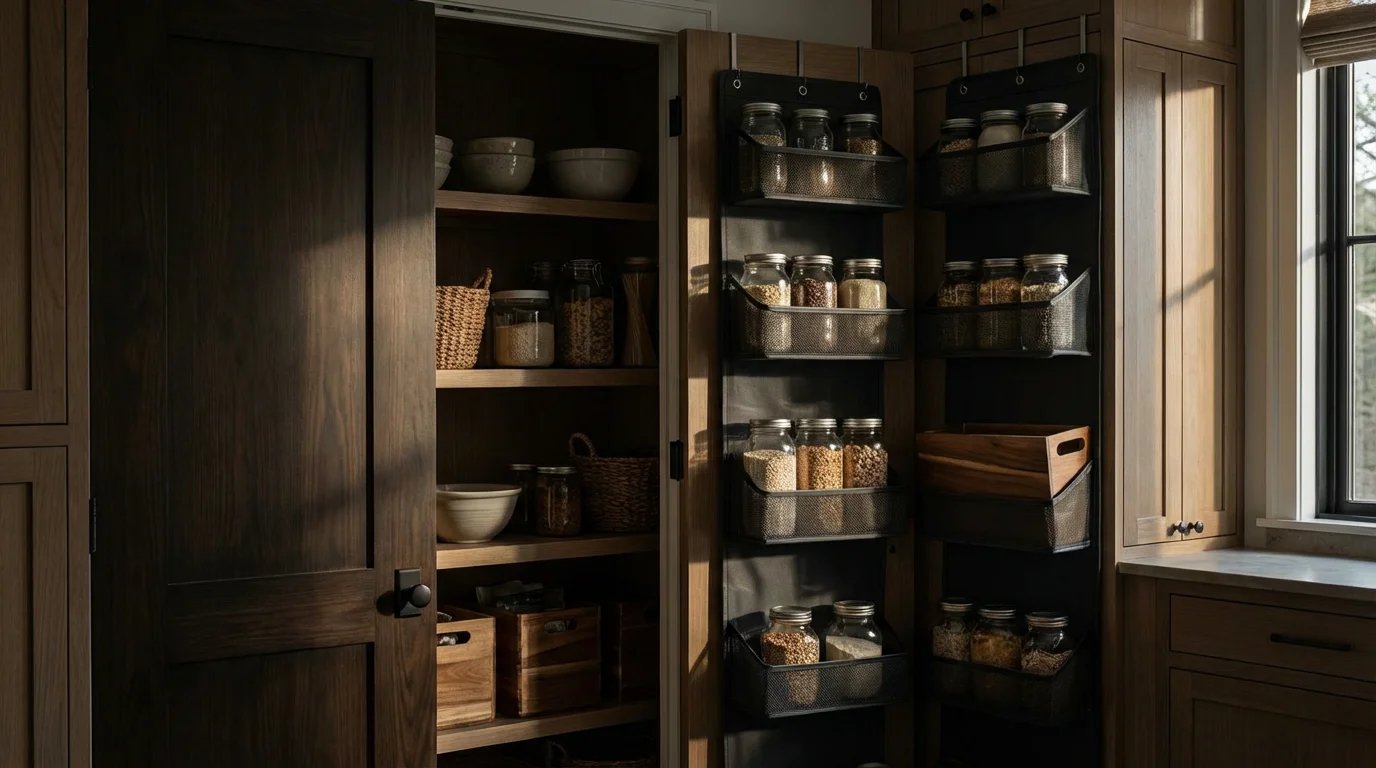
- Door-Mounted Pantry Racks: A door-mounted rack, storage that hangs on the inside of cabinet doors, works exceptionally well on a pantry door. Unlike smaller cabinet door racks, pantry door organizers can be full-length, offering several tiers of deep shelving. These typically range from 20-30 inches wide and feature multiple baskets, providing space for dozens of spice jars, larger containers, and even baking extracts.
These solutions capitalize on existing structures to create highly functional, accessible spice storage.
Uniform Spice Jars and Labeling Systems
With a large collection, uniformity becomes a game-changer for both aesthetics and efficiency.
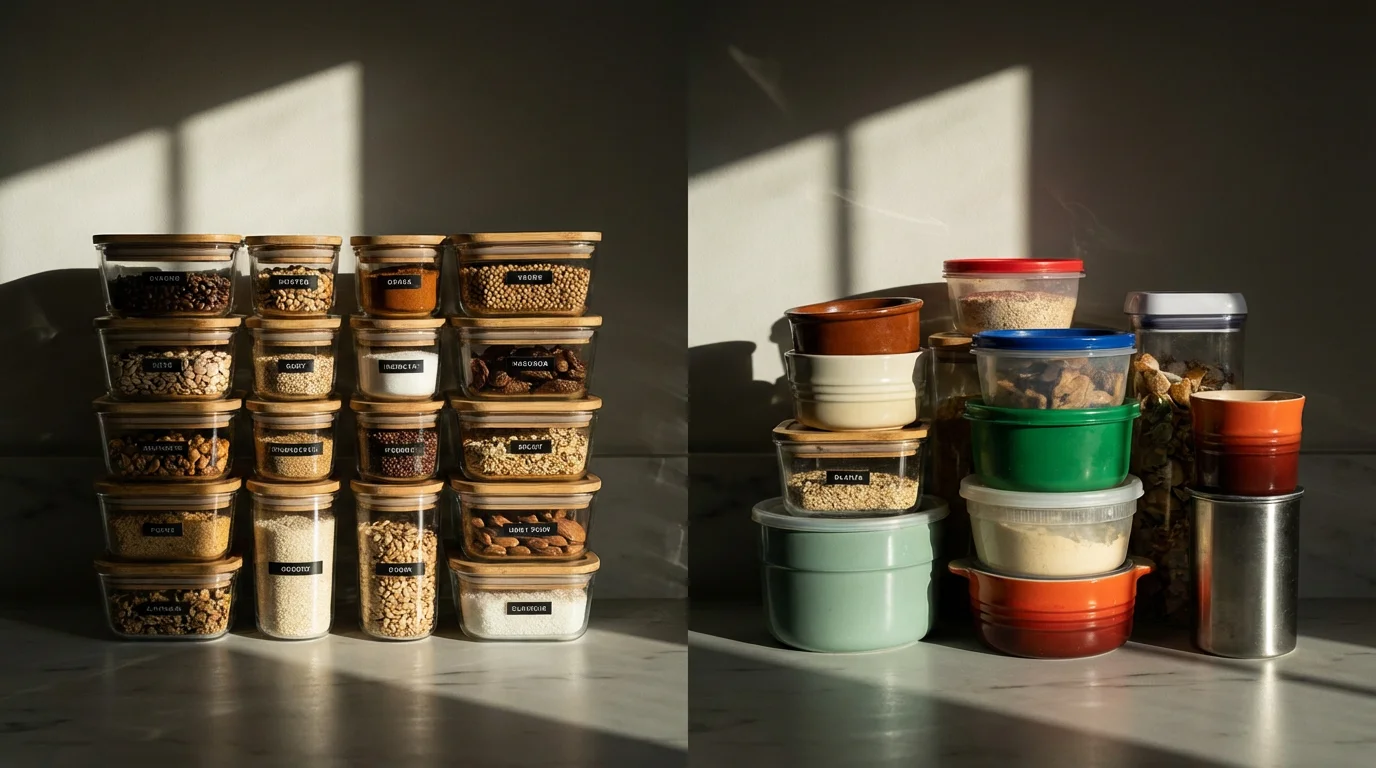
- Matching Jars: Invest in a set of identical spice jars, perhaps 4 oz or 6 oz capacity, to store all your spices. This creates a clean, cohesive look and allows for more efficient packing into any organizer. The uniform size means no wasted space between different jar shapes.
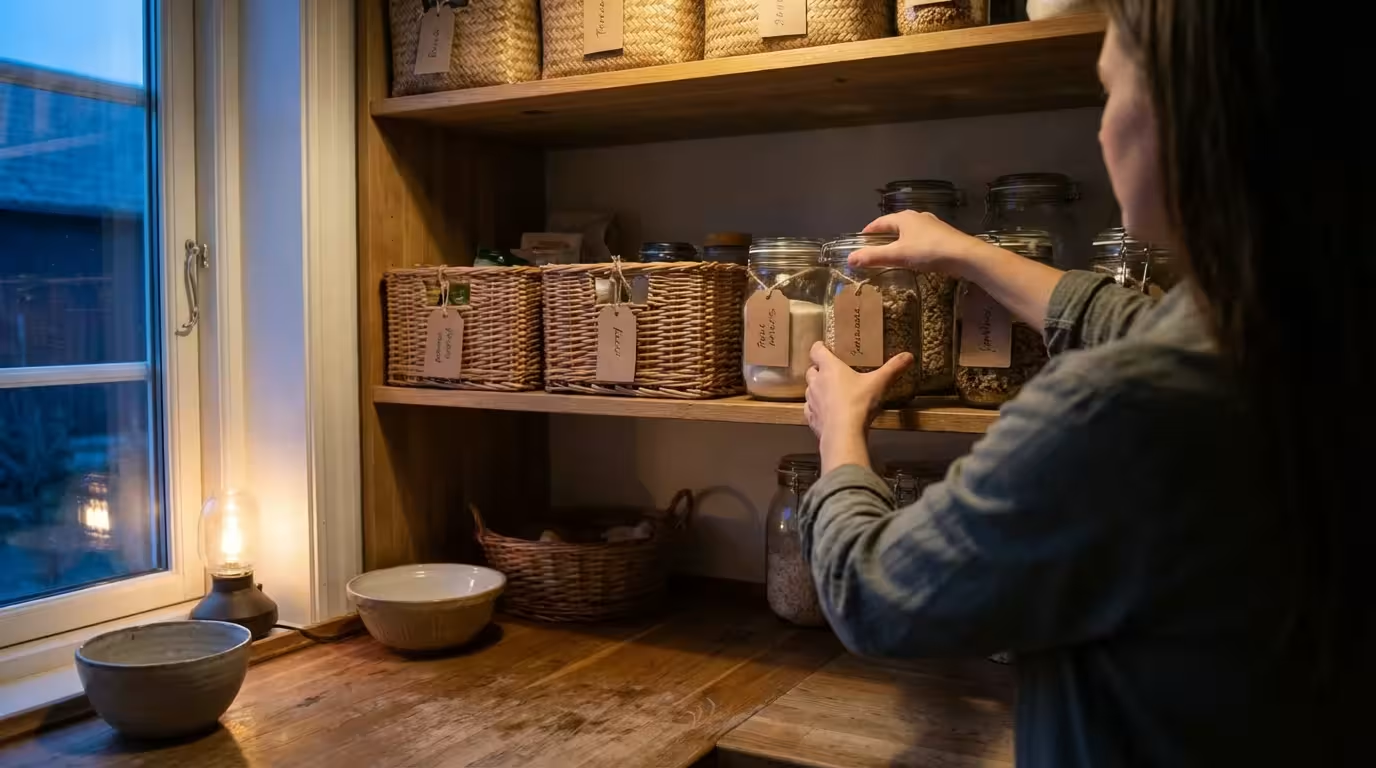
- Consistent Labeling: Once you transfer spices to uniform jars, apply clear, readable labels. Consider labels for the top of the jar for drawer storage and side labels for shelf storage. Implement a system: alphabetical, by cuisine, or by frequency of use. This consistency dramatically speeds up finding what you need.
This system not only looks professional but also simplifies inventory management. You immediately see when a spice is running low.
Implementing FIFO for Spices
When you buy spices in bulk or have a large collection, the “first in, first out” (FIFO) method is invaluable. FIFO, an acronym meaning first in, first out, is a method of rotating food so the oldest gets used first.
When you refill a jar or add a new purchase of an existing spice, place the newer item behind or underneath the older item. This ensures you always use the oldest spices first, reducing waste and maintaining freshness. Labeling jars with purchase or expiration dates on the bottom or back further supports a successful FIFO system.
Custom Built-Ins
For homeowners building or renovating a large kitchen, custom built-in spice storage offers the ultimate tailored solution. This might include:
- Dedicated Spice Drawers: Custom-designed drawers with tiered inserts built directly into the cabinetry.
- Narrow Pull-Out Pantry Units: Integrated seamlessly into a bank of cabinetry, often disguised as decorative panels.
- Spice Nooks: Small, recessed shelves built into a backsplash or an unused wall cavity, providing a beautiful and functional display.
These options blend functionality with high-end design, creating truly bespoke spice storage.
Comparing Spice Rack Options: A Quick Reference Guide
Choosing the right spice rack involves balancing space, accessibility, capacity, and cost. This table helps you compare popular options.
| Spice Rack Type | Kitchen Size Suitability | Installation | Capacity (Avg. Jars) | Cost Range (USD) | Pros | Cons |
|---|---|---|---|---|---|---|
| Drawer Insert (Angled) | Small, Mid-sized | None (drop-in) | 12-24 | $15 – $40 | Keeps counters clear, labels visible, renter-friendly. | Requires sufficient drawer depth, uses up a drawer. |
| Cabinet Door Rack | Small, Mid-sized | Over-the-door (no tools) or screw-in | 10-20 | $10 – $35 | Utilizes “dead space”, easy access, renter-friendly options. | Requires door clearance, can interfere with internal shelves. |
| Magnetic Tins/Board | Small | Tins on fridge (none), board on wall (adhesive/screws) | 6-30 | $15 – $50 (for tins + board) | Very space-efficient, visual inventory, flexible placement. | Requires specific tins, tins can lose magnetism over time. |
| Shelf Riser/Tiered Shelf | Small, Mid-sized | None (place on shelf) | 6-18 | $10 – $30 | Maximizes vertical space in cabinets, inexpensive, renter-friendly. | Can still obscure jars behind the front row. |
| Pull-Out Cabinet Organizer | Mid-sized, Large | Screw-in (base cabinet) | 18-40 | $60 – $150+ | Full visibility and access, excellent for deep cabinets. | Requires installation, higher cost, permanent. |
| Lazy Susan | Mid-sized, Large | None (place on shelf) | 12-24 | $15 – $45 | Optimizes corner cabinet space, easy rotation for access. | Jars can fall off if not careful, sizes vary. |
| Wall-Mounted Rack | Mid-sized, Large | Screw-in | 12-60+ | $20 – $80 | High capacity, visible, frees up cabinet/drawer space. | Requires drilling, permanent, visible on wall. |
Sustaining Order: Maintaining Your Organized Spice System
Implementing an organization system is a significant achievement, but maintaining it requires ongoing effort. Without a consistent approach, even the best system can devolve into chaos. You want your kitchen to remain functional and efficient for the long term.
Regular Audits
Schedule a quick 10-minute audit of your spice collection once every 3-6 months. This allows you to:
- Check Expiration Dates: Quickly identify and discard any spices that have passed their prime.
- Note Replacements: Make a list of spices running low so you can restock before you need them.
- Re-align Jars: Straighten up any jars that have shifted out of place.
This routine prevents major clean-ups and keeps your system performing optimally.
Develop a “Spice Zone” Workflow
Think about how you cook. Do you often use certain spices together for specific cuisines? Grouping similar spices helps maintain order and speeds up your cooking process.
- Baking Spices: Cinnamon, nutmeg, cloves, ginger, allspice. Keep these together, perhaps in a designated corner of a cabinet or a specific drawer.
- Everyday Seasonings: Salt, pepper, garlic powder, onion powder, paprika, cumin, oregano. These should be in the most accessible spot, whether on a countertop rack or a front drawer.
- Global Cuisines: Group Indian spices, Mexican spices, or Asian spices together. This helps you grab all necessary ingredients for a specific recipe quickly.
This zone-based organization reduces decision fatigue and makes returning items to their proper place intuitive.
Labeling Consistency
Labels are the unsung heroes of organization. Ensure all your spice jars have clear, legible labels.
- Update Labels: If you change a jar’s contents or transfer an old spice to a new container, immediately update the label.
- Consider Label Makers: A label maker provides a uniform, professional look and helps maintain consistency.
- Date Labels: Adding the purchase date or expiration date to your labels simplifies the FIFO process and helps you track freshness.
Clear labeling eliminates guesswork and keeps your system user-friendly for everyone in your household.
Budget-Friendly to Premium Spice Organization Choices
Organizing your spices does not require a large budget or a complete kitchen overhaul. You can find effective solutions at every price point, from simple DIY tricks to sophisticated integrated systems.
Budget-Friendly Options (Under $30)
You can achieve significant organization with minimal investment.
- DIY Cardboard Risers: Cut and fold cardboard boxes to create custom tiered risers for your cabinets or drawers. This is free and highly customizable.
- Dollar Store Baskets/Bins: Small, inexpensive plastic baskets from discount stores can contain loose spice packets or group jars within a cabinet, preventing them from scattering.
- Basic Shelf Risers/Tiered Organizers: Many effective wire or plastic shelf risers and expanding tiered shelves cost under $20-$30. These provide immediate vertical space without installation.
- Thrift Store Jars: If uniformity is your goal, look for matching glass jars at thrift stores. Clean them thoroughly and add your own labels.
These options focus on immediate impact and clever use of existing resources.
Mid-Range Solutions ($30-$100)
Stepping up slightly in budget allows for more durable materials, better aesthetics, and some basic installation.
- Bamboo Drawer Inserts: High-quality bamboo drawer inserts offer a natural, appealing look and excellent durability, often expanding to fit various drawer sizes.
- Metal Door-Mounted Racks: Sturdy metal racks for cabinet doors or pantry doors provide reliable, long-lasting storage. Look for powder-coated finishes for durability.
- Plastic Pull-Out Organizers: Some basic pull-out systems for narrow cabinets are available in this range, typically made from plastic or coated wire, offering improved accessibility.
- Magnetic Spice Tin Sets: Complete sets of magnetic tins with labels, often including a magnetic board, fall into this price point.
These solutions balance cost with enhanced functionality and longevity.
Premium Options ($100+)
For those seeking integrated, high-end solutions, the investment brings superior materials, seamless design, and often greater capacity.
- Custom Built-In Organizers: Working with a cabinet maker or opting for high-end brands provides bespoke drawer inserts or narrow pull-out spice racks that perfectly match your cabinetry.
- Solid Wood or Stainless Steel Pull-Out Systems: These offer exceptional durability, smooth glides, and a premium aesthetic. They are often designed for heavy use and last for decades.
- High-Capacity Pantry Door Systems: Robust, multi-tiered systems designed for pantry doors, often made of heavy-gauge wire or solid wood, can hold a vast collection of spices and other small items.
- Designer Countertop Racks: Aesthetic, often pre-filled, spice racks made from high-quality materials like brushed stainless steel or exotic woods.
These premium choices provide a polished, integrated look and the highest level of convenience. Regardless of your budget, a well-organized spice collection is an achievable goal, enhancing your cooking experience every day.
Frequently Asked Questions
What is the best way to store spices to keep them fresh?
Store spices in airtight containers, away from direct sunlight, heat, and moisture. Keep them in a cool, dark place like a cabinet, drawer, or pantry. Avoid storing them directly above the stove, as the heat and steam will degrade their flavor and potency quickly.
Can I organize my spices if I am a renter?
Absolutely. Many excellent renter-friendly options exist. Consider drawer inserts, over-the-door racks that hang without drilling, magnetic tins on the refrigerator, or freestanding tiered shelves. These solutions are easy to install and remove without damaging surfaces.
How do I know if my spices are still good?
The best test is your nose and taste buds. If a spice has little to no aroma, or tastes bland compared to when you first bought it, it has lost its potency. While expired spices are generally not harmful, they will not add flavor to your dishes. Ground spices typically last 2-3 years, and whole spices 3-4 years.
Should I transfer store-bought spices into uniform jars?
Yes, transferring spices to uniform jars offers several benefits. It creates a cohesive, visually appealing look, maximizes space by eliminating awkwardly shaped containers, and simplifies labeling. This uniformity also makes it easier to use drawer inserts or tiered shelves effectively.
What if I have too many spices for my small kitchen?
First, conduct a thorough decluttering to eliminate expired or rarely used spices. Then, prioritize space-saving solutions like drawer organizers, cabinet door racks, and magnetic systems. If you still have too many, consider a small, off-site storage solution for specialty spices you use infrequently, bringing them into the main kitchen only when needed.
Disclaimer: Product prices and availability change frequently. Prices shown were accurate at time of writing but may have changed. We may earn a small commission from purchases made through links on this site, at no extra cost to you. Always measure your space before purchasing organizers to ensure proper fit.
While you are optimizing your drawers, consider how the best drawer organizers for utensils can prevent your silverware from becoming a jumbled mess.
Just as vertical spice racks save space, utilizing bakeware organization techniques like vertical dividers can revolutionize your cookie sheet storage.
Leave a Reply