
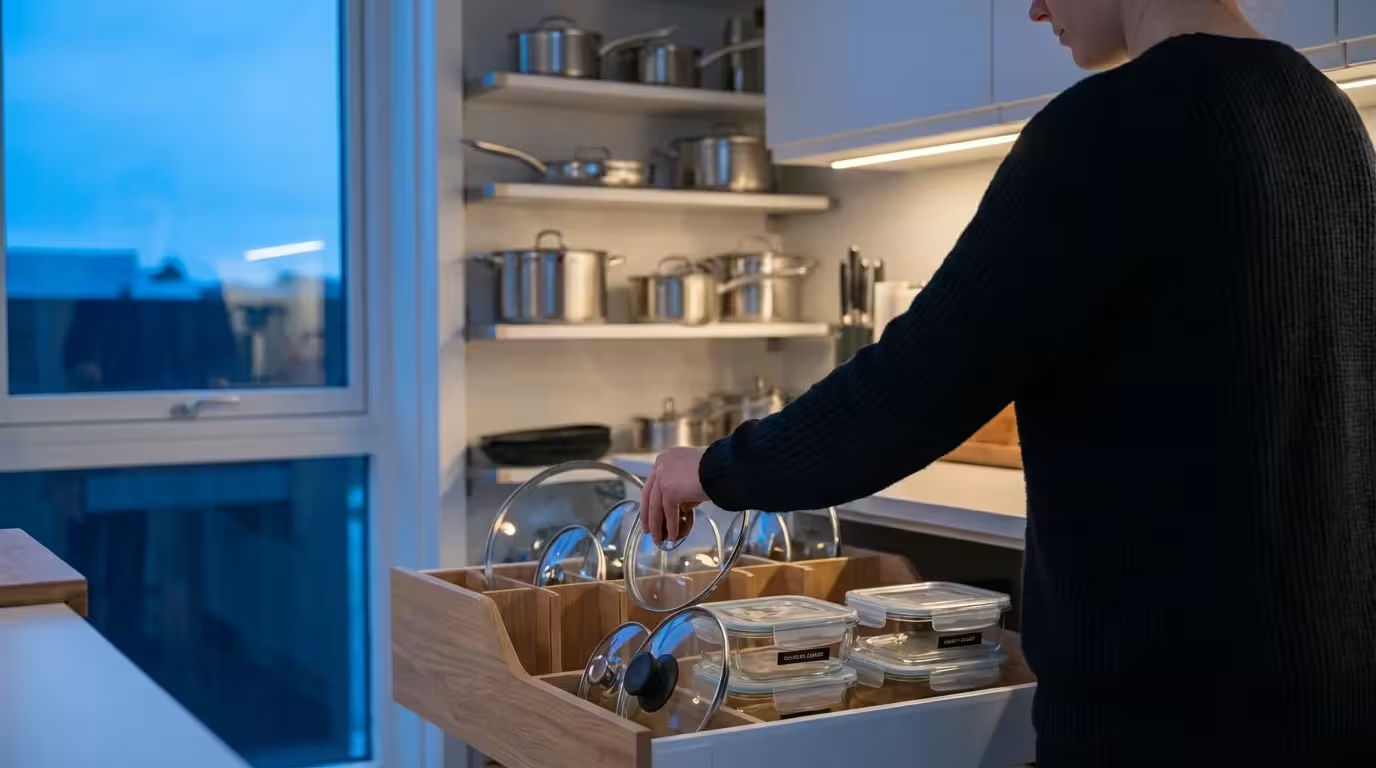
Clutter often plagues kitchens, and few culprits are as frustrating as runaway lids. You find the perfect pot, but its lid is nowhere in sight. Or perhaps your food storage containers are neatly stacked, yet their matching covers have formed an unruly mountain, threatening an avalanche every time you open the cabinet. This common kitchen chaos wastes time, creates stress, and limits the functionality of your cooking space. As an expert kitchen organization specialist, I understand your frustration. You deserve a kitchen that supports your cooking, not hinders it.
Fortunately, transforming your lid chaos into a harmonious system is achievable. You can create a functional kitchen without expensive renovations, using smart storage solutions tailored to your specific needs and available space. This guide provides practical, actionable insights to help you tame your pot lids and container covers, ensuring every piece has its place and remains easily accessible.
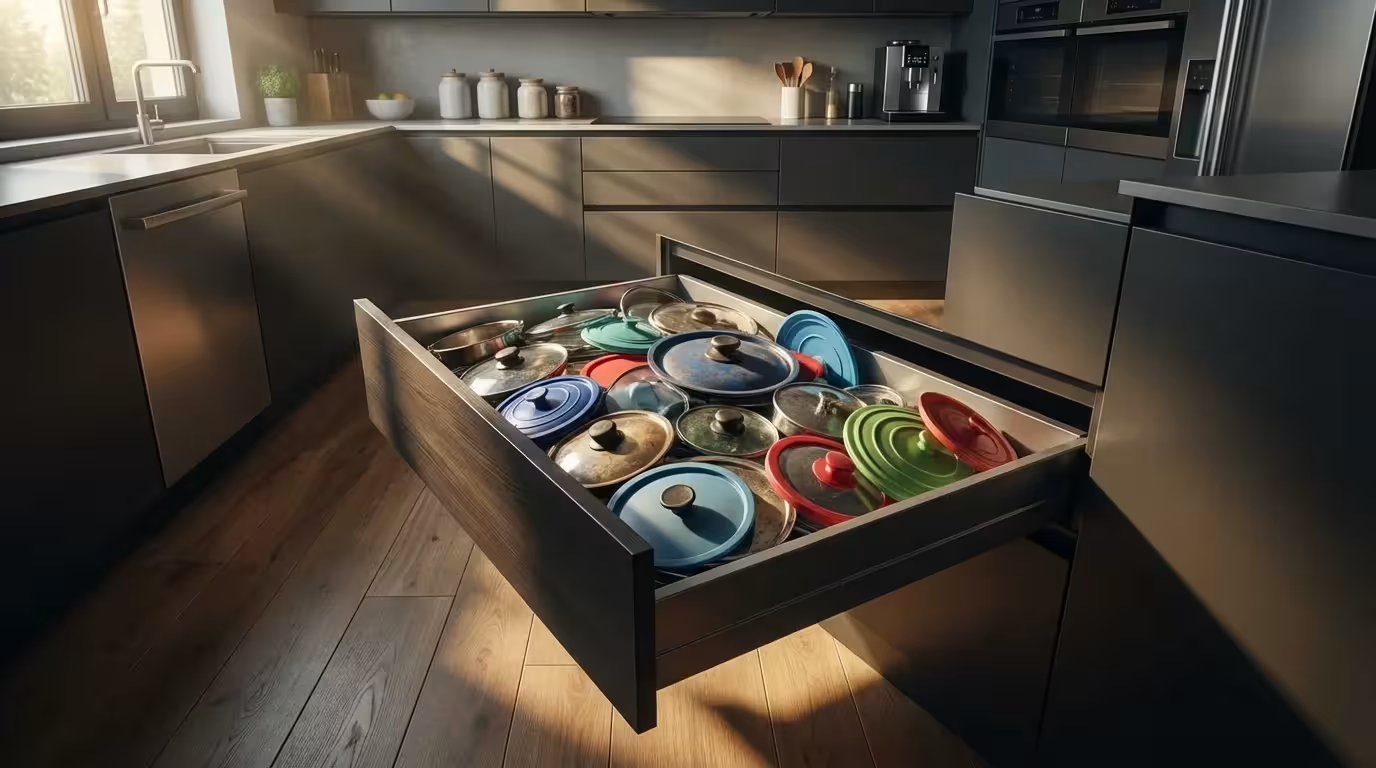
Understanding Lid Chaos: Why It Happens
Lids present unique storage challenges due to their varying sizes, shapes, and materials. Unlike pots and pans, which often stack, lids rarely nest perfectly. This leads to precarious piles, lost matches, and wasted cabinet space. When you struggle to find a matching lid, you lose valuable time and often resort to grabbing a random lid that almost fits, compromising your cooking or food storage.
This struggle is particularly acute in smaller kitchens or for home cooks with extensive cookware and food storage collections. Without a dedicated system, lids quickly become “dead space” fillers, preventing you from utilizing cabinet and drawer depths efficiently. You need solutions that specifically address these challenges, converting dead space into functional storage. According to Real Simple’s organization experts, effective kitchen organization begins with understanding the specific items causing clutter and then implementing tailored solutions.
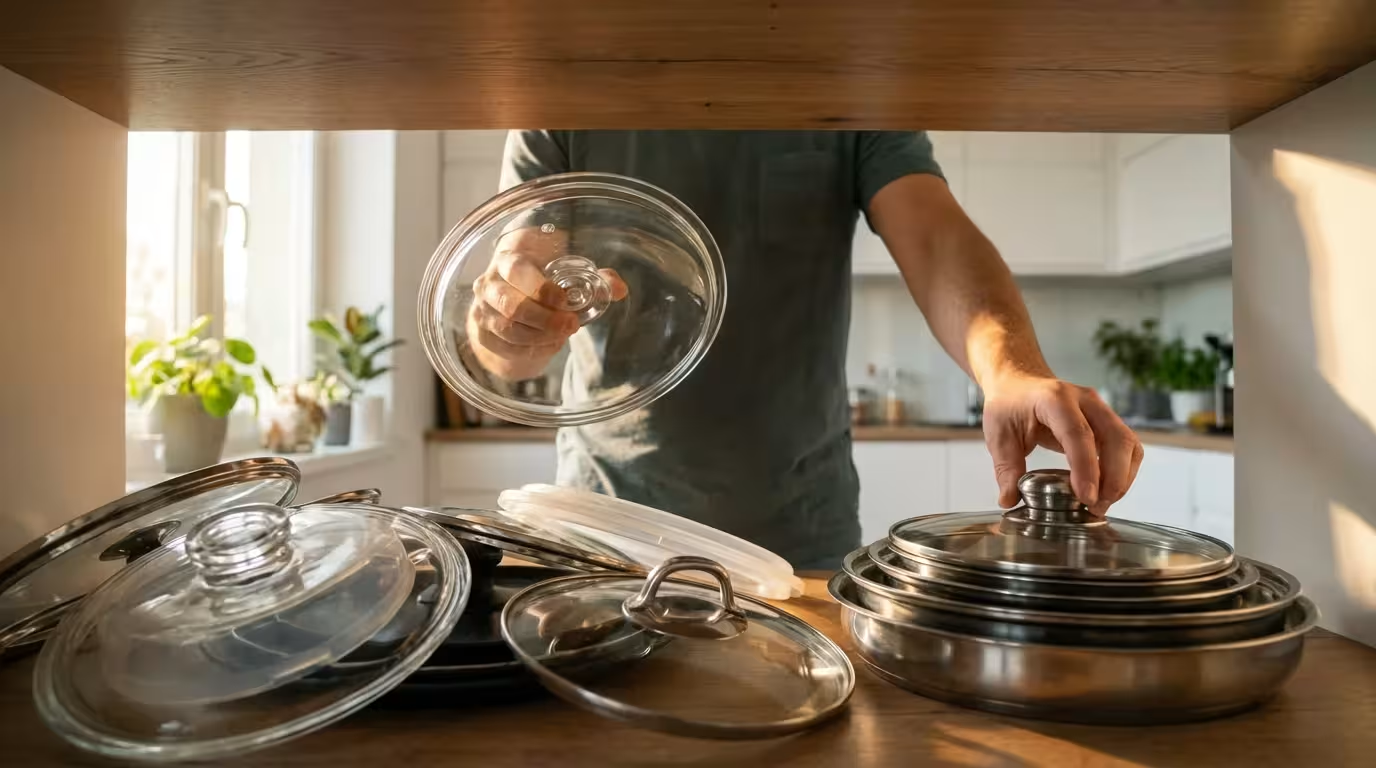
Assessing Your Lid Collection: Declutter First
Before buying any organizer, take a critical look at what you own. This vital first step prevents you from organizing clutter and ensures you invest in the right solutions for your actual needs. You should:
This process is similar to how you would approach bakeware organization, where vertical storage often wins over stacking.
- Empty Everything: Remove all pot lids and container covers from your cabinets, drawers, and countertops. Place them on a large surface like your dining table.
- Match & Pair: Match every lid to its corresponding pot, pan, or food container. Be ruthless. If a lid has no match, or its corresponding pot is chipped, broken, or never used, it goes.
- Evaluate Usage: Identify lids you rarely use. Do you have a specialty lid for a pot you only use once a year? Consider if it merits prime real estate.
- Address Duplicates: Do you own multiple lids for similar-sized pots? Keep the best ones.
- Inspect Condition: Discard any bent, broken, or severely damaged lids.
You will likely find yourself with a significantly smaller, more manageable collection. This decluttering process is crucial for creating a truly organized kitchen, as emphasized by Good Housekeeping’s home organization advice.
“The goal isn’t a Pinterest-perfect pantry. It’s being able to find what you need in 10 seconds or less.” — Professional Organizer
In-Cabinet Lid Organizers: Maximizing Enclosed Space
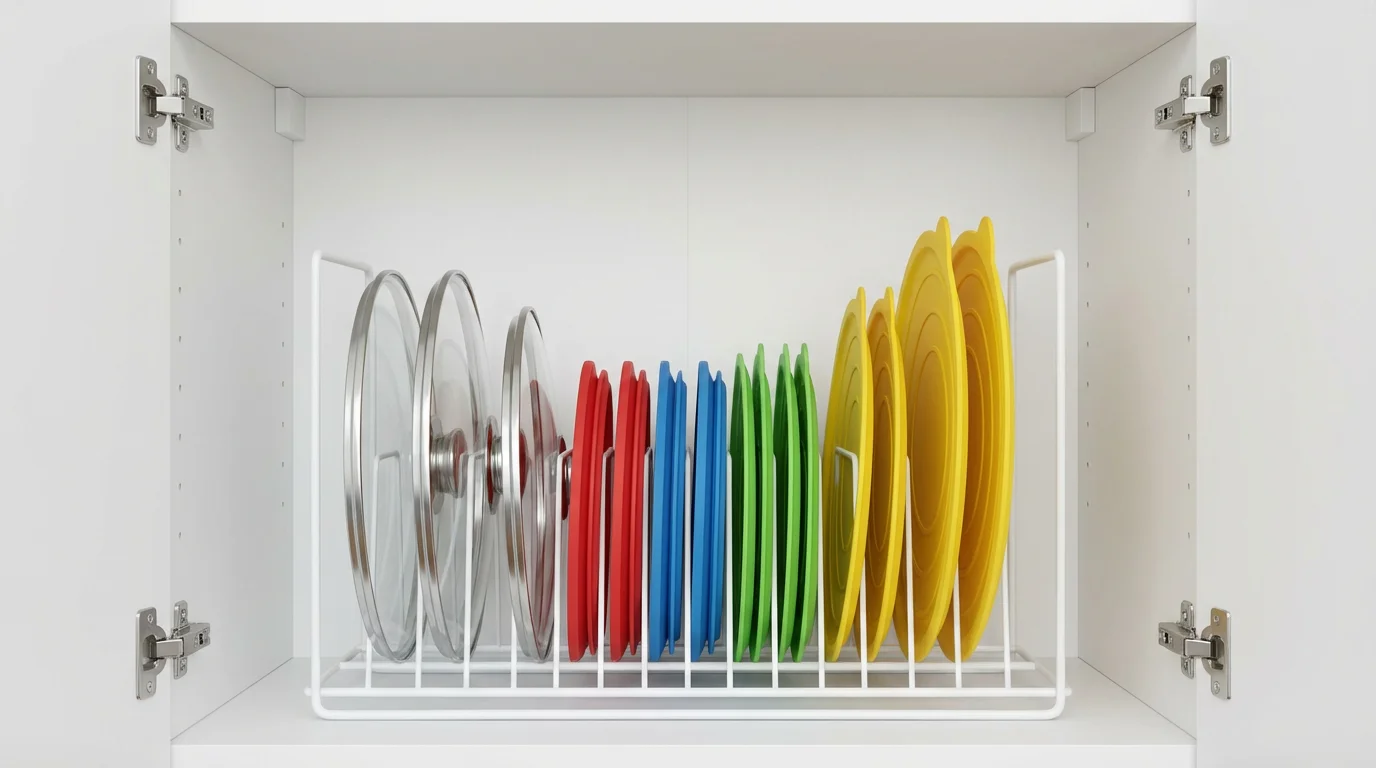
Your cabinets offer excellent potential for lid organization. Various in-cabinet organizers can transform chaotic stacks into neat, accessible rows.
Adjustable Lid Racks
These are often U-shaped or wire racks designed to stand inside a cabinet. They hold lids vertically, preventing them from falling over and allowing you to grab the one you need without disturbing others. Many models feature adjustable dividers, enabling you to customize the spacing for different lid sizes, from small saucepans to large stockpots.
- Typical Dimensions: Many adjustable racks expand from about 7 inches to 13 inches in length, 4-6 inches wide, and 3-5 inches tall. Ensure your cabinet shelf has enough depth and height for the organizer and the largest lid it will hold.
- Best For: Deep cabinets, lower cabinets, or pantry shelves.
- Considerations: Ensure the rack has non-slip feet to prevent it from sliding when you remove lids.
Pot and Pan Organizers with Lid Storage
Some vertical pot and pan organizers integrate lid slots. These are excellent solutions for keeping the lid right with its corresponding pot, minimizing search time. They often resemble a tiered rack where pots sit on shelves, and their lids slide into slots alongside them.
- Typical Dimensions: These vary widely based on pot capacity, but expect a footprint of 10-15 inches wide, 10-12 inches deep, and 8-15 inches tall.
- Best For: Base cabinets with ample space, corner cabinets (if designed for that shape).
- Considerations: Measure your cabinet height and depth meticulously to ensure both the organizer and your tallest pot fit comfortably.
Pull-Out Organizers
A pull-out organizer is a drawer or shelf that slides out for easy access. While more of an investment, these can be game-changers for deep or lower cabinets. You can install pull-out shelves with vertical dividers specifically for lids or choose general pull-out drawers where you then use smaller inserts.
- Typical Dimensions: Available for various cabinet widths (e.g., 12-inch, 15-inch, 18-inch standard base cabinets) and depths (usually 21-22 inches deep).
- Best For: Base cabinets, especially deep ones where items get lost at the back. Renters may find installation challenging or restrictive.
- Considerations: Requires installation, often involving screws. Measure your cabinet’s internal width, depth, and door opening clearance.
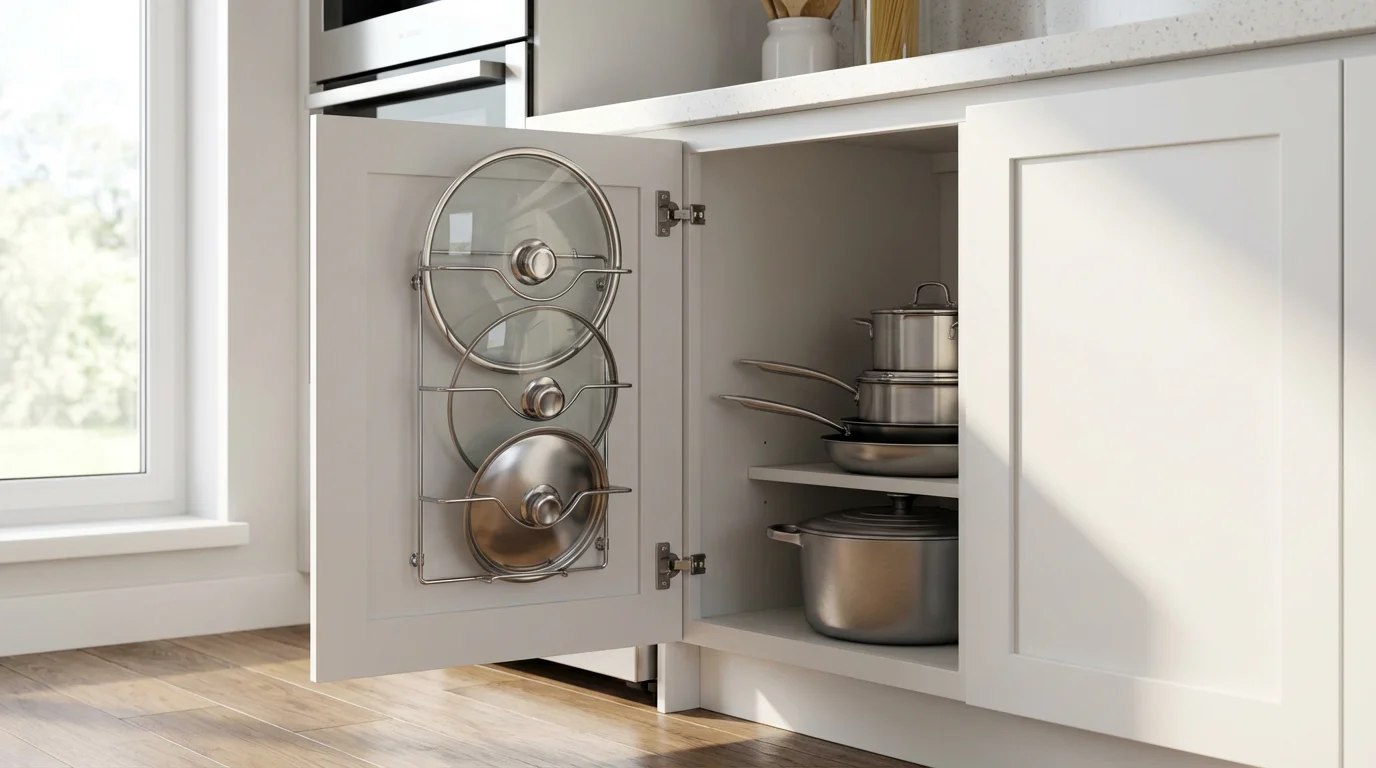
Door-Mounted Solutions: Utilizing Vertical Real Estate
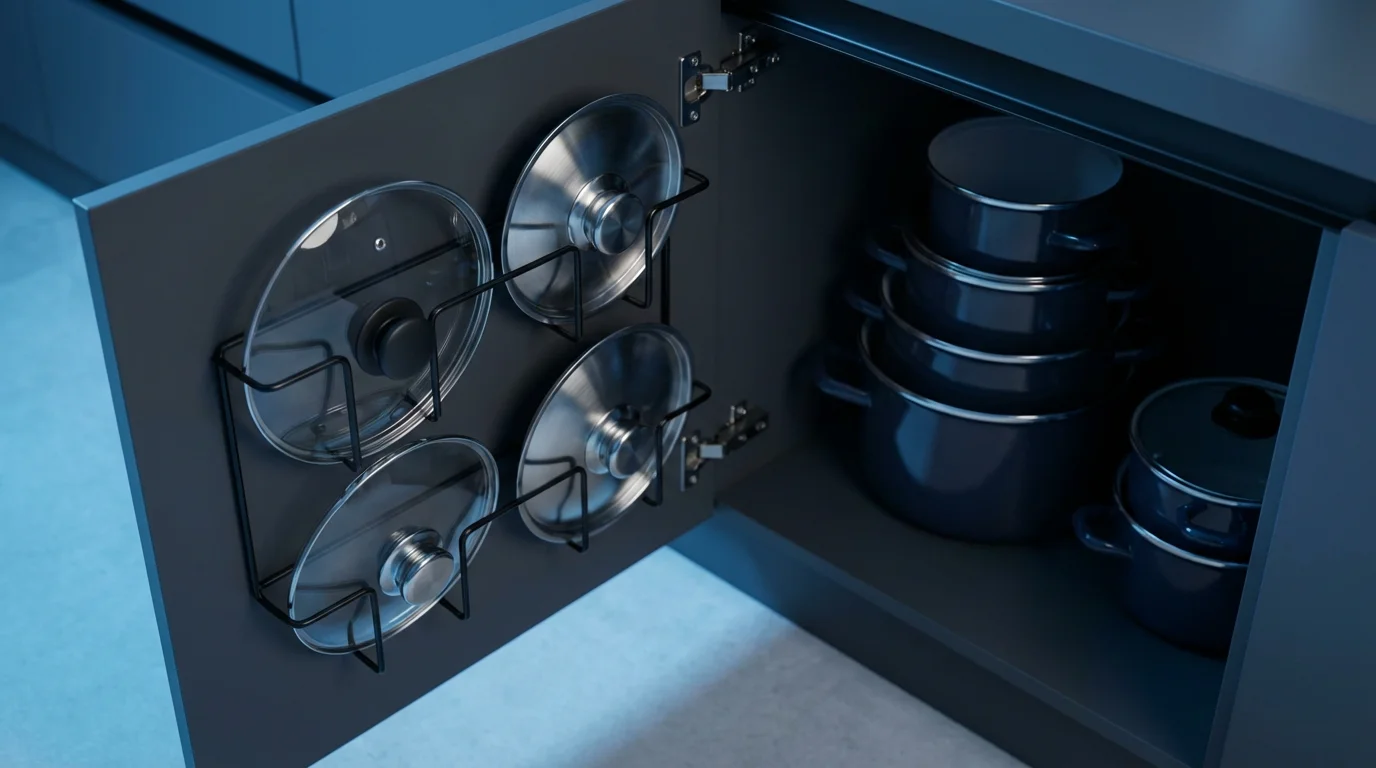
Your cabinet doors offer often-overlooked “dead space” perfect for lid storage. Door-mounted racks are storage solutions that hang on the inside of cabinet doors, keeping lids visible and easily accessible without consuming valuable shelf space.
Wire Lid Racks
These simple, effective racks screw directly onto the inside of cabinet doors. They typically feature multiple tiers or loops to hold lids vertically. They work well for both pot lids and some flatter container lids.
- Typical Dimensions: Common sizes range from 10-12 inches wide and 15-20 inches tall, with a depth of 3-4 inches to accommodate lid handles.
- Best For: Anyone with standard cabinet doors. Excellent for renters if using over-the-door hooks instead of screws, though screw-in offers more stability.
- Considerations: Ensure enough clearance inside the cabinet for the lids to fit when the door closes. Check for interference with internal shelves or items. Leave about 4-5 inches of clearance between the rack and any internal shelves.
Over-the-Door Hooks or Baskets
For a non-permanent solution, you can use over-the-door hooks to hang individual lids by their handles or small, shallow baskets that hang over the door for flatter lids. This is particularly useful for lighter lids or those you use most frequently.
- Typical Dimensions: Varies. Standard over-the-door hooks fit most cabinet door thicknesses (usually up to 0.75 inches).
- Best For: Renters or those who want minimal commitment.
- Considerations: May not be suitable for heavy cast iron lids. Can cause the door to not close flush if not properly sized.
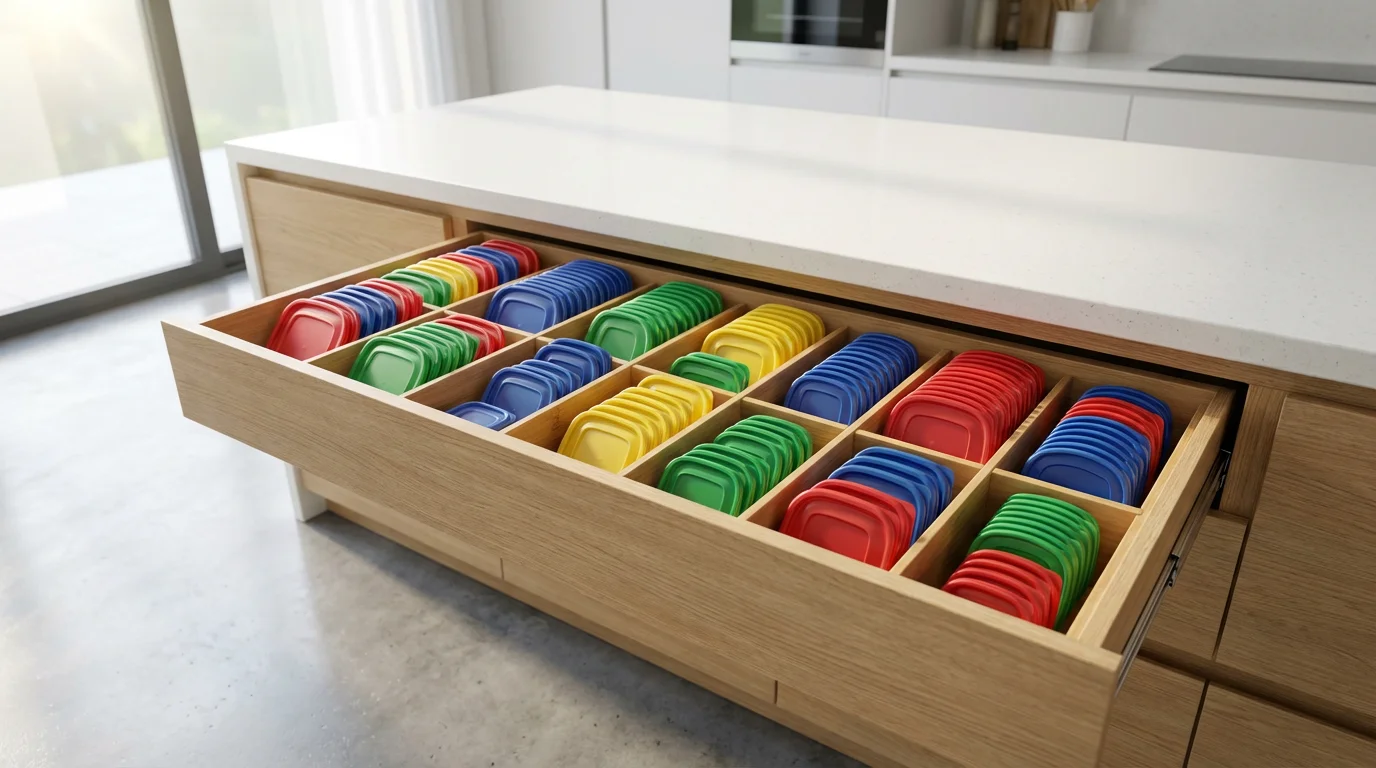
Drawer Organizers for Lids: Taming the Drawer
Drawers can become black holes for lids if left unchecked. Drawer organizers transform this potential mess into an orderly system.
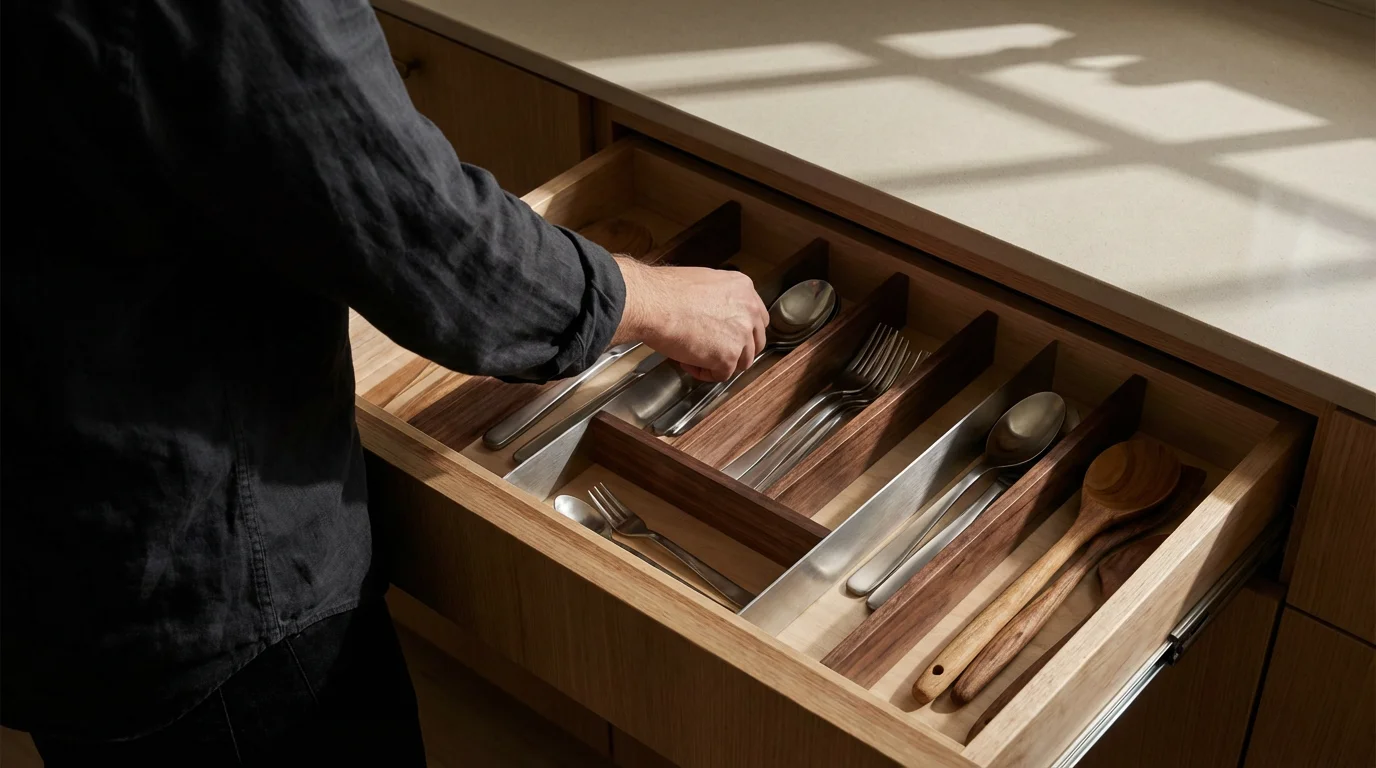
Adjustable Drawer Dividers
These dividers slide and lock into place, creating custom compartments within your drawer. You can arrange them to hold lids vertically or separate different types of lids. They are particularly effective for food container lids.
- Typical Dimensions: Expandable dividers fit drawer depths typically ranging from 12-24 inches and come in heights of 2-6 inches.
- Best For: Wide, deep drawers.
- Considerations: Ensure the dividers fit snugly and do not shift. Measure your drawer’s internal dimensions accurately.
Expandable Utensil Trays with Lid Slots
While often marketed for utensils, some expandable trays feature deeper compartments or specialized slots that can hold smaller pot lids or frequently used container lids.
- Typical Dimensions: Expandable from 10-18 inches wide, 14-18 inches deep, and 2-3 inches tall.
- Best For: Shallow or medium-depth drawers.
- Considerations: Check compartment sizes to ensure they accommodate your specific lids.
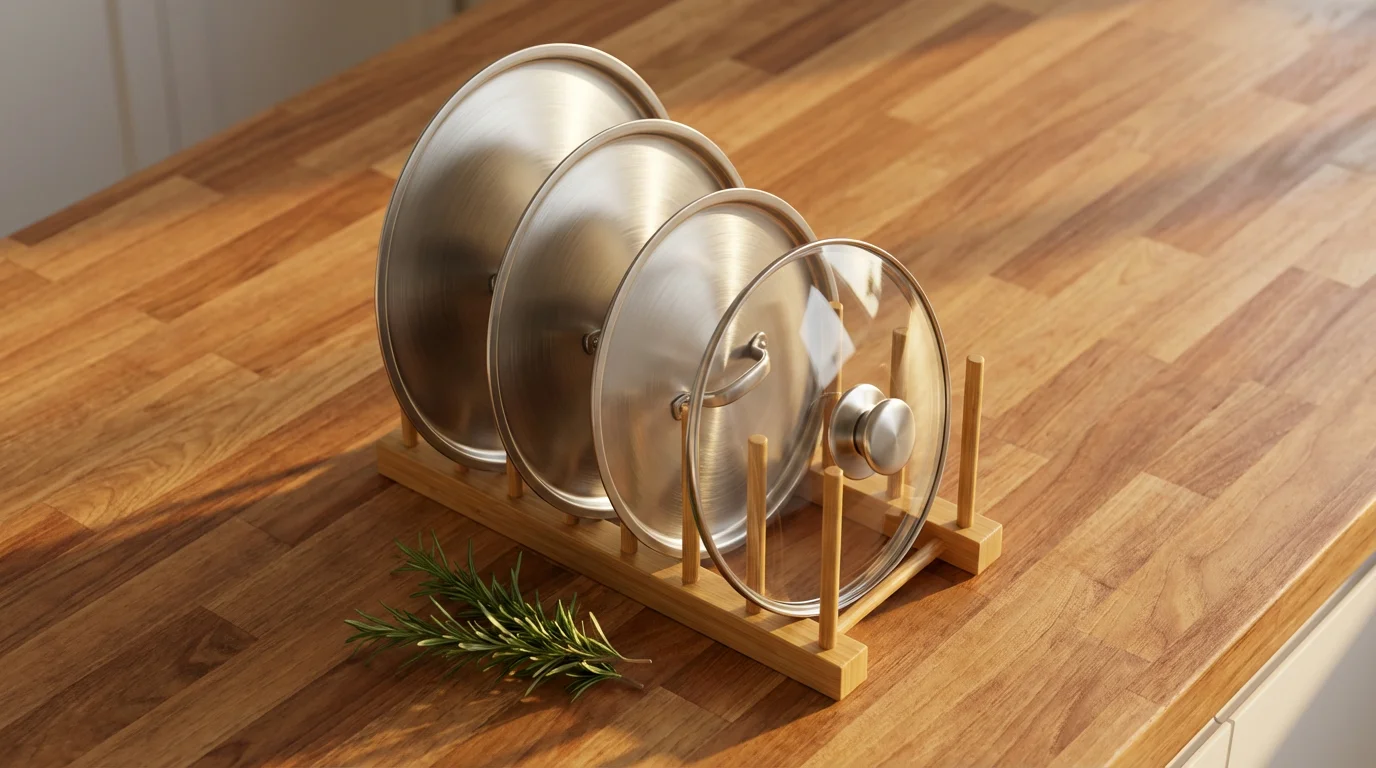
Countertop Lid Storage: When Accessibility is Key
While aiming for clear countertops, some items benefit from immediate access. For your most frequently used pot lids, a countertop solution might be ideal.
Countertop Lid Racks
These are usually compact wire or bamboo racks designed to sit on your counter. They hold a few essential lids vertically, keeping them within arm’s reach while cooking.
- Typical Dimensions: Often 8-12 inches long, 4-6 inches wide, and 5-8 inches tall.
- Best For: Busy cooks who use the same few pots daily.
- Considerations: Only use for a small number of lids to avoid countertop clutter. Ensure it complements your kitchen aesthetic.
Appliance Garages (for larger lids)
An appliance garage is an enclosed cabinet on the countertop, typically used for small appliances. However, if you have one, you can use its internal space with a small lid rack for larger, less frequently used lids, keeping them out of sight but still accessible.
- Typical Dimensions: Built-in appliance garages vary but often have internal dimensions around 15-20 inches wide, 12-15 inches deep, and 15-20 inches high.
- Best For: Kitchens with existing appliance garages or dedicated pantry areas.
- Considerations: This is a premium solution, often part of custom cabinetry.
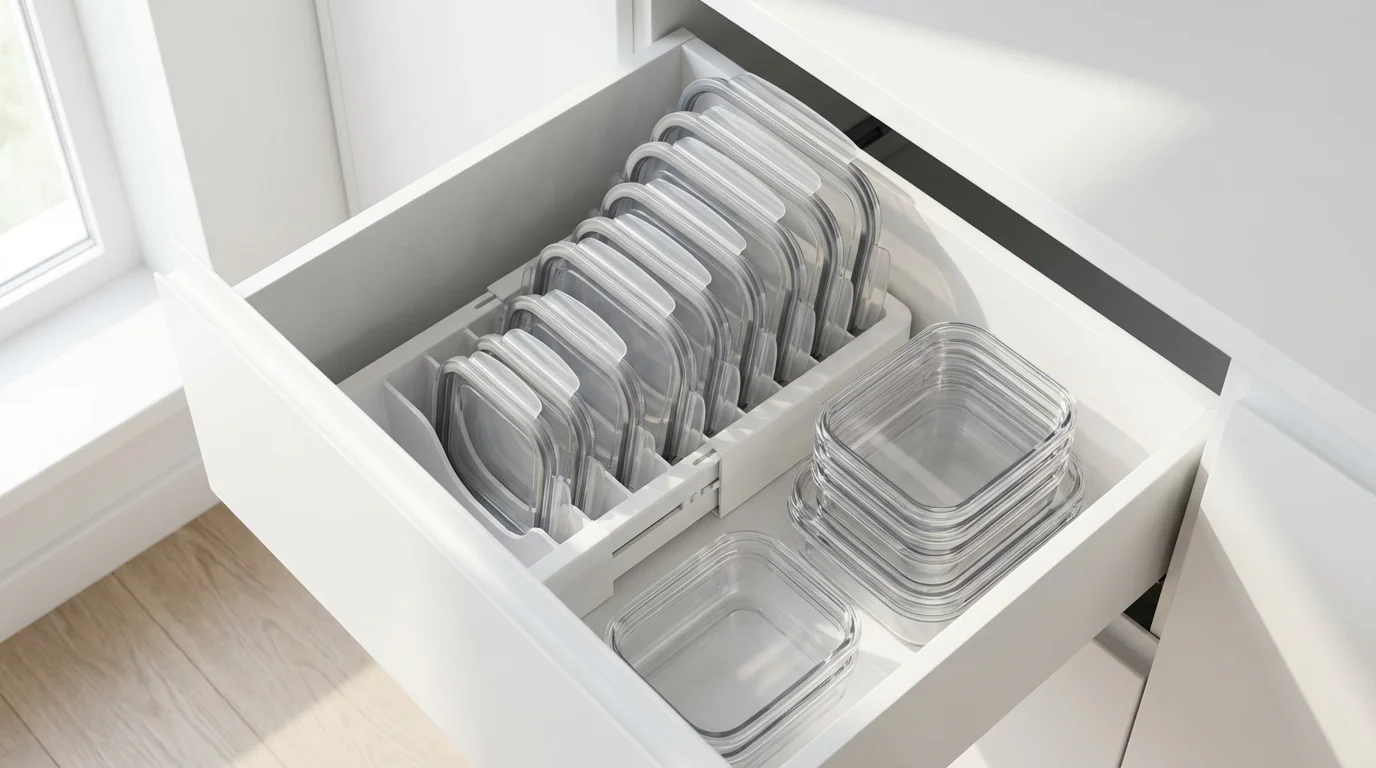
Food Container Lid Strategy: Keeping Sets Together
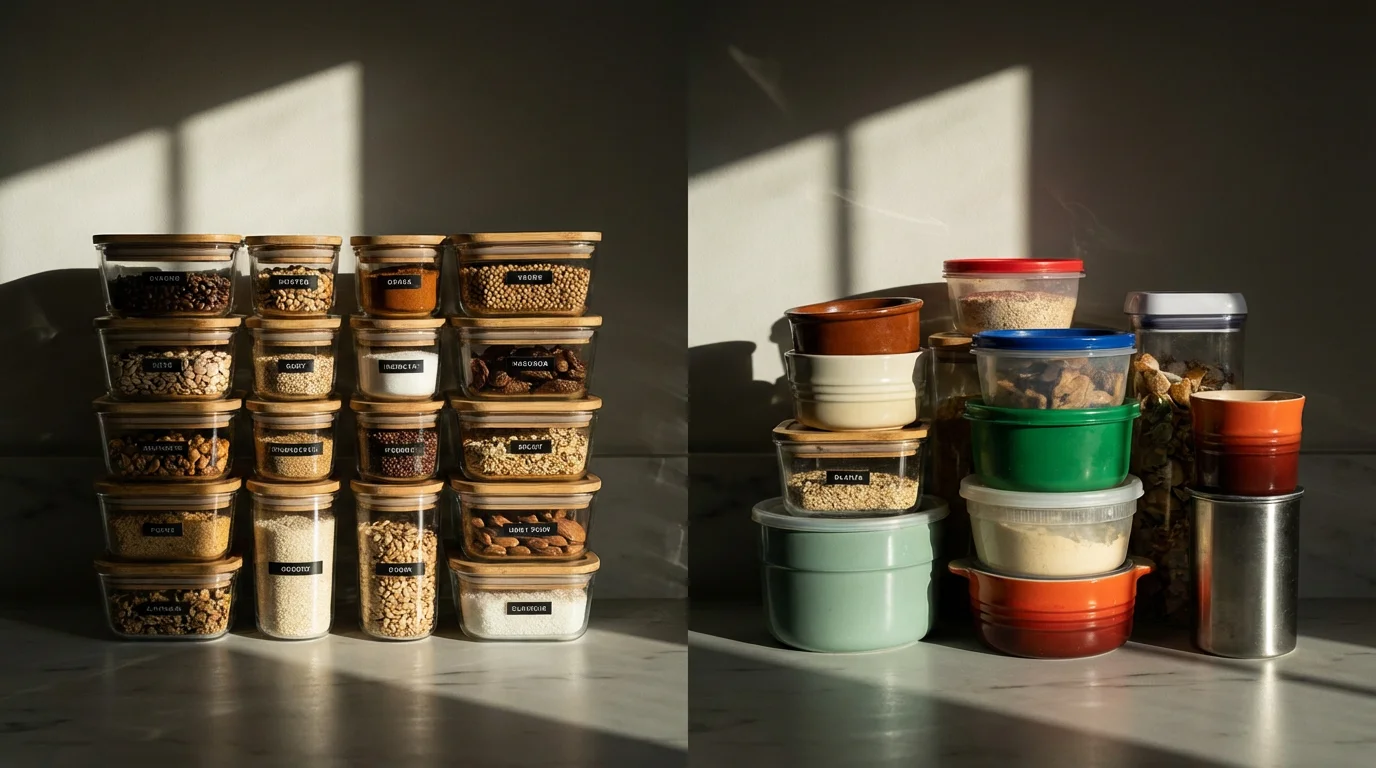
Organizing food container lids often feels like a separate battle from pot lids, but the principles remain the same: declutter, categorize, and contain. The goal is to always find the right lid for the right container.
Dedicated Lid Organizers for Containers
Many brands offer specific organizers for their food container lids. These often feature vertical slots that keep lids upright and separated by size. Some are expandable or modular, allowing you to configure them to your specific collection.
- Typical Dimensions: From 10 inches to 20 inches in length, 4-8 inches wide, and 3-5 inches tall.
- Best For: Keeping diverse container lid shapes and sizes neatly categorized.
- Considerations: Choose an organizer that fits the range of lid sizes you own. Some designs work better for square/rectangular lids than round ones.
Plastic Bins or Baskets
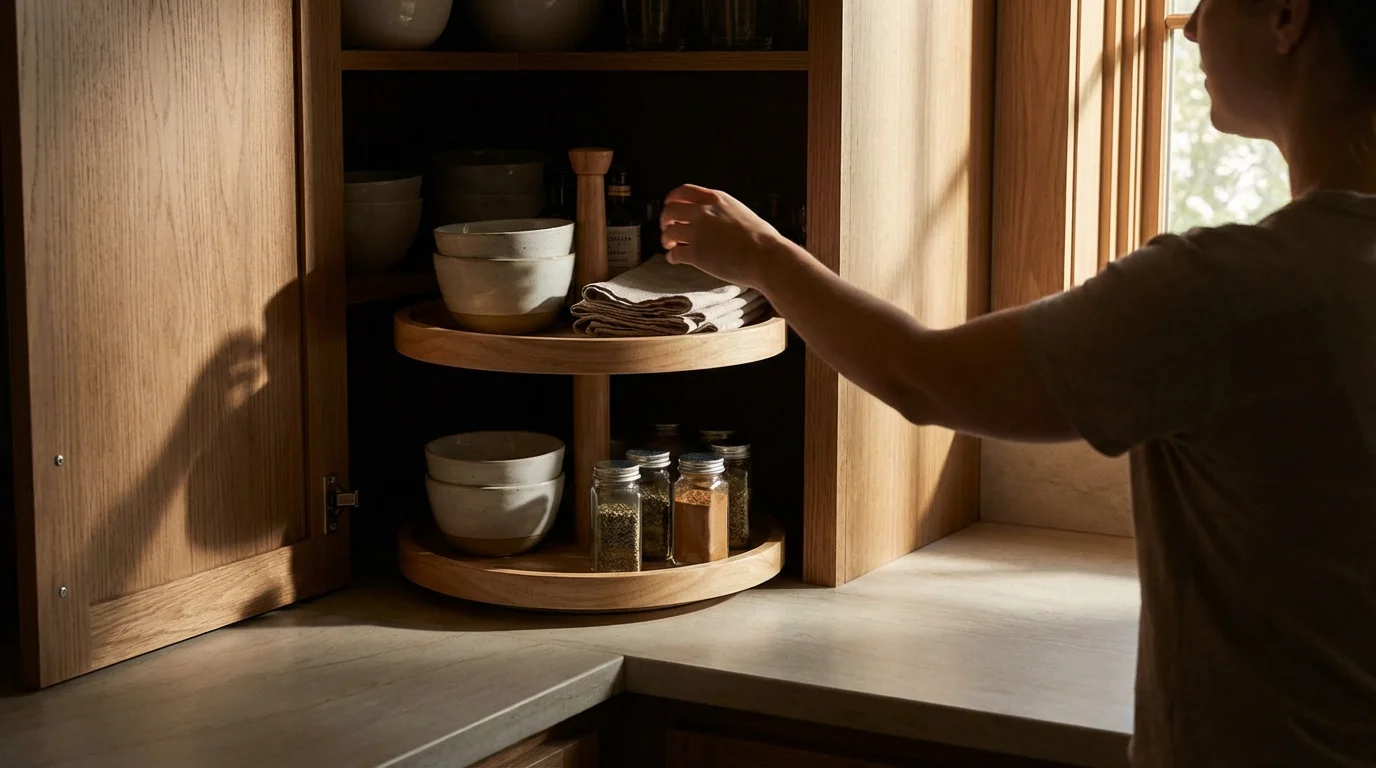
Simple bins or baskets can effectively contain container lids. You can sort lids by shape (round, square) or size, then place them vertically within the bin. Use a lazy susan, a rotating tray that makes corner cabinet items accessible, within a larger cabinet to hold multiple bins of lids for easy rotation and access.
- Typical Dimensions: Bins range widely. Consider a bin around 10x6x4 inches for smaller lids or 12x8x6 inches for larger ones.
- Best For: Versatility, budget-friendliness, and quick implementation. Works well in pantries or deep cabinets.
- Considerations: Choose bins with flat sides to maximize space.
Drawer Dividers (Revisited)
For drawers dedicated to food containers, adjustable drawer dividers work exceptionally well. Create distinct zones for each lid size or shape, making retrieval effortless. As Wirecutter’s kitchen organization reviews often highlight, smart drawer organization significantly improves kitchen efficiency.
DIY and Budget-Friendly Hacks
You do not need expensive solutions to achieve an organized kitchen. Many effective lid organization strategies cost very little or utilize items you already have.
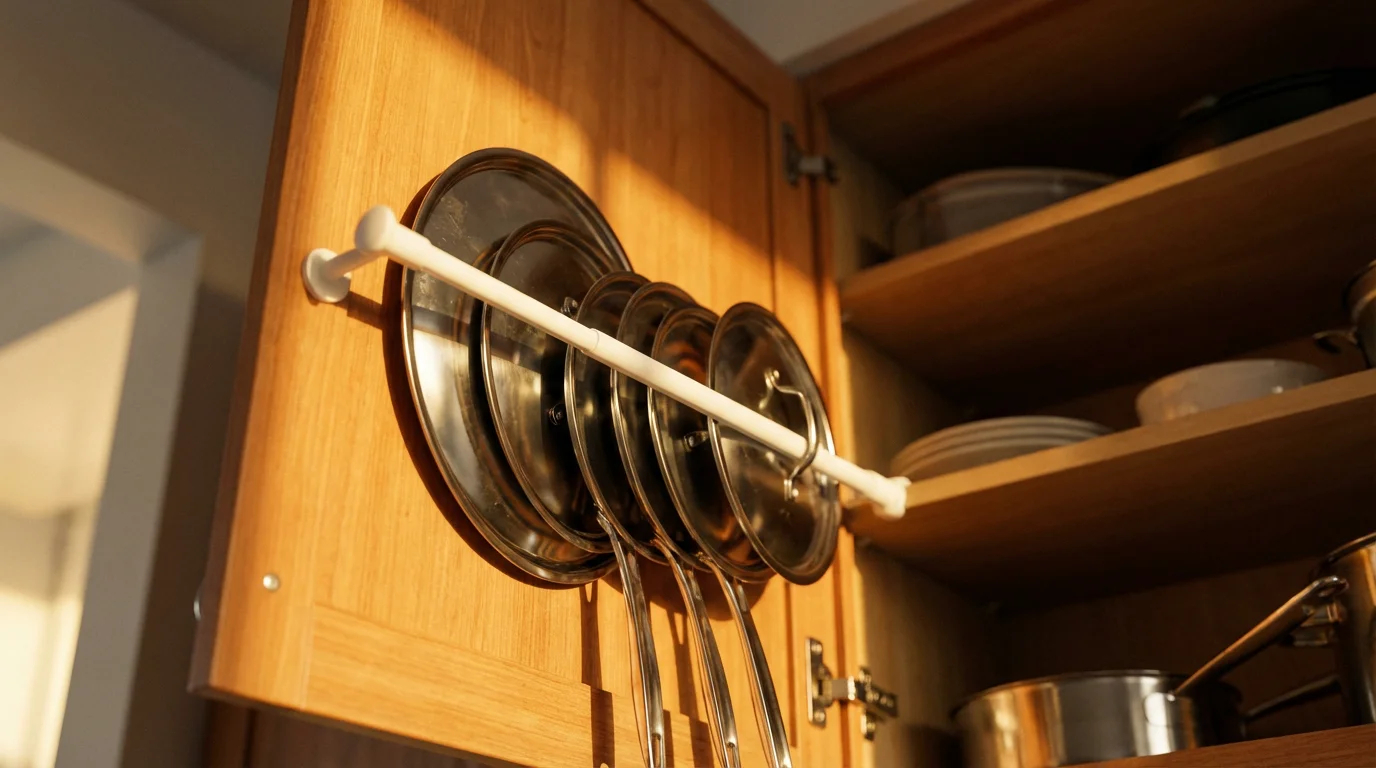
- Tension Rods: Place one or two tension rods horizontally inside a cabinet or drawer. They act as vertical dividers, holding lids upright. This works especially well for drawers or shallow cabinets.
- Magazine Files: Inexpensive plastic or metal magazine files, placed on their sides, make excellent vertical lid holders in cabinets or pantries. They are perfect for flatter container lids.
- Command Hooks: For very lightweight lids or those with specific handles, Command hooks on the inside of a cabinet door can provide individual hanging spots.
- Small Dish Drying Racks: A compact dish drying rack with vertical slots can be repurposed as a lid organizer inside a cabinet or on a shelf.
- Shoe Box Lids: Cut down shoe box lids to create custom dividers in drawers. This is a temporary but effective solution.
These methods are particularly useful for renters, as they are non-permanent and often require no tools for installation.
Maintaining Your Organized Kitchen
Organization is not a one-time event; it is an ongoing practice. To keep your lid system functional long-term, incorporate these habits:
- One-In, One-Out Rule: When you buy a new pot or container set, evaluate if you need to discard an old one. This prevents clutter from accumulating again.
- Immediate Put-Away: As soon as a lid is clean, return it to its designated spot. Do not leave it to pile up on the counter or in the sink.
- Regular Reviews: Every few months, quickly check your lid organization. Does it still work for you? Have your cooking habits changed? Adjust as needed.
- Zone-Based Organization: Store lids near their corresponding pots and pans. If you have a baking zone, keep baking-related lids there. This aligns with a zone-based organization strategy by cooking workflow, making items intuitive to find.
- Use It or Lose It: If you consistently find yourself ignoring a particular lid or container, it is time to re-evaluate its necessity.
Frequently Asked Questions
What is the best way to organize pot lids in a small kitchen?
For a small kitchen, vertical storage is your best friend. Door-mounted wire racks (typically 10-12 inches wide, 15-20 inches tall, and 3-4 inches deep) are excellent as they utilize cabinet door “dead space.” Adjustable in-cabinet lid racks (often expanding 7-13 inches long) or even tension rods can also maximize vertical space on shelves without taking up much horizontal room. Focus on solutions that stack or stand lids upright.
How do I organize container lids so they don’t fall over?
The most effective method for container lids involves vertical storage within a contained space. Use dedicated container lid organizers with slots, plastic bins (sized to your cabinet or drawer, e.g., 10x6x4 inches), or adjustable drawer dividers (fitting drawer depths 12-24 inches) to create upright compartments. Sort lids by size or shape within these organizers to prevent them from toppling and to make matching easier.
Can I use the same organizer for pot lids and food container lids?
Generally, you should use different organizers. Pot lids are often heavier, round, and have distinct handles, requiring sturdier, wider-slotted racks. Food container lids are typically flatter, lighter, and come in more varied shapes, benefiting from narrower, more numerous slots or simple bin containment. While some generic drawer dividers might work for both, specialized organizers offer better functionality for each type.
Are pull-out lid organizers worth the investment?
Pull-out lid organizers, which are shelves or drawers that slide out for easy access, are a significant investment but often worth it for deep base cabinets or individuals with mobility challenges. They prevent items from getting lost at the back of cabinets, offering full visibility and easy access. Ensure you measure your cabinet’s internal dimensions (width, depth, height) precisely, as they require permanent installation.
How often should I declutter my lids?
Aim for a quick lid declutter and organization review at least once every six months, or whenever you acquire new cookware or food storage. This helps you identify orphaned lids, remove unused items, and ensure your system still meets your needs. Consistent maintenance prevents clutter from returning and keeps your kitchen functional.
Disclaimer: Product prices and availability change frequently. Prices shown were accurate at time of writing but may have changed. We may earn a small commission from purchases made through links on this site, at no extra cost to you. Always measure your space before purchasing organizers to ensure proper fit.
Leave a Reply