

Achieving culinary perfection often hinges on one critical element: timing. Whether you are baking a delicate soufflé, roasting a juicy chicken, or simply boiling eggs, a reliable kitchen timer keeps your cooking on track. Many home cooks rely on phone timers, but a dedicated kitchen timer offers advantages like tactile buttons, portability, and robust alarms, freeing your phone for other tasks.
As expert kitchen product reviewers, we understand the frustration of gadgets that promise much and deliver little. We scrutinize the market for kitchen timers that truly enhance your cooking process, providing precision and convenience without unnecessary complexity. Forget the flimsy models that vanish into junk drawers, we focus on durability, ease of use, and dependable performance.
Understanding Your Kitchen Timer Needs: Mechanical, Digital, or Smart?
Selecting the right kitchen timer starts with understanding your cooking habits and kitchen environment. Are you a minimalist who appreciates a simple twist-and-go solution, or do you juggle multiple dishes, requiring individual countdowns? Your ideal timer provides functionality aligned with your specific demands.
Just as you evaluate your need for timing precision, consider whether other bulky items like salad spinners are necessary for your specific kitchen setup.
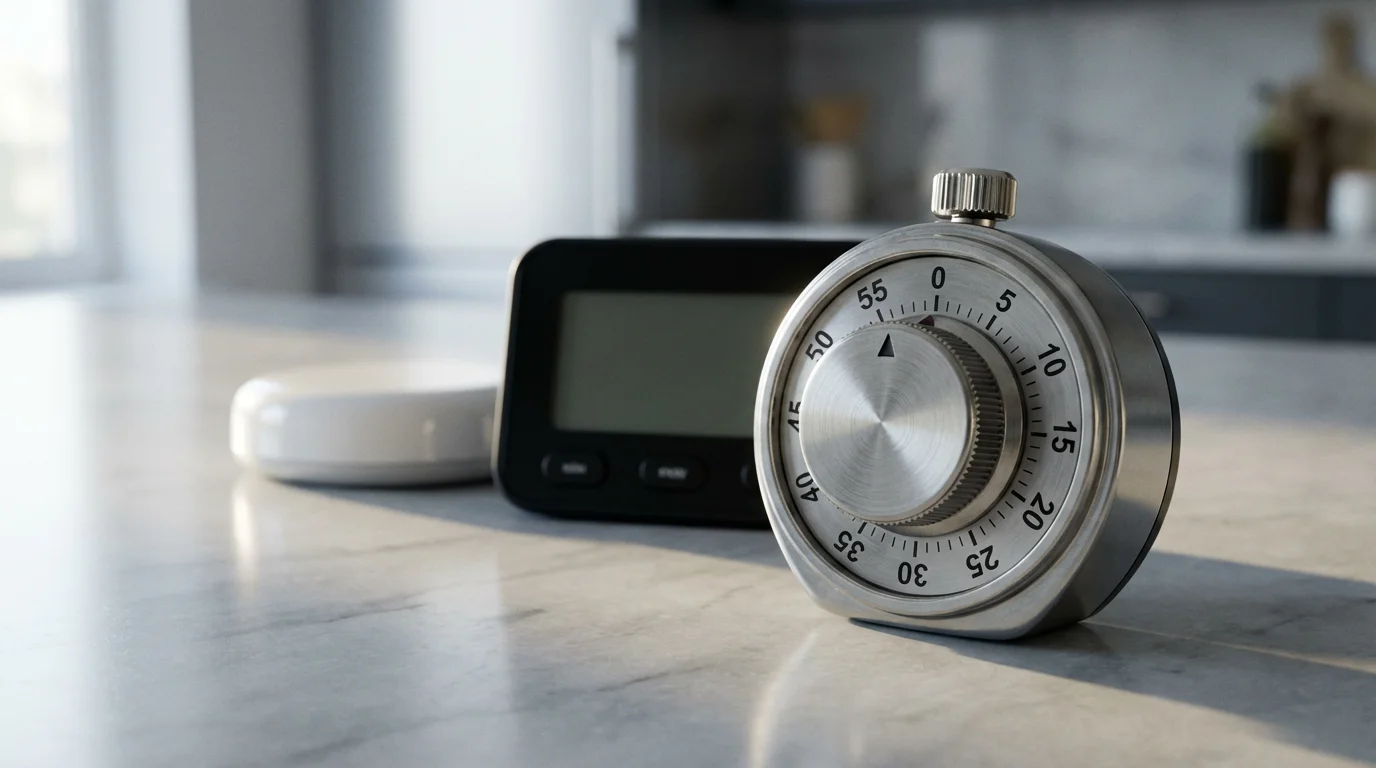
The market offers three primary categories: mechanical, digital, and smart timers. Each type caters to different preferences and offers distinct advantages. A mechanical timer, for example, offers straightforward operation without batteries. Digital timers bring greater precision and often include additional features. Smart timers integrate with your existing smart home setup, offering remote control and notifications.
Consider the noise level in your kitchen. A loud kitchen timer for hard of hearing cooks becomes essential if you often miss subtle beeps amidst sizzling pans or bustling family activity. Conversely, a quiet timer suits kitchens where you prefer minimal auditory disruption. We explore these options to help you pinpoint the best kitchen timer for your cooking style.
The Core Features That Define a Great Kitchen Timer
Beyond the basic countdown, several features elevate a good kitchen timer to a great one. We evaluate these elements in our hands-on testing, ensuring our recommendations meet high standards for usability and performance.
- Alarm Loudness and Tone: A timer fails if you cannot hear it. We test alarm decibel levels and the clarity of the tone. Some timers offer adjustable volume or different alarm sounds, which prove invaluable in varying kitchen environments. A loud kitchen timer for hard of hearing users is a specific consideration, often requiring alarms exceeding 80 dB.
- Display Clarity: Can you read the time from across the kitchen? Large, backlit displays are crucial, especially in dim lighting or for cooks with vision impairments. Contrast and font size directly impact usability.
- Ease of Programming: Intuitive buttons and straightforward programming prevent frustration. You want to set a timer quickly, not consult a manual every time. We look for clear labeling and responsive buttons.
- Power Source: Most digital timers use AAA or AA batteries. We assess battery life and whether models include an auto-off feature to conserve power. Mechanical timers, of course, require no batteries.
- Mounting Options: Many timers feature magnets for refrigerator attachment. We test magnet strength, ensuring the timer stays firmly in place. Some timers include kickstands for countertop use or clips for aprons.
- Durability and Materials: The best cooking timer withstands the rigors of a busy kitchen. We prefer models with sturdy plastic casings, stainless steel accents, or silicone protection that resist drops and spills.
Mechanical Kitchen Timers: Simple Reliability
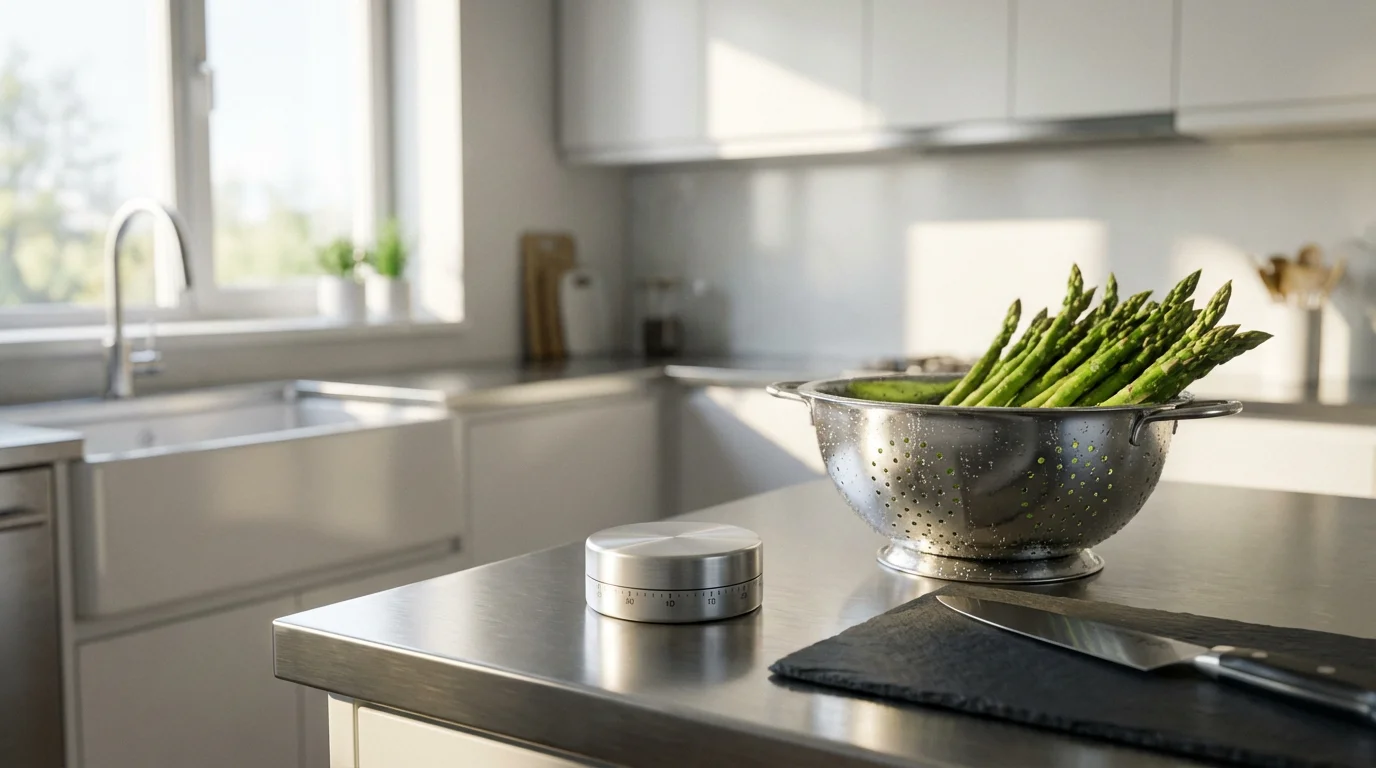
Mechanical kitchen timers represent the simplest form of timekeeping, operating without batteries or complex electronics. You typically wind them to a desired time, and a spring mechanism slowly unwinds, triggering a bell alarm when it reaches zero. This unitasker gadget excels in straightforward, single-task timing.
These simple mechanical tools are perfect for timing short tasks, like extracting fresh juice with manual or electric citrus juicers for a quick vinaigrette.
Pros:
- No batteries required, ever.
- Extremely easy to operate; twist to set.
- Often very durable, with minimal electronic components to fail.
- Affordable.
Cons:
- Less precise than digital timers, often with increments of one minute at best.
- The ticking sound can be distracting for some users.
- Alarm volume often fixed and can be quiet in a noisy kitchen.
- Limited functionality, typically only a countdown.
Our Observations:
Many mechanical timers provide a charming, retro aesthetic, but their practical utility depends on your need for precision. We tested several popular models. The Wirecutter also often reviews various kitchen gadgets, noting that while mechanical timers are nostalgic, their accuracy can vary significantly from unit to unit. Some models showed a deviation of up to 30 seconds over a 60-minute countdown, which proves problematic for precise baking.
Consider a heavy-duty stainless steel mechanical timer for its robust build, offering a satisfying feel and a louder, clearer bell than cheaper plastic alternatives. While simple, these timers fulfill basic needs for boiling pasta or steeping tea, where absolute accuracy within a few seconds is not paramount.
Digital Kitchen Timers: Precision at Your Fingertips
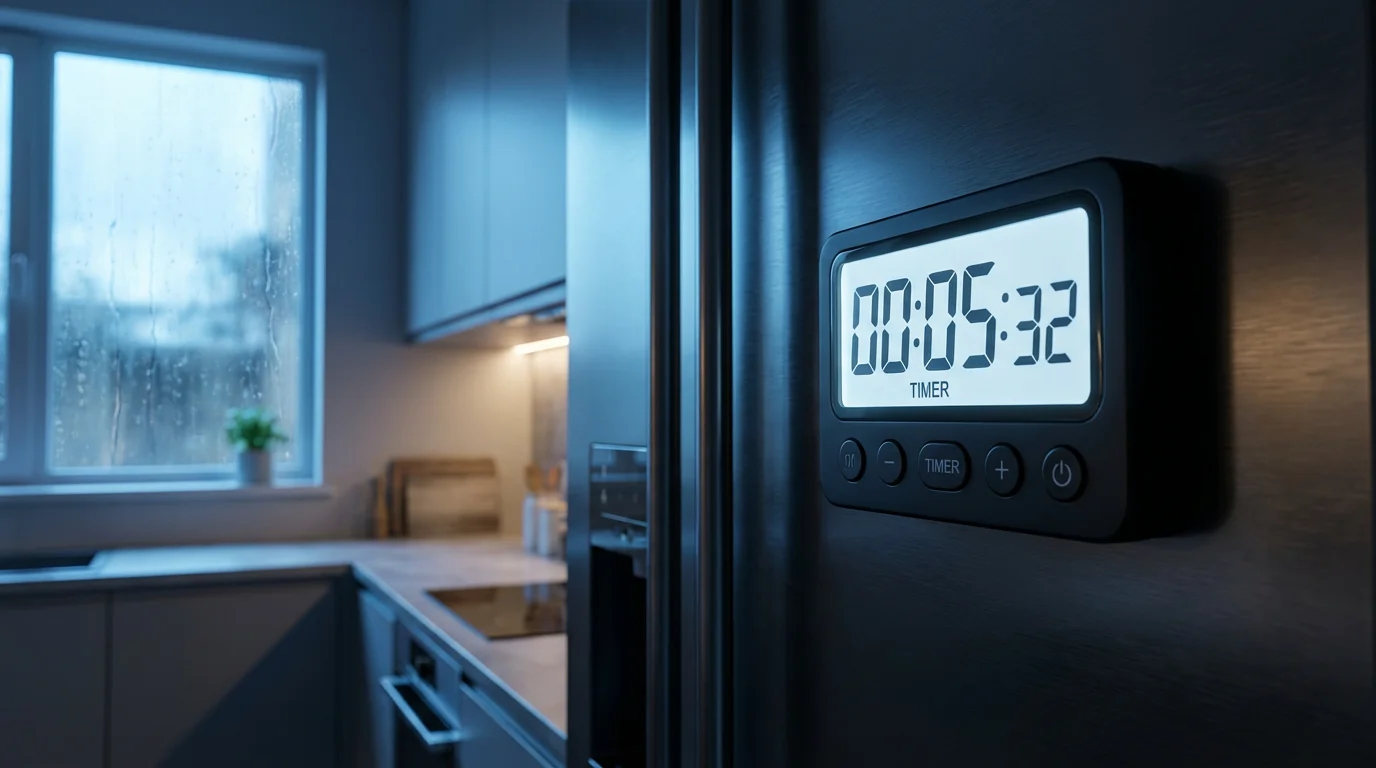
Digital kitchen timers offer superior accuracy, often allowing you to set times down to the second. They typically feature an LCD screen, intuitive buttons for setting hours, minutes, and seconds, and a clear alarm. This category constitutes the most common type of cooking timer, balancing functionality and affordability.
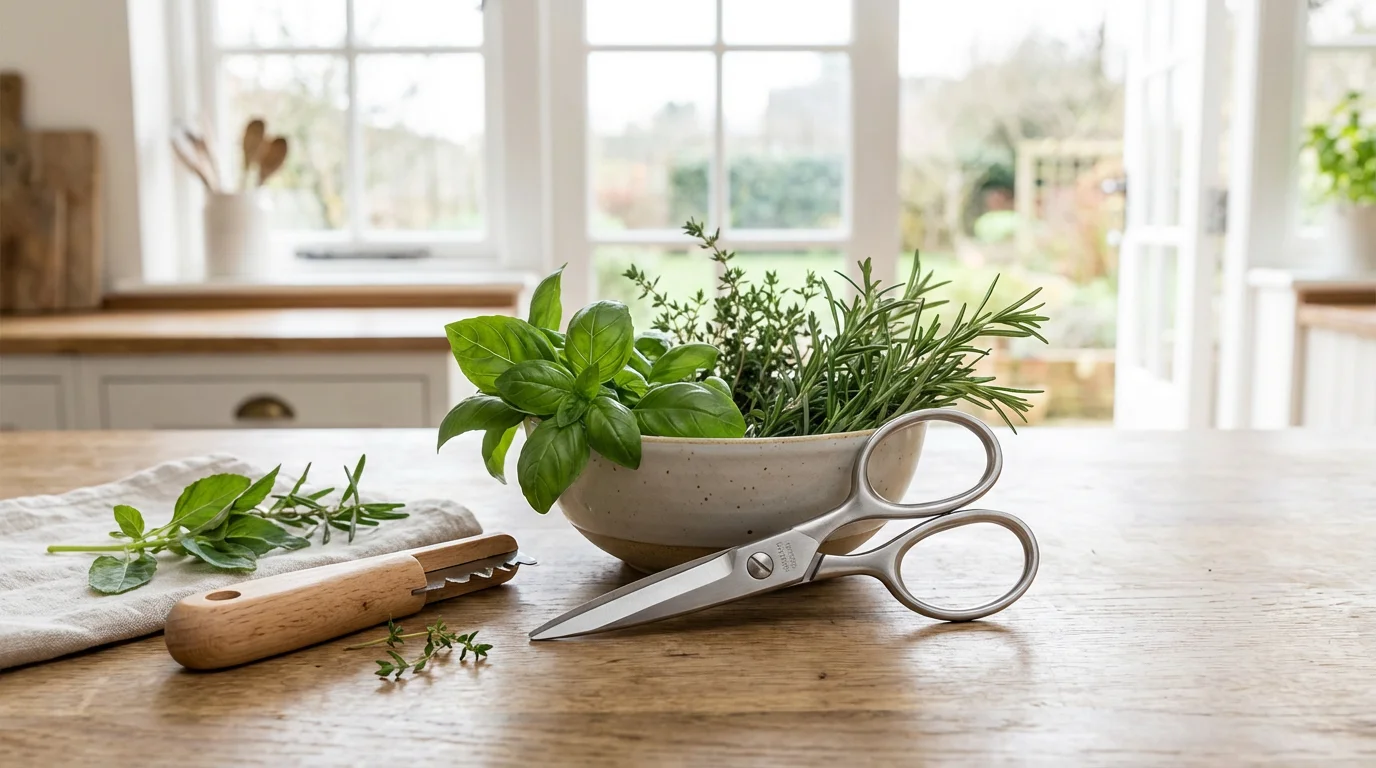
While your digital timer counts down the seconds, you can efficiently prep fresh garnishes using herb strippers and scissors to save even more time.
Pros:
- High precision, down to seconds.
- Clear digital display, often with large numbers.
- Often includes both countdown and count-up (stopwatch) functions.
- Variety of alarm volumes and tones available.
- Usually compact and lightweight.
Cons:
- Requires batteries (usually AAA or AA).
- Can be less robust than mechanical timers if made with flimsy plastic.
- Button feedback can vary, with some feeling mushy or unresponsive.
Our Observations:
We tested numerous digital timers, observing significant differences in build quality and user interface. Models with large, distinct buttons and a clear “start/stop” function consistently performed better in usability tests. The ThermoPro TM01, for instance, offers a bright backlight and intuitive controls, making it a reliable choice for daily cooking. Its magnet holds firmly to refrigerator doors, and its loud beep penetrates a moderately noisy kitchen.
For those needing a loud kitchen timer for hard of hearing individuals, look for models explicitly stating high decibel alarms, often around 85 dB. Some advanced digital timers also include a vibration mode or flashing lights, adding visual cues to the auditory alarm.
Advanced Digital Timers: Mastering Multiple Tasks
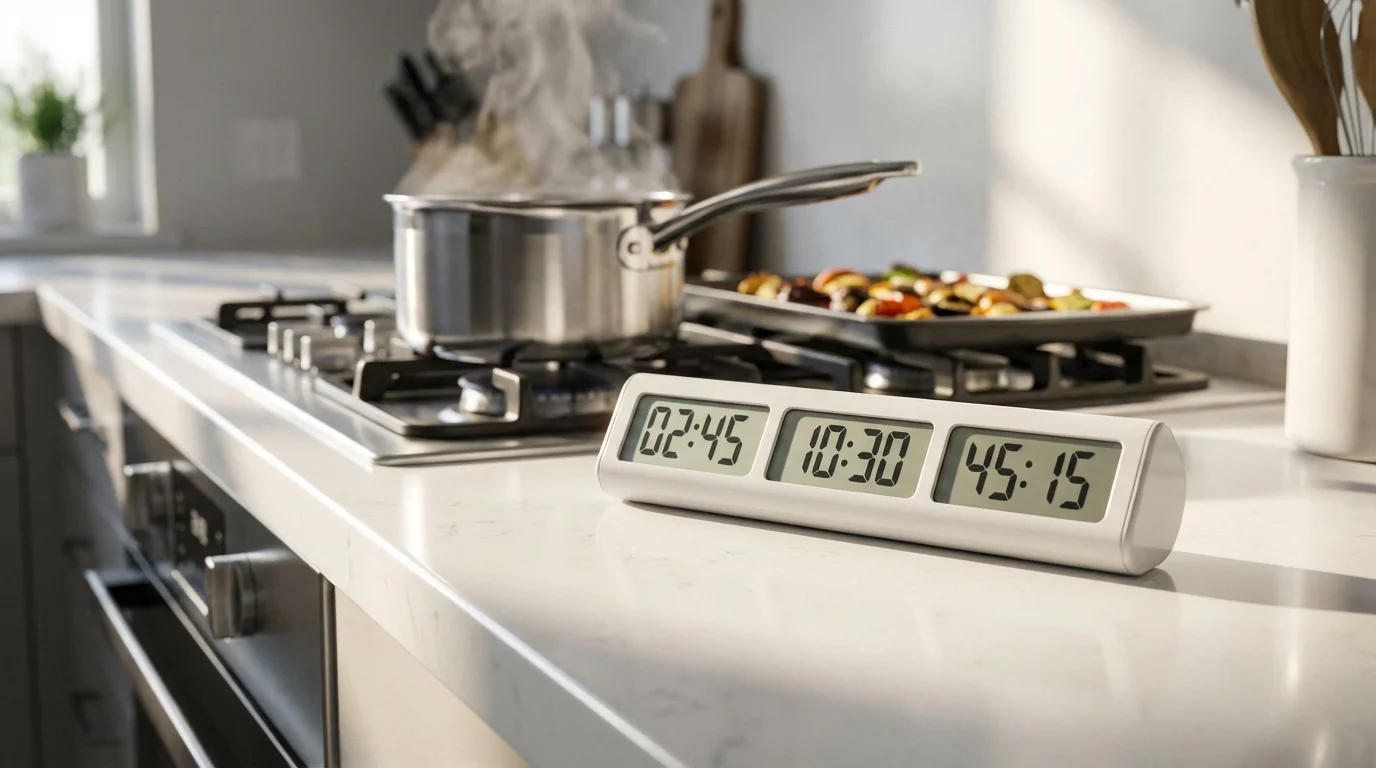
When your cooking demands more than a single countdown, advanced digital timers rise to the occasion. These units often feature multiple independent channels, allowing you to track several dishes simultaneously. They are the best kitchen timer with multiple alarms for busy cooks managing complex meals.
Pros:
- Multiple independent timers (e.g., two, three, or four channels).
- Often includes memory functions for frequently used times.
- Probe thermometers integration for monitoring internal meat temperatures.
- Advanced features like clock displays and auto-off.
- Greater control over individual alarms.
Cons:
- Can be more expensive than basic digital timers.
- Interface may become complex with more features.
- Requires multiple batteries or sometimes a power adapter.
Our Observations:
Advanced digital timers, like the CDN DT450, significantly streamline multi-dish cooking. We found its four independent channels invaluable when preparing Thanksgiving dinner, allowing us to track the turkey, stuffing, green beans, and pie all at once. Each channel provided a distinct alarm, preventing confusion. The display remained clear, even with multiple countdowns running.
“The best kitchen gadget is one you’ll actually use every week—not the one with the most Amazon reviews. A multi-channel timer, though a unitasker, earns its counter space by reliably simplifying complex cooking.”
Another excellent example is the ThermoWorks TimeStack, which allows you to stack multiple timers or set them in sequence. This proves incredibly useful for baking processes requiring distinct resting, proofing, and baking times. Serious Eats often praises Thermoworks products for their accuracy and durability. According to Serious Eats’ equipment reviews, ThermoWorks consistently produces high-quality, professional-grade kitchen tools.
When considering an advanced cooking timer, assess the clarity of its interface. Some multi-channel timers clutter the display, making quick reads difficult. Look for clear separation between channels and distinct button groupings for each timer.
Smart Kitchen Timers: Connectivity and Control
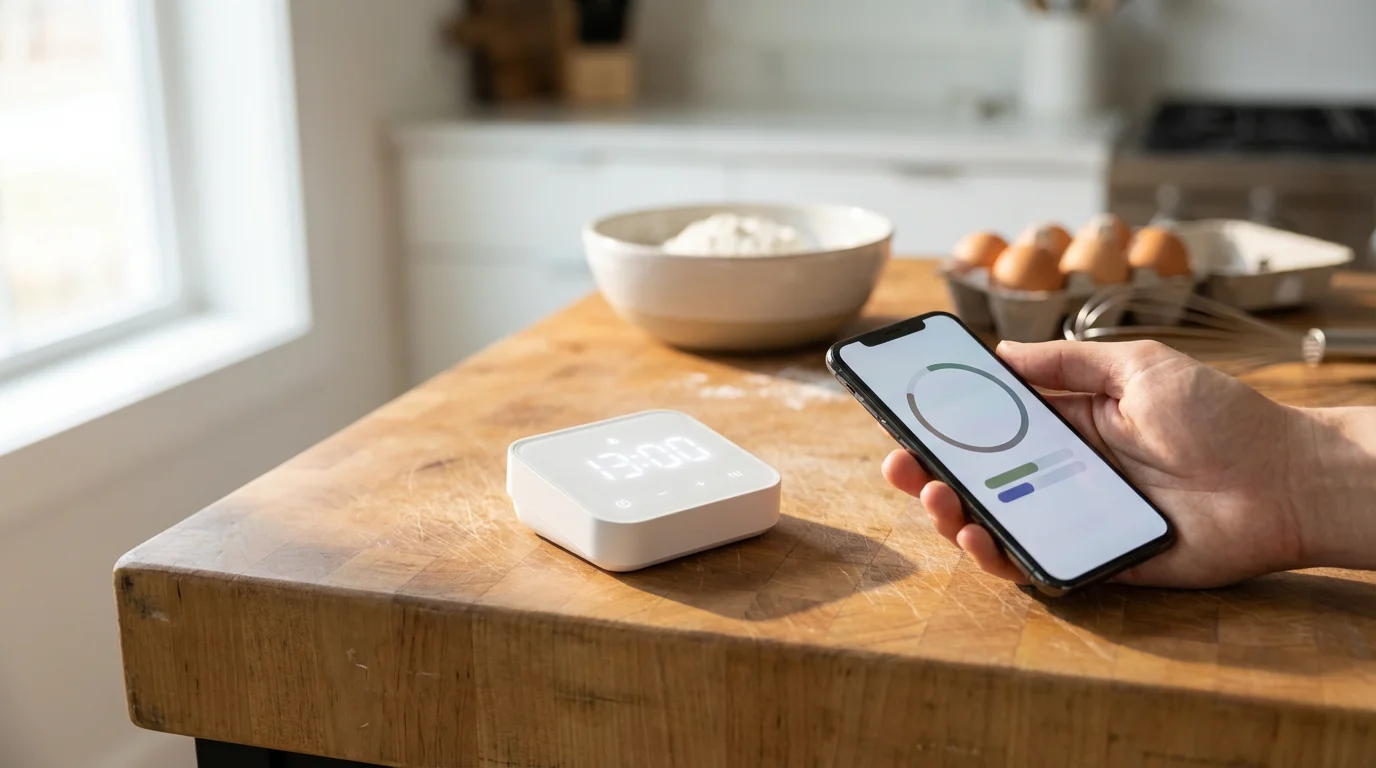
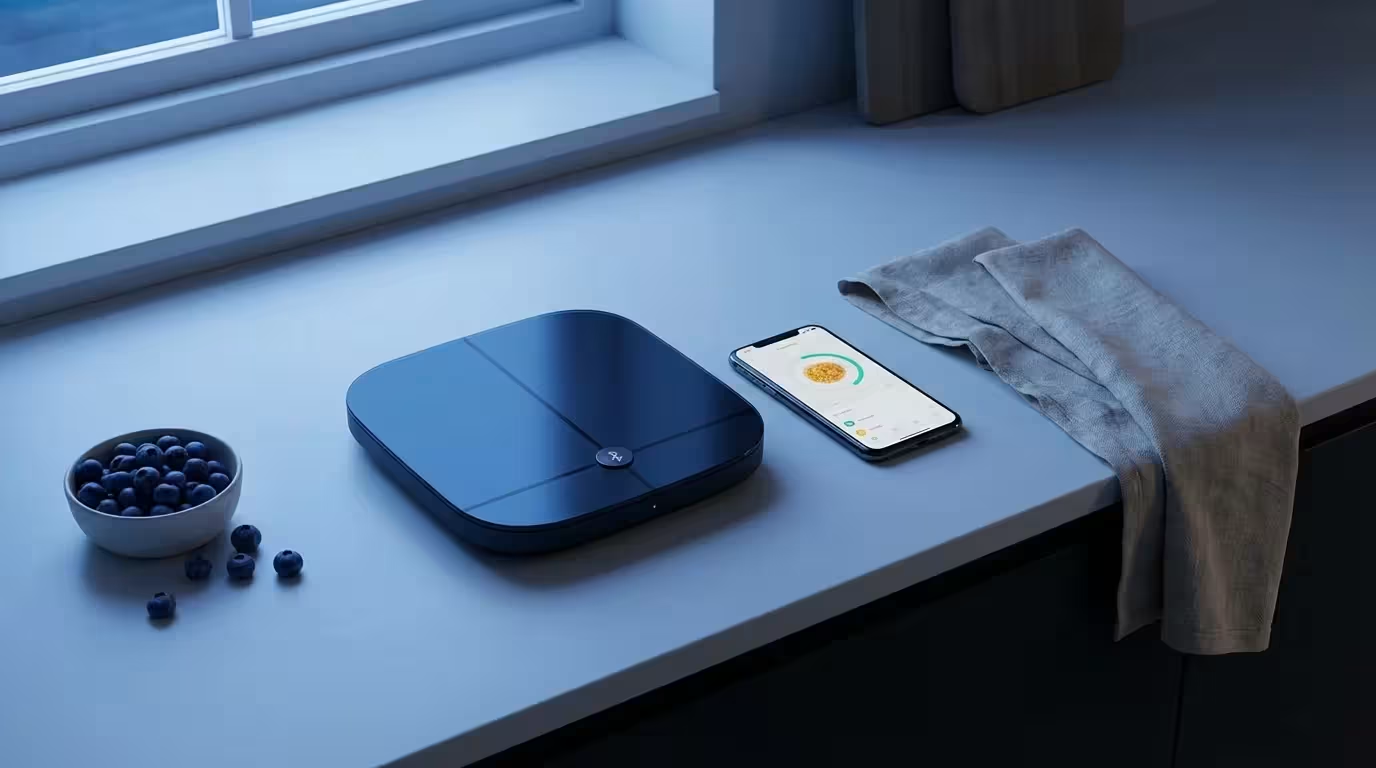
The latest evolution in kitchen timing comes in the form of smart timers. These devices integrate with your smartphone, smart home assistant, or dedicated apps, offering features like remote monitoring, voice control, and push notifications. While still a niche, this category offers unique advantages for the tech-savvy cook.
For tech-savvy cooks, pairing smart devices with specialized tools like vegetable spiralizers can take healthy, precisely-timed meal preparation to the next level.
Pros:
- Remote monitoring and control via smartphone app.
- Voice activation with smart home assistants (Alexa, Google Assistant).
- Push notifications to your phone, even when away from the kitchen.
- Often paired with smart thermometers for precise temperature tracking.
- Can include recipe integration and timer suggestions.
Cons:
- Generally the most expensive option.
- Requires Wi-Fi or Bluetooth connectivity to function optimally.
- Dependency on apps and software updates.
- Can be overly complex for basic timing needs.
Our Observations:
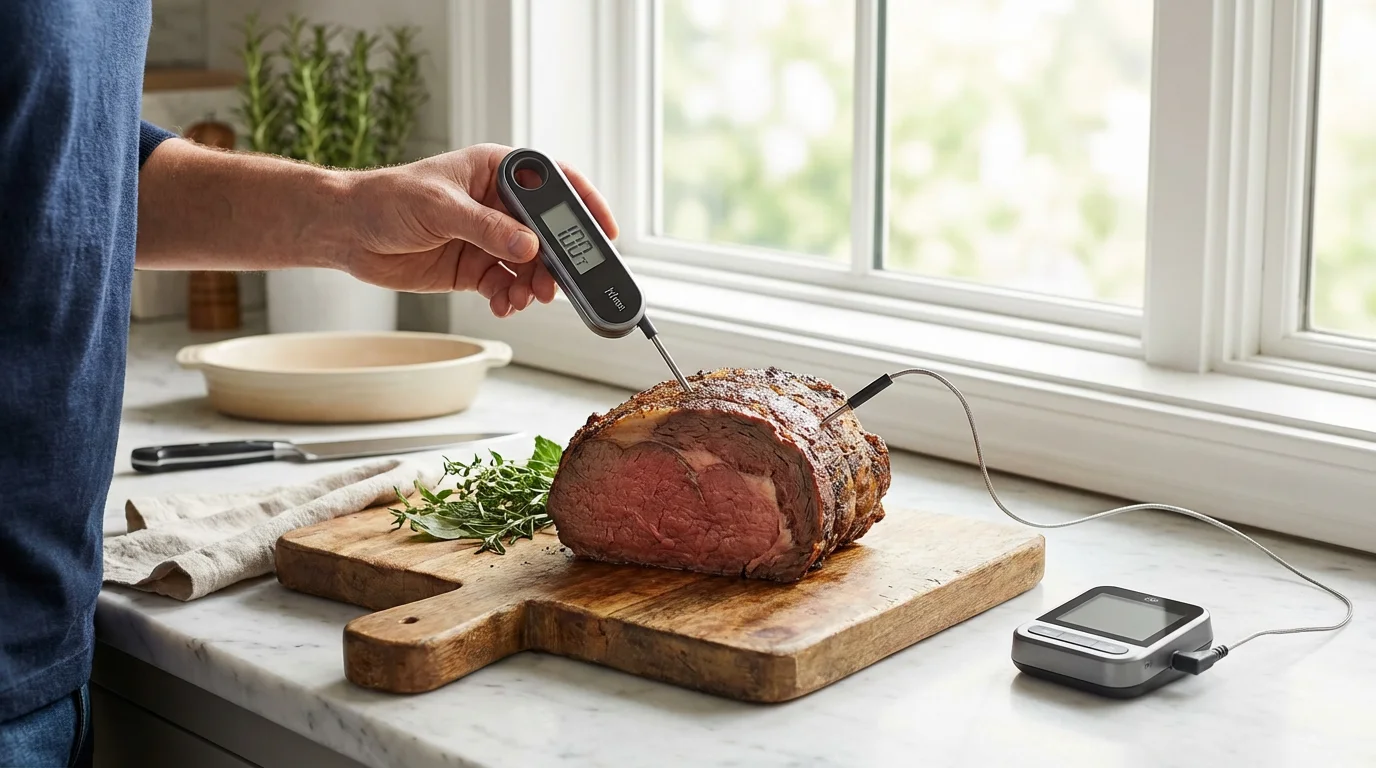
Smart timers, while convenient, come with a learning curve. We tested several smart kitchen timer options, primarily those integrated with smart thermometers. The Meater Plus, for example, combines a wireless meat probe with a sophisticated app that tracks cooking time and estimated completion based on internal temperature. This provides incredible precision for roasting, but it’s a specialized tool rather than a general-purpose cooking timer.
Dedicated smart timers, often controlled through an app or voice command, excel at providing reminders when you are in another room or even outside the house. Imagine receiving a notification on your phone that your slow-cooked stew is ready. However, the reliance on an internet connection or Bluetooth range can be a drawback if your connectivity is inconsistent.
For most home cooks, a smart timer remains a “nice-to-have” rather than an essential upgrade. If you heavily use smart home devices and enjoy controlling your kitchen from your phone, this category offers significant convenience. Otherwise, a robust digital timer provides ample functionality without the added complexity.
Durability, Ergonomics, and Cleaning: Longevity Matters
A great kitchen timer should not only perform well but also withstand daily use and be easy to maintain. We pay close attention to materials, design, and cleaning practicality during our reviews.
Build Quality and Materials
The materials used in a kitchen timer directly impact its lifespan. We prefer models incorporating robust plastics, stainless steel, or durable silicone. Timers with brushed stainless steel casings offer a premium feel and resist fingerprints better than glossy plastic. Silicone outer shells provide a non-slip grip and extra protection against accidental drops, which frequently occur in busy kitchens.
Lower-priced timers often feature thinner plastic that cracks easily or buttons that stick after minimal use. We conduct drop tests and scrutinize button mechanisms to gauge long-term durability. A solid magnetic back, often made with strong neodymium magnets encased in a protective layer, prevents the timer from sliding down your refrigerator.
Ergonomic Design
Ergonomics refers to the design’s comfort and efficiency for human use. An ergonomic timer features buttons that are easy to press, a display that is easy to read, and a shape that fits comfortably in your hand or sits stably on your counter. We assess button size, spacing, and tactile feedback. Small, closely packed buttons, for example, frustrate users with larger hands or limited dexterity.
For countertop timers, a stable base or a sturdy kickstand prevents tipping. Some models include a non-slip grip on their base, made from silicone or rubber, ensuring they stay put even on wet surfaces. Consider also the viewing angle of the display; some timers angle their screen upwards, making it easier to read when placed on a lower counter.
Cleaning and Maintenance
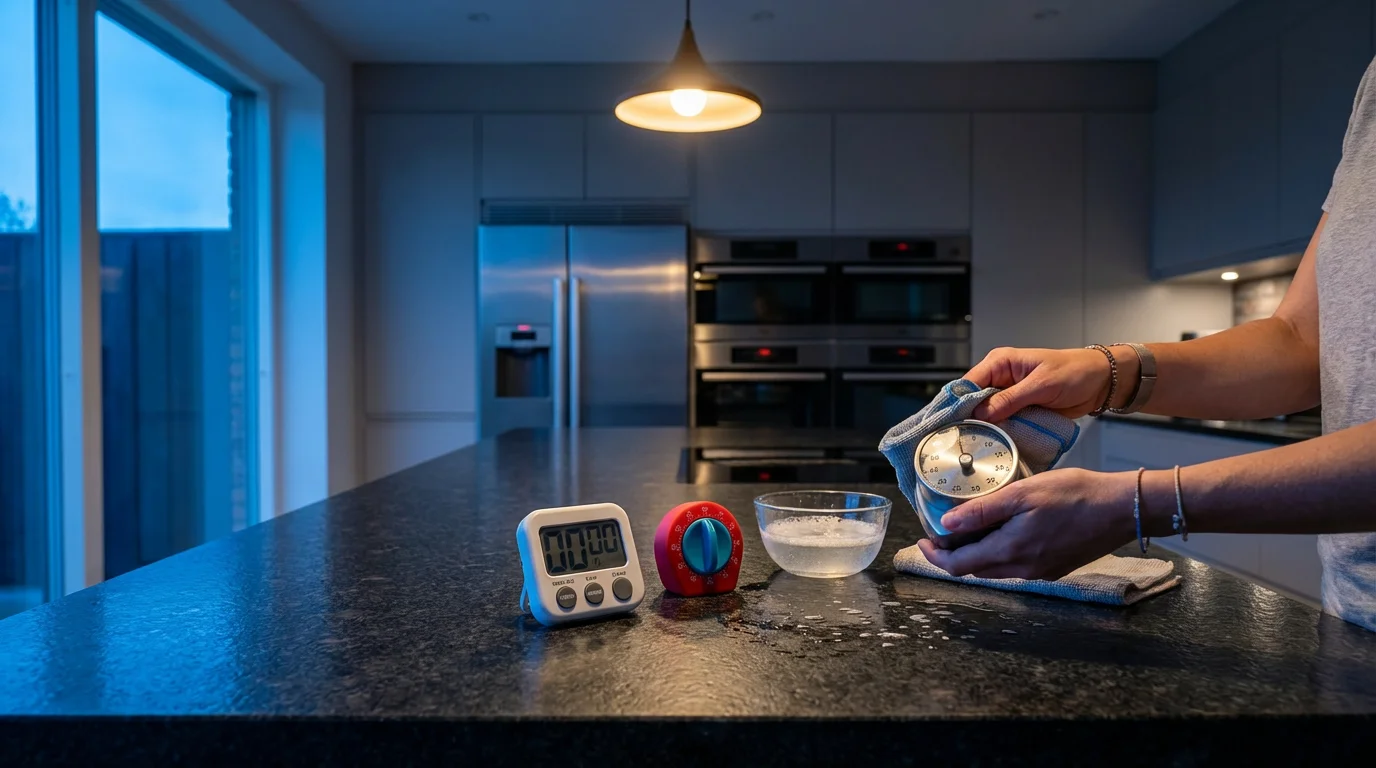
Kitchens are messy places, and your timer will inevitably encounter spills and splashes. We look for timers with smooth surfaces and minimal crevices where food particles can accumulate. Most digital timers are not dishwasher safe; you should wipe them clean with a damp cloth. Some advanced models with external probes, often used for meat temperatures, might have dishwasher safe probe tips, but always check manufacturer instructions.
Battery compartments should seal well to prevent moisture intrusion, which can lead to corrosion. Easy access to the battery compartment for replacement is also a plus. Mechanical timers generally require the least cleaning, usually just a quick wipe down.
| Timer Type | Key Features | Typical Precision | Alarm Loudness | Battery Requirement | Average Price Range |
|---|---|---|---|---|---|
| Mechanical | Twist-to-set, basic bell, no display | +/- 30-60 seconds | Moderate (fixed) | None | $5 – $20 |
| Basic Digital | LCD display, countdown/count-up, single channel | +/- 1 second | Adjustable (often) | 1-2 AAA/AA | $10 – $25 |
| Advanced Digital | Multiple channels, memory, sometimes probe integration | +/- 1 second | Loud (often adjustable) | 2-4 AAA/AA | $25 – $60 |
| Smart Timer | App control, voice integration, remote notifications | +/- 1 second | Phone/speaker-dependent | Rechargeable/AAA/AA | $40 – $100+ |
Making the Right Choice: Skip If, Buy If
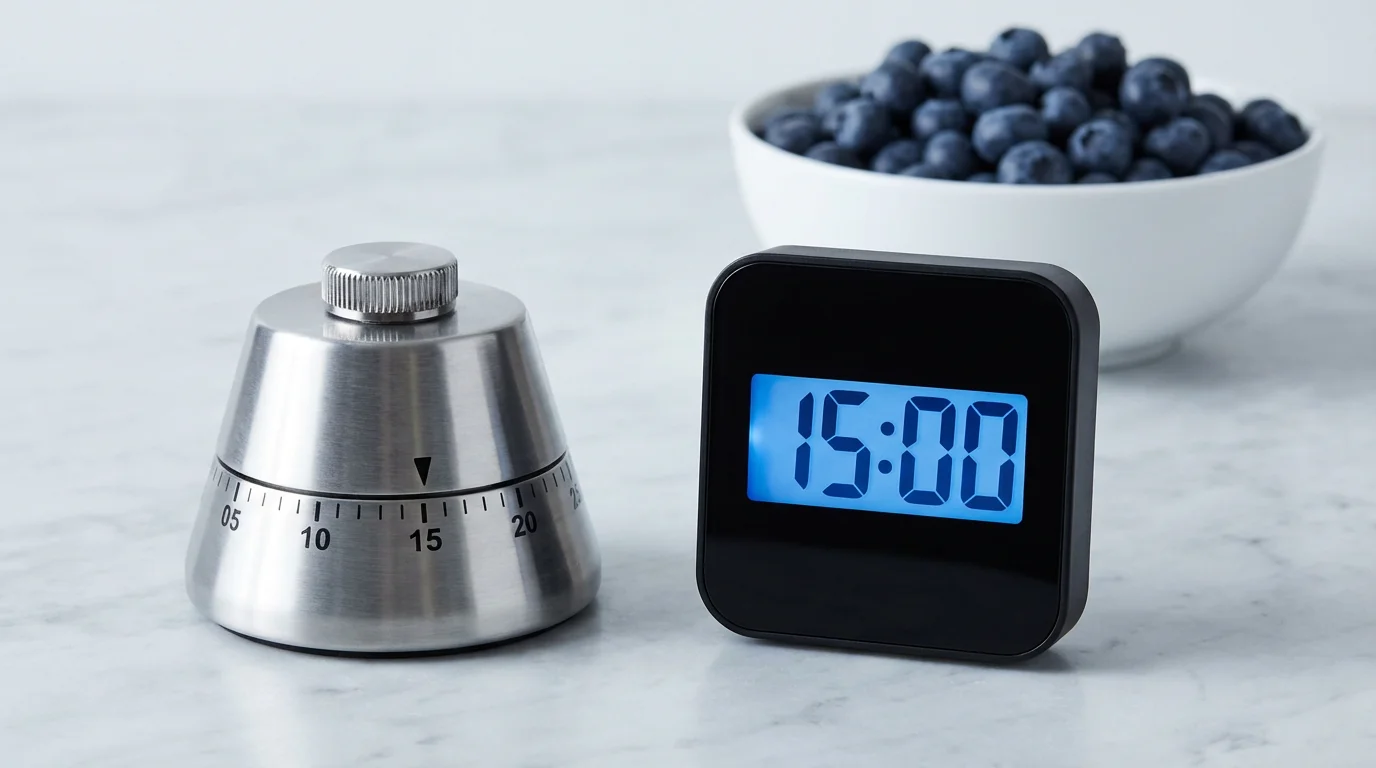
Choosing the best cooking timer boils down to your personal preferences and cooking habits. Use these quick guides to help make your decision:
Skip a Dedicated Kitchen Timer if…
- You primarily cook simple dishes requiring minimal timing precision, like boiling water or quick heating.
- Your smartphone timer adequately serves your needs, and you do not mind using it for cooking.
- Countertop space is extremely limited, and you prefer fewer gadgets.
- You rarely forget items cooking and possess an excellent internal clock.
Buy a Dedicated Kitchen Timer if…
- You need precise timing: Baking, candy making, or specific recipes demand accuracy beyond a smartphone’s general feel.
- You cook multiple dishes simultaneously: A digital timer with multiple alarms becomes invaluable.
- You need a loud, reliable alarm: Especially helpful for hard of hearing individuals or noisy kitchens, ensuring you never miss a critical timing alert.
- You want to keep your phone clean: Handling a phone with messy hands during cooking can be inconvenient.
- You appreciate tactile feedback: Physical buttons often offer a more satisfying and intuitive experience than tapping a screen.
- You want a durable tool: Many dedicated timers withstand splashes and heat better than a smartphone. According to Good Housekeeping’s kitchen appliance reviews, durability and ease of use are key factors for consumer satisfaction with kitchen gadgets.
- You are gifting a gadget: A well-chosen, practical timer makes an excellent kitchen stocking stuffer or housewarming gift.
Frequently Asked Questions
Are digital kitchen timers more accurate than mechanical ones?
Yes, digital kitchen timers are significantly more accurate than mechanical timers. Digital models typically measure time down to the second, whereas mechanical timers often have a margin of error of 15 to 60 seconds over a typical cooking period. If precision is crucial for your recipes, always choose a digital cooking timer.
How loud should a kitchen timer be for someone hard of hearing?
For individuals who are hard of hearing, a kitchen timer with an alarm volume of at least 80 decibels (dB) is recommended. Some specialized timers offer even higher volumes, vibration alerts, or flashing light indicators to ensure the alarm is not missed amidst kitchen noise or other distractions. Always check the product specifications for alarm volume if this is a critical need.
Can I use my smartphone as a kitchen timer?
You can certainly use your smartphone as a kitchen timer, and many people do. However, a dedicated kitchen timer offers advantages like tactile buttons for quick setting, a louder or more distinct alarm that won’t get lost among phone notifications, and the ability to free your phone for other tasks without risking food splatter or damage.
What is a “unitasker” in the context of kitchen gadgets?
A “unitasker” is a kitchen gadget designed to perform only one specific task. A basic kitchen timer is a classic example of a unitasker, as its primary function is to count down or up. While some unitaskers can be unnecessary, a reliable kitchen timer is often considered an essential one, simplifying a critical aspect of cooking.
Disclaimer: Product prices and availability change frequently. Prices shown were accurate at time of writing but may have changed. We may earn a small commission from purchases made through links on this site, at no extra cost to you. Always verify current pricing on the retailer’s website before purchasing.


Leave a Reply