
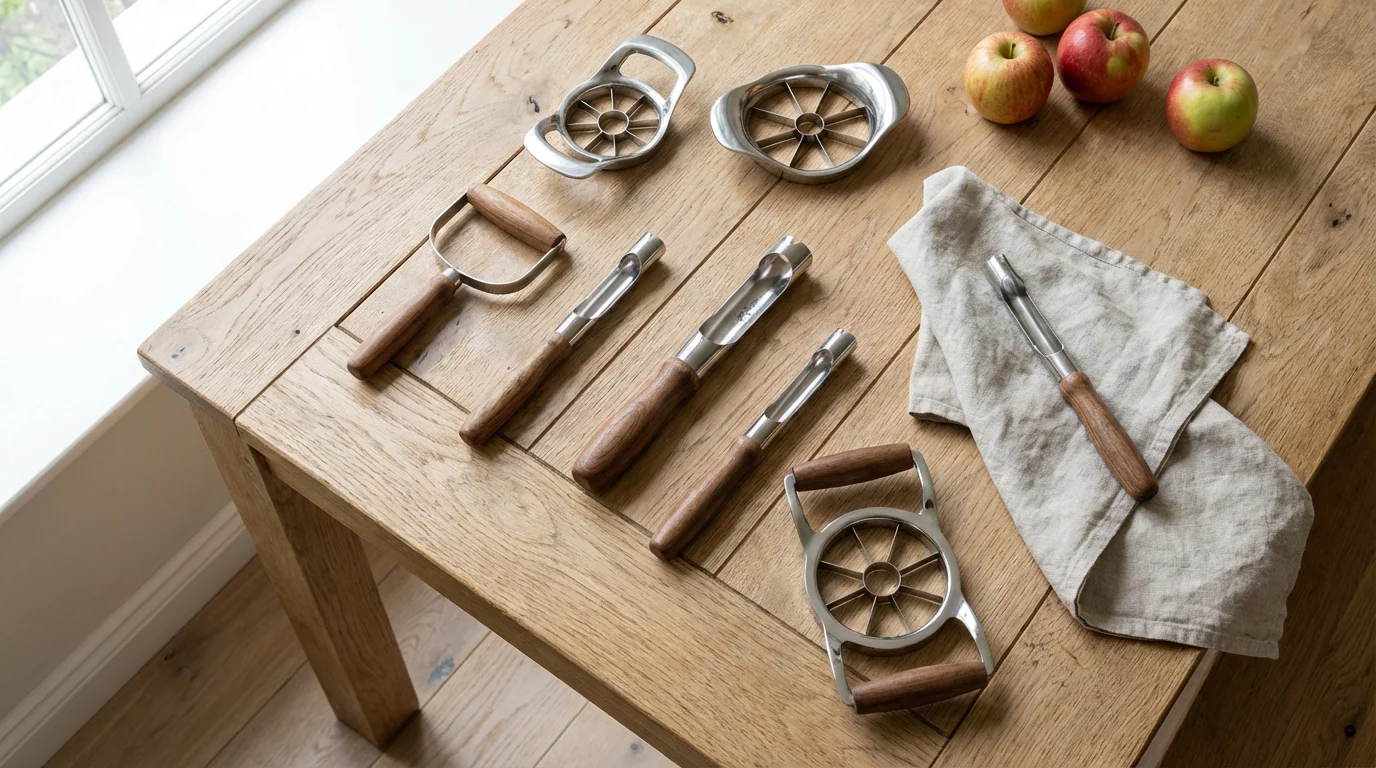
You stand in the kitchen, a pile of apples awaiting preparation for pies, sauces, or school lunches. The task seems simple enough, but a dull knife or an uneven cut can quickly turn a quick job into a frustrating chore. Many home cooks consider specialized apple gadgets a luxury, yet the right apple corer or apple slicer significantly streamlines this process, ensuring uniform pieces and reducing waste. Our extensive testing reveals which tools genuinely deliver on their promises and which you can confidently skip, saving you cabinet space and money.
We approach kitchen gadgets with a healthy dose of skepticism. You have likely encountered countless “solutions” that solve non-existent problems or simply fail to perform as advertised. Our goal is to cut through the marketing hype and provide practical, actionable insights on the best fruit tools for your specific needs, focusing on performance, durability, and value.
Are Apple Corers and Slicers Truly Necessary?
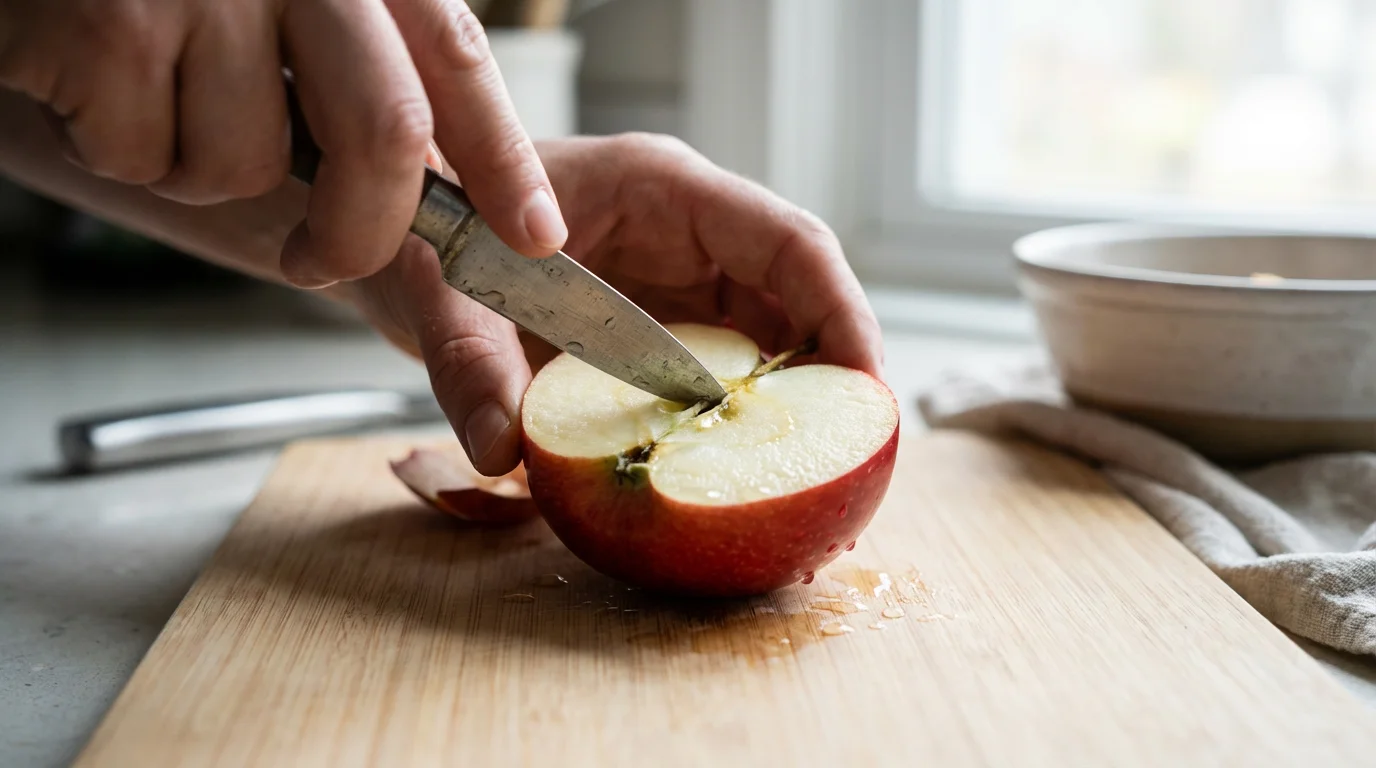
Many kitchen gadgets are “unitaskers,” performing only one specific job. Apple corers and slicers often fall into this category, leading to the perennial question: do you truly need them? Our answer depends on your cooking habits and priorities. If you rarely eat apples or only prepare one or two at a time, a sharp paring knife likely suffices. However, if you frequently bake pies, make applesauce, prepare healthy snacks for kids’ lunches, or process large batches of fruit, these specialized tools become invaluable time-savers.
This debate over utility is common for many prep tools, much like the question of whether salad spinners are a necessity or a luxury for your workflow.
Consider the process of how to core apples for baking pies. Manually coring requires careful knife work to remove the seeds and fibrous core without losing too much usable fruit. A dedicated corer removes this section cleanly and efficiently. Similarly, slicing apples by hand for snacks or dehydrating can result in uneven pieces, which cook inconsistently or look less appealing. An apple slicer creates uniform wedges with minimal effort. This consistency, particularly for baking, significantly impacts the final product’s texture and cooking time.
Our Testing Approach: Evaluating Apple Tools for Real-World Use
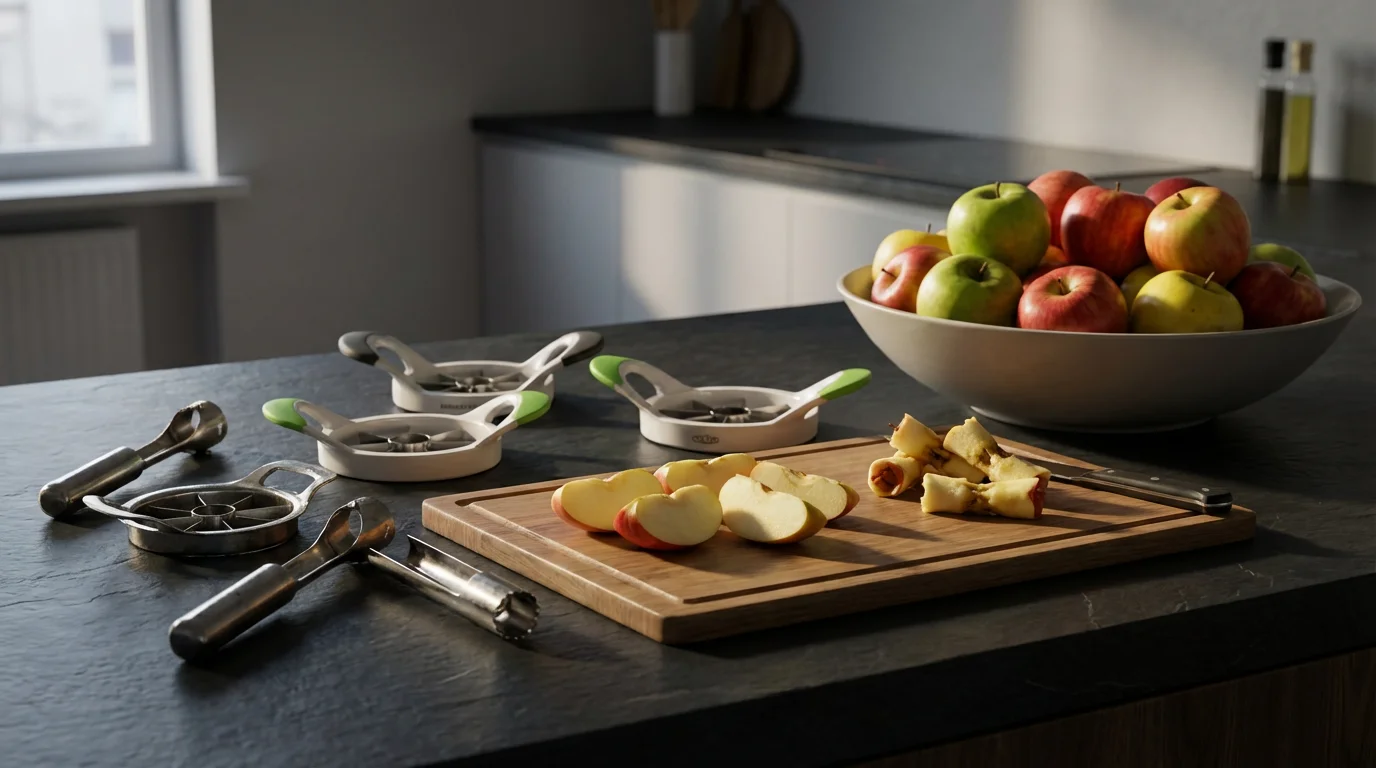
To identify the best apple corers and slicers, we put dozens of models through rigorous, hands-on testing. Our methodology goes beyond simply unboxing; we simulate real-world kitchen scenarios to gauge performance, durability, and user experience. We processed over 300 apples of various sizes and firmness, including crisp Honeycrisp, softer Gala, and firm Granny Smith varieties, ensuring a comprehensive assessment.
While these tools are specific to fruit, they are often included in lists of 10 kitchen gadgets that actually save time during intensive meal prep.
Our evaluation criteria included:
- Corer Effectiveness: How cleanly does it remove the core? Does it leave seeds or fibrous material behind? How much fruit does it waste?
- Slicer Performance: Does it slice uniformly? How much force does it require? Can it handle different apple sizes without bending or breaking?
- Durability and Material Quality: We assessed the robustness of stainless steel blades and plastic frames, looking for signs of bending, rusting, or cracking after repeated use and cleaning cycles.
- Ergonomics and Ease of Use: We evaluated handle comfort, non-slip grip effectiveness, and overall user effort across different hand sizes and strengths.
- Cleaning and Storage: We tested dishwasher safe claims and examined how easily food debris became trapped in crevices. We also considered the tool’s footprint in a drawer or on a counter.
We paid close attention to consumer feedback, noting common complaints about flimsy construction or difficult cleaning. Our tests aimed to replicate and verify these concerns, ensuring our recommendations address real-world frustrations.
“The best kitchen gadget is one you’ll actually use every week, not the one with the most Amazon reviews. Practicality and durability always outweigh fleeting trends.”
Precision and Simplicity: Dedicated Apple Corers
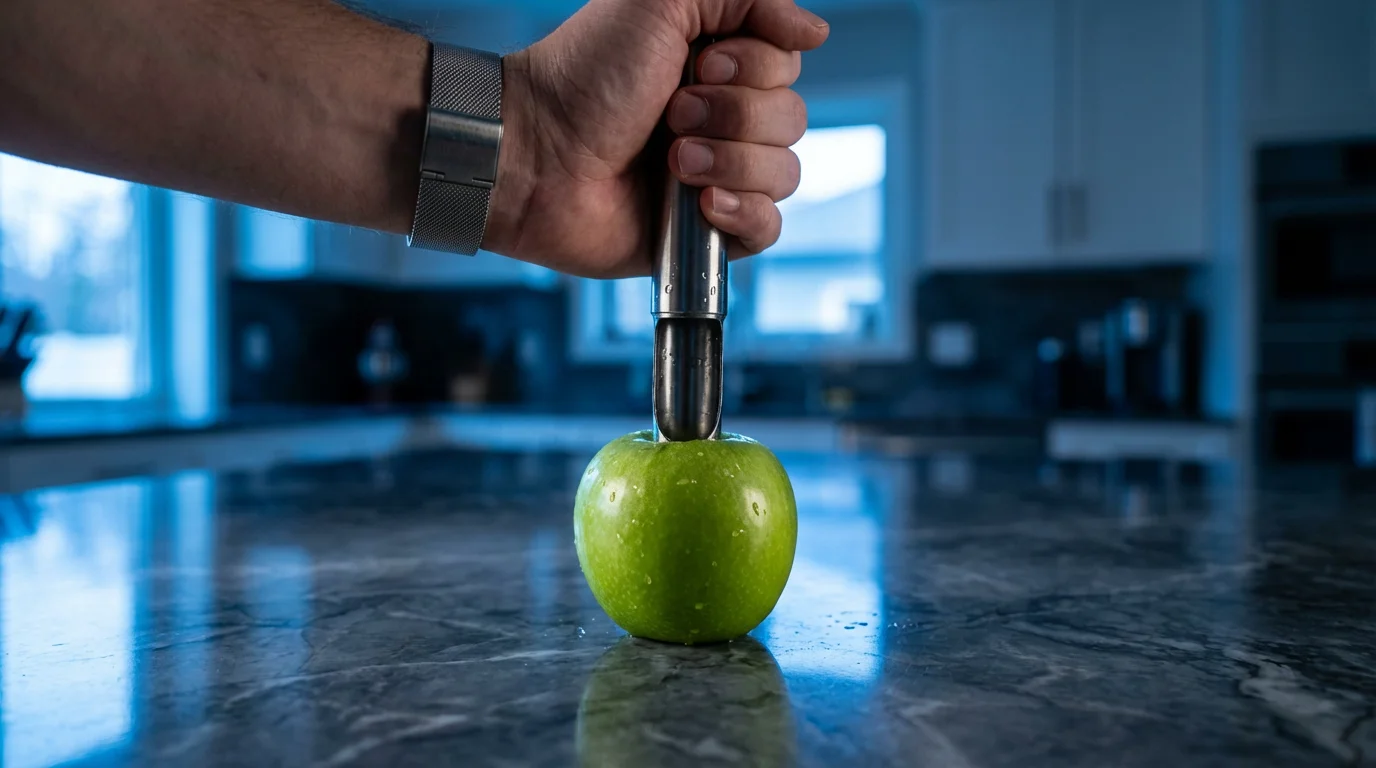
A dedicated apple corer is a specialized unitasker designed for one job: removing the apple’s core. These tools typically feature a cylindrical blade, often serrated, with a handle for leverage. You position the blade over the apple’s stem end, push down, twist, and pull out the core.
For those looking to get even more creative with fruit and vegetable textures, our guide to vegetable spiralizers explores how to turn produce into unique shapes for salads and garnishes.
Our testing revealed significant differences in design and material quality. The most effective corers feature sharp, rigid blades made from high-quality stainless steel. This material resists rust and maintains sharpness over time. Cheaper models with thin, stamped metal blades tend to bend or dull quickly, tearing through the apple rather than cleanly cutting the core. A wider coring cylinder, typically around 0.75 to 1 inch in diameter, removes the entire core effectively without leaving stray seeds or fibrous material. However, overly wide corers can waste more edible fruit.
Some models incorporate a plunger mechanism to eject the core easily. This feature, while seemingly minor, significantly improves the user experience, preventing you from needing to dig out the core with your fingers or another utensil. The OXO Good Grips Stainless Steel Apple Corer, for example, features a soft, non-slip grip and a sturdy stainless steel shaft with an integrated plunger, making it a top performer in our tests. It consistently removed cores cleanly with minimal effort.
Pros of Dedicated Corers:
- Precision: Removes the core cleanly and efficiently.
- Minimal Waste: Typically designed to remove only the core, preserving more fruit.
- Compact: Most are slim and easy to store in a utensil drawer.
- Durability: High-quality stainless steel models last for years.
Cons of Dedicated Corers:
- Unitasker: Only performs one function.
- Requires a separate knife for slicing.
A dedicated corer is an excellent choice if you frequently prepare apples for baking, where a clean core is paramount, or if you prefer to slice apples by hand to control thickness.
Speed and Uniformity: Exploring Apple Slicers
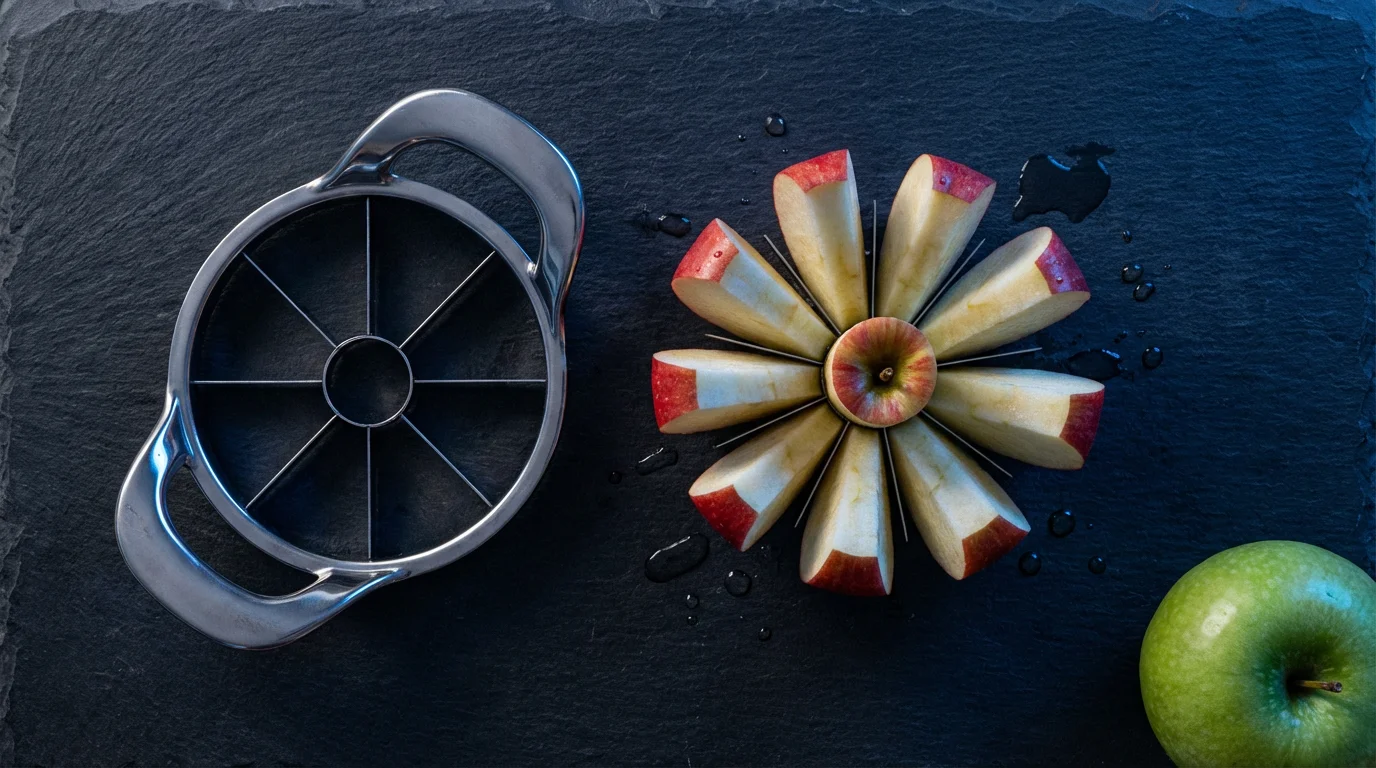
Apple slicers offer a rapid way to transform a whole apple into uniform wedges with a single press. These tools typically feature a central coring ring surrounded by multiple wedge-shaped blades. You place the apple on a flat surface, center the slicer over the apple, and push down firmly.
Similar to how egg slicers create perfect rounds for salads, these apple tools ensure consistent results for snacks and fruit plates.
We tested various designs, from basic 8-wedge slicers to more advanced 12-wedge versions and models with ergonomic handles. The most common configuration features 8 stainless steel blades, which work well for most medium-sized apples and yield substantial wedges suitable for snacking or baking. For smaller apples or for creating thinner slices, such as for dehydrating or kids’ lunches, 12-blade slicers provide more delicate portions.
Blade sharpness and material quality are critical. Sharper stainless steel blades cut through apples cleanly, requiring less force. Dull blades, or those made from inferior metal, tend to mush the apple or require excessive pressure, which can be difficult for individuals with weaker hand strength or small children. The frame supporting the blades also matters. Many slicers feature a plastic frame. While this reduces weight, a flimsy frame can flex or crack under pressure. Sturdier models often incorporate reinforced BPA-free plastic or a more robust metal frame for increased longevity.
Ergonomics plays a significant role in the usability of apple slicers. Models with large, comfortable handles and non-slip grips significantly reduce strain. We found that the leverage provided by well-designed handles made a substantial difference, particularly when slicing firmer apples. For instance, the Progressive International Thin Slice Apple Slicer, while designed for thinner slices, features broad handles that distribute pressure evenly, making it easier to use than some competitors with narrower grips.
Pros of Apple Slicers:
- Speed: Slices and cores an apple in seconds.
- Uniformity: Creates consistently sized wedges.
- Convenience: Ideal for quick snacks, fruit salads, or large batch prep.
Cons of Apple Slicers:
- Limited to specific apple sizes: Some struggle with very large or very small apples.
- Requires significant downward force for some models or firmer apples.
- Cleaning can be tricky if apple pieces get stuck between blades.
The All-in-One Appeal: Combined Corer-Slicers
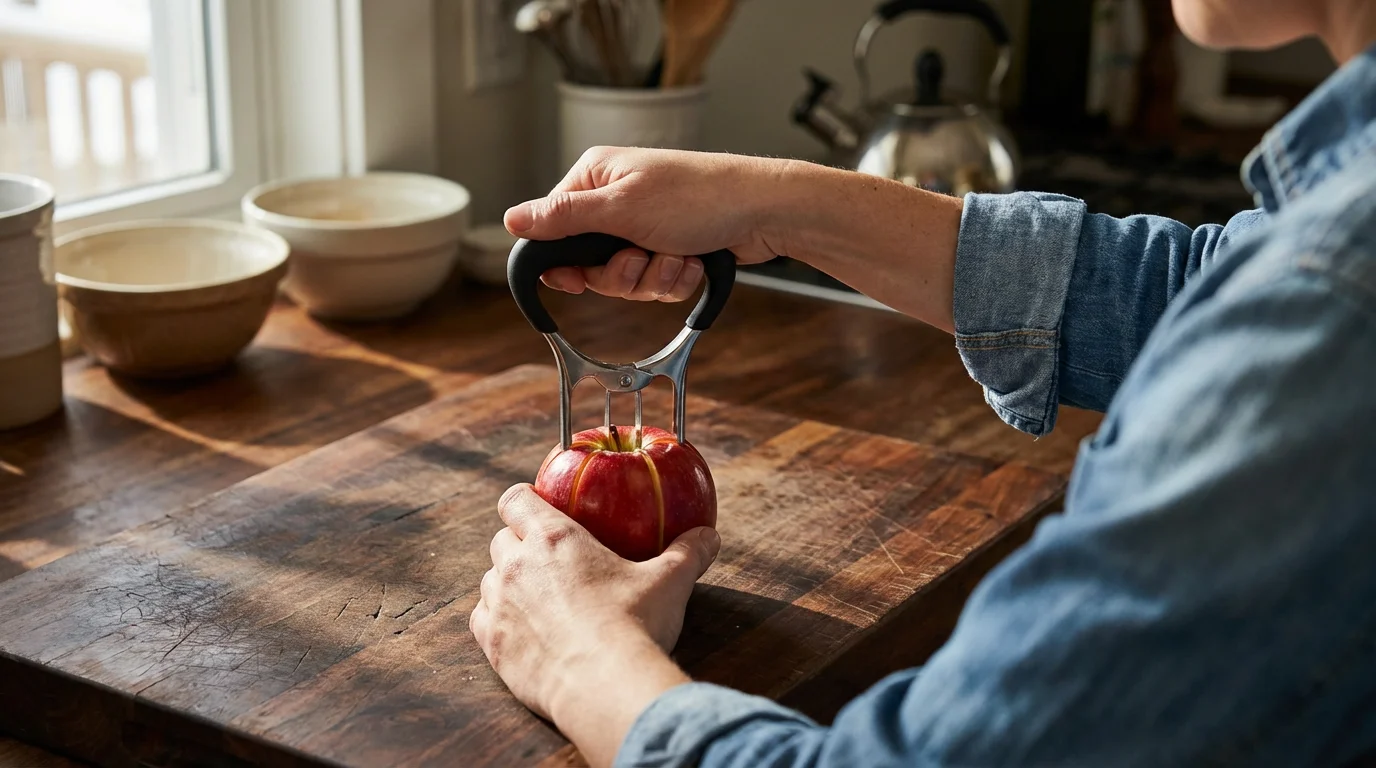
The term “apple corer” often refers to the all-in-one device that both cores and slices an apple simultaneously. This category represents the most popular type of apple corer and apple slicer on the market. These gadgets combine the central coring ring with radial blades, offering a complete solution in a single tool. Their primary advantage lies in efficiency: one press, and you have cored, sliced apple wedges.
Our durability testing revealed that the design of combined corer-slicers is crucial. Many budget models feature thin stainless steel blades embedded in a lightweight plastic frame. While initially functional, these often bend, distort, or crack after repeated use, especially with hard apples. For reliability, look for models with robust, thicker stainless steel blades and a sturdy frame, ideally with reinforced joints. Some premium models feature an all-metal construction or a very dense, high-impact plastic that withstands greater pressure.
America’s Test Kitchen, in their extensive equipment reviews, often highlights the importance of robust construction for these tools, noting that flimsier versions can be frustrating and even unsafe. According to America’s Test Kitchen, the best combined corer-slicers balance sharp blades with a durable, comfortable handle to provide maximum leverage.
| Model Feature | Budget Plastic Frame | Mid-Range Reinforced | Premium All-Metal |
|---|---|---|---|
| Blade Material | Thin Stainless Steel | Thicker Stainless Steel | Thick Gauge Stainless Steel |
| Frame Material | Lightweight Plastic | Reinforced BPA-Free Plastic | Cast Aluminum or Heavy Plastic |
| Effort Required (1-5, 1=low) | 3-4 (variable) | 2-3 (consistent) | 1-2 (minimal) |
| Durability Score | 2/5 | 4/5 | 5/5 |
| Ease of Cleaning | Moderate (food gets stuck) | Good (fewer crevices) | Excellent (smooth surfaces) |
| Best For | Occasional use, soft apples | Regular use, various apples | Heavy use, all apple types |
Some combined units feature a base that helps stabilize the apple and provides a clean cutting surface. While this adds to the storage footprint, it significantly improves stability and safety, particularly for kids lunches or if you have limited countertop space. We found that models like the Calphalon Classic Apple Slicer & Corer offered a good balance of sharp blades, a comfortable handle, and sufficient reinforcement for consistent performance.
Pros of Combined Corer-Slicers:
- Maximum Efficiency: Cores and slices in one action.
- Convenience: Quick preparation for a variety of uses.
- Uniformity: Produces consistent apple wedges.
Cons of Combined Corer-Slicers:
- Can be difficult to push through very firm apples if construction is poor.
- Blade gaps can trap apple pulp, making cleaning more challenging.
- Larger footprint than a dedicated corer.
Durability and Design: Materials, Ergonomics, and Quality
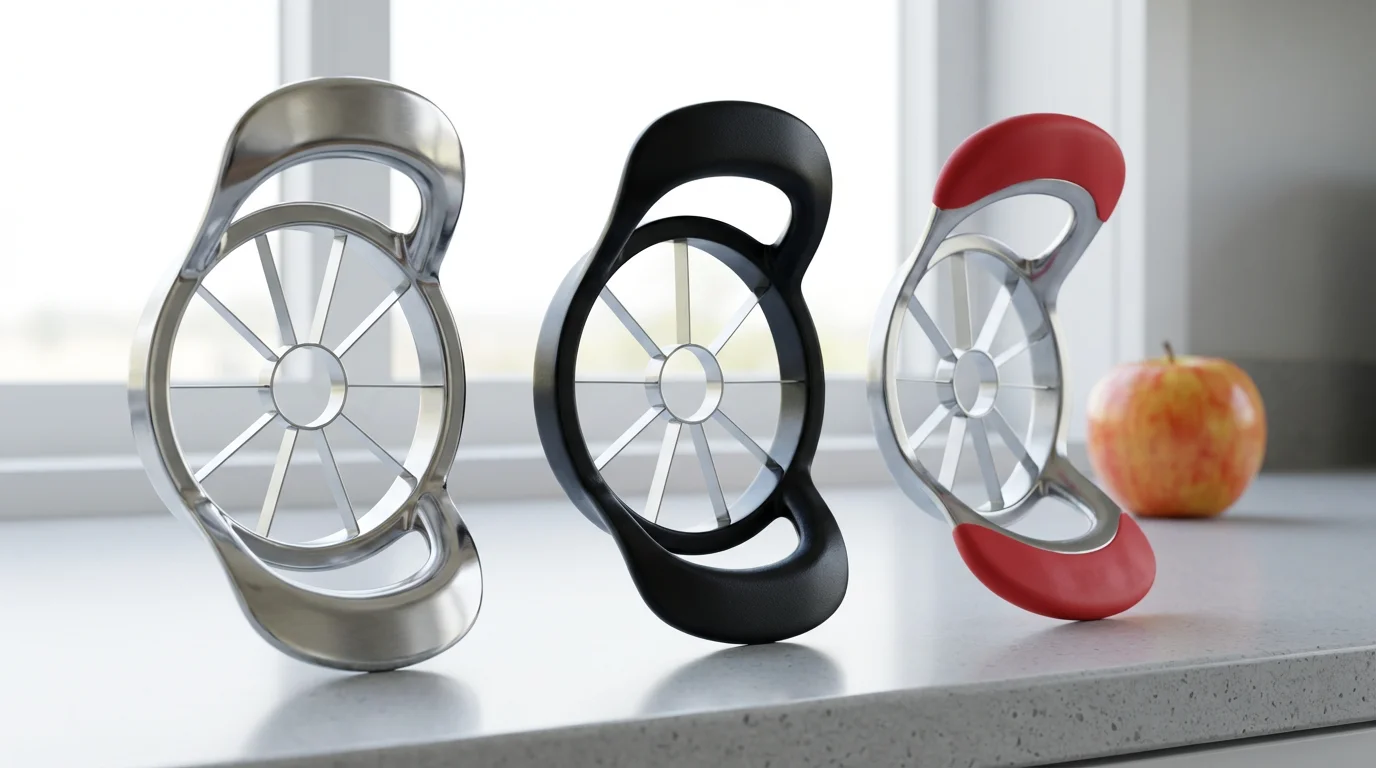
The lifespan and performance of your apple tool depend heavily on its construction materials and design. We rigorously tested tools made from stainless steel, various plastics, and those incorporating silicone components.
If you enjoy adding fresh zest to your apple recipes, consider why every kitchen needs a good microplane grater to enhance flavors effortlessly.
Stainless Steel: This is the gold standard for blades and core components. Good quality stainless steel resists rust, corrosion, and retains sharpness. Inferior stainless steel, often found in very cheap products, can pit, stain, or dull quickly. Look for blades that appear thick and sturdy, not thin or easily flexible. The strength of the core component determines how much force the tool can withstand without bending or breaking. Many of the best apple corers, like those recommended by Consumer Reports, feature high-grade stainless steel.
Plastic: Many apple slicer frames and handles incorporate plastic. BPA-free plastic is a common and preferred choice for food contact items, ensuring no harmful chemicals leach into your food. The quality of plastic varies immensely. Cheap, brittle plastic frames often crack or snap under the pressure of slicing a firm apple. High-quality, reinforced plastic, sometimes described as ABS or impact-resistant, offers excellent durability without adding excessive weight. Some premium tools use a combination of durable plastic for the handle and metal for the frame to balance weight and strength.
Silicone: You might find silicone used for non-slip grips on handles. This flexible, heat-resistant material provides a comfortable and secure hold, especially useful when your hands are wet or messy. Silicone grips generally enhance the ergonomic feel of a tool, improving safety and reducing hand fatigue.
Ergonomic Design: An ergonomic design ensures the tool fits comfortably in your hand and minimizes strain during use. This is particularly important for apple slicers, which require significant downward force. Key ergonomic features include:
- Comfortable Handles: Thick, rounded handles are easier to grip than thin, sharp-edged ones.
- Non-Slip Grips: Non-slip grip materials, like silicone or textured plastic, prevent the tool from slipping in your hand, improving safety and control.
- Leverage: The design should allow you to apply force directly and efficiently, reducing the effort needed. Wider handles often provide better leverage.
We evaluated tools by having users with varying hand sizes and strengths test them. Tools with poor ergonomic design often caused discomfort or required excessive effort, making them frustrating for regular use. A well-designed tool feels like an extension of your hand, not a battle against a stubborn apple.
Beyond the Core: Cleaning, Storage, and Versatility
Even the most effective apple tool becomes a nuisance if it is difficult to clean or takes up too much space. We consider these practical aspects essential for any kitchen gadget worth its salt.
Once your apples are sliced, a quick splash of lemon juice from citrus juicers can help prevent oxidation and browning.
Cleaning Considerations:
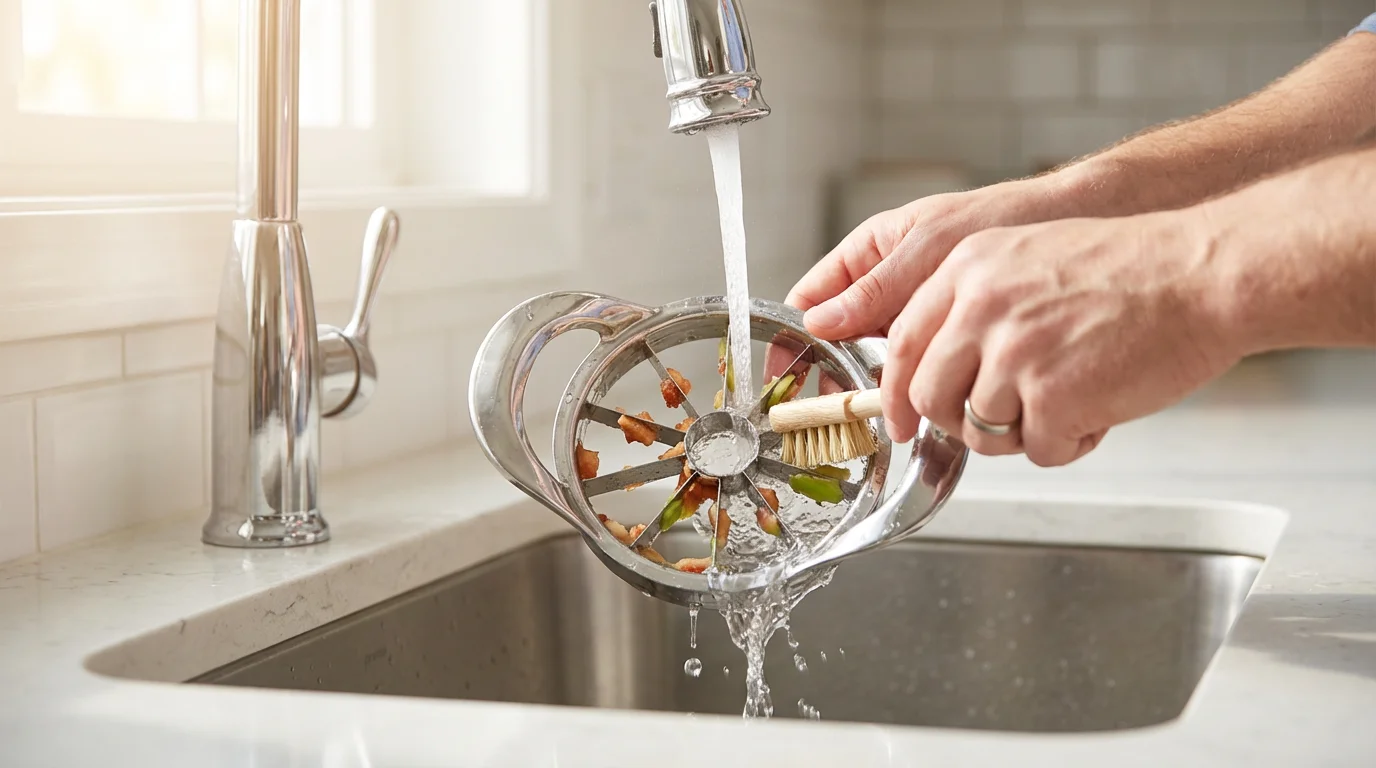
Most apple corers and slicers claim to be dishwasher safe. Our tests generally confirm this, but we noted some nuances. Tools with intricate blade designs or small crevices, especially combined corer-slicers, can trap apple pulp. While technically dishwasher safe, a quick rinse immediately after use often prevents stubborn residue from drying. For handwashing, a brush can help dislodge trapped bits. Dedicated corers with a simple cylindrical design are typically the easiest to clean. Look for models with minimal seams or hard-to-reach areas.
Storage Footprint:
Dedicated apple corers are typically slim and can easily slide into a utensil drawer or knife block. Combined apple slicers, due to their larger diameter, require more space. Consider where you will store your tool before purchasing. Some slicers come with blade covers or stands, which protect the blades and make storage slightly safer, but also add to the overall footprint. If drawer space is at a premium, a compact dedicated corer might be a better choice, even if it means an extra step for slicing.
Versatility Beyond Apples:
While designed for apples, some of these fruit tools offer limited versatility. A dedicated apple corer can sometimes core pears or even bell peppers, though the results might not be perfect. Apple slicers are generally less versatile; they work best on fruits with a similar firmness and shape to an apple, such as certain pears. They will struggle with fruits like oranges or tomatoes due to their softer texture or different core structure. If you are seeking broader utility from your fruit tools, consider how well a specific apple gadget might adapt to other produce you regularly prepare.
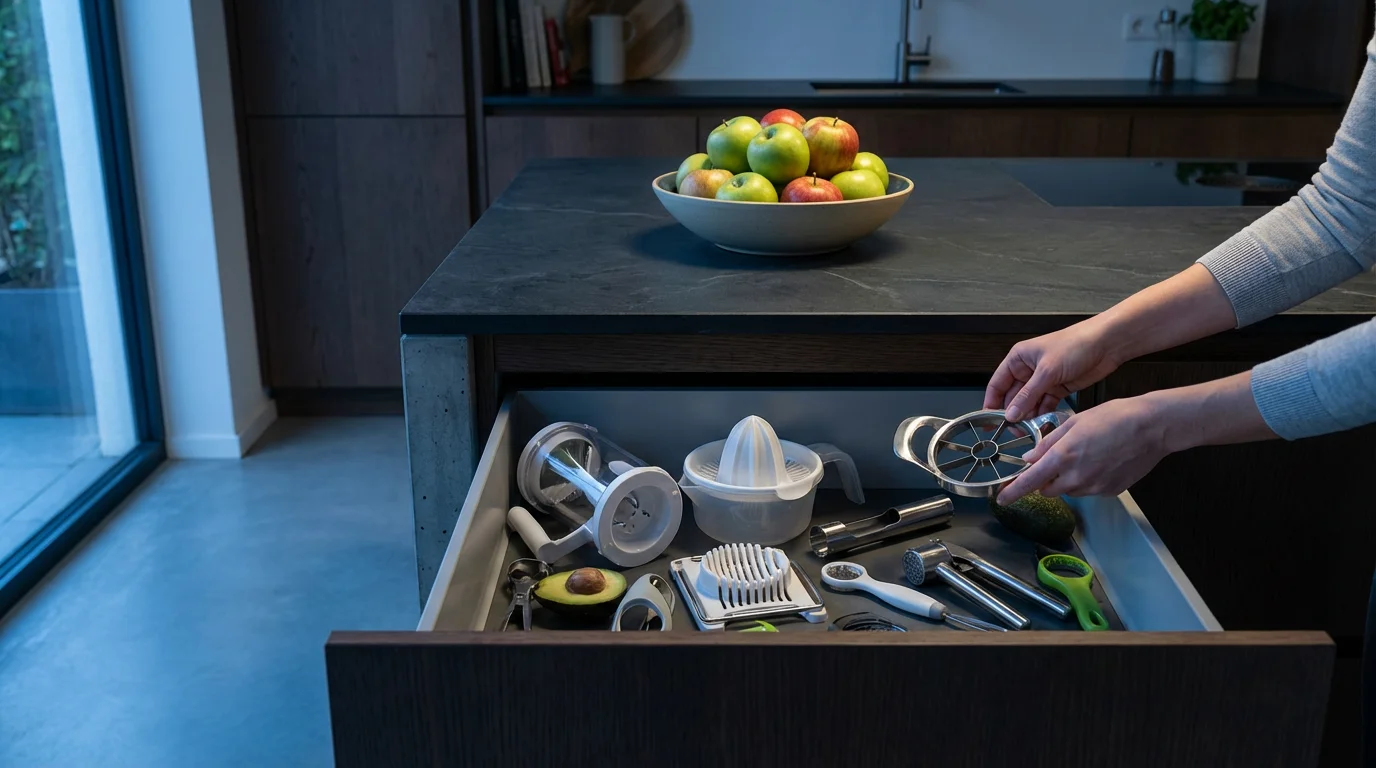
Making Your Choice: Practical Recommendations
Selecting the right apple tool boils down to your specific needs and how you typically use apples. We aim to help you avoid gadgets that end up in the dreaded “kitchen gadget graveyard.”
Buy a Dedicated Apple Corer If:
- You primarily bake with apples and need a perfectly clean core for recipes like how to core apples for baking pies.
- You prefer to slice apples by hand, controlling the thickness and shape.
- Your kitchen has limited storage space, as these are typically very compact.
- You prioritize precise core removal over speed of slicing.
Skip a Dedicated Apple Corer If:
- You rarely core apples or only process one or two at a time.
- You prefer an all-in-one tool for speed and convenience.
Buy an Apple Slicer (Combined Corer-Slicer) If:
- You frequently prepare apples for snacking, kids’ lunches, or fruit salads.
- Speed and uniformity are your top priorities for apple preparation.
- You process large batches of apples regularly.
- You value the convenience of a single-step core and slice operation.
Skip an Apple Slicer If:
- You process very few apples or prefer the control of a knife.
- You have very limited storage space for bulkier gadgets.
- You find the required downward force challenging due to hand strength or mobility issues, unless you opt for a highly ergonomic, well-reviewed model.
Ultimately, the “best” tool is the one you will actually use and that meets your specific culinary demands. Invest in quality materials and ergonomic design for longevity and satisfaction. Good Housekeeping’s kitchen gadget reviews often echo this sentiment, emphasizing that functionality and durability are key to a worthwhile purchase. As Good Housekeeping advises, always read recent user reviews for insights into long-term performance.
Frequently Asked Questions
Are apple corers and slicers difficult to clean?
Cleaning depends on the design. Dedicated corers are generally very easy to clean due to their simple cylindrical shape, often just requiring a rinse. Combined corer-slicers can sometimes trap apple pulp between the blades. Rinsing immediately after use and using a small brush helps. Most quality models are dishwasher safe, which simplifies the process.
Can I use an apple slicer on other fruits?
Apple slicers work best on fruits with similar firmness and internal structure to an apple, such as firm pears. They are not suitable for softer fruits like peaches or tomatoes, which will crush rather than slice cleanly, or fruits with large, irregular pits like avocados. Using them on inappropriate fruits can damage the blades or the fruit itself.
What material is best for apple corer and slicer blades?
Stainless steel is the superior choice for blades. High-quality stainless steel blades remain sharp, resist rust, and withstand repeated use without bending or dulling quickly. While plastic frames are common, ensuring they are reinforced and BPA-free is important for durability and safety.
How do I choose the right size apple slicer?
Most standard apple slicers are designed for medium to large apples. If you primarily work with very small apples (e.g., crabapples) or exceptionally large ones, check the product specifications. Some slicers offer wider openings or more flexible designs to accommodate a broader range of sizes. Consider if you prefer 8 or 12 wedges based on your serving preference.
Disclaimer: Product prices and availability change frequently. Prices shown were accurate at time of writing but may have changed. We may earn a small commission from purchases made through links on this site, at no extra cost to you. Always verify current pricing on the retailer’s website before purchasing.




Leave a Reply