You stand in your kitchen, flour on your apron, phone in one hand, and a mixing bowl in the other. You are trying to decide if you should upgrade your trusty, batter-splattered digital scale to a sleek, Bluetooth-enabled smart scale. Manufacturers promise that these devices will revolutionize how you cook, offering step-by-step recipe guidance, nutritional tracking, and pour-over coffee precision. But do they actually deliver on that promise, or are they just another solution looking for a problem?
For decades, professional bakers have preached the gospel of weighing ingredients over measuring by volume. It is the single fastest way to improve your baking consistency. However, adding an app and Bluetooth connectivity to a simple weighing device introduces a layer of complexity that deserves scrutiny. As home cooks, we need to determine if that complexity adds value or just frustration.
In this guide, we break down the mechanics, the pros and cons, and the real-world utility of smart kitchen scales to help you decide if your kitchen needs an IQ upgrade.
What Exactly Makes a Scale “Smart”?
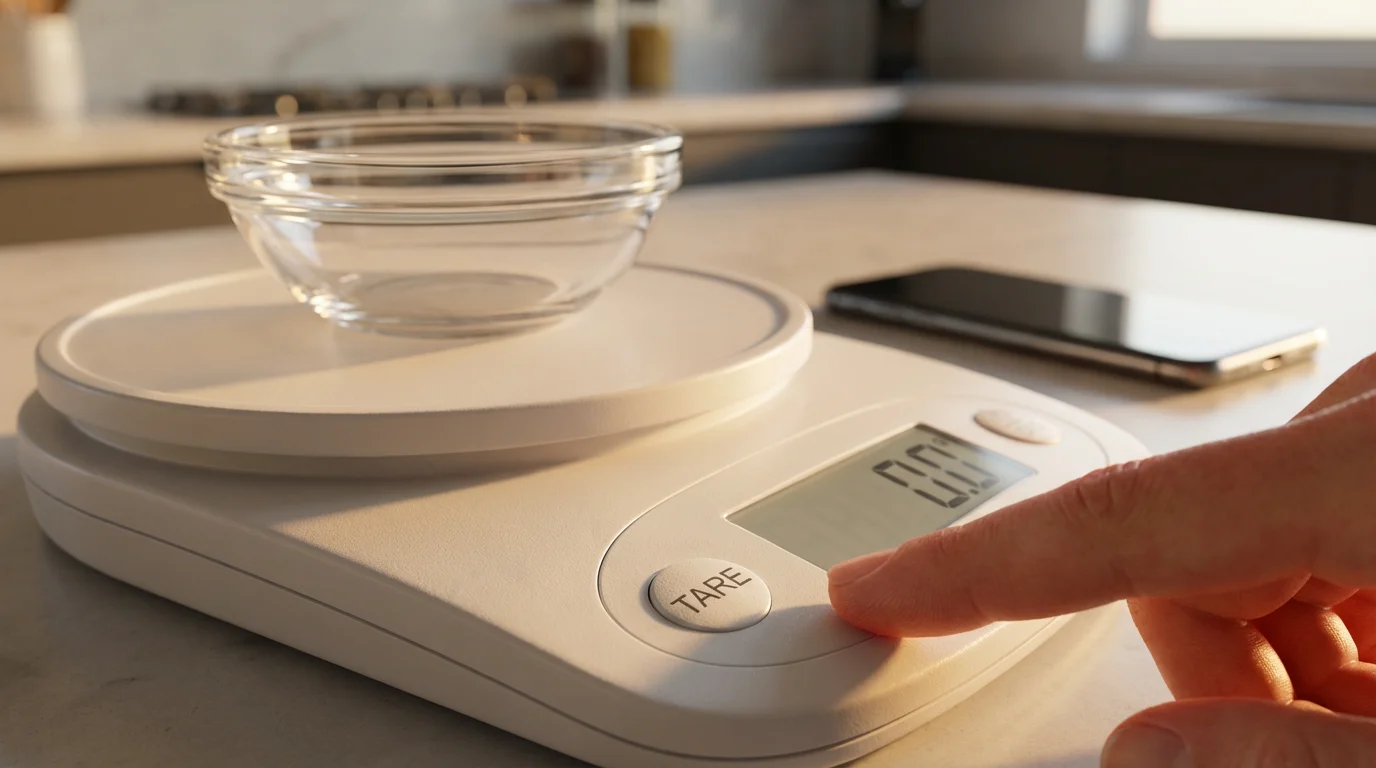
To understand the value proposition, you first need to understand the hardware. A standard digital kitchen scale uses a load cell—a transducer that converts force into an electrical signal—to display weight on an LCD screen. It has a tare button (to zero out the weight of a bowl) and a unit converter. It does one thing, and usually, it does it well.
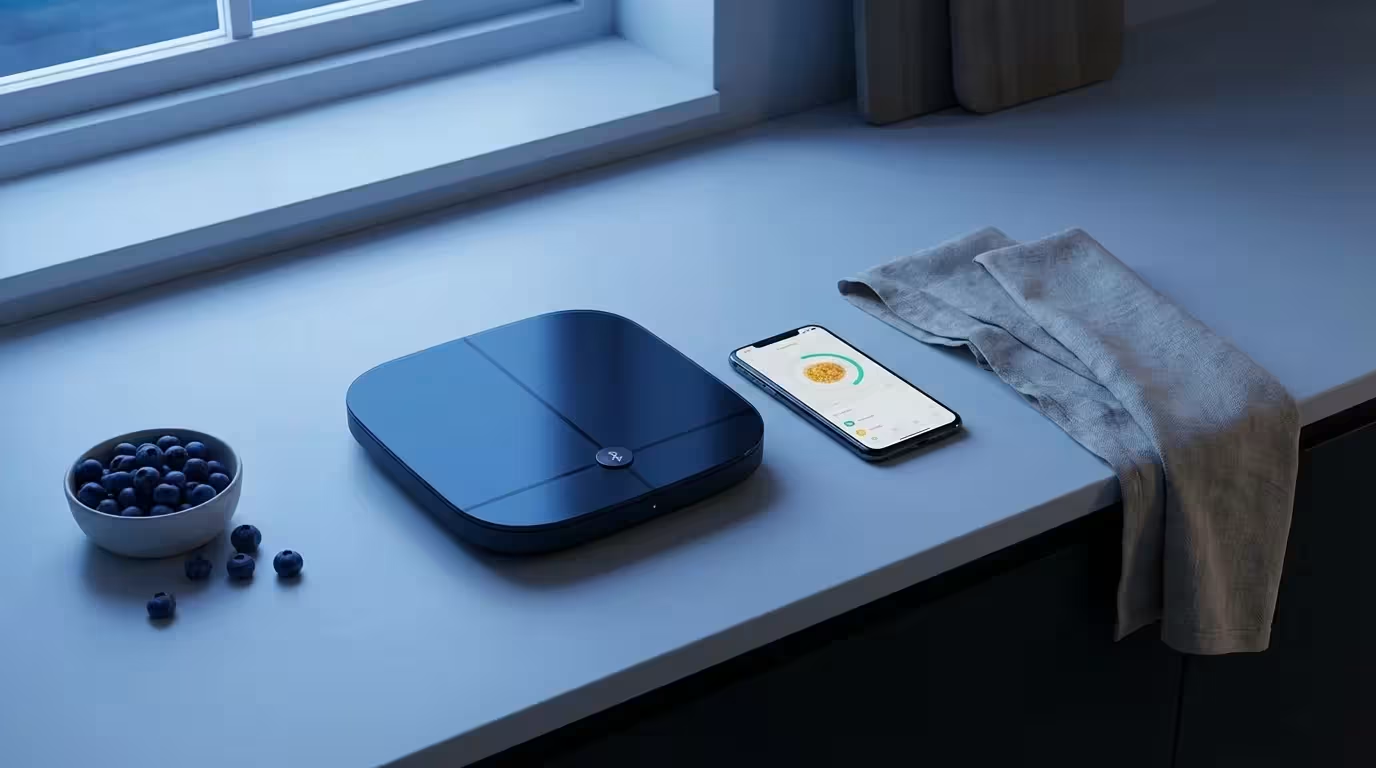
A smart kitchen scale takes that basic load cell functionality and adds a Bluetooth transmitter. This allows the scale to communicate directly with a smartphone or tablet. While many smart scales still have a physical display, some minimalist models rely entirely on your phone screen to show the weight. The “smart” aspect comes entirely from the companion app, which generally offers three main features:
- Recipe Mirroring: The app adjusts ingredient amounts dynamically based on how much you pour.
- Nutritional Calculation: You tell the app what is on the scale (e.g., “chicken breast”), and it calculates calories, protein, carbs, and fats based on the weight.
- Data Logging: It saves your intake or brewing history for future reference.
The goal is to bridge the gap between the physical act of cooking and the digital information of a recipe or diet plan.
The Argument for Connectivity: Where Smart Scales Shine
For the generalist cook making a Tuesday night stir-fry, a smart scale offers little advantage. However, for specific culinary disciplines, the technology solves legitimate problems. If you fall into one of the following categories, the connectivity might justify the higher price tag.
Baking for Beginners
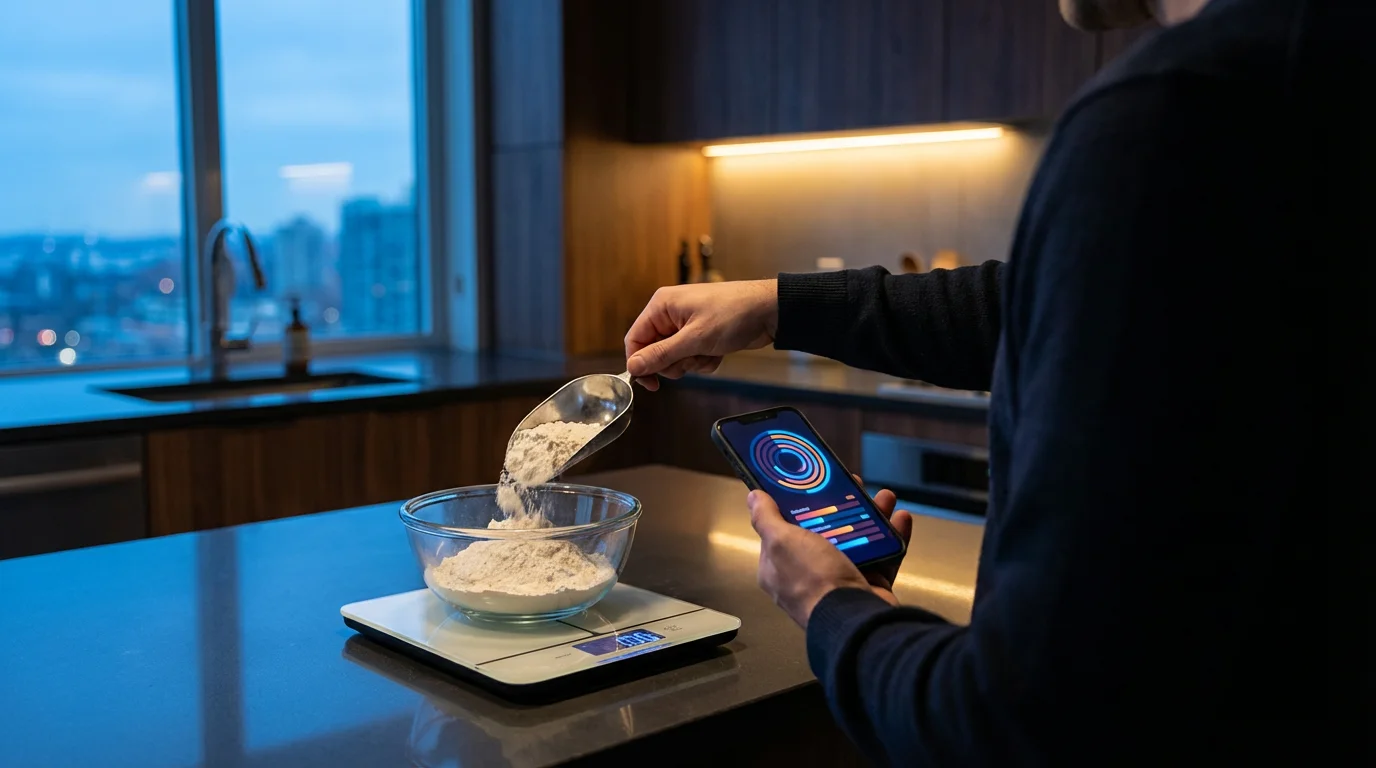
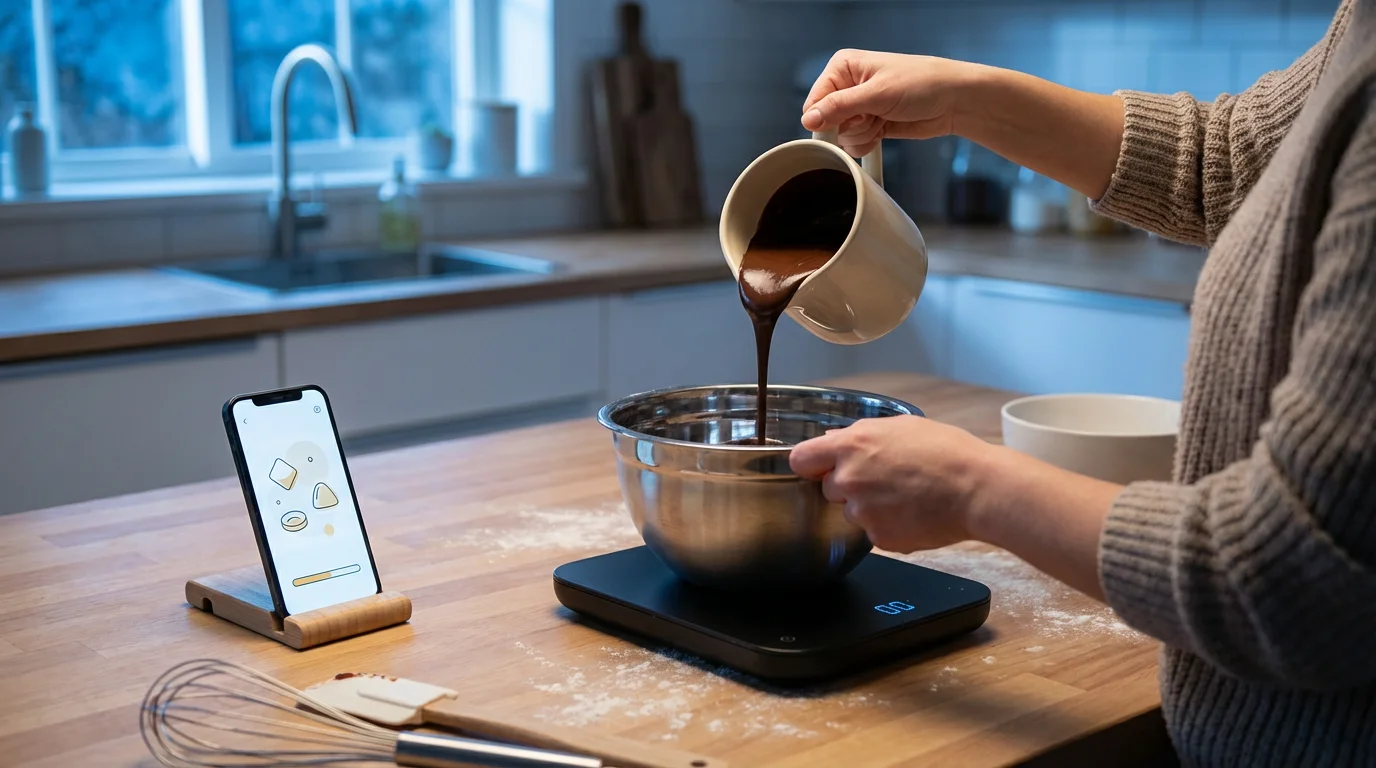
Baking is chemistry; it requires precision. Novice bakers often struggle with “bakers math” or scaling recipes up and down. Smart scale apps often include interactive recipes. As you pour flour into the bowl, a virtual bar fills up on your tablet screen. When you hit the target weight, the app alerts you to stop. If you accidentally over-pour, some sophisticated apps will instantly recalculate the rest of the ingredients to match the error, saving the dough from disaster.
The Cocktail Mixologist
Making complex cocktails usually involves handling sticky jiggers and measuring cups. A smart scale allows you to build a drink directly in the shaker or glass. The app tells you to pour 2 ounces of gin, you pour until the app dings, then it prompts you for the vermouth. It streamlines the process and ensures consistent ratios every time, which is critical for balancing flavors in mixology.

The Coffee Enthusiast’s Secret Weapon
If there is one category where smart scales have found a permanent home, it is the world of specialty coffee. Brewing the perfect pour-over requires monitoring two variables simultaneously: weight (how much water you’ve poured) and time (how long the water has been in contact with the grounds).
Standard scales force you to use a separate timer or do mental math while pouring hot water. Smart scales designed for coffee often feature:
- Auto-Start Timers: The timer begins the moment the first drop of water hits the coffee bed.
- Flow Rate Monitoring: The app visualizes how fast you are pouring water, helping you maintain a consistent extraction.
- Brew Logging: You can save the exact parameters of a successful brew to replicate it later.
According to Serious Eats, precision is non-negotiable for great coffee, and while a basic scale works, the dedicated features of high-end coffee scales provide a level of control that enthusiasts crave.
Dietary Management and Macro Tracking
For individuals tracking macronutrients for bodybuilding, weight loss, or medical reasons (such as diabetes), weighing food is a daily chore. The traditional workflow is tedious: weigh the food, look at the number, open an app like MyFitnessPal, search for the food, and type in the weight.
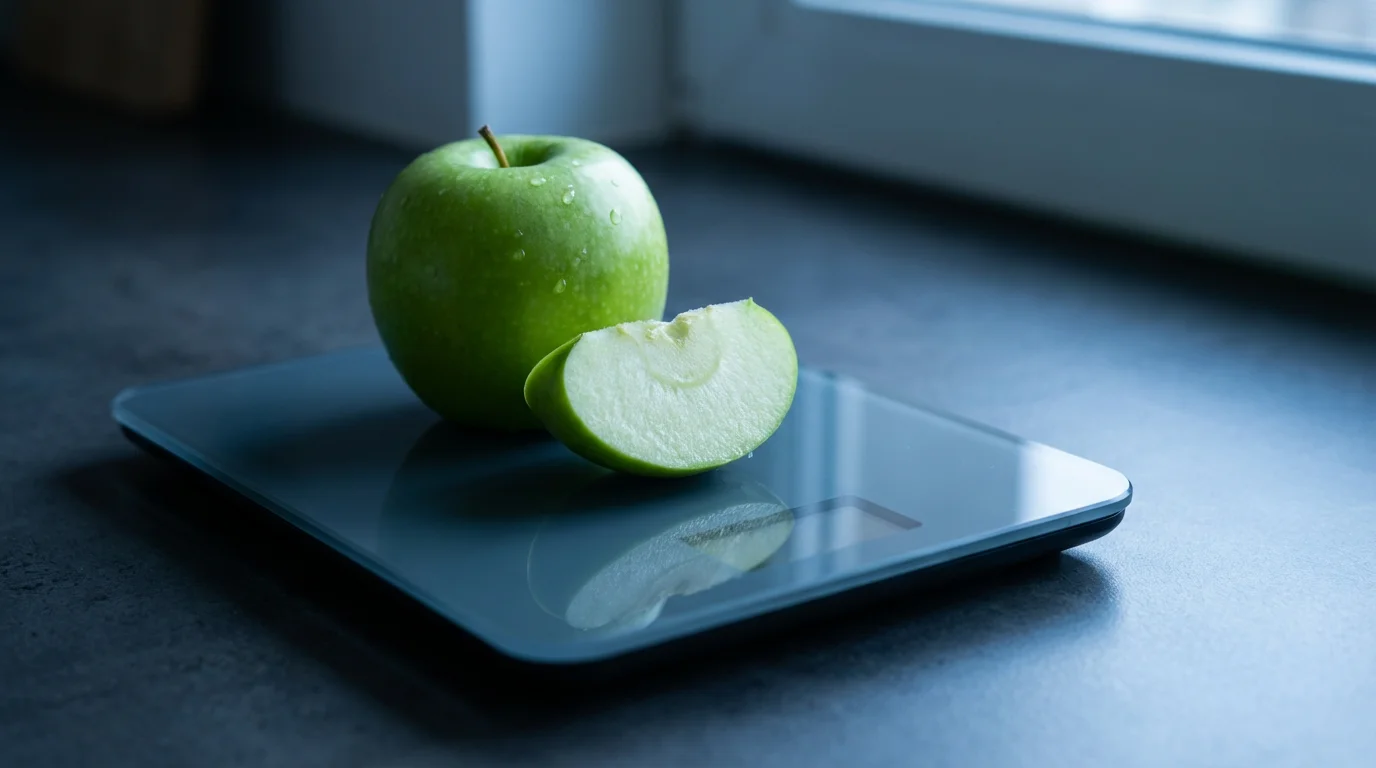
Smart nutritional scales streamline this. You place an apple on the scale, select “Apple” in the scale’s app, and the data—sugar, fiber, calories—is automatically logged into your daily profile. This reduces friction, making it more likely that you will stick to your tracking habit. If you are weighing 15 ingredients a day, saving 30 seconds per ingredient adds up to significant time savings over a week.
The Friction Factor: When Tech Gets in the Way
Despite the potential benefits, smart scales introduce “friction points” that standard scales avoid. A kitchen tool should ideally disappear into the process; smart devices often demand attention.
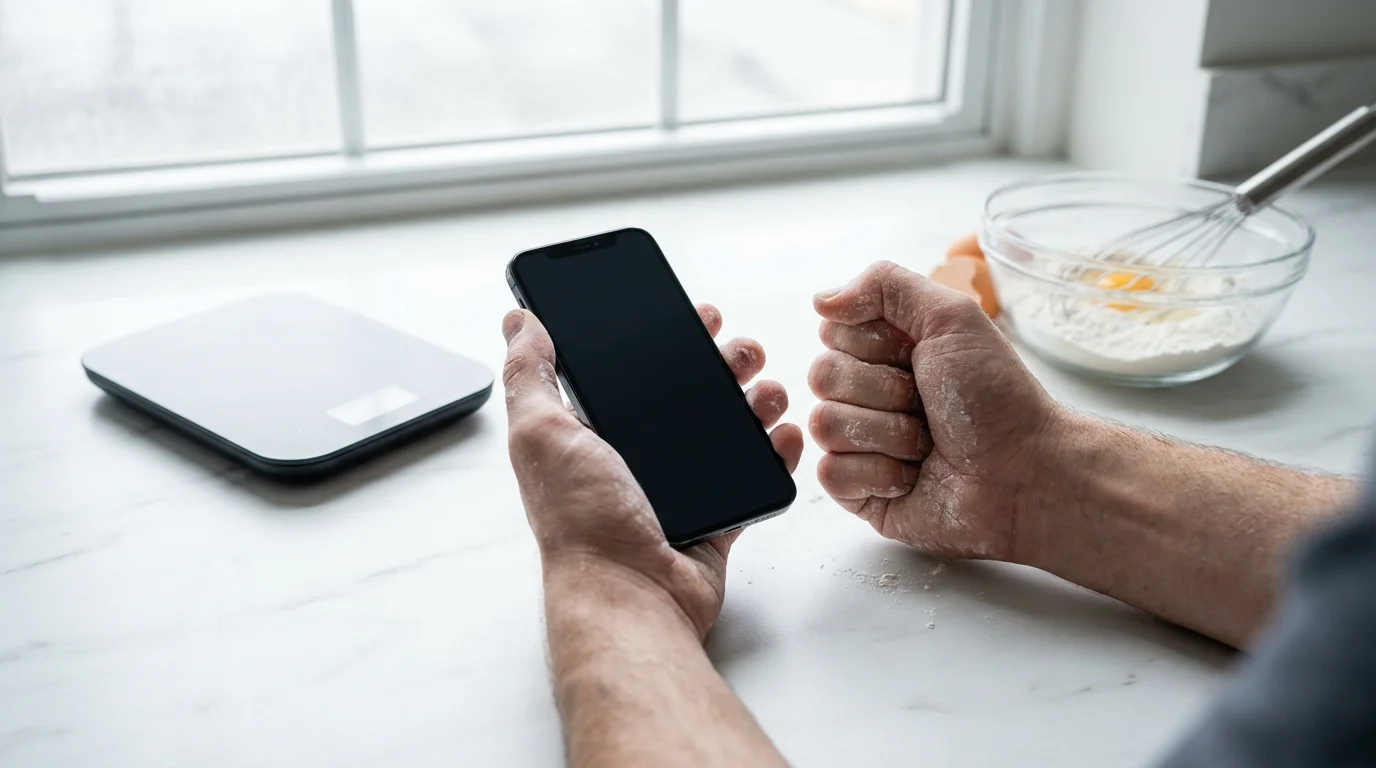
Connectivity Issues: Bluetooth is notoriously fickle. If your phone loses connection with the scale in the middle of a recipe, you are left troubleshooting technology rather than cooking. You have dirty hands, the oven is preheating, and now you have to toggle Bluetooth settings. This is the opposite of convenience.
Screen Dependency: Many smart scales reduce the on-device display quality, assuming you will look at your phone. This forces you to keep your expensive smartphone in the “splash zone” of oil, water, and flour. You also have to keep your phone unlocked, which drains the battery and requires you to touch the screen with potentially messy fingers.
Startup Lag: A “dumb” scale turns on instantly. A smart scale often requires you to open an app, wait for pairing, and navigate a menu before you can weigh a single gram. If you just want to weigh a letter to see how many stamps it needs, or check 100g of pasta, the smart scale is cumbersome.
“The best kitchen gadget is one you’ll actually use every week—not the one with the most Amazon reviews.” — Professional Recipe Developer
Comparison: Smart Scales vs. Standard Digital Scales
To help visualize the trade-offs, here is a direct comparison of how these tools perform across key categories.
| Feature | Standard Digital Scale | Smart Kitchen Scale |
|---|---|---|
| Price Range | $15 – $40 | $40 – $150+ |
| Setup Time | Instant (1 second) | Variable (10 seconds to 1 minute) |
| Battery Life | Months or Years (AA/AAA) | Weeks or Months (often USB rechargeable) |
| Primary Interface | On-device LCD/LED | Smartphone App |
| Advanced Features | Tare, Unit Switch | Nutritional data, Recipe resizing, Flow rate |
| Learning Curve | Zero | Moderate |
The App Ecosystem Trap
When you buy a standard scale, you own the hardware for life. When you buy a smart scale, you are buying into a software ecosystem. This creates a risk known as “bricking.” If the manufacturer goes out of business or decides to stop updating the app for new versions of iOS or Android, the “smart” features of your scale become useless.
We have seen this happen with several “As Seen on TV” gadgets and crowdfunding darlings. Before purchasing, check the app store reviews. Look for recent updates. If the app hasn’t been updated in two years, do not buy the scale. A smart scale without a working app is just an expensive, over-engineered paperweight.
Wirecutter consistently emphasizes the importance of longevity in kitchen gear. They often favor tools that do not rely on third-party software to function, simply because a kitchen scale should last you 10 to 15 years, while software rarely lasts five.

Durability, Materials, and Maintenance
Regardless of the Bluetooth capabilities, the physical build quality matters. Smart scales often use sleek glass surfaces to look high-tech. While glass is easy to wipe down (sanitary), it can be fragile. In a busy kitchen, a heavy cast-iron pan set down too roughly can shatter a glass-topped scale.
Look for these physical specs:
- Button Type: Touch-sensitive buttons are common on smart scales. They look nice but can be unresponsive if your fingers are wet. Physical, tactile buttons are often more reliable in a messy environment.
- Water Resistance: Electronics and water are enemies. Look for scales with sealed internals or “IP” water resistance ratings, especially if you plan to use them for coffee brewing or near the sink.
- Size: Ensure the weighing platform is large enough to hold your mixing bowl without obscuring the display (if it has one).
Verdict: Who Should Buy One (And Who Should Skip It)
Are Bluetooth scales worth it? For the vast majority of home cooks, the answer is no. A high-quality, responsive standard digital scale (often costing under $40) will serve you better, faster, and with less frustration.
However, there are specific exceptions where the “smart” features offer genuine utility.
Buy a Smart Scale If:
- You are a Coffee Geek: You brew pour-over coffee daily and want to track flow rates and brew times precisely to dial in your extraction.
- You Track Macros Strictly: You are managing a specific diet (Keto, Diabetic, Bodybuilding) and the time saved by auto-logging food data outweighs the connectivity hassle.
- You Love Tech-Assisted Baking: You enjoy using apps that resize recipes for you and guide you step-by-step through complex baking projects.
Skip It If:
- You Just Want to Cook Dinner: If you need to weigh 500g of pasta or check a postage letter, a smart scale is overkill.
- You Hate Sticky Phones: If the idea of touching your $1,000 smartphone with raw chicken hands stresses you out, avoid app-dependent kitchen tools.
- You Value Longevity: If you want a tool that will definitely work in 10 years regardless of iPhone updates.
Frequently Asked Questions
Do smart scales work if I don’t use the app?
Most smart scales function as basic digital scales without the app, displaying the weight on the built-in screen. However, some minimalist models lack a screen entirely and require the phone to be connected to show any data. Always check if the model has a physical display before buying.
Are smart kitchen scales more accurate than regular scales?
Generally, no. The “smart” feature refers to connectivity, not the sensor quality. Both types usually use similar load cell technology. However, coffee-specific smart scales often measure in 0.1g increments, whereas standard kitchen scales often only measure in 1g increments. This high precision is available in non-smart scales as well.
Can I put my smart scale in the dishwasher?
Absolutely not. While some parts (like a removable rubber mat) might be dishwasher safe, the scale itself contains sensitive electronics and batteries. Submerging it will destroy it. Clean it by wiping the surface with a damp cloth.
Disclaimer: Product prices and availability change frequently. Prices shown were accurate at time of writing but may have changed. We may earn a small commission from purchases made through links on this site, at no extra cost to you. Always verify current pricing on the retailer’s website before purchasing.

Leave a Reply