
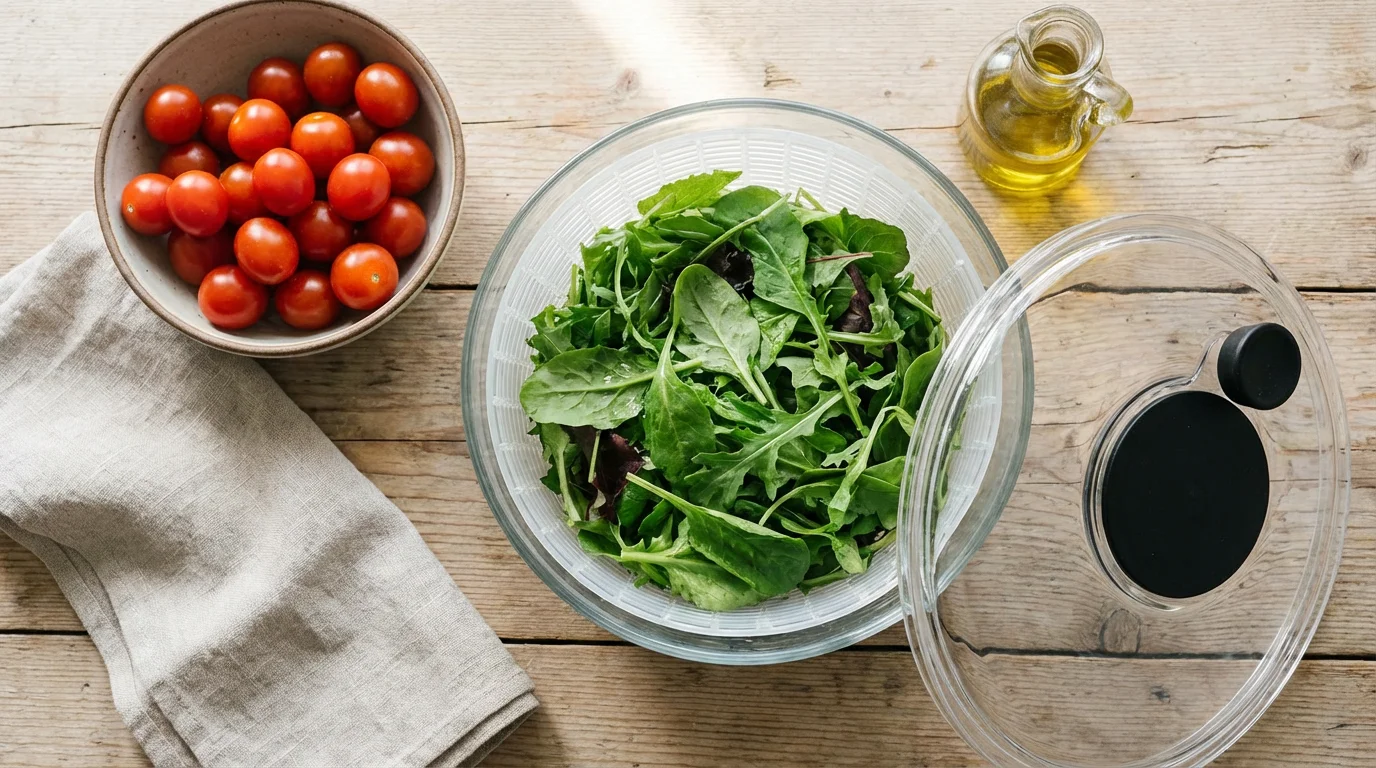
You crave crisp, vibrant salads. You wash your greens meticulously, but then you face the age-old problem: how do you get them truly dry without bruising them or using an entire roll of paper towels? Waterlogged lettuce dilutes dressing, weakens flavor, and makes for a sad, limp salad experience. This common kitchen dilemma leads many home cooks to consider a seemingly simple solution: the salad spinner. But is this specialized gadget a kitchen essential, a convenient luxury, or just another unitasker destined for the back of your cabinet?
As expert kitchen product reviewers, we approach every gadget with a healthy dose of skepticism. We understand you’ve likely invested in kitchen tools that promise the world but deliver only disappointment. Our goal is to provide practical, actionable insights supported by hands-on testing and real-world results. We evaluate whether a tool genuinely simplifies your cooking, saves time, or improves the quality of your meals. Let’s dive deep into the world of salad spinners to determine if this particular piece of equipment deserves a spot in your kitchen.
The Pursuit of Perfectly Dry Greens: Why It Matters
The foundation of an outstanding salad lies in its greens. They must be impeccably clean and, crucially, thoroughly dry. Excess moisture on lettuce or other salad components creates a barrier, preventing your dressing from adhering properly. Instead of coating each leaf, the dressing slips off, leaving pools at the bottom of the bowl and a bland, unappetizing experience. This isn’t a minor detail, it’s fundamental to achieving vibrant flavors and appealing textures.
If you want to add more texture and visual appeal to your salads, consider using vegetable spiralizers to create beautiful zucchini or carrot ribbons.
Beyond taste, thoroughly dried greens also last longer. Moisture promotes spoilage, so removing as much water as possible before storage extends the shelf life of your produce, reducing food waste and saving you money. We’ve seen firsthand how properly dried greens can stay crisp for days longer than those simply patted down with a towel, which rarely removes enough moisture. This simple step can dramatically improve your weekly meal prep and grocery budget.
“The best kitchen gadget is one you’ll actually use every week, the one that solves a genuine kitchen frustration effectively and efficiently.”
What Exactly is a Salad Spinner and How Does It Work?
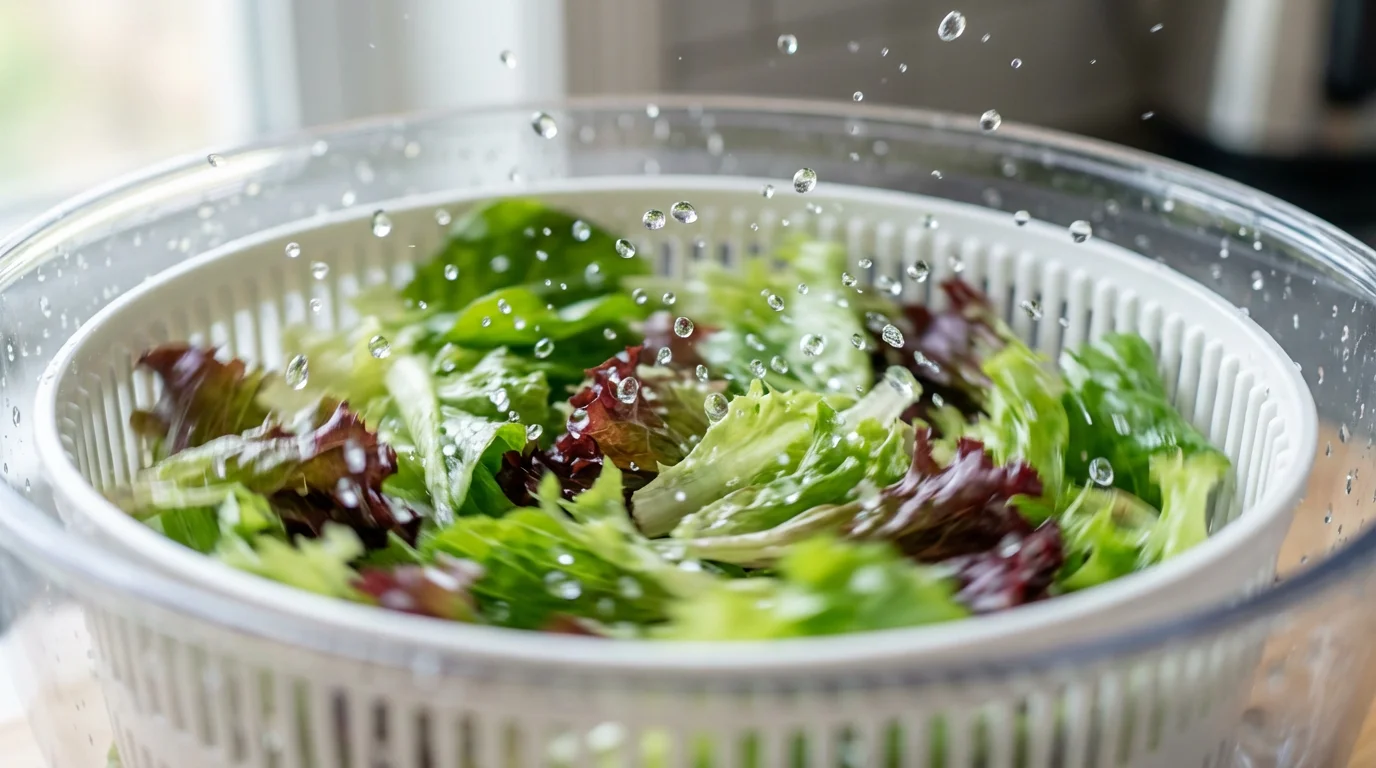
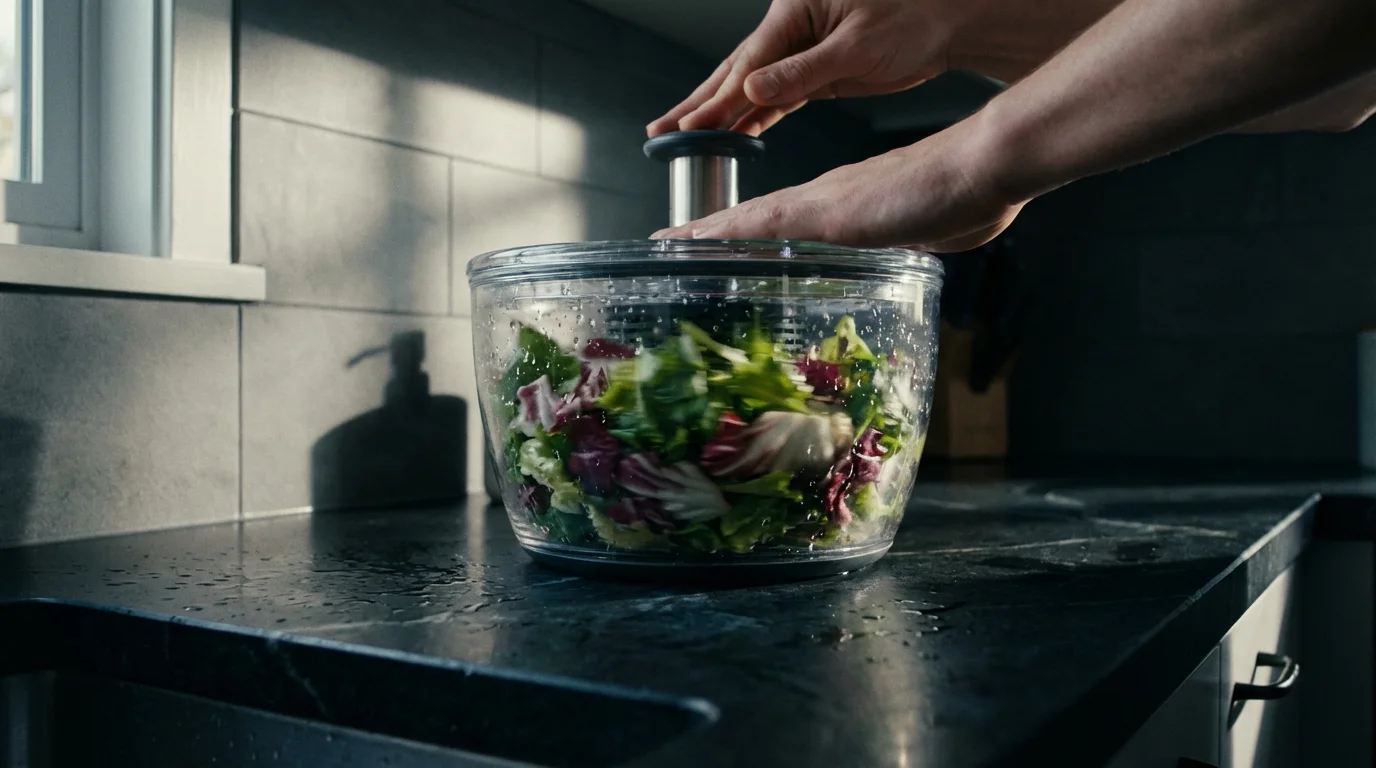
A salad spinner is a kitchen gadget designed to remove excess water from washed salad greens, herbs, and other produce using centrifugal force. It typically consists of an outer bowl, an inner colander basket, and a lid containing a spinning mechanism. To use it, you place your washed greens in the inner basket, secure the lid, and activate the spinning mechanism. This can be a pull-cord, a pump, or a crank handle, depending on the model.
Using a Microplane grater is another efficient way to add finely grated ingredients like hard cheese or citrus zest to your greens once they are perfectly dry.
As the basket spins rapidly, the water droplets clinging to the greens are flung outwards through the perforations in the colander basket and collect in the outer bowl. This process effectively dries the greens without damaging their delicate structure. It is a more efficient and gentle method than patting dry with towels or shaking greens by hand, which often leaves residual moisture and can bruise delicate leaves. The physics of the spin ensures that water is separated from the greens, leaving them ready for dressing, storage, or serving.
Single-Purpose Tool or Kitchen Essential? The Debate Over the Salad Spinner
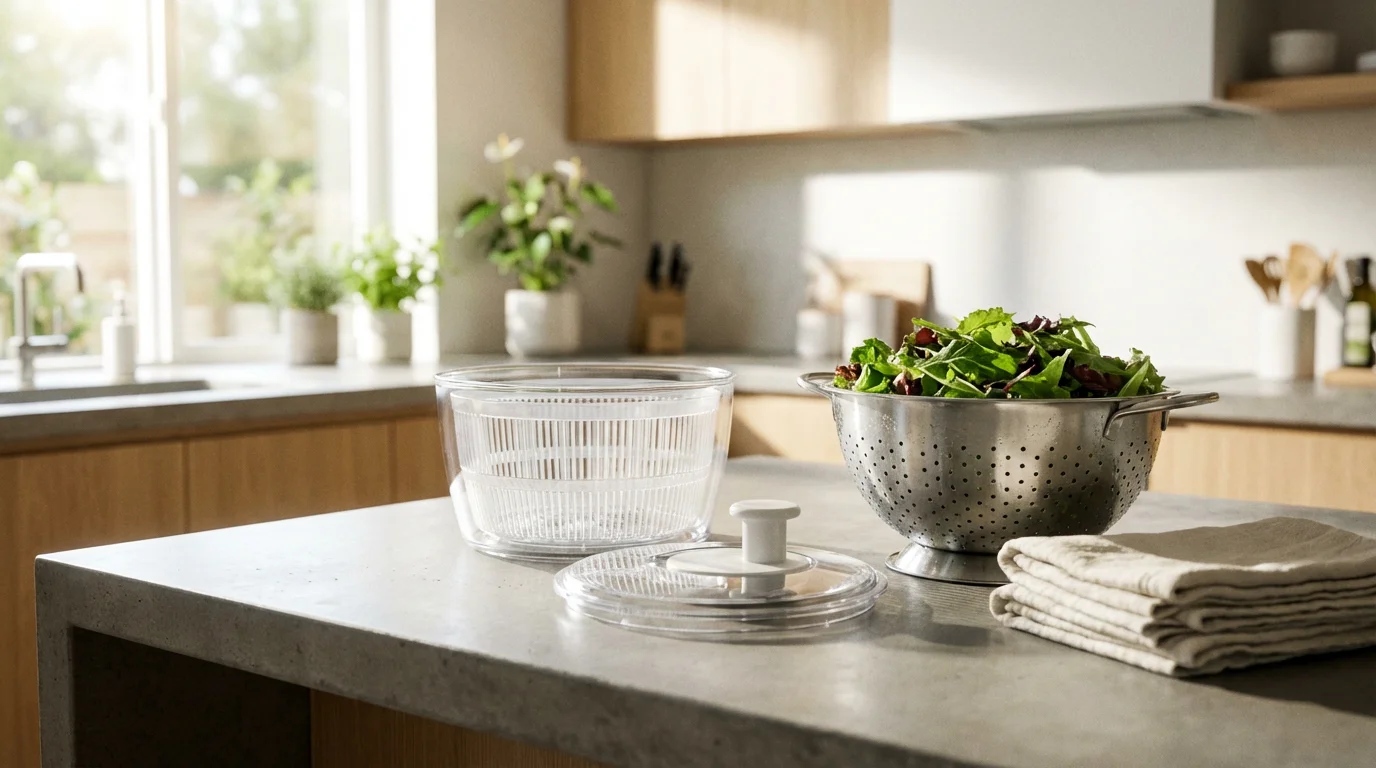
The term “unitasker” often surfaces in discussions about kitchen gadgets. A unitasker is a tool that performs only one specific task, like a banana slicer or an egg separator. Critics argue that unitaskers clutter kitchens, consume valuable storage space, and offer minimal utility compared to multi-functional tools. The salad spinner often finds itself squarely in this debate.
To quickly enhance the flavor of your homemade salad dressings, the best garlic press ensures your cloves are minced effortlessly and consistently.
On one hand, a salad spinner’s primary function is indeed very specific: drying greens. It doesn’t chop, slice, or mix. On the other hand, for frequent salad eaters, its ability to perfectly dry greens is invaluable. Wet lettuce leads to bad salads, and the spinner addresses this core problem directly and efficiently. Consider your cooking habits: if you prepare salads or wash large quantities of produce regularly, a salad spinner transcends the “unitasker” label to become a practical time-saver and quality enhancer.
Our testing shows a good salad spinner makes a noticeable difference in salad quality and kitchen efficiency. It frees up counter space from piles of paper towels and reduces the time spent manually drying. According to Wirecutter’s kitchen gadget reviews, a quality salad spinner consistently outperforms alternative methods for drying leafy greens, making it a worthy investment for many home cooks. It provides a level of dryness and convenience that manual methods struggle to achieve consistently.
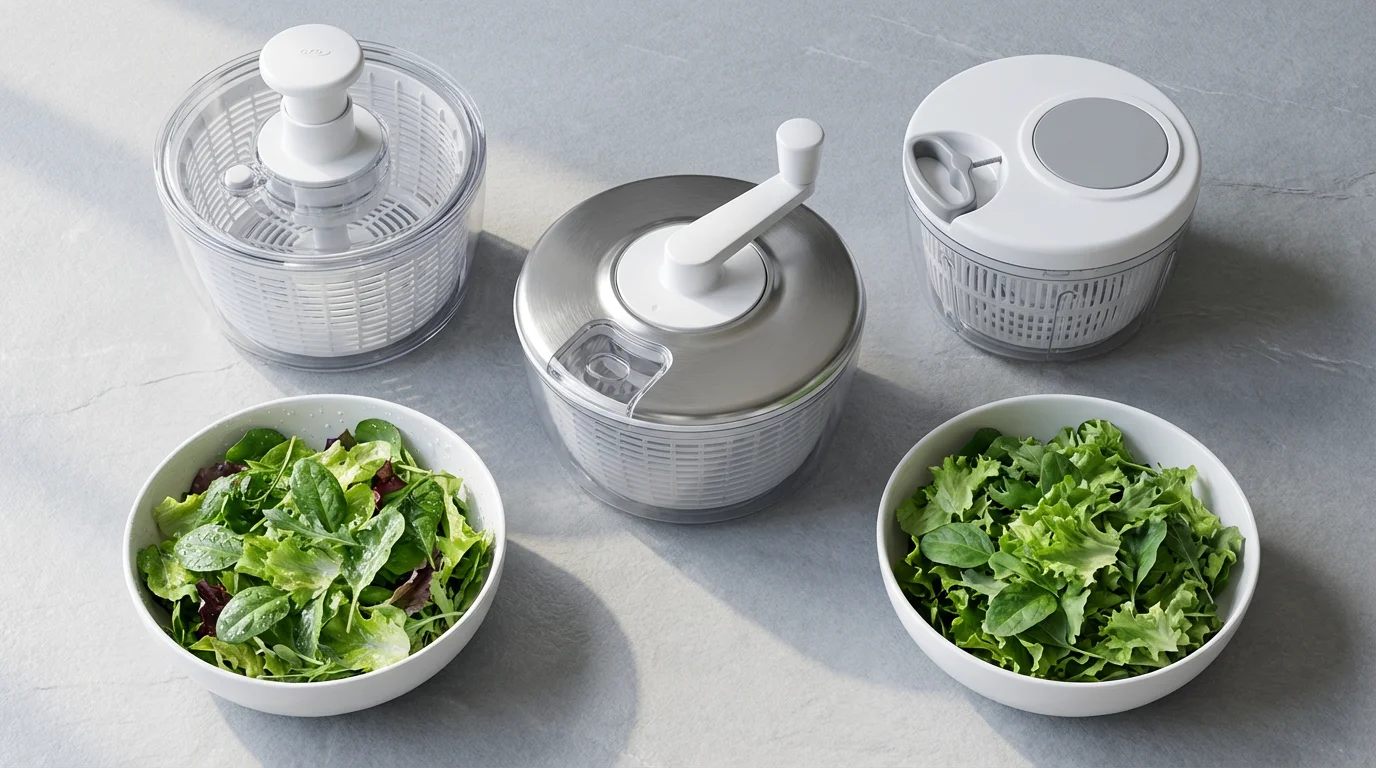
Testing Popular Salad Spinners: Performance and Features
We put several leading salad spinners through their paces, evaluating their drying efficiency, ease of use, durability, and additional features. Here’s what we found:
For those who frequently top their salads with healthy fats, specialized avocado tools can make the process of slicing and pitting much safer.
| Spinner Type | Key Mechanism | Pros | Cons | Best For |
|---|---|---|---|---|
| Pump-Action | Push-button pump, brake button | Excellent drying, very easy one-hand use, ergonomic, often doubles as serving bowl. | Higher price, mechanism can be harder to clean if disassembled. | Frequent salad makers, those prioritizing ease and efficiency. |
| Crank-Handle | Rotating handle on lid | Very durable, good control over spin speed, often robust and stable. | Requires two hands, handle can be bulky for storage. | Durability seekers, control-oriented users. |
| Pull-Cord | Pull-string mechanism | Most compact, very affordable, good for minimal space. | Less powerful spin, cord can be fragile, less stable on counter. | Small kitchens, occasional users, budget-conscious buyers. |
Across all types, the primary metric for performance is how dry the greens get without damage. We found that the better models effectively removed 90-95% of surface water, leaving greens crisp and ready for dressing. Inferior models left noticeable droplets, defeating the purpose of a dedicated lettuce dryer. The key is consistent, vigorous spinning without violent agitation that would bruise delicate leaves.
Deep Dive into Pump-Action Spinners: The OXO Good Grips Advantage
Models like the OXO Good Grips salad spinner consistently rank high in our tests for their outstanding drying power and user-friendly design. Their pump-action mechanism is remarkably easy to operate, even with one hand. A simple press on the large, comfortable knob quickly brings the basket up to speed, and a convenient brake button allows you to stop it instantly. This precise control prevents over-spinning and potential damage to delicate leaves. Many OXO models feature an outer bowl that doubles as an attractive serving bowl, adding versatility. The lid often flattens with a lock for easier storage, reducing its vertical footprint. The pump mechanism typically integrates a non-slip grip, which means the handle is designed to not slide in your hand, even when wet or greasy, ensuring safe and comfortable operation.
Examining Crank-Handle Spinners: Reliable and Robust
Crank-handle spinners, such as those from Zyliss or RSVP International, offer robust performance and excellent durability. You turn a handle on the lid to spin the basket, which often feels more direct and powerful than a pull-cord. While they typically require two hands for operation, one to hold the base and one to crank, they provide excellent control over spin speed. Many designs feature a sturdy, non-slip base for stability on your countertop, preventing wobbling during vigorous spinning. These models often feature simpler, more mechanical designs, which can contribute to their longevity and perceived robustness. The gearing systems are usually well-engineered to deliver efficient spinning with minimal effort.
Evaluating Pull-Cord Spinners: Compact and Convenient
Pull-cord models are often the most compact and can be a good option for small kitchens or for those who use a salad spinner less frequently. A simple pull of a cord on the lid initiates the spin. While often effective for basic drying, we found they sometimes don’t achieve the same high spin speeds or drying efficiency as pump or crank models. The cords can also be prone to tangling or breaking over time if not handled carefully, representing a potential point of failure. However, their smaller footprint and lower price point make them an attractive choice for those with limited space or a budget. They represent a compromise between performance and convenience.
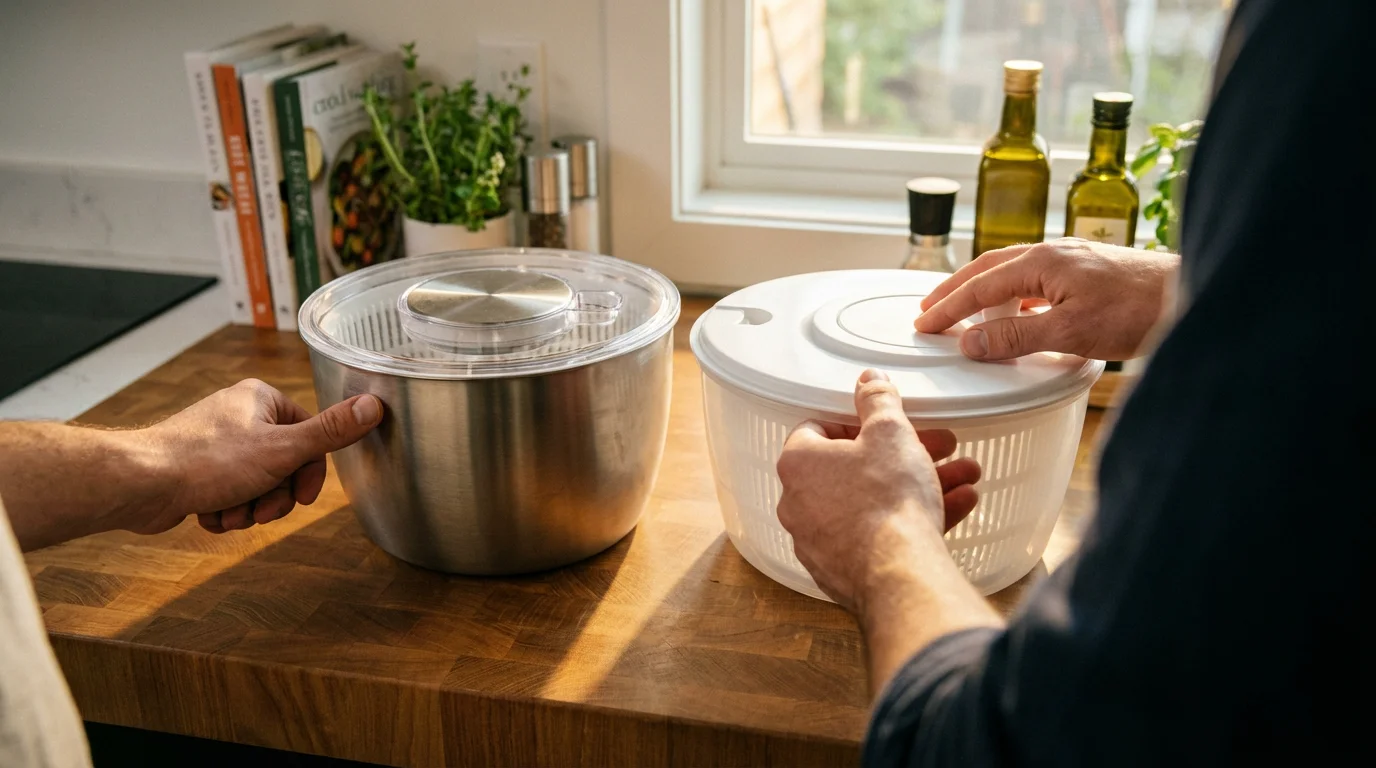
Beyond the Spin Cycle: Durability, Materials, and Design
The longevity and usability of a salad spinner hinge significantly on its build quality and materials. We scrutinize components that impact both performance and health considerations.
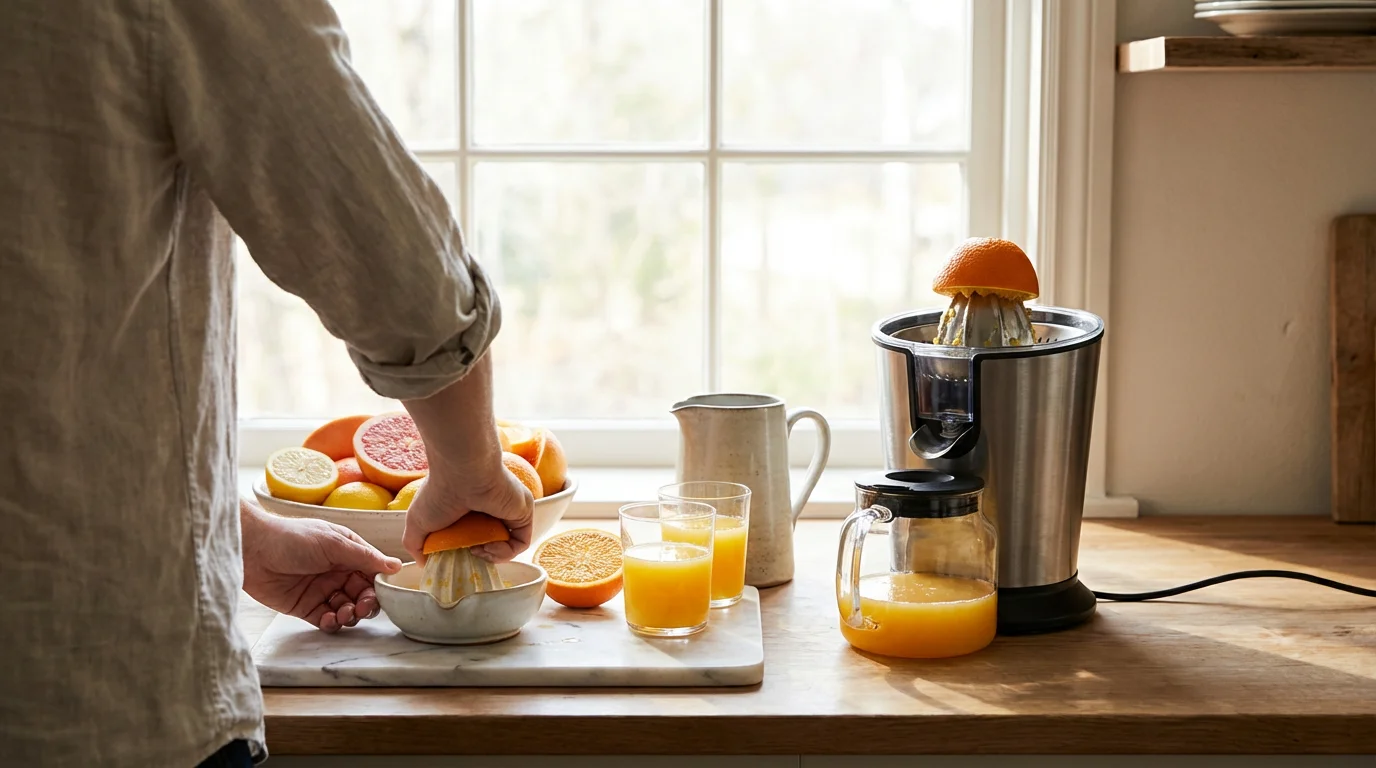
Finishing your salad with fresh lemon or lime juice from high-quality citrus juicers provides a bright acidity that pairs perfectly with crisp, dry greens.
Materials Matter: Stainless Steel vs. Plastic
Most salad spinners primarily use plastic for the bowls and basket, with some premium options featuring stainless steel outer bowls.
- High-Quality Plastic Models: High-quality, BPA-free plastic is common. BPA-free means it is made without Bisphenol A, a chemical some people prefer to avoid in food contact items due to potential health concerns. These models are typically lighter, making them easier to handle, and more affordable. Look for sturdy, thick plastic that resists cracking, staining, and odor absorption. Brands like OXO and Zyliss generally use robust, impact-resistant plastics that stand up to repeated use, dishwashing, and the occasional drop. The clarity of the plastic bowls also allows you to easily monitor your greens.
- Stainless Steel Outer Bowls: Some premium salad tools integrate a stainless steel outer bowl. This offers several distinct advantages: superior durability against impacts and scratches, a more elegant and modern aesthetic that allows it to seamlessly double as a serving bowl for your freshly spun greens, and often better thermal properties if you chill your greens in the bowl before serving. Stainless steel is a durable metal that resists rust and staining, making it a long-lasting and hygienic material choice. While stainless steel models are heavier and more expensive, the investment often pays off in longevity, versatility, and visual appeal, enhancing its value beyond a single-purpose tool.
Ergonomic Design and Ease of Use
An ergonomic design ensures the gadget is comfortable to hold and use, regardless of hand size or strength. This is crucial for kitchen tools you use frequently, preventing strain and making the task more enjoyable.
- Handles and Knobs: Pump-action spinners with large, easy-to-press knobs or crank spinners with comfortably contoured handles reduce hand fatigue during operation. Many feature a non-slip grip, which means the handle is designed to not slide in your hand, even when wet or greasy, providing security and control.
- Stability: A good salad spinner remains stable on the counter during vigorous spinning, preventing it from skidding or tipping. Look for models with rubberized feet, a wide, heavy base, or a suction cup mechanism. Our tests revealed that models lacking a stable base often required one hand to hold the spinner down, negating some of the ease-of-use benefits and making the process less efficient.
- Lid Design: Lids that fit securely, yet are easy to attach and remove, contribute significantly to overall ease of use. A clear lid also lets you monitor the greens without interruption.
Build Quality Observations
We consistently found a direct correlation between price and overall build quality. Cheaper models often use thinner, more brittle plastics that feel flimsy and mechanisms that jam, squeak, or wear out quickly, leading to frustration and early replacement. Mid-range and premium spinners, however, often feature tightly fitting lids, smooth and quiet spinning mechanisms, and robust materials that instill confidence in their longevity and performance. According to Serious Eats’ equipment reviews, the longevity of a salad spinner often comes down to the quality of its moving parts and the resilience of its plastic components against common kitchen stresses like dropping or vigorous use.
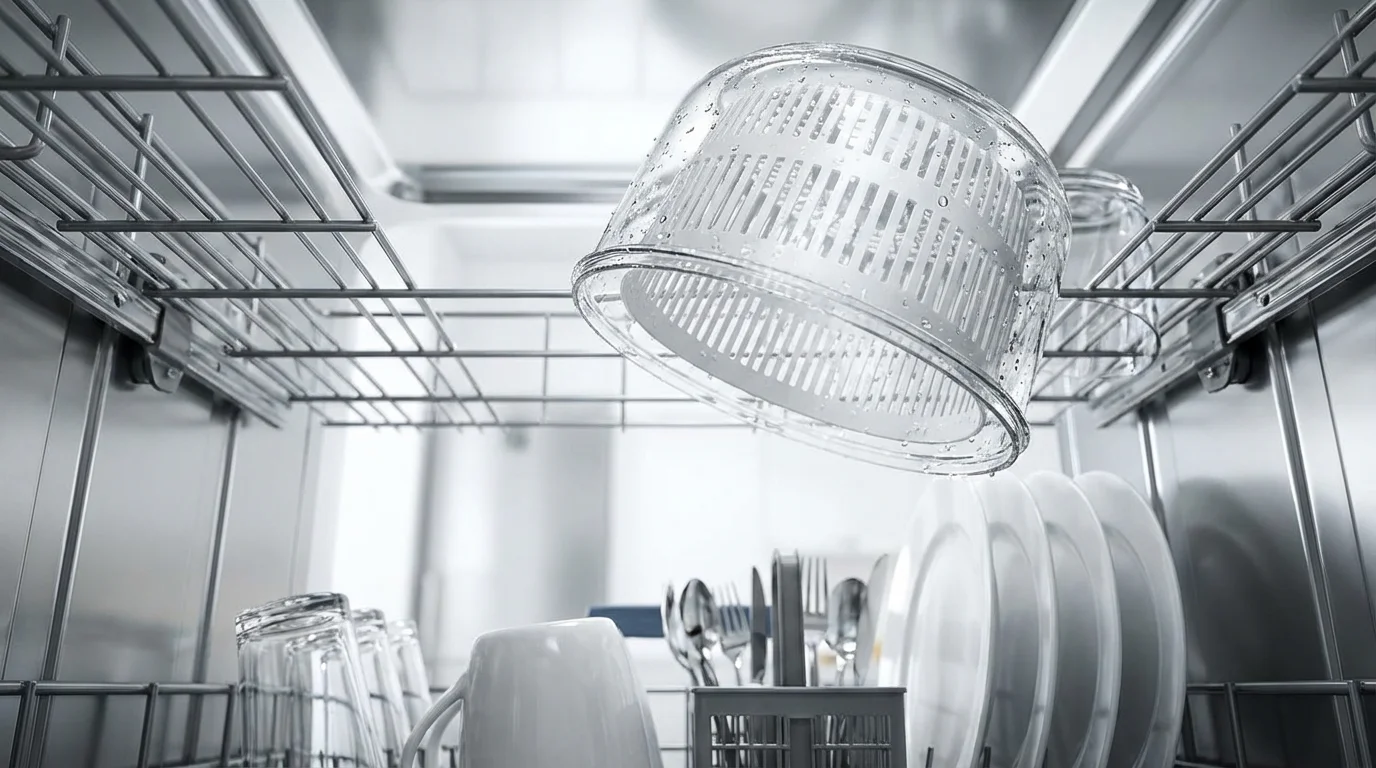
Storage, Cleaning, and Maintenance: Practical Considerations
Even the most effective gadget becomes a burden if it’s a nightmare to clean or consumes too much precious kitchen real estate.
Cleaning Difficulty and Dishwasher Compatibility
Most salad spinners are designed for relatively easy cleaning. The inner basket and outer bowl are typically dishwasher safe, meaning they can be cleaned in a dishwasher without damage. This makes routine cleaning simple and convenient. However, the lids, especially those with complex pump or crank mechanisms, often require hand washing to protect the delicate moving parts from high heat, aggressive water jets, and harsh detergent residue that can degrade plastic or lubricants over time. Always check the manufacturer’s instructions for specific care guidance. We generally recommend hand washing the lid regardless, simply because trapped food particles in mechanisms can be difficult to remove and might lead to hygienic concerns or operational issues.
When evaluating models, we prioritize designs with minimal crevices, nooks, and crannies where water or food debris could get trapped, making cleaning a chore. Simple, two-piece designs (outer bowl and inner basket) are generally easier to clean than lids with many small, intricate moving parts. Brands like Progressive and Cuisinart offer some models with lids that disassemble more easily for thorough cleaning, which is a significant advantage for long-term maintenance.
Storage and Countertop Footprint
Salad spinners are relatively bulky kitchen items. They occupy a significant amount of cabinet space, which is a critical consideration, especially for a small kitchen where every inch counts.
- Nested Designs: Many well-designed models feature a nested design where the colander basket fits snugly inside the outer bowl. Furthermore, the lid can often be inverted, disassembled, or has a flattened profile to reduce the overall height of the stacked unit, making it easier to store in cabinets.
- Multi-Use Bowls: As mentioned, a spinner with an attractive and sturdy outer bowl that can serve salads directly or store other produce adds value, making it less of a strictly single-purpose item. This versatility helps justify its space requirement.
- Capacity: Spinners range in capacity from small, personal-sized models (around 2.5 quarts, suitable for 1-2 servings) to large family-sized versions (5+ quarts, ideal for entertaining or meal prepping). Choose a size appropriate for your typical needs. A larger spinner, while more versatile for bulk drying, will inevitably take up more space. For the best salad spinner for small kitchen, consider compact pull-cord models or those with exceptionally good nesting features that minimize height when stored.
Warranty and Customer Service
A good warranty signals a manufacturer’s confidence in their product’s durability and quality. Many reputable brands offer a limited warranty, typically 1-5 years, covering defects in material and workmanship. While we didn’t explicitly test customer service for every brand, brands like OXO are widely known for responsive and helpful customer support, which adds valuable peace of mind to your purchase. Knowing you can get support for a faulty mechanism or missing part is an underrated aspect of product value.
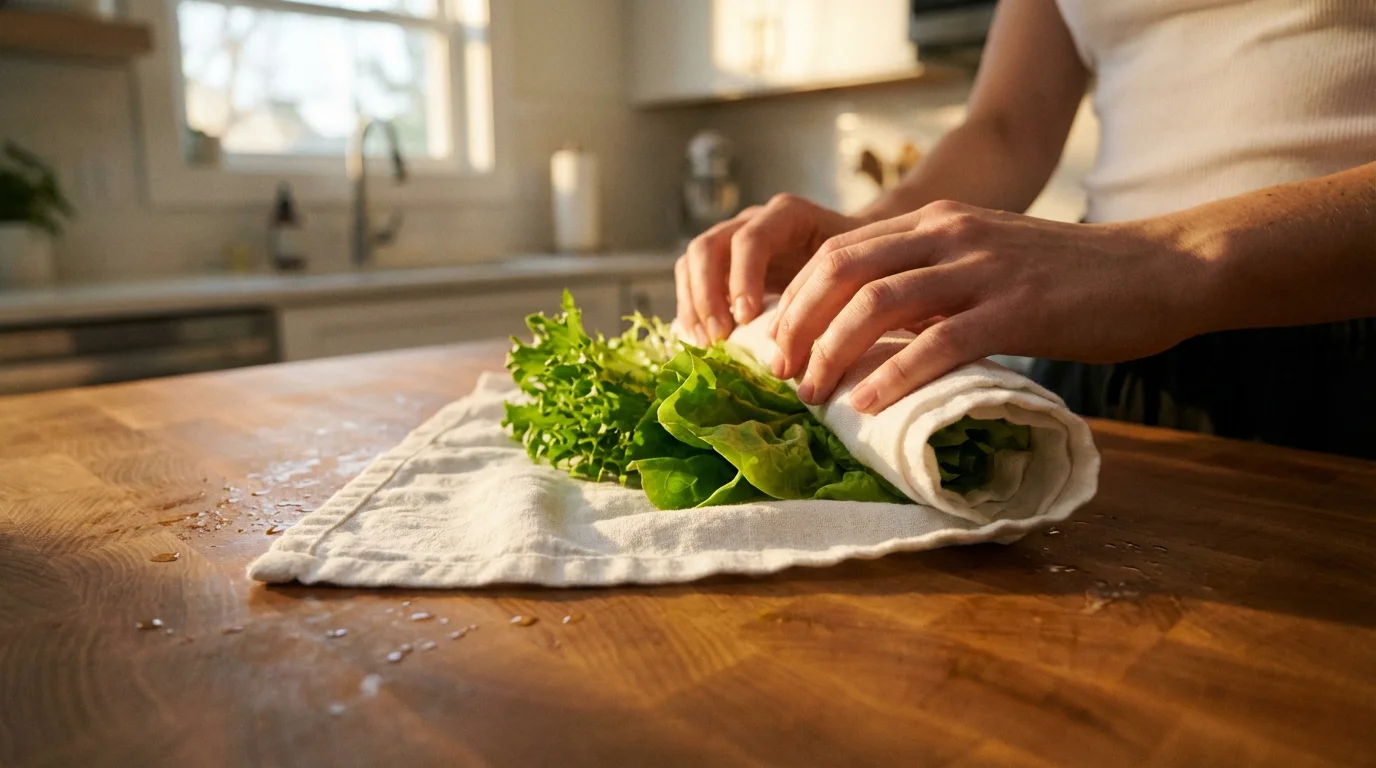
Alternatives to the Salad Spinner: Drying Lettuce Without a Gadget
If you’re still on the fence about dedicating cabinet space to a salad spinner, or you simply prefer minimalist kitchen tools, several effective methods exist for how to dry lettuce without salad spinner:
- Paper Towel Method: Lay clean greens on several layers of paper towels, gently roll them up, and pat or press lightly. This absorbs a good amount of moisture, but can use a lot of paper towels, especially for large quantities, and doesn’t always get greens completely dry. It’s effective for small batches of very delicate greens.
- Clean Kitchen Towel Method: This method is similar to using paper towels but more sustainable. Lay greens on a large, clean, absorbent kitchen towel. Gather the corners of the towel to create a secure pouch, then go outside or find a spacious area and swing the pouch around vigorously in circles. Centrifugal force will release water, which the towel absorbs. This method is surprisingly effective, often used by professional chefs in kitchens lacking a spinner, but requires space and can be messy if not done carefully.
- Colander Shake: After washing, place greens in a standard kitchen colander and shake vigorously over the sink. While better than simply draining, this is typically the least effective method for thorough drying and risks bruising delicate leaves due to the harsh agitation. It leaves significant residual moisture.
- Salad Bag & Roll: For delicate greens that bruise easily, place them in a clean plastic bag (like a large produce bag). Inflate the bag slightly by blowing into it, then seal it. Gently shake and roll the bag on your counter. The air cushion protects the greens while the motion helps dislodge water droplets. Afterward, empty them onto a clean towel to finish air drying.
While these alternatives can work, none match the speed, efficiency, and consistent dryness of a well-designed salad spinner. For serious home cooks, the time and effort saved, along with the superior results, often justify the investment in a dedicated lettuce dryer, particularly when preparing salads frequently.
Is a Salad Spinner Right for Your Kitchen?
After extensive testing and consideration, our verdict on the salad spinner is nuanced. It is not an absolute necessity in the same way a good knife or cutting board is, but it offers significant advantages that elevate salad preparation from a chore to an efficient pleasure. For many, it moves beyond a simple unitasker to become a valued kitchen helper.
Buy a Salad Spinner if:
- You make salads frequently, at least a few times a week.
- You want perfectly crisp, dry greens that hold dressing beautifully every time.
- You want to extend the shelf life of your washed produce, reducing food waste.
- You want to reduce paper towel consumption for environmental or cost reasons.
- You have adequate storage space in your kitchen to accommodate its size.
- You appreciate gadgets that genuinely save time and effort in routine cooking tasks.
Skip a Salad Spinner if:
- You rarely eat salads or only prepare them for one person occasionally.
- Your kitchen is extremely small, and you cannot justify the storage space for another item.
- You don’t mind the extra effort or slightly less dry results from towel-based methods.
- You are on a very strict budget and prioritize other essential kitchen tools first.
Ultimately, a good salad spinner is an investment in better salads and a more efficient kitchen. Our recommendation leans towards quality pump-action or crank-handle models from reputable brands like OXO or Zyliss for their superior performance and durability. They deliver on the promise of perfectly dry greens, making them one of the few single-purpose kitchen tools we genuinely endorse for the right user. As America’s Test Kitchen often demonstrates, the right tool can transform a cooking task, and a good salad spinner exemplifies this by elevating a simple salad to its full potential.
Frequently Asked Questions
What else can I use a salad spinner for?
Beyond lettuce, a salad spinner is excellent for washing and drying other delicate produce like fresh herbs, berries, and spinach. You can also use the inner basket to rinse canned beans or pasta, ensuring they are free of excess water or starches. Some cooks even use the outer bowl for mixing ingredients, chilling drinks, or marinating, making it a surprisingly versatile item in your kitchen.
How do I choose the best salad spinner for a small kitchen?
For small kitchens, prioritize compact models, typically pull-cord designs, or those with excellent nesting capabilities where the lid can sit flat inside the bowl for minimal height. Look for capacities around 2.5 to 3 quarts, which are sufficient for 1-2 servings of salad. Always measure your available cabinet space before purchasing to ensure a good fit.
Is it worth buying an expensive salad spinner?
In our experience, investing in a mid-range to premium salad spinner often provides better value in the long run. More expensive models typically feature more robust, BPA-free materials, smoother and more durable spinning mechanisms, and ergonomic designs that improve ease of use and stability. They also tend to last longer and perform more efficiently than cheaper alternatives, justifying the higher upfront cost with consistent performance and longevity.
Can I wash salad spinner parts in the dishwasher?
Most salad spinner bowls and colander baskets are dishwasher safe. However, the lids, especially those with complex pump or crank mechanisms, often contain delicate moving parts that can be damaged by the high heat and harsh detergents of a dishwasher. We recommend hand washing the lid to ensure its longevity and proper function, avoiding potential wear and tear on the mechanism. Always check the manufacturer’s specific cleaning instructions for your particular model.
Disclaimer: Product prices and availability change frequently. Prices shown were accurate at time of writing but may have changed. We may earn a small commission from purchases made through links on this site, at no extra cost to you. Always verify current pricing on the retailer’s website before purchasing.


Leave a Reply