
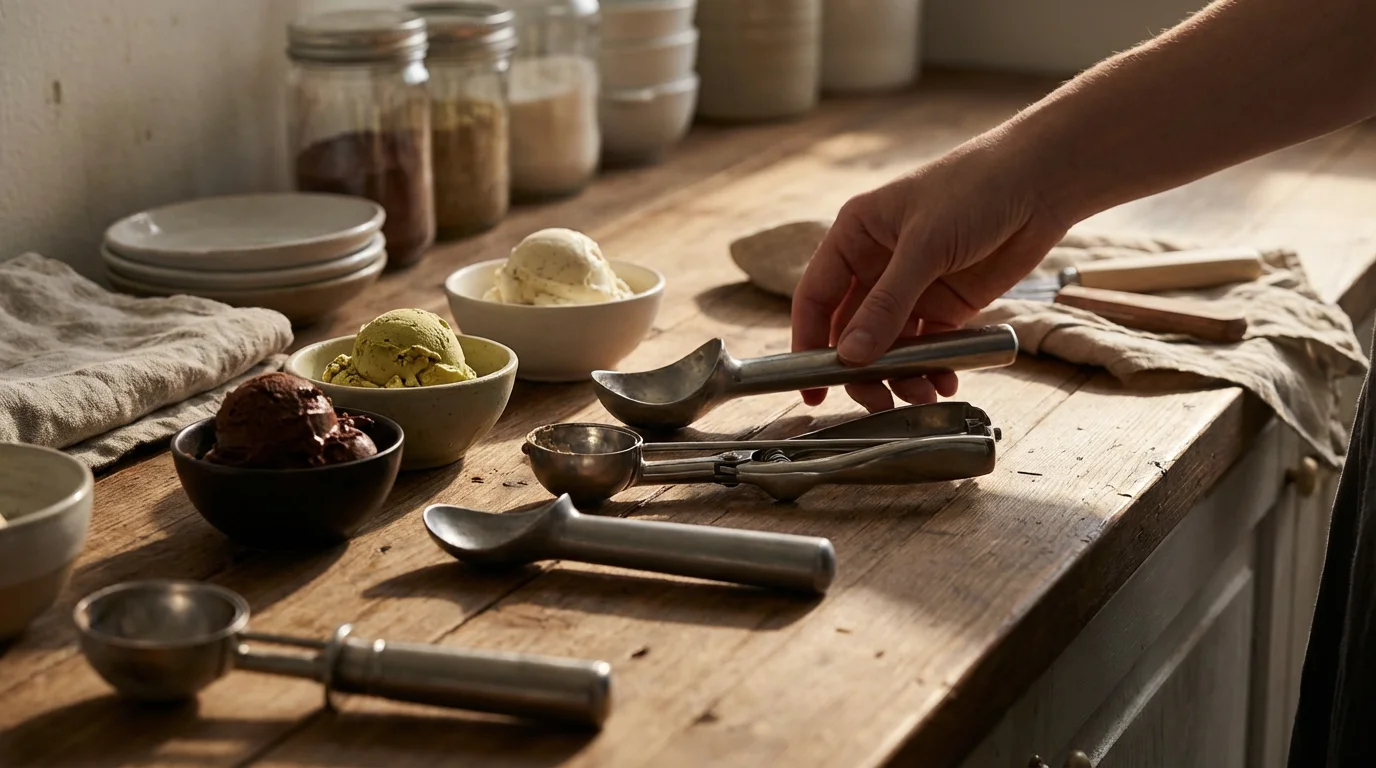
Every home cook knows the frustration: you reach for a scoop to serve up a delicious dessert, only for the tool to bend, slip, or fail to release that perfectly round sphere of goodness. A flimsy ice cream scoop quickly becomes a source of aggravation, relegated to the back of the drawer with other failed kitchen gadgets. This guide cuts through the marketing hype, focusing on durability, design, and real-world performance to help you find an ice cream scoop that actually works, lasting through countless dessert nights and making serving a pleasure instead of a chore.
The Core Problem: Why Most Scoops Fail
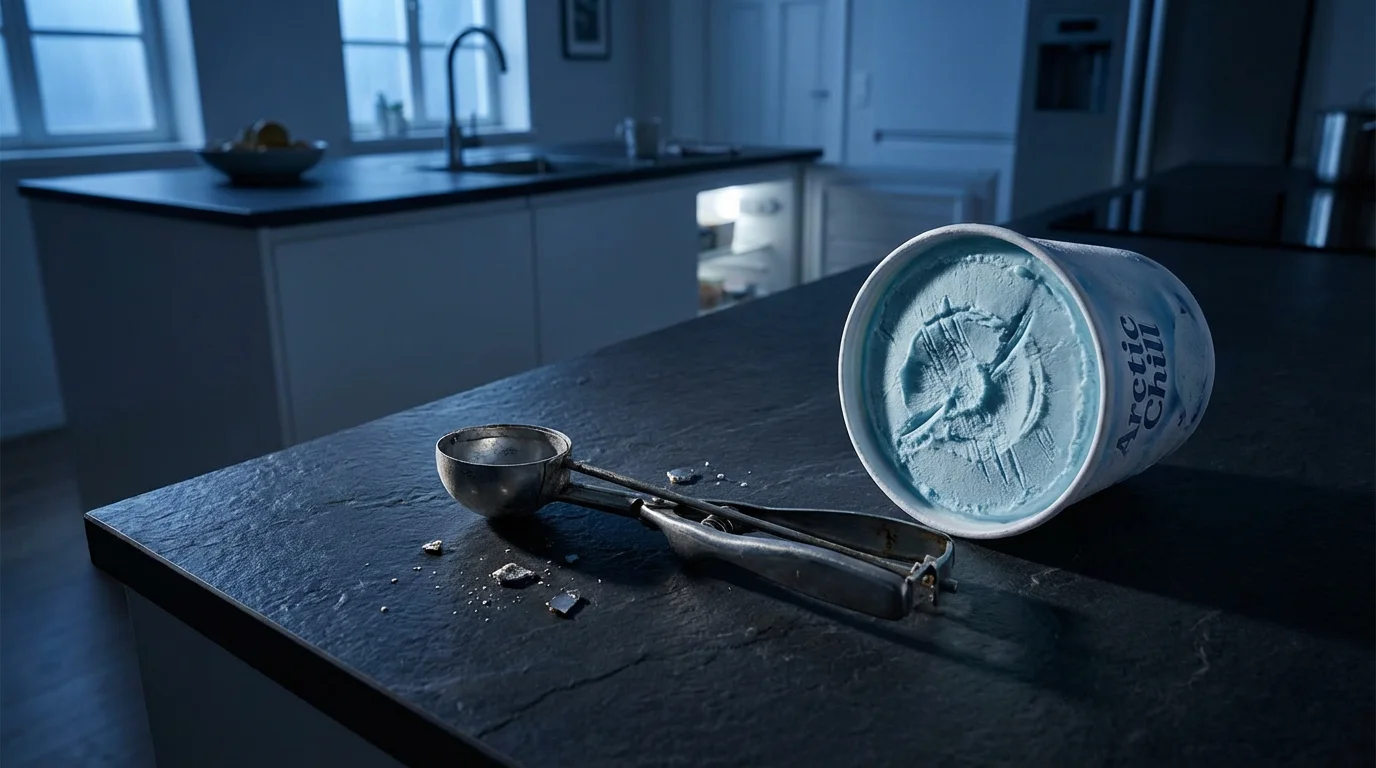
The primary reason an ice cream scoop disappoints boils down to one simple factor: inadequate design or material for the task. Ice cream, particularly when deeply frozen, presents a significant challenge. It requires a tool capable of exerting considerable force without deforming. Many budget scoops feature thin metal construction, weak welds where the head meets the handle, or handles that flex under pressure. You apply force, the handle bends, or the head twists, leaving you with a mangled scoop and a less than perfect serving.
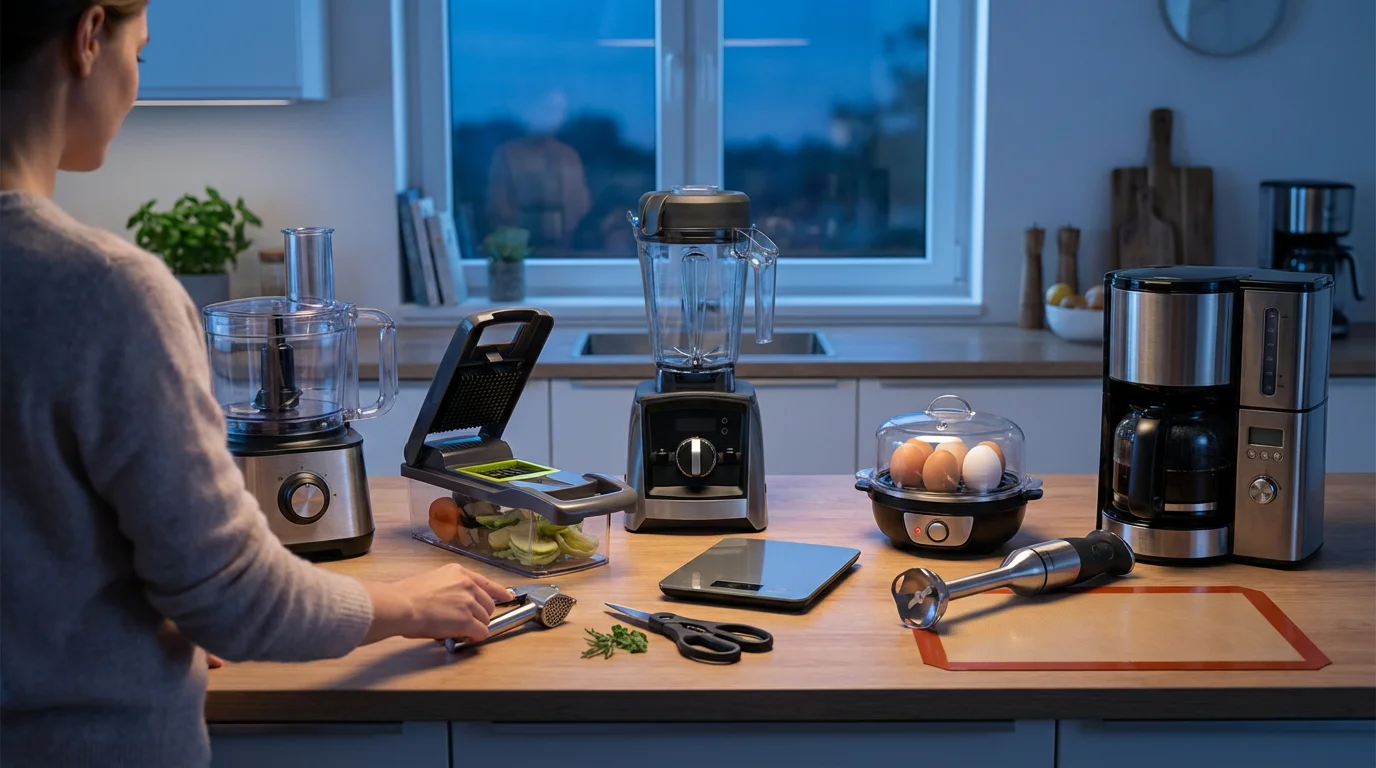
Just as a cheap scoop ruins dessert, a low-quality garlic press can make meal prep unnecessarily difficult.
Another common failure point involves the release mechanism. Some scoops rely on simply a rounded bowl, forcing you to use a separate spoon or your finger to dislodge the ice cream. Spring-loaded mechanisms often fail due to flimsy components or corrosion, especially when not properly cared for. We test these critical points rigorously, ensuring our recommendations stand up to the challenge of even the densest, coldest treat.
Understanding Scoop Types: Beyond the Basic Spoon
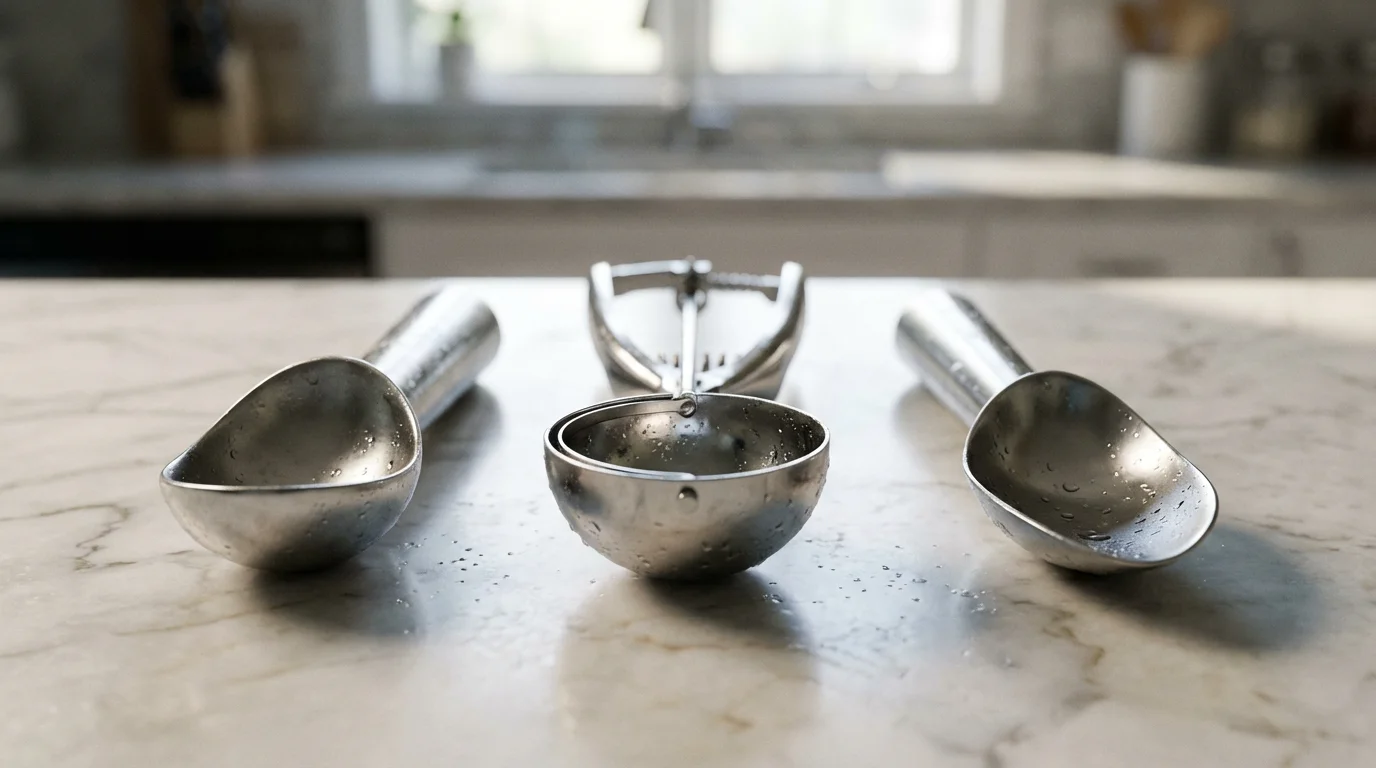
You might think an ice cream scoop is a simple tool, but manufacturers offer several distinct designs, each with its own advantages and drawbacks. Knowing the differences helps you choose the right one for your specific needs.
To elevate your presentation, consider adding chocolate shavings or citrus zest to your scoops using a versatile microplane grater.
Standard Scoops
These are the most common type, featuring a simple bowl-shaped head and a solid handle. They rely entirely on your strength and the scoop’s edge to cut through ice cream. High-quality standard scoops often boast robust construction, sharp edges, and comfortable handles. Their simplicity means fewer moving parts to break, making them highly durable if constructed from the right materials.
Disher Scoops (Portion Scoops)
Often found in professional kitchens, a disher scoop incorporates a spring-loaded sweep arm inside the bowl. A squeeze of the handle activates the arm, pushing the scooped food out cleanly. These are excellent for creating perfectly uniform balls of ice cream, but they also function wonderfully as a cookie scoop or a portion scoop for muffins, meatballs, or even mashed potatoes. The downside can be the complexity of the mechanism, which, if poorly made, can jam or break. They also come in various sizes, typically measured in ounces or by the number of scoops per quart.
Heated Scoops
These specialized scoops contain a non-toxic, heat-conductive fluid within their handles. The warmth from your hand transfers to the scoop’s edge, theoretically making it glide through frozen desserts more easily. Our heated ice cream scoop reviews show mixed results. While some users report a noticeable difference, the effect is often subtle, especially with extremely hard ice cream, and it quickly dissipates. They can also take longer to clean due to their hollow design and often cannot go into the dishwasher.
Spade Scoops
With a flat, paddle-like head, spade scoops excel at scraping ice cream from the bottom and sides of containers, particularly larger tubs. They are less about creating perfectly round balls and more about efficient serving and getting every last bit. While not ideal for presentation, their robust design often makes them incredibly durable.
Material Matters: Stainless Steel vs. Aluminum vs. Plastic
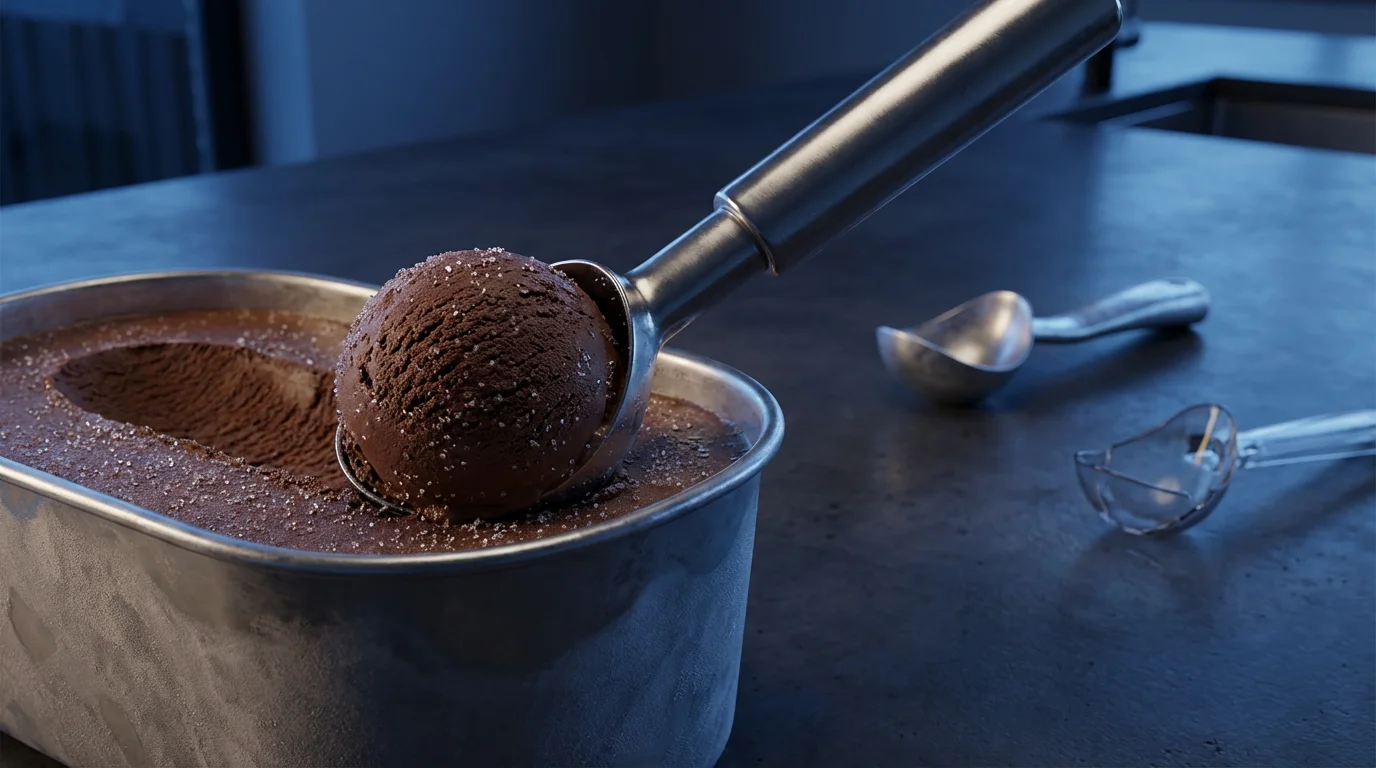
The material of your ice cream scoop dictates its durability, heat transfer properties, and ease of cleaning. We tested various materials to see how they hold up under stress.
Stainless Steel
For most users, stainless steel represents the gold standard. It offers superior strength, preventing the bending and twisting that plague lesser scoops. A good stainless steel scoop maintains a sharp edge, cutting through even the hardest ice cream with relative ease. It resists rust and staining, and quality models are usually dishwasher safe. This material makes the best ice cream scoop that doesn’t bend, ensuring longevity. Look for scoops made from a single piece of stainless steel or those with robust, securely welded joints.
Aluminum
Some standard scoops and many heated scoops use aluminum. Aluminum conducts heat well, which is why it features in heated designs. However, aluminum is softer than stainless steel and can pit or discolor, especially with acidic foods or if placed in a dishwasher. It also reacts to high heat and certain detergents, potentially leading to a chalky finish. While lighter, its durability for heavy-duty scooping is generally inferior to stainless steel.
Plastic
Plastic scoops are typically the most affordable option. While lightweight and often brightly colored, they rarely offer the necessary strength for hard ice cream. Handles snap, bowls crack, and edges dull quickly. Some higher-quality plastic scoops exist, often reinforced with metal cores, but we generally recommend avoiding all-plastic versions for ice cream. If you consider a plastic scoop, ensure it is clearly labeled as BPA-free, meaning it is made without a chemical that some people prefer to avoid in food contact items.
Handle Materials
Beyond the scoop head, the handle material matters for comfort and grip. Many quality scoops feature handles wrapped in silicone or rubber, which provides a non-slip grip, even with wet hands. This makes them more comfortable to hold and reduces strain. Solid metal handles are also common; ensure they are contoured to fit your hand without sharp edges.
To help you visualize the differences, here is a comparison of common materials:
| Material | Durability | Heat Transfer | Ease of Cleaning | Common Issues |
|---|---|---|---|---|
| Stainless Steel | Excellent, highly resistant to bending | Low | Excellent, typically dishwasher safe | Can be heavier, more expensive |
| Aluminum | Good, but softer than stainless steel | High | Moderate, prone to pitting and discoloration | Not always dishwasher safe, reacts to acids |
| Plastic | Poor, prone to cracking and breaking | Very Low | Good, but can stain | Not for hard ice cream, less ergonomic |
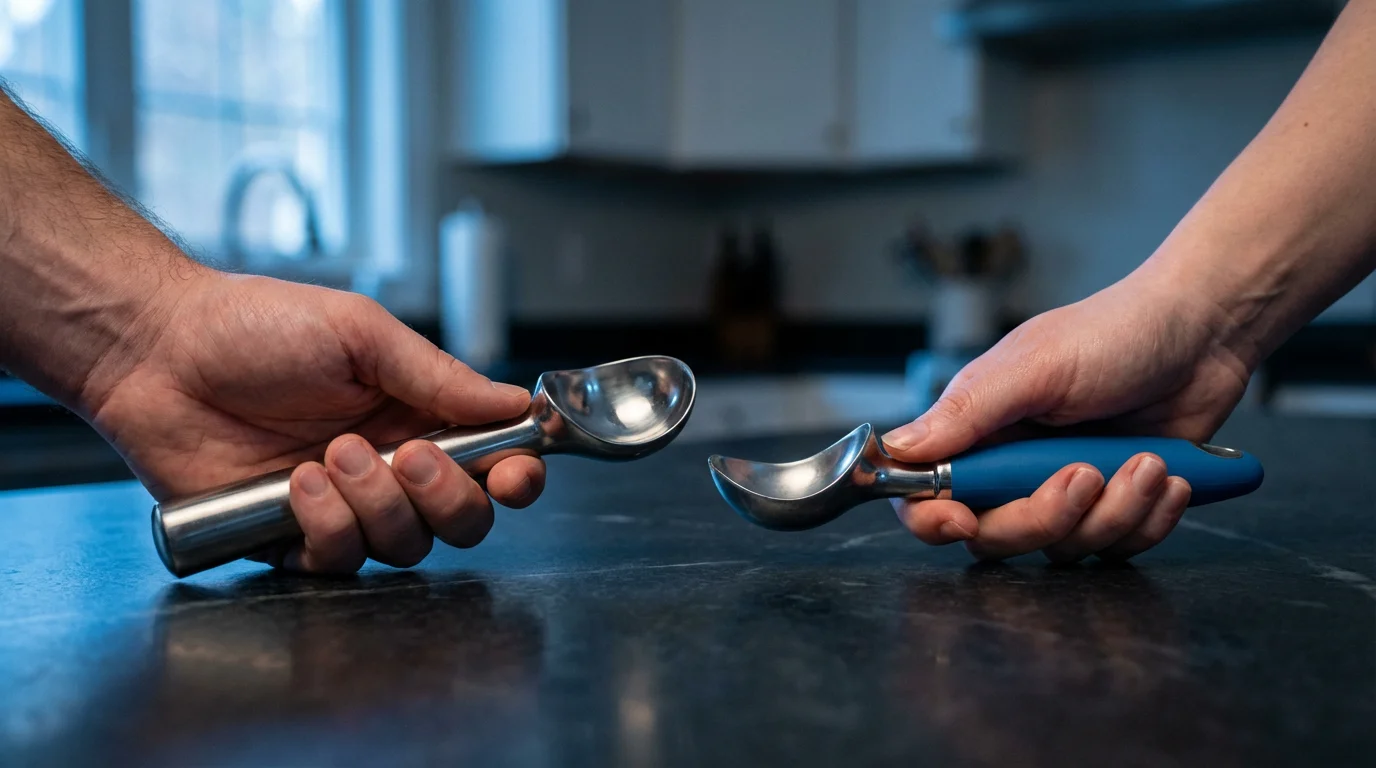
Ergonomics and Ease of Use: A Grip for Every Hand
An effective ice cream scoop must feel comfortable and secure in your hand. The term ergonomic refers to a design that prioritizes comfort and efficiency for the user. We evaluate scoops based on how well they fit different hand sizes and how much effort they require.
A good ergonomic design minimizes strain on your wrist and hand. This often means a handle that is sufficiently thick to fill your palm, providing leverage without requiring a death grip. Features like a non-slip grip, often achieved with silicone or textured rubber, become crucial when dealing with cold, potentially wet hands. Some scoops feature a thumb rest or a specific angle to the handle, which can enhance leverage and reduce the force needed to penetrate hard ice cream.
We found that scoops with thin, flat, or overly smooth handles quickly lead to hand fatigue, particularly when serving multiple portions. Scoops with a pointed tip or a sharp, beveled edge on the bowl also perform better, as they slice through frozen desserts more efficiently than blunt, rounded edges. Consider the weight distribution as well; a well-balanced scoop feels like an extension of your arm, not a cumbersome tool you wrestle with.
“The right ice cream scoop transforms a chore into a seamless experience. It means you spend less time struggling with the dessert and more time enjoying it with family and friends. Good design marries form with function, making every scoop effortless.”

Performance Test: Scooping Hard vs. Soft Ice Cream
The ultimate test for any ice cream scoop is its performance against actual ice cream. We conduct real-world tests using a variety of frozen desserts, from freshly churned, soft-serve consistency to rock-hard, freezer-burnt pints.
While temperature control is vital for ice cream, it is even more critical for food safety when cooking proteins, which is why reliable meat thermometers are a kitchen essential.
Testing Methodology
- Hard-Frozen Ice Cream: We use a pint of premium, dense ice cream kept at 0°F (-18°C) for at least 24 hours. This represents the toughest challenge for any scoop. We evaluate initial penetration, the ease of forming a ball, and the release mechanism.
- Moderately Frozen Ice Cream: A pint left out for 5-10 minutes provides a more common scenario. We assess smoothness of scooping and consistency of ball formation.
- Release Mechanism: For disher scoops, we count how many times the mechanism successfully releases without jamming. For standard scoops, we note how much effort is required to transfer the ice cream to a bowl.
- Durability Under Stress: We observe if handles flex, heads bend, or coatings chip during repeated use against hard ice cream. This is where a best ice cream scoop that doesn’t bend truly distinguishes itself.
Results and Observations
Our tests consistently reveal that solid stainless steel scoops with well-designed, ergonomic handles outperform all other types against hard-frozen ice cream. The sheer rigidity of the material allows you to apply significant leverage without fear of damage. Scoops with a sharp, tapered front edge cut into the ice cream more effectively than those with a blunt, rounded profile.
Heated scoops showed a marginal improvement with moderately hard ice cream, but the effect diminished rapidly with genuinely hard ice cream. Their performance did not justify their higher price point or the extra care required, especially considering that Wirecutter also notes the limited benefits of heated scoops in their broader kitchen tool recommendations.
Disher scoops excelled at consistent portioning, especially for semi-soft desserts or when used as a cookie scoop. However, their internal mechanisms sometimes struggled with extremely hard ice cream, requiring more force or risking damage to the sweep arm.
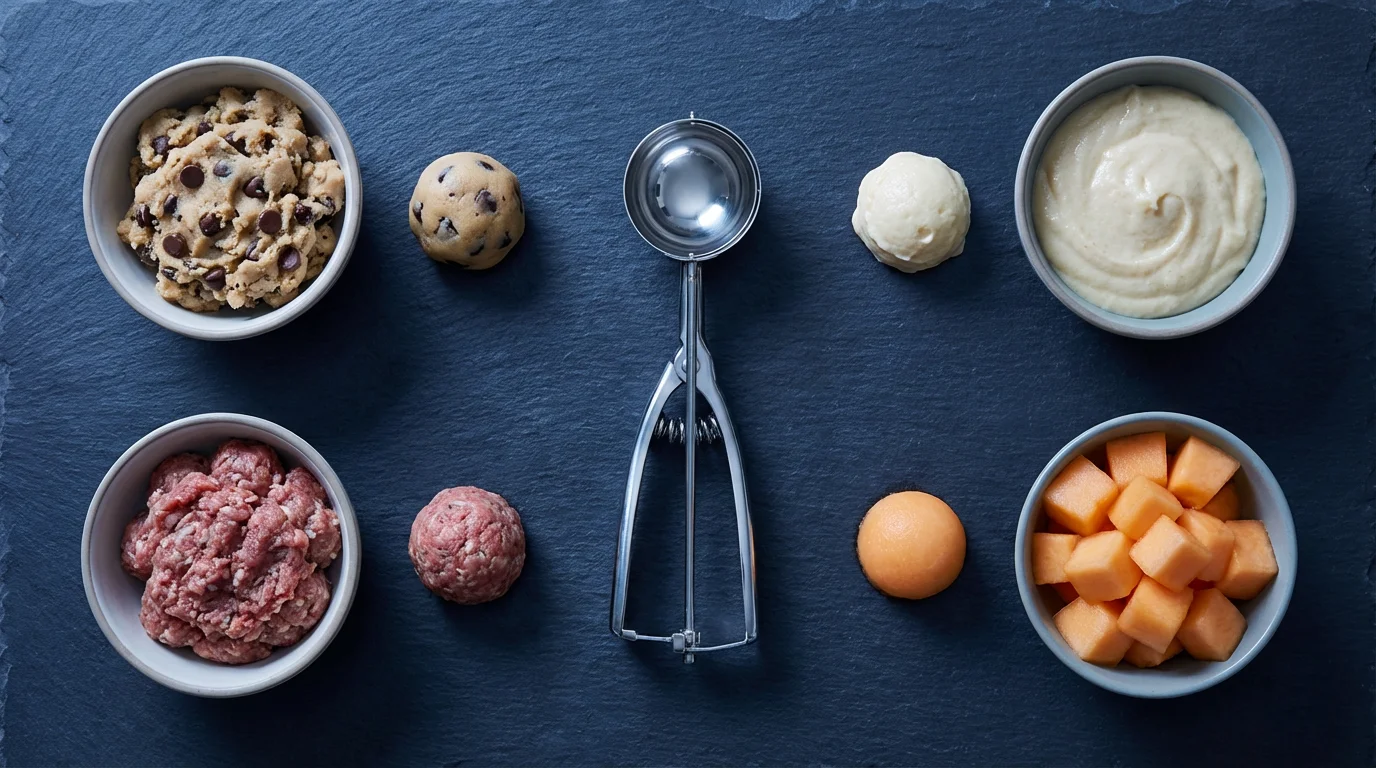
Beyond Ice Cream: Multi-Use or Unitasker?
In the world of kitchen gadgets, the term unitasker describes a tool designed for only one specific task. While a dedicated ice cream scoop might seem like a prime example, many high-quality scoops offer versatility.
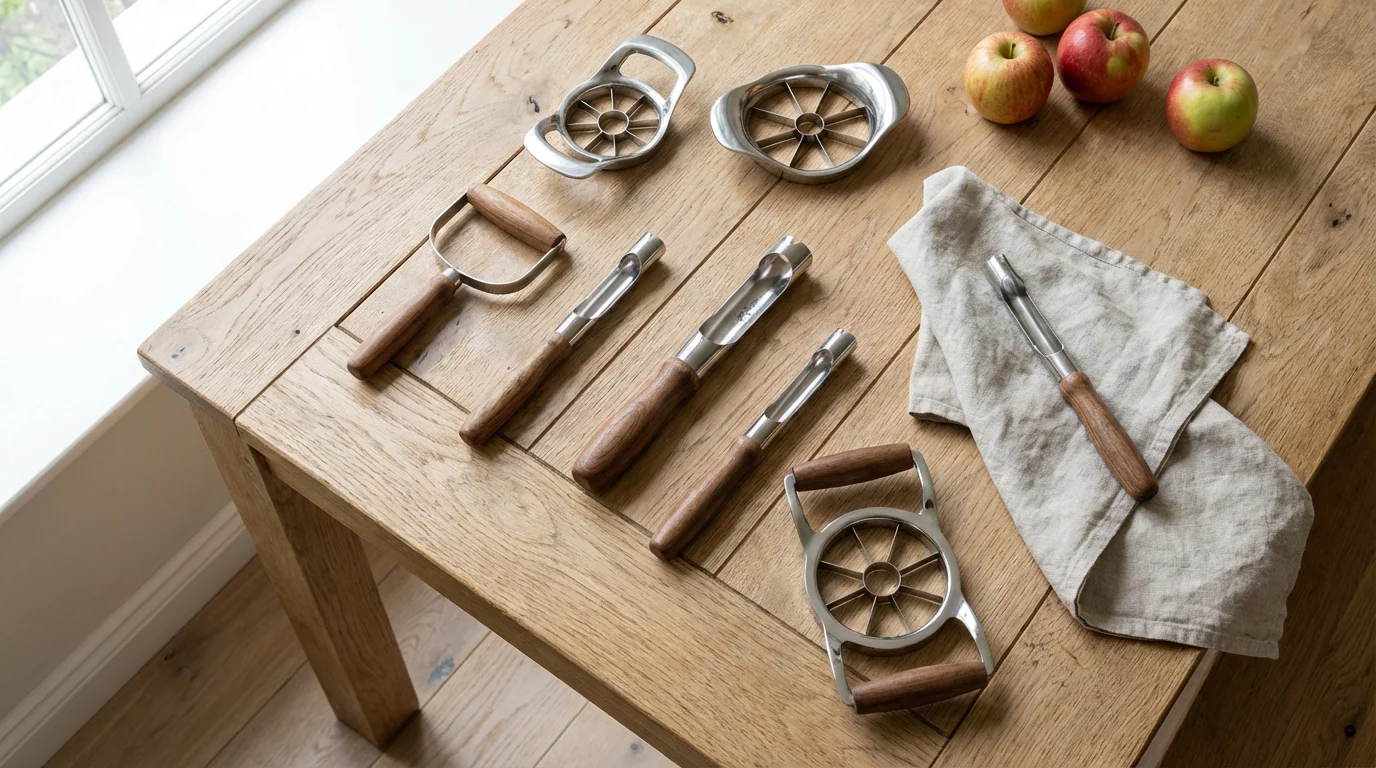
If you are using your scoop to serve dessert alongside an apple pie, having the best apple corers and slicers will make your fruit preparation much faster.
A disher scoop, for instance, perfectly doubles as a cookie scoop, ensuring uniform cookie sizes for even baking. It also works as a portion scoop for cupcake batter, melon balls, or even meatball mixture. This multi-functionality increases its value and ensures it earns its place in your drawer, rather than becoming another forgotten item.
Even robust standard scoops find other uses. Their sturdy construction often makes them suitable for scooping other firm, cold foods like mashed potatoes, fruit salads, or even frozen yogurt. When considering any kitchen gadget, always ask: “Does this tool perform its primary function exceptionally well, and can it do anything else useful?” If the answer to both is yes, it’s a worthwhile investment.

Cleaning and Storage: Keeping Your Kitchen Tidy
A great kitchen tool integrates seamlessly into your routine, and that includes easy cleanup and convenient storage. We assess each scoop for its cleaning requirements and its physical footprint.
Maintaining an organized drawer also means choosing compact, high-quality tools like modern can openers that won’t clutter your space.
Cleaning Considerations
For maximum convenience, look for scoops that are dishwasher safe. Solid stainless steel scoops typically fit this criterion perfectly, enduring the heat and detergents of a dishwasher without degradation. Scoops with plastic or silicone handles usually fare well, provided the materials are high-quality. However, check manufacturer instructions specifically, as some finishes or internal mechanisms might require hand washing.
Heated scoops often require hand washing due to their hollow construction and the internal fluid. Disher scoops, with their moving parts, can sometimes trap food debris in crevices, requiring a quick scrub with a brush to ensure thorough cleaning. Our tests show that scoops with smooth, non-porous surfaces clean up the fastest, preventing sticky residue from clinging.
Storage Footprint
Kitchen space is precious. A compact scoop that fits easily into a utensil drawer is ideal. Avoid overly bulky handles or unusual shapes that make storage awkward. Most standard and disher scoops present a reasonable profile for drawer storage. Consider a model with a hanging loop if you prefer to keep your frequently used tools on a hook. Ultimately, an ice cream scoop should not demand excessive space, allowing your drawers to remain organized and functional.
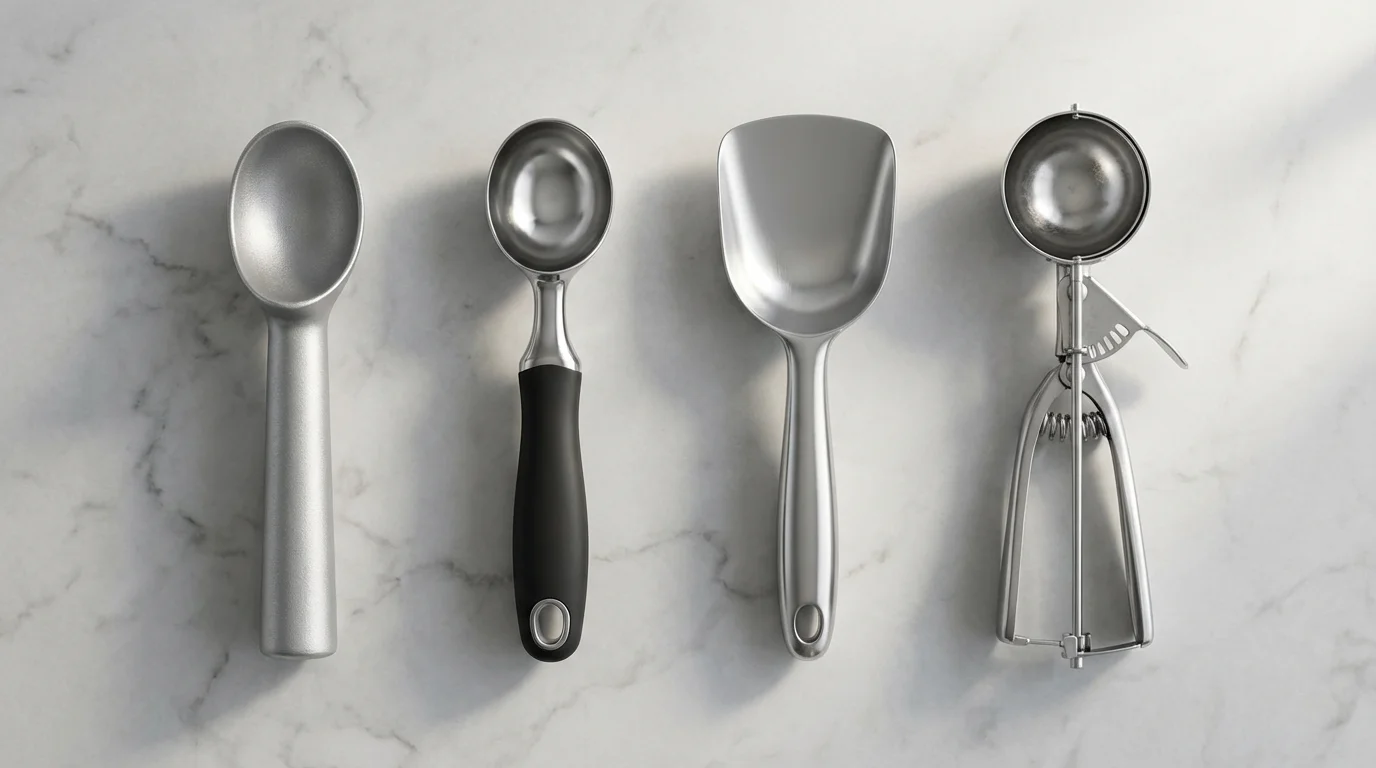
Top Recommendations: Our Picks for Every Need
Based on extensive testing, durability, and user feedback, we highlight several types of ice cream scoop that deliver on their promises. While we do not name specific brands, we describe the characteristics of scoops that consistently perform well.
1. The Indestructible Stainless Steel Scoop (Best for Durability)
- Description: A solid, heavy-gauge stainless steel scoop, often forged from a single piece of metal. It features a sharp, tapered edge and a comfortable, ergonomic handle, sometimes with a silicone grip.
- Buy if: You frequently encounter rock-hard ice cream, demand a scoop that won’t bend or break, and prioritize longevity. You want the best ice cream scoop that doesn’t bend.
- Skip if: You prefer lightweight tools or need a precise portioning mechanism.
2. The Versatile Disher Scoop (Best for Multi-Use)
- Description: A robust disher scoop with a strong spring mechanism and a stainless steel bowl. Sizes range, but a 2-ounce (size 16) is excellent for standard scoops of ice cream and also works perfectly as a cookie scoop or portion scoop.
- Buy if: You appreciate uniform portions, frequently bake cookies or muffins, and want a tool with multiple applications. According to America’s Test Kitchen, kitchen tools that excel in more than one role provide exceptional value.
- Skip if: You only ever scoop very hard ice cream, as the mechanism can occasionally struggle.
3. The Spade-Style Scraper (Best for Bulk Serving)
- Description: A flat, sturdy spade-shaped scoop, typically made from thick stainless steel. It has a broad, flat edge designed for scraping and serving large quantities.
- Buy if: You often serve ice cream from large tubs, prefer scraping over forming perfect balls, or need to efficiently clear a container.
- Skip if: Presentation and perfectly spherical scoops are your top priority.
Frequently Asked Questions
Is it worth spending more on an ice cream scoop?
Yes, absolutely. A cheap ice cream scoop often bends, breaks, or struggles with hard ice cream, leading to frustration and eventually, replacement. Investing in a high-quality, durable scoop made from materials like stainless steel ensures it will last for years, provide better performance, and offer a more comfortable scooping experience. The long-term value outweighs the initial cost savings of a flimsy alternative.
Can I put my ice cream scoop in the dishwasher?
Many modern ice cream scoops, especially those made entirely of stainless steel or with high-quality plastic/silicone handles, are dishwasher safe. Always check the manufacturer’s specific instructions, as some materials (like untreated aluminum) or intricate mechanisms (like those found in some heated or disher scoops) might require hand washing to prevent damage or corrosion. Hand washing can prolong the life of any kitchen tool.
What makes an ice cream scoop “ergonomic”?
An ergonomic ice cream scoop is designed for comfort and ease of use, minimizing strain on your hand and wrist. Key features include a handle that fits comfortably in your palm, often with a non-slip grip, and a well-balanced weight distribution. The scoop’s head should have a sharp, tapered edge for easier penetration, reducing the force you need to apply. These design elements ensure a smoother, less fatiguing scooping experience.
Can a good ice cream scoop also work as a cookie scoop?
A high-quality disher-style ice cream scoop, with its spring-loaded release mechanism, works exceptionally well as a cookie scoop or a general portion scoop. This dual functionality is a great example of a kitchen tool that avoids being a pure unitasker, adding significant value to your kitchen arsenal. Standard, non-disher scoops are less ideal for cookies as they lack the precise release mechanism for uniform dough balls.
Disclaimer: Product prices and availability change frequently. Prices shown were accurate at time of writing but may have changed. We may earn a small commission from purchases made through links on this site, at no extra cost to you. Always verify current pricing on the retailer’s website before purchasing.






Leave a Reply