

You know the scenario. You are standing at the stove, a pot of roasted butternut squash soup simmering away. You reach for your immersion blender, ready to puree it into velvet, but the cord is three inches too short to reach the nearest outlet. Or worse, you plug it in, but the cord drapes dangerously close to a hot burner, or knocks over a bottle of olive oil as you maneuver around the kitchen island.
The cord is the leash of the modern kitchen. It tethers us to the wall and dictates where we can cook. It is no surprise that appliance manufacturers are rushing to cut that cord. From hand mixers to food choppers, the lithium-ion revolution has reached the countertop.
But does losing the cord mean losing the power? For a tool designed to pulverize fibrous vegetables and crush frozen fruit, torque is non-negotiable. If you buy a cordless drill, you expect it to drive screws just as well as a plug-in version. You should expect the same from your kitchen gear.
We are diving deep into the world of cordless immersion blenders (often called stick blenders). We will strip away the marketing hype to determine if these portable gadgets are a liberating upgrade or an underpowered compromise that will leave you with chunky soup and a dead battery.

The Cordless Appeal: Why Make the Switch?
The primary argument for going cordless is obvious: freedom. However, the benefits extend beyond just reaching a pot on the far burner. A cordless immersion blender changes the flow of your cooking.
In a professional kitchen, chefs often carry stick blenders from station to station. In a home kitchen, you might not be running a brigade, but the ability to blend a vinaigrette right at the dinner table, froth milk at the coffee station, or puree tomatoes directly in a can without wrestling a cable is genuinely useful. It transforms the immersion blender from a “heavy appliance” into a grab-and-go utility tool.
Furthermore, many modern kitchens—especially in older homes or apartments—are notoriously starved for outlets. If your only free socket is blocked by the toaster oven, a cordless tool solves a logistical headache. It also eliminates the “cord drag,” where the weight of the power cable pulls the blender off balance, forcing you to use more wrist strength to keep it upright.
Power and Torque: The Lithium-Ion Reality
The skepticism is valid. For years, battery-operated kitchen tools were synonymous with “weak.” They were the gadgets that groaned when they saw a carrot. However, battery technology has evolved significantly, borrowing heavily from the power tool industry.
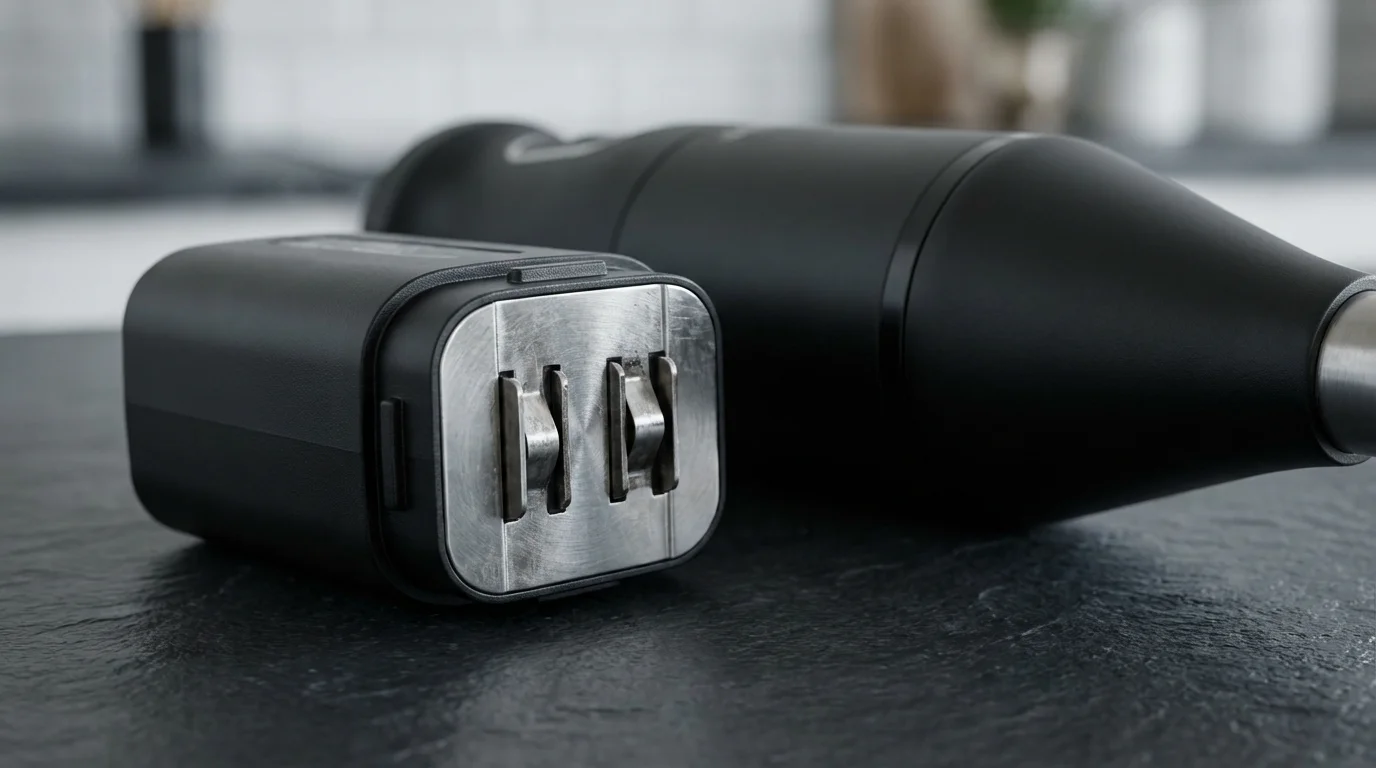
Modern cordless immersion blenders typically utilize 8-volt or 12-volt lithium-ion batteries. Unlike old nickel-cadmium batteries that lost power gradually as they drained, lithium-ion provides fade-free power. This means the blender runs at full speed until the battery is depleted, rather than getting slower and slower.
But how does it compare to a standard AC motor? A high-quality corded stick blender typically pulls between 200 and 600 watts directly from the wall. A cordless motor relies on DC power. While you cannot directly compare watts between AC and DC motors due to efficiency differences, the torque test tells the truth.
In practical testing, top-tier cordless models from brands like KitchenAid and Cuisinart handle standard tasks—emulsifying mayonnaise, blending soft vegetable soups, and whipping cream—with ease. Where they struggle is with hard loads. If you are trying to crush ice for a margarita or blend a very thick smoothie with frozen berries, a cordless unit may stall where a corded Breville or All-Clad would power through. As Wirecutter notes in their testing, the best immersion blenders create a strong vortex that pulls food into the blades; cordless models can sometimes lack the sustained RPMs necessary to maintain that vortex in thick mixtures.

Battery Life and Charging Anxiety
The nightmare scenario is halfway through blending a hot pot of potato leek soup, the blender dies. You are left with a half-pureed mess and a tool that needs two hours to charge. Is this a real risk?
Most manufacturers claim a runtime of 20 to 30 minutes of continuous blending. That may sound short, but consider how you actually use a stick blender. You rarely run it for more than 60 seconds at a time. A 30-minute runtime is enough to blend about 20 bowls of soup. For the average home cook, a single charge can last weeks.
The “Quick Charge” Feature
The real differentiator between a good cordless gadget and a useless one is the charging speed. Look for models offering a “quick charge” feature. This technology allows you to plug the dead unit in for 10 or 20 minutes to get enough juice for one single blending task. If a model requires a full 4-hour charge before it will turn on, avoid it. That is a dinner-ruining design flaw.
Additionally, check the battery indicator. A simple light that turns red when the battery is low is essential. Surprisingly, some budget models lack this, dying without warning.
Ergonomics, Weight, and Design
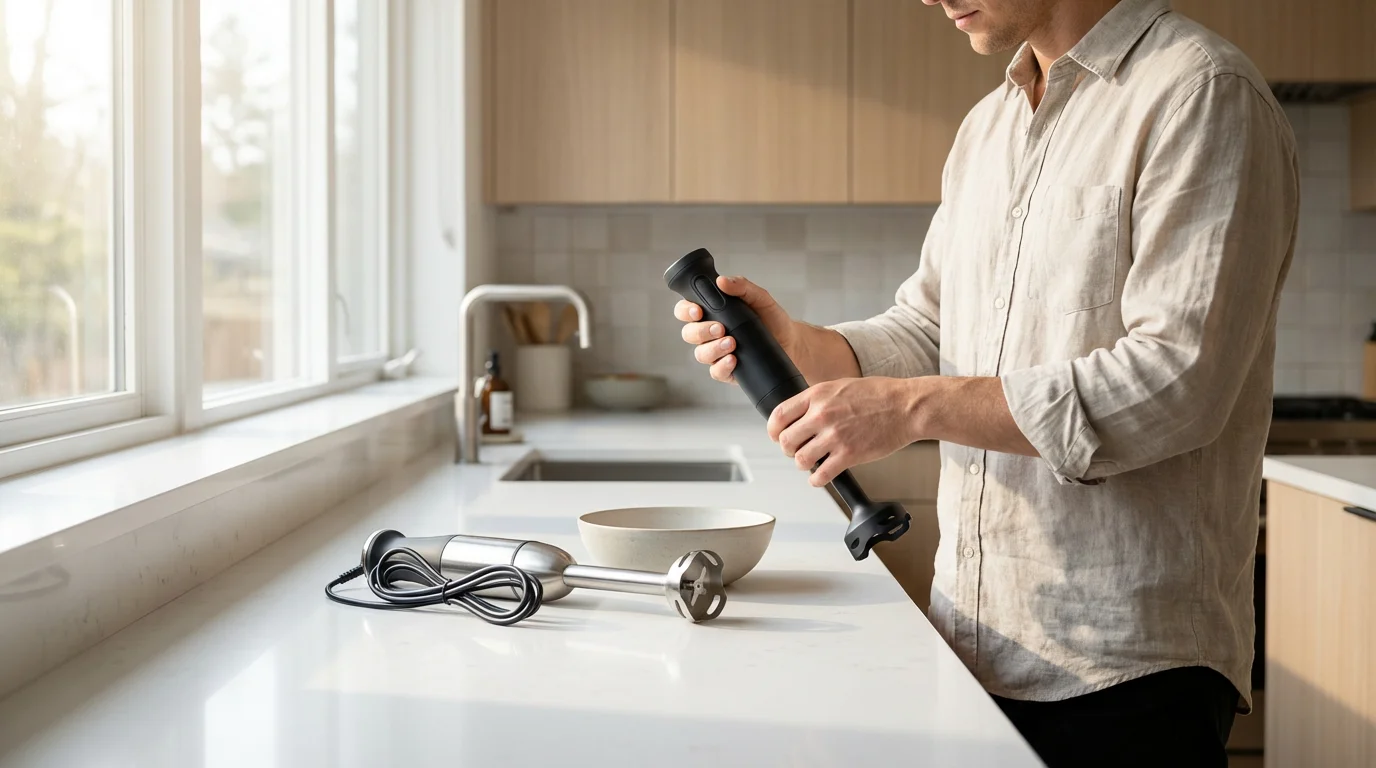
Physics dictates that batteries are heavy. When you remove the copper windings of an AC motor and replace them with a battery pack and a DC motor, the weight distribution shifts. A corded blender is often top-heavy, but the cord weight drags it down. A cordless blender carries all its weight in the handle.
Ergonomic design—how the tool fits and feels in your human hand—is critical here. Because the handle houses the battery, cordless handles tend to be thicker. If you have smaller hands, gripping a thick cylinder while holding down a power button can induce hand fatigue quickly.
“The best kitchen gadget is one you’ll actually use every week—not the one with the most Amazon reviews.” — Professional Chef
Look for a model with a tapered grip or a rubberized, non-slip coating. You will likely be using this with wet or oily hands; a slick plastic handle is a recipe for dropping the unit into a pot of boiling sauce.
The Safety Switch Frustration
Here is a controversial topic: safety interlocks. Because a cordless blender has no plug to remove, it is technically “live” whenever it is in your drawer. If you reached in to grab a spatula and accidentally pressed the power button, you could slice your finger open.
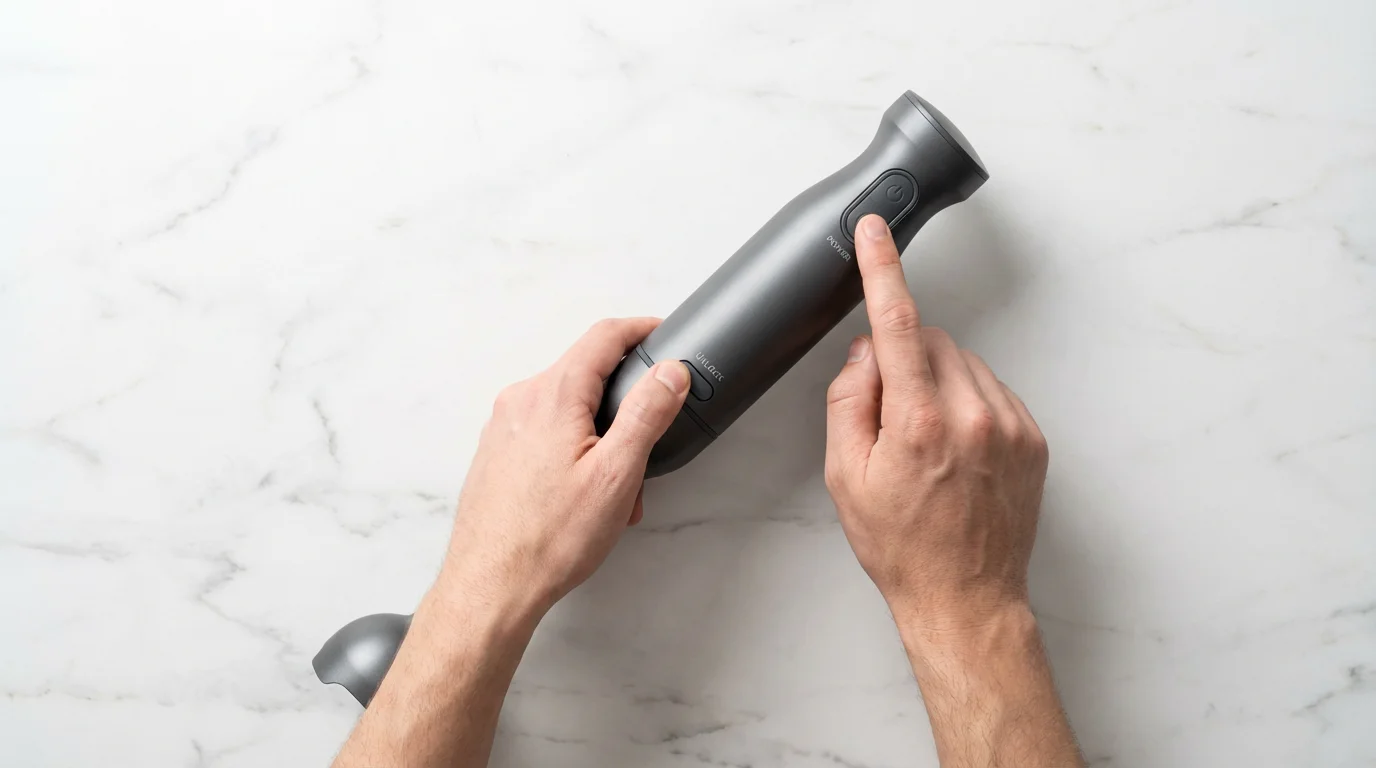
To prevent this, manufacturers install safety mechanisms. Usually, this requires you to press an “unlock” button simultaneously with the “power” button, or press them in a specific sequence. While necessary for safety, these can be incredibly annoying. Some are designed so poorly that you need two hands to start the blender—one to hold the pot and two to start the tool? That math doesn’t work.
When shopping, read user reviews specifically regarding the button configuration. You want a blender where the safety trigger can be engaged with the same hand that holds the handle, leaving your other hand free to stabilize your mixing bowl.
Build Quality: Plastic vs. Stainless Steel
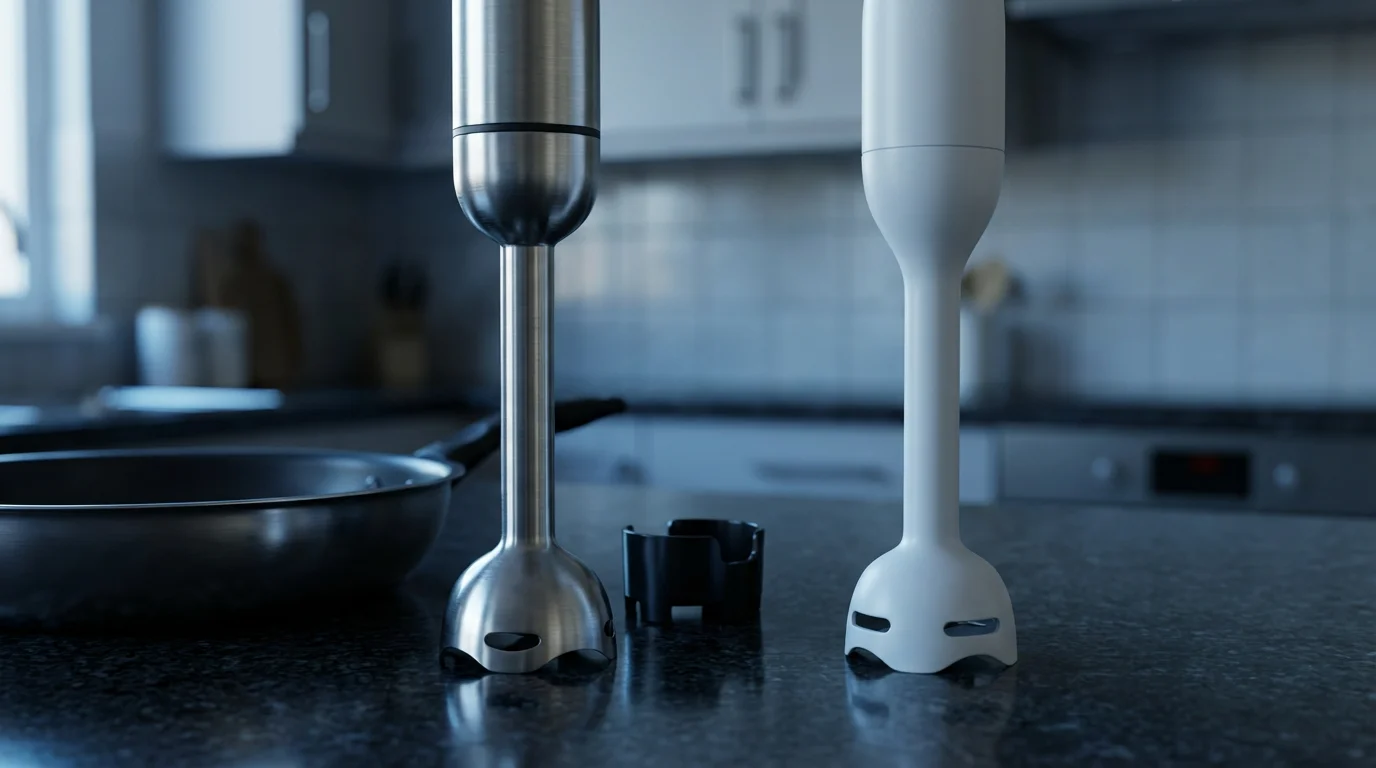
The blending arm (the stick part that goes into the food) is the business end of the tool. You will find two main materials: plastic and stainless steel.
- Plastic Arms: Generally found on budget models (under $40). They are prone to staining when used in tomato-based sauces or curries with turmeric. More worryingly, plastic can warp or crack if used in very hot soups. They should generally be avoided for hot cooking.
- Stainless Steel Arms: The industry standard for a reason. They are durable, heat-resistant, and do not absorb odors or colors. They also look sleeker and offer a more professional feel.
Another component to watch is the blade guard—the bell-shaped cover around the spinning blades. Metal guards are durable but can scratch non-stick cookware (like your expensive Dutch oven) if you aren’t careful. Some brands include a removable plastic “pan guard” or have a silicone rim on the metal bell. This is a brilliant feature that protects your cookware investment.
According to Serious Eats, the design of the blade guard vents is also crucial; large vents help circulate food, while small vents can cause suction that sticks the blender to the bottom of the pot.

Comparison: Corded vs. Cordless
Is the trade-off worth it for you? Here is a breakdown of how the two categories stack up against each other.
| Feature | Corded Immersion Blender | Cordless Immersion Blender |
|---|---|---|
| Power Consistency | Unlimited, consistent torque. | Strong initially, may struggle with heavy loads (ice/frozen fruit). |
| Runtime | Infinite. | 20–30 minutes per charge. |
| Weight | Lighter in hand (but cord adds drag). | Heavier due to battery; thicker handle. |
| Convenience | Tethered to outlet; cord management required. | Go anywhere; blend at the table or outdoor grill. |
| Longevity | Lasts decades (motor is simple). | Battery eventually degrades (3–5 years typically). |
| Price | $30 – $100+ | $60 – $150+ (Premium for battery tech). |
Cleaning and Maintenance
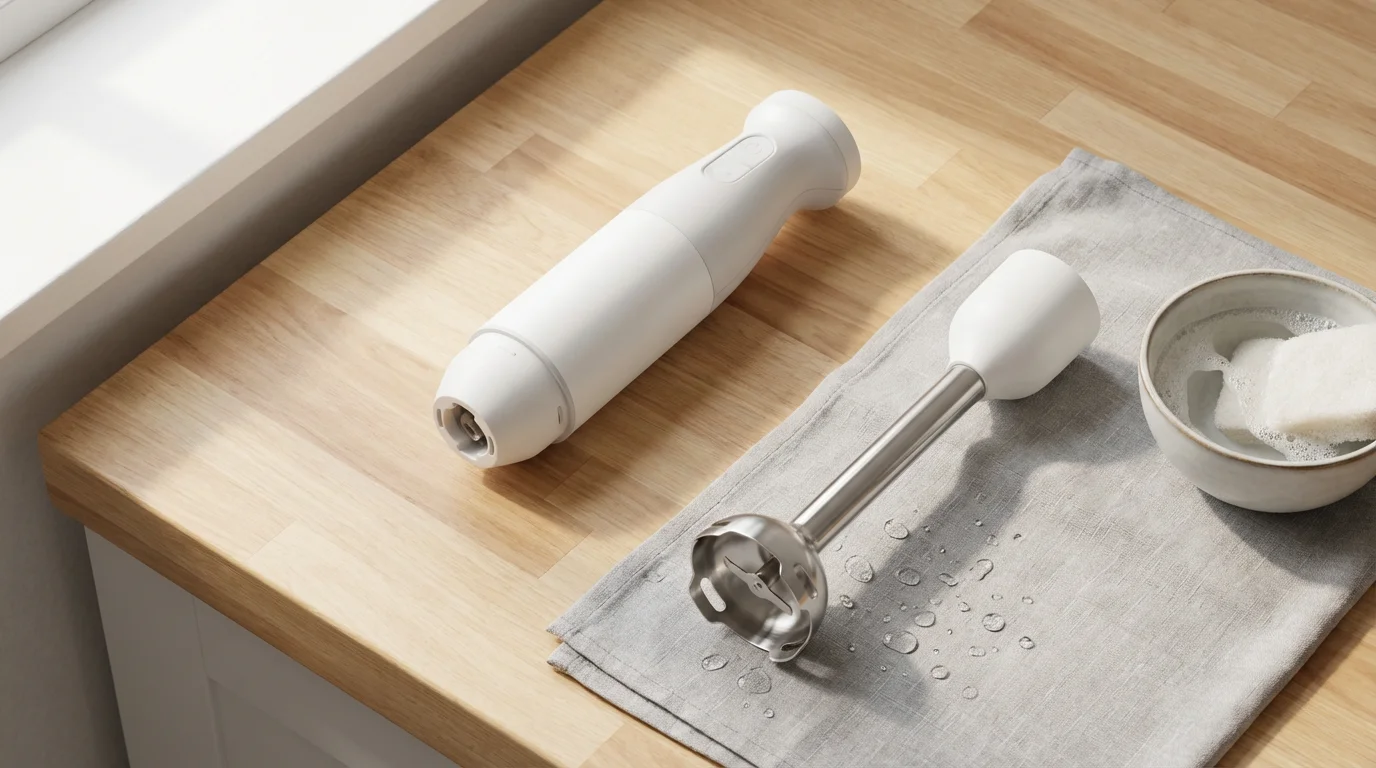
One area where cordless blenders often win is ease of cleaning, simply because you don’t have a cord dangling in the sink. However, the mechanics of cleaning are the same. Most immersion blenders feature a detachable blending arm. This arm is usually dishwasher safe (top rack), though hand washing is recommended to keep the blade sharp.
Warning: The motor body (the handle) can never be submerged. With cordless units, you must be extra careful not to get water into the charging port. Higher-end models cover the charging port with a rubber seal, but cheaper ones leave it exposed. If water gets in there, corrosion sets in, and your blender becomes a paperweight.

Verdict: Who Should Go Cordless?
After reviewing the specs and considering the practical limitations, we can draw a line in the sand. Cordless immersion blenders have graduated from “gimmick” to “legitimate tool,” but they are not for everyone.
Buy a Cordless Immersion Blender If:
- Your kitchen has limited outlets, or your island lacks power.
- You primarily blend soft foods: soups, mayo, whipped cream, or batters.
- You want to declutter your counter and hate wrapping cords.
- You have average to large hands that can comfortably grip a thicker handle.
Stick to a Corded Blender If:
- You are a “power user” who makes thick nut butters, heavy hummus, or crushes ice frequently.
- You have small hands or grip strength issues (corded models are often slimmer and lighter).
- You are bad at remembering to charge devices. There is nothing sadder than a dead blender on Thanksgiving morning.
- You want a tool that will last 15 years. Lithium-ion batteries eventually die; a corded AC motor can last a lifetime.
Frequently Asked Questions
Can a cordless immersion blender crush ice?
Generally, no. While some high-end models claim to handle ice, most lack the sustained torque and blade design required to turn ice cubes into snow. Doing so frequently can damage the motor or dull the blades. For crushing ice, a countertop blender is the superior tool.
Are the batteries replaceable?
In most consumer models, the battery is sealed inside the unit and cannot be replaced by the user. Once the battery stops holding a charge (usually after several years of regular use), the entire motor unit must be replaced. This is a significant environmental and cost consideration compared to corded models.
Is it safe to use a metal immersion blender in non-stick pans?
Metal blade guards can scratch the delicate coating of non-stick pans like Teflon or ceramic. If you cook with non-stick cookware, look for a blender that includes a plastic pan guard or has a silicone bumper on the edge of the bell.
What is a “Unitasker” and is this one?
A “unitasker” is a kitchen tool that performs only one specific function (like a strawberry huller). An immersion blender is the opposite—it is a multitasker. It can puree soup, emulsify dressings, whip cream, and chop nuts (with attachments). Going cordless actually increases its versatility by allowing you to use it in more places.
Disclaimer: Product prices and availability change frequently. Prices shown were accurate at time of writing but may have changed. We may earn a small commission from purchases made through links on this site, at no extra cost to you. Always verify current pricing on the retailer’s website before purchasing.






Leave a Reply