

Freshly squeezed citrus juice elevates everything from your morning smoothie to your evening cocktail. Achieving that perfect zest, however, often starts with a fundamental decision: do you choose a manual citrus juicer or an electric model? Many home cooks, burned by gadgets that promise much and deliver little, approach new kitchen tools with a healthy skepticism. This guide cuts through the marketing hype to compare manual and electric citrus juicers, helping you discover which type truly earns its spot in your kitchen.
Understanding Your Juicing Needs
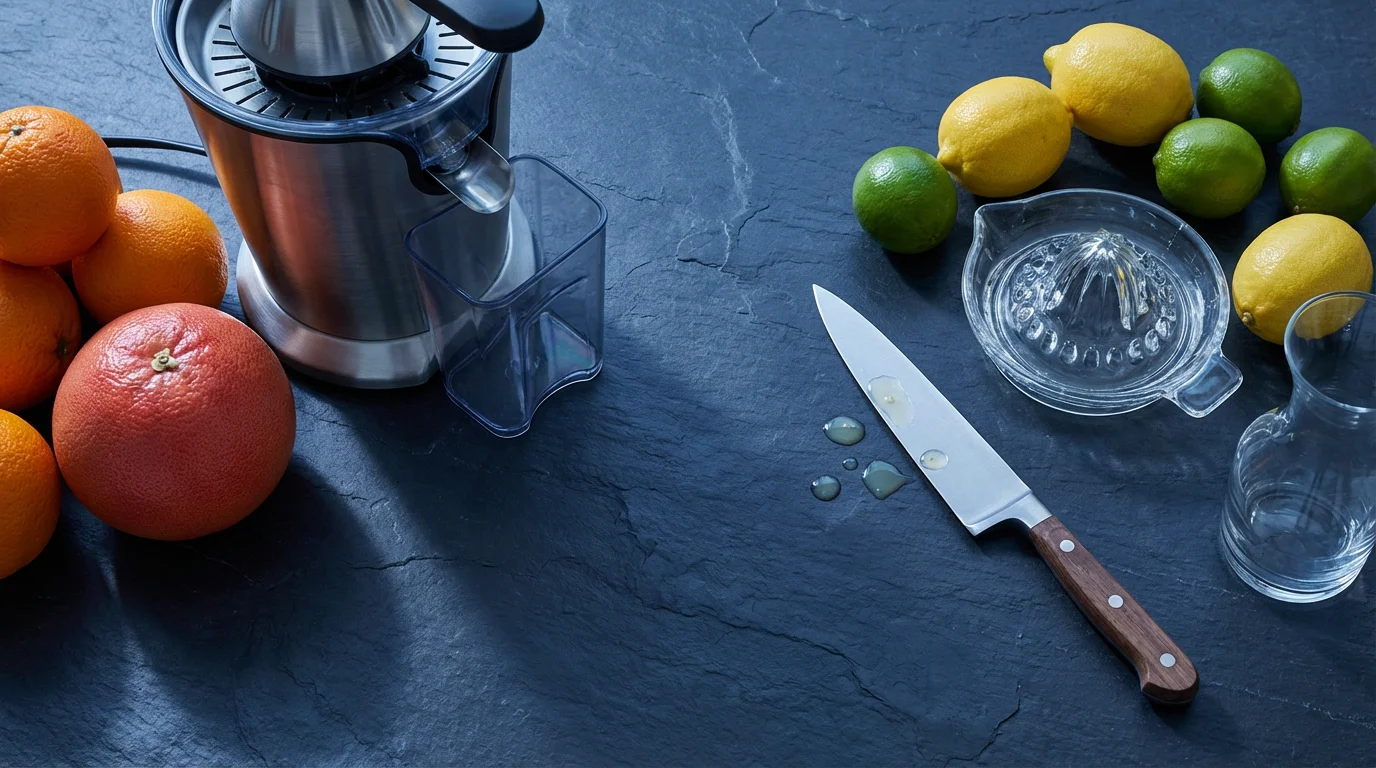
Before you invest in any citrus juicer, assess your typical usage. Do you squeeze a single lemon for a recipe once a week, or do you prepare a large batch of orange juice for the family every morning? Your volume requirements significantly influence which type of citrus juicer offers the best value and convenience. Consider also the types of citrus you typically juice. Small limes and lemons, or larger oranges and grapefruits? Some juicers excel with specific fruit sizes, while others offer more versatility. For those with limited counter space or small kitchens, the physical footprint of the gadget becomes a crucial factor.
Identifying 10 kitchen gadgets that actually save time can help you build a more efficient kitchen setup for daily meal prep.

Manual Citrus Juicers: Simplicity and Control
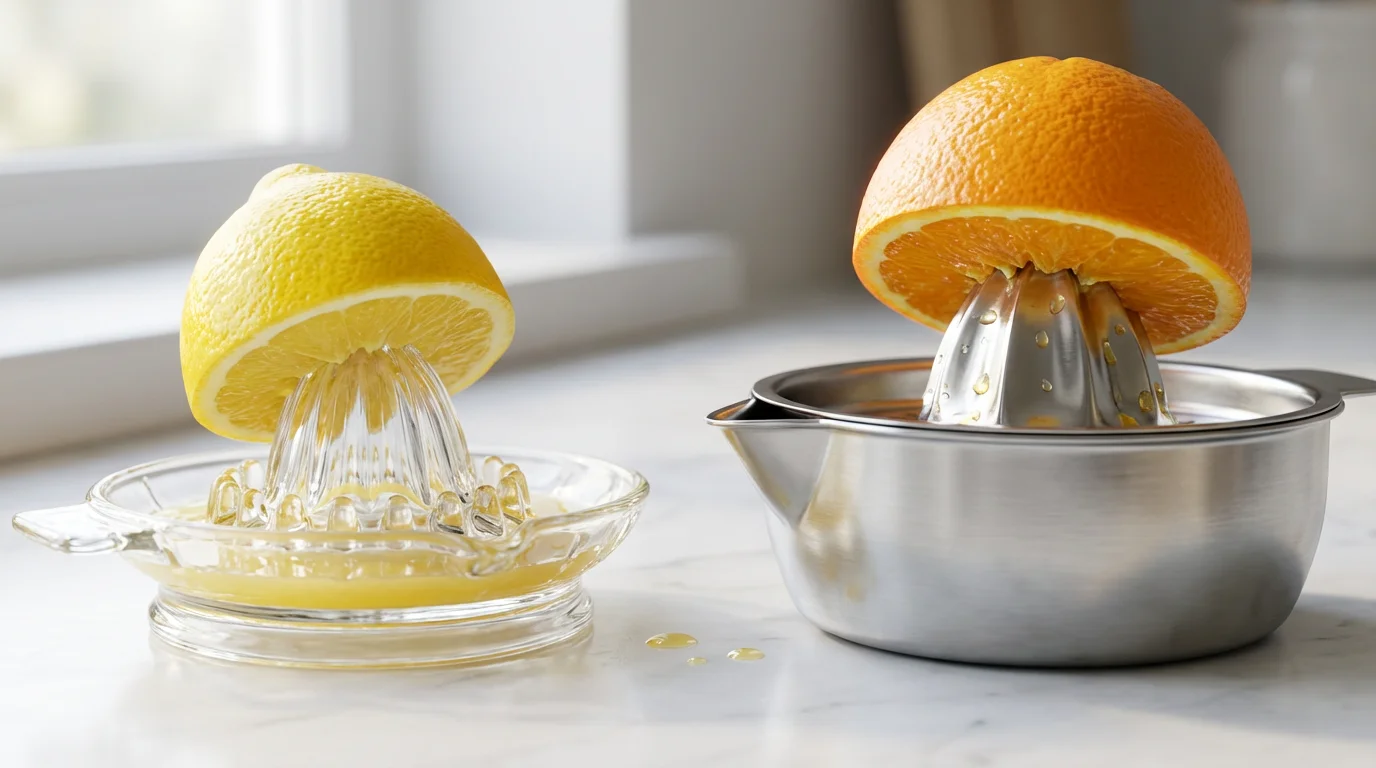
Manual citrus juicers encompass several designs, each offering varying levels of effort and efficiency. The classic reamer, often made of glass, wood, or plastic, requires you to twist a halved fruit directly onto a cone. This design, while simple, can leave pulp and seeds in your juice and requires significant arm strength for larger volumes. Another popular style, the hand-held lemon squeezer, clamps down on half a citrus fruit, pressing out the juice. These are often considered a “unitasker”, a gadget that only does one specific task, but for many, a good lemon squeezer is an indispensable kitchen staple.
Much like choosing the best garlic press for effortless mincing, the right manual juicer provides high-quality results with a simple mechanical design.
Our tests show that a well-designed manual lemon squeezer, particularly those crafted from durable materials like stainless steel, consistently extracts more juice from a single lemon or lime than a basic reamer. For example, the OXO Good Grips Citrus Juicer with a built-in measuring cup, a two-piece reamer style, yields about 2.5 tablespoons from a medium lemon. In contrast, a high-quality stainless steel lemon squeezer, like the one from Zulay Kitchen, consistently produced closer to 3 tablespoons from an identical lemon, with fewer seeds.
“The simplest kitchen tools often prove the most reliable for everyday tasks. A robust manual juicer handles most home cooking needs without fuss or power cords.” — QuickKitchenTools Reviewer
The primary advantage of manual models lies in their portability, lack of electrical components, and ease of storage. You can juice anywhere, anytime. Their simple construction means fewer parts to break, often translating to a longer lifespan. Many manual juicers are dishwasher safe, meaning you can clean them in a dishwasher without damage, simplifying cleanup significantly.
Electric Citrus Juicers: Power and Efficiency
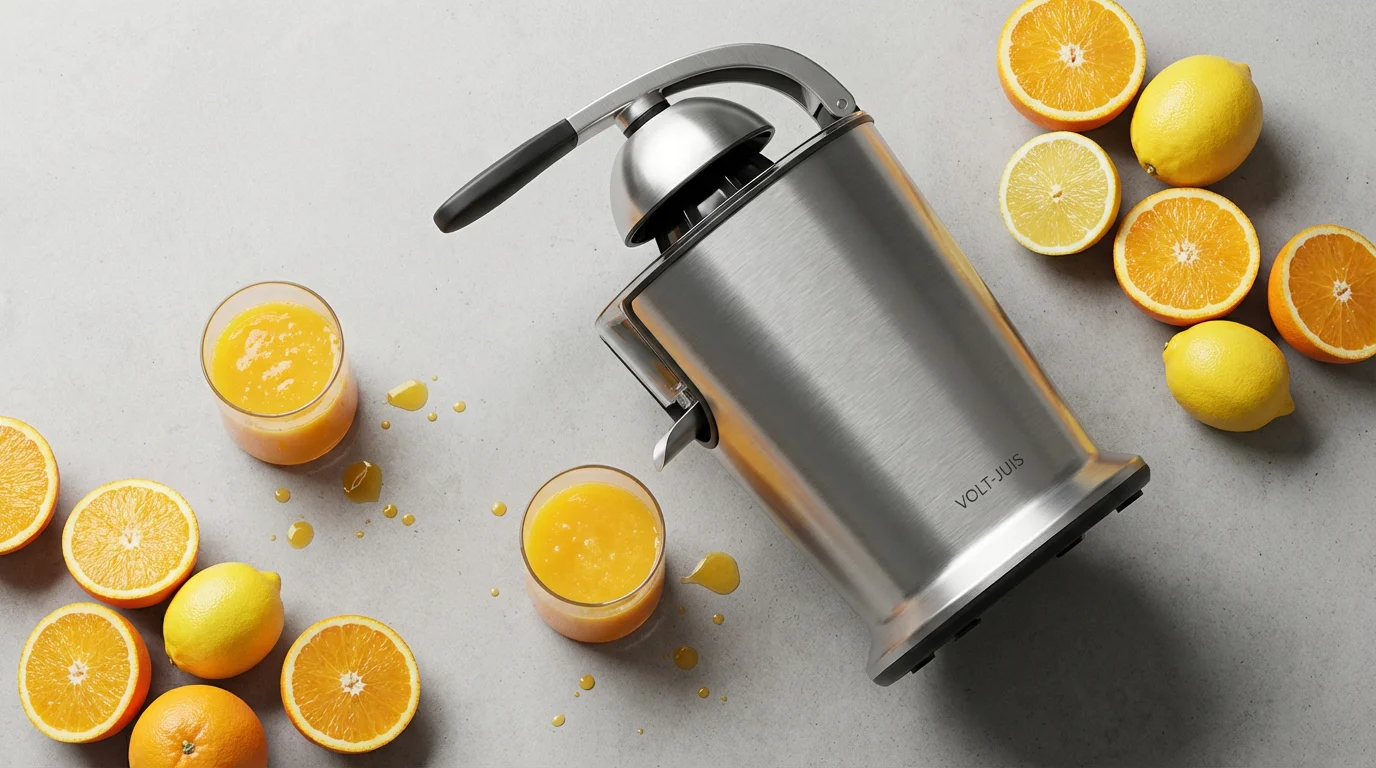
Electric citrus juicers, by contrast, tackle high-volume juicing with minimal effort. These machines typically feature a motorized reamer that spins, extracting juice as you press a halved citrus fruit onto it. Some advanced models include a pressure-activated start or a lever arm for even greater ease. You will find both compact and larger, more robust models on the market.
In our comprehensive tests, electric models significantly reduced the physical exertion required for juicing. For instance, preparing four cups of fresh orange juice with a manual press took an average of 10 minutes of active squeezing, often leading to hand fatigue. An electric juicer, such as the Cuisinart CCJ-500 Pulp Control Citrus Juicer, accomplished the same volume in under 4 minutes, with almost no physical strain. These juicers often come with adjustable pulp filters, allowing you to customize your juice consistency, a feature rarely found in manual versions.
While powerful, electric juicers require counter space and an electrical outlet. They also often involve more components, like motor bases, reamer cones, and pulp strainers, which can complicate cleaning compared to a simple manual tool. However, many parts are often BPA-free, meaning they are made without a chemical (BPA) that some people prefer to avoid, and dishwasher safe, making the post-juicing cleanup less of a chore.
Performance Showdown: Manual vs. Electric
When choosing between a manual and electric citrus juicer, understanding their core performance differences guides your decision. Here is a direct comparison based on our extensive product testing and evaluation.
| Feature | Manual Citrus Juicer (Hand Press/Reamer) | Electric Citrus Juicer (Motorized) |
|---|---|---|
| Juice Extraction Efficiency | Good to excellent, depends on user strength and design. Hand presses often excel for small citrus. | Excellent, consistent yield with minimal effort. Often extracts more juice overall, especially from large fruits. |
| Speed for Batches | Slow for large volumes, can cause hand fatigue. Best for 1-2 servings. | Fast and effortless for large volumes. Ideal for making multiple glasses or recipes. |
| Pulp Control | Basic straining, often requires separate strainer for pulp-free juice. | Often features adjustable pulp filters for customized juice consistency. |
| Noise Level | Virtually silent. | Low to moderate motor hum. Quieter than blenders, but not silent. |
| Power Source | Human power only. No electricity needed. | Requires an electrical outlet. |
| Versatility (Fruit Size) | Some models limited to specific fruit sizes; multi-size reamers or multiple hand presses needed. | Often comes with multiple reamer cones or adjustable reamer for various fruit sizes (lemon to grapefruit). |
Our testing consistently showed that while a high-quality manual lemon squeezer can match the yield of an electric model for a single lemon, the electric juicer wins hands down for speed and ease when processing multiple fruits. America’s Test Kitchen, a trusted authority in kitchen equipment, often highlights the trade-offs, noting that manual presses are excellent for small, quick tasks, while electric models shine for larger volumes and ease of use, particularly for those with hand strength limitations. America’s Test Kitchen reviews reinforce that efficiency depends heavily on your specific needs.

Beyond Performance: Design, Durability, and Cleaning
Performance is only one piece of the puzzle. The long-term satisfaction you get from your citrus juicer also depends on its build quality, the materials used, and how easy it is to keep clean.
Ease of operation is also a key factor when evaluating other essentials, such as the best can openers for easy use in a modern kitchen.
Durability and Material Quality:
We scrutinize the materials. Manual juicers often come in stainless steel, aluminum, plastic, or glass. Stainless steel citrus juicers offer exceptional durability, resisting rust and staining, and usually feel substantial in hand. Aluminum models are lighter but can be prone to bending or chipping. Plastic juicers are the most affordable but often sacrifice longevity, with reamer cones sometimes cracking under pressure. For electric models, the motor housing is usually plastic, but look for BPA-free plastics for food contact parts. The reamer cones and juice collection parts can be plastic or stainless steel. Solid construction, particularly in the gears or motor of electric units, predicts a longer lifespan.
Cleaning Considerations:
Cleaning can turn a convenient gadget into a drawer-dweller. Manual reamers and hand presses are typically the easiest to clean, often just requiring a quick rinse or a run through the dishwasher. Electric juicers, with their multiple removable parts (reamer, strainer, juice collector), can be more involved. While many components are dishwasher safe, the motor base itself requires careful wiping, never immersion. We prioritize models where the removable parts disassemble easily and have minimal nooks and crannies for pulp to get stuck. For example, some Cuisinart electric models feature parts that separate with a simple twist, making them highly efficient to clean.

Ergonomics and Ease of Use: A Grip on Your Juicer
An ergonomic design means the gadget is designed to be comfortable to hold and use, regardless of your hand size or strength. This becomes particularly important for manual juicers where you provide all the power.
For hand-held lemon squeezers, we look for handles that provide a non-slip grip, designed to not slide in your hand even when wet, and a lever mechanism that offers good leverage, reducing strain. Handles that are too thin or made of hard plastic can dig into your hands during use. Silicone grips are a common feature on well-designed models, offering both comfort and a secure hold. Testing consistently shows that models with wider, rounded handles and a sturdy pivot point minimize hand fatigue. People with smaller hands might find larger, heavier presses cumbersome, while those with larger hands appreciate a substantial grip.
Electric juicers mostly negate the physical strain of juicing, shifting the ergonomic focus to controls and stability. Look for intuitive on/off mechanisms, often pressure-activated, and a stable base. A non-slip base is crucial for preventing the juicer from moving across your countertop during operation. Some electric juicers include a clear cover to reduce splatter, improving the overall user experience.
Storage Footprint and Kitchen Integration
Every item in your kitchen competes for space. A great gadget that ends up in a forgotten drawer due to storage issues is hardly a success story, especially for those with small kitchens or limited counter space. This is where the debate of multi-use gadgets versus single-purpose tools often comes into play. A citrus juicer is typically a single-purpose tool, so its footprint matters.
If space is a concern, you might also find yourself wondering if larger gadgets like salad spinners are worth the space in your cabinets.
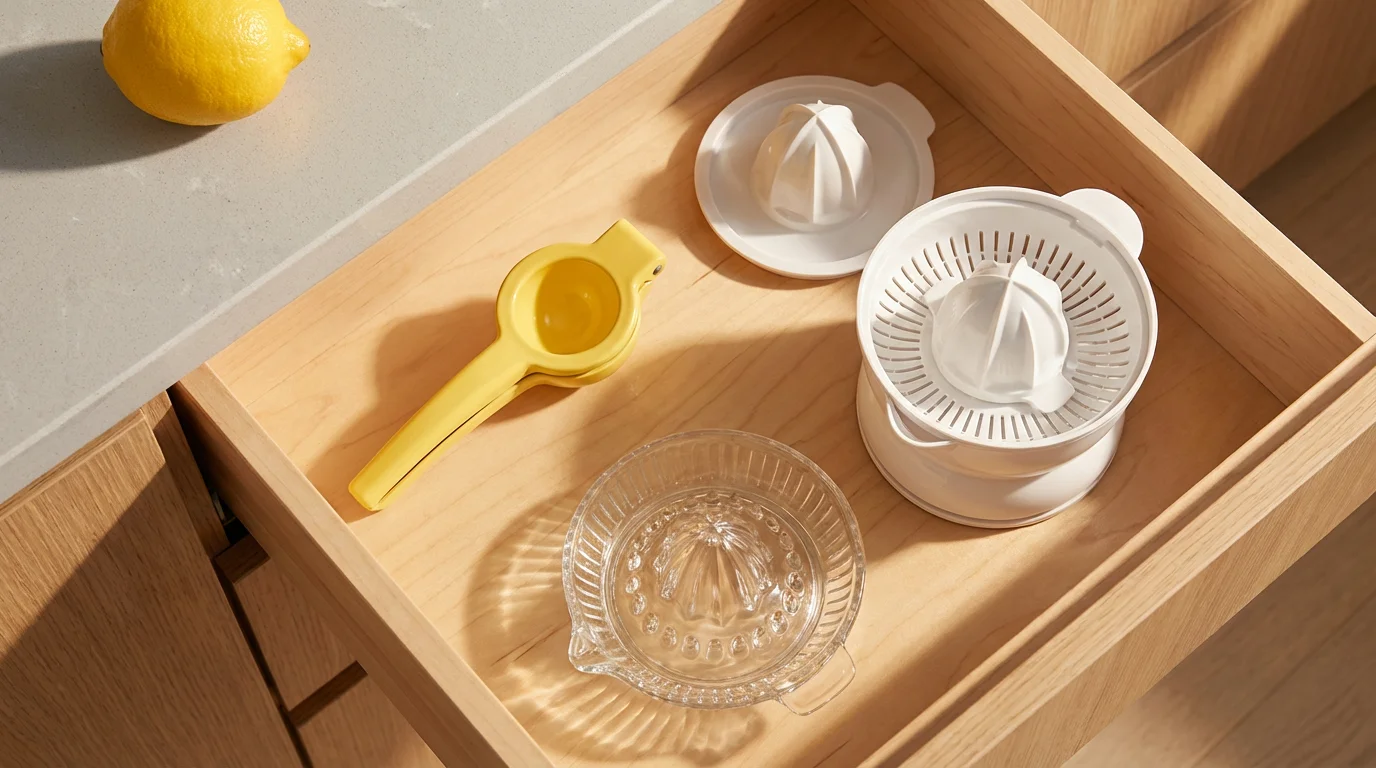
Manual juicers, especially the hand-held lemon squeezer type, are compact. Many fit easily into a utensil drawer, making them the best citrus juicer for small kitchens. Reamer-style juicers with a collection cup might take up slightly more room but often stack, further optimizing space. Their minimal footprint makes them ideal for renters, dorm rooms, or RVs.
Electric juicers, conversely, demand more space. They have a motor base, which can be bulky, and often require permanent counter space or a dedicated cabinet spot. Their cord management, or lack thereof, can also contribute to a cluttered look if left out. Consider how often you will use it. If it is daily, a permanent spot on the counter might be justifiable. If it is weekly or less, ensure you have an accessible cabinet or pantry shelf for storage. Wirecutter, known for its rigorous product testing, often emphasizes storage and practical use for everyday items, advising readers to consider how an item integrates into their daily routine and available space. Wirecutter reviews frequently highlight products that offer excellent performance without excessive bulk.

The “Do You Really Need This?” Test: When to Buy, When to Skip
Many kitchen gadgets are solutions looking for problems, and a citrus juicer can fall into this category if your needs are minimal. Be honest about your juicing habits.
This same logical approach can be applied to other specialized items, such as avocado tools including slicers and pitters, to avoid clutter.
Buy an electric citrus juicer if:
- You juice large quantities of citrus regularly, such as a pitcher of orange juice daily or several cups for cooking and baking.
- You frequently juice larger fruits like grapefruits.
- You have arthritis, carpal tunnel syndrome, or limited hand strength, making manual squeezing painful or difficult.
- You prioritize speed and minimal physical effort above all else.
- You have ample counter or cabinet space to store a larger appliance.
Skip an electric citrus juicer if:
- You only squeeze one or two lemons or limes a few times a week for cocktails or recipes. A simple manual option works perfectly here.
- Your kitchen is tiny, and you cannot justify dedicating valuable counter or cabinet space to a single-purpose appliance.
- You prefer silent operation and do not want another appliance to plug in or maintain.
Buy a manual citrus juicer (specifically a robust hand press) if:
- You need a lemon squeezer for small, frequent tasks like adding fresh lime to tacos or lemon to fish.
- You prefer minimal cleanup and appreciate a tool that can be rinsed and tossed in the dishwasher.
- You have a small kitchen and need compact, drawer-friendly tools.
- You appreciate the control and direct interaction with your ingredients.
Skip a manual citrus juicer (or opt for a basic reamer) if:
- You rarely juice at all, or only need a tiny splash here and there, which you might achieve with a fork and a bowl.
- You require large volumes of juice quickly and easily, and have the budget and space for an electric model.
Ultimately, the best citrus juicer for you delivers efficient performance without becoming another unused gadget. According to Consumer Reports, the most highly-rated small appliances are those that integrate seamlessly into a user’s routine, providing real value for their specific needs.
Frequently Asked Questions
Are plastic juicers safe to use?
For those who enjoy prepping a variety of fresh produce, finding the best apple corers and slicers can also significantly speed up healthy snack preparation.
Many plastic juicers are perfectly safe, especially those labeled BPA-free, meaning they are made without a chemical (BPA) that some people prefer to avoid. While plastic may not offer the same durability or aesthetic appeal as stainless steel or glass, a good quality, BPA-free plastic juicer is a cost-effective and lightweight option, particularly for manual models. Always check manufacturer specifications for material safety.
How do I get the most juice from my citrus?
Regardless of your juicer type, a few tricks maximize your yield. First, bring citrus fruits to room temperature before juicing. Cold fruit yields less juice. Second, roll the fruit firmly on a countertop for 10-15 seconds before cutting, which helps break down the internal membranes. Finally, cut the fruit in half across the middle, not lengthwise, to expose more of the pulp to the reamer.
Can I use an electric citrus juicer for other fruits, like apples or carrots?
No, an electric citrus juicer is designed specifically for citrus fruits. Its reaming mechanism extracts juice from soft, pulpy citrus halves. It will not effectively juice hard fruits or vegetables like apples, carrots, or leafy greens. For those items, you need a dedicated centrifugal or masticating juicer, which operates on an entirely different principle.
What is the difference between a lemon squeezer and a reamer?
A lemon squeezer is a type of manual juicer, often a two-handled press that clamps down on a halved lemon or lime, squeezing out the juice. It excels at quick, direct extraction from smaller citrus. A reamer is a cone-shaped tool, either manual or motorized, onto which you twist a halved fruit. Reamers are more versatile for different citrus sizes but can sometimes leave more pulp or require more effort without a press mechanism.
Are silicone components on juicers durable?
Silicone is a flexible, heat-resistant material used in many kitchen tools, including some juicer components. It is very durable, resistant to high temperatures, and non-reactive, making it safe for food contact. You often find silicone on non-slip grips, gaskets, or splash guards on juicers. It generally holds up very well to repeated use and cleaning, often being dishwasher safe.
Disclaimer: Product prices and availability change frequently. Prices shown were accurate at time of writing but may have changed. We may earn a small commission from purchases made through links on this site, at no extra cost to you. Always verify current pricing on the retailer’s website before purchasing.









Leave a Reply