
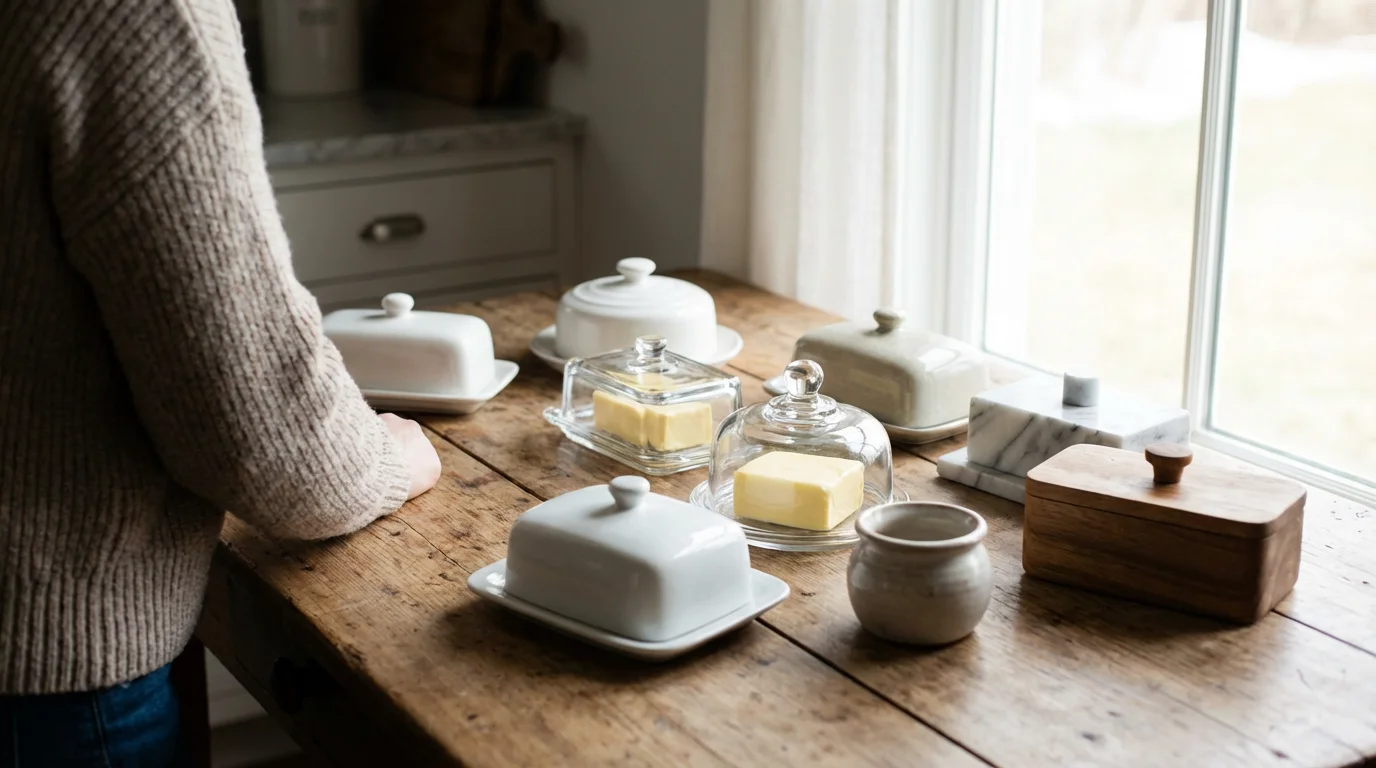
There is a specific kind of morning frustration reserved for trying to spread cold, hard butter onto a warm piece of toast. Instead of melting into a golden layer, the butter tears the bread to shreds, leaving you with a mangled breakfast and a cold pat of fat that refuses to cooperate. The solution is simple, yet often debated: keep your butter on the counter. But to do that safely and cleanly, you need the right tool.
While a butter dish might seem like a basic piece of crockery, the difference between a well-designed keeper and a frustrating one is vast. Some allow your butter to go rancid too quickly, while others have lids that slip out of greasy fingers and shatter on the floor. From high-tech French crocks that use water seals to utilitarian stainless steel vaults, the market is flooded with options.
This guide cuts through the aesthetic fluff to focus on the mechanics of keeping butter fresh, spreadable, and sanitary. You will learn which materials survive a busy kitchen, why the shape of your butter stick matters, and whether you should invest in a water-sealed crock or stick to a standard dish.
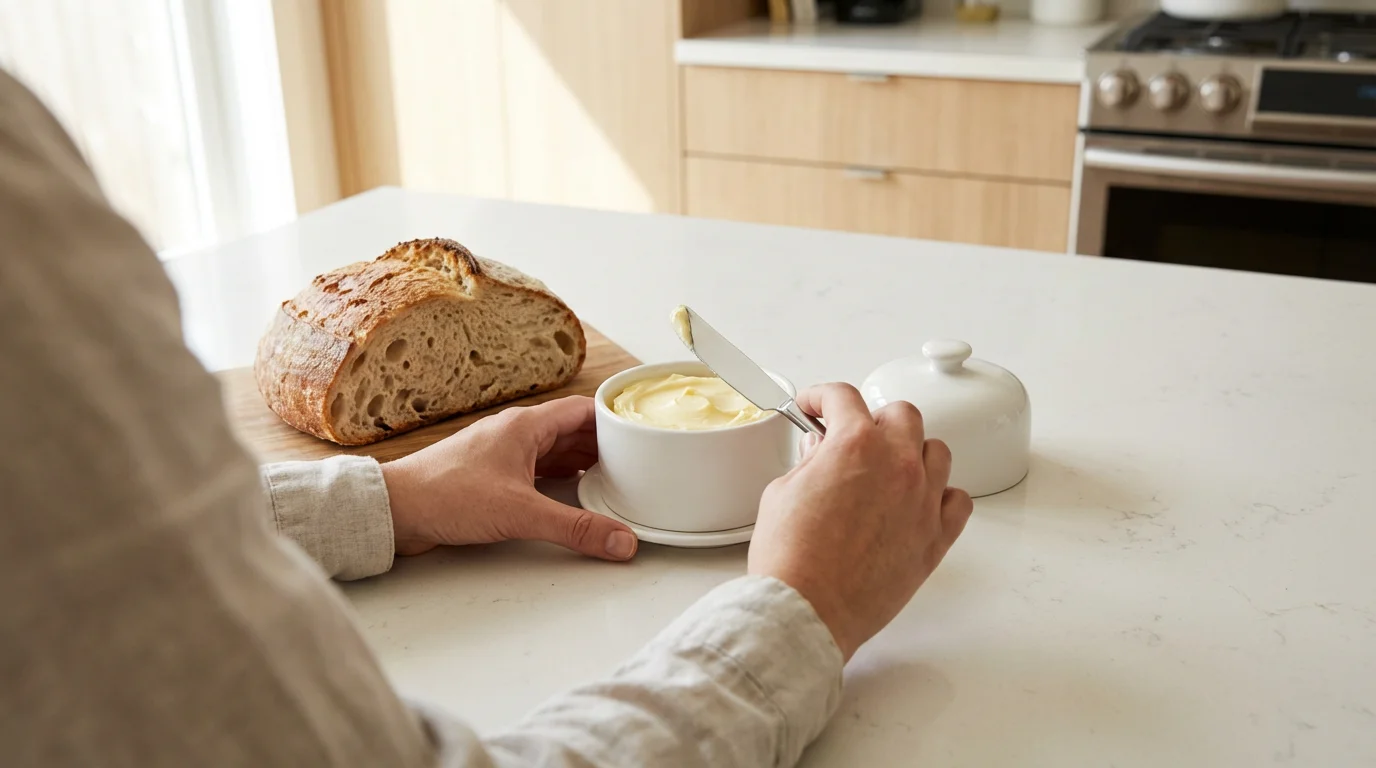
The Safety Question: Can You Really Keep Butter Out?
Before buying a specific dish, you need to understand the science of counter storage. Many home cooks hesitate to leave dairy out of the refrigerator, fearing food poisoning. However, butter is unique among dairy products.
Butter is approximately 80% fat and roughly 16-17% water. This high fat content, combined with pasteurization, creates an environment where bacteria struggle to grow rapidly compared to milk or cream. Furthermore, if you use salted butter, the salt acts as a natural preservative.
For most kitchens kept at a standard ambient temperature (around 68°F to 72°F), salted butter remains safe and palatable for anywhere from one to two weeks. If your kitchen gets hotter than 75°F, the fat can oxidize faster, leading to a rancid taste. A good butter dish protects the fat from light and air, the two main culprits that accelerate spoilage. If you go through a stick of butter every week, counter storage is generally safe. If it takes you a month to finish a stick, you might want to keep it in the fridge or use a smaller butter keeper.
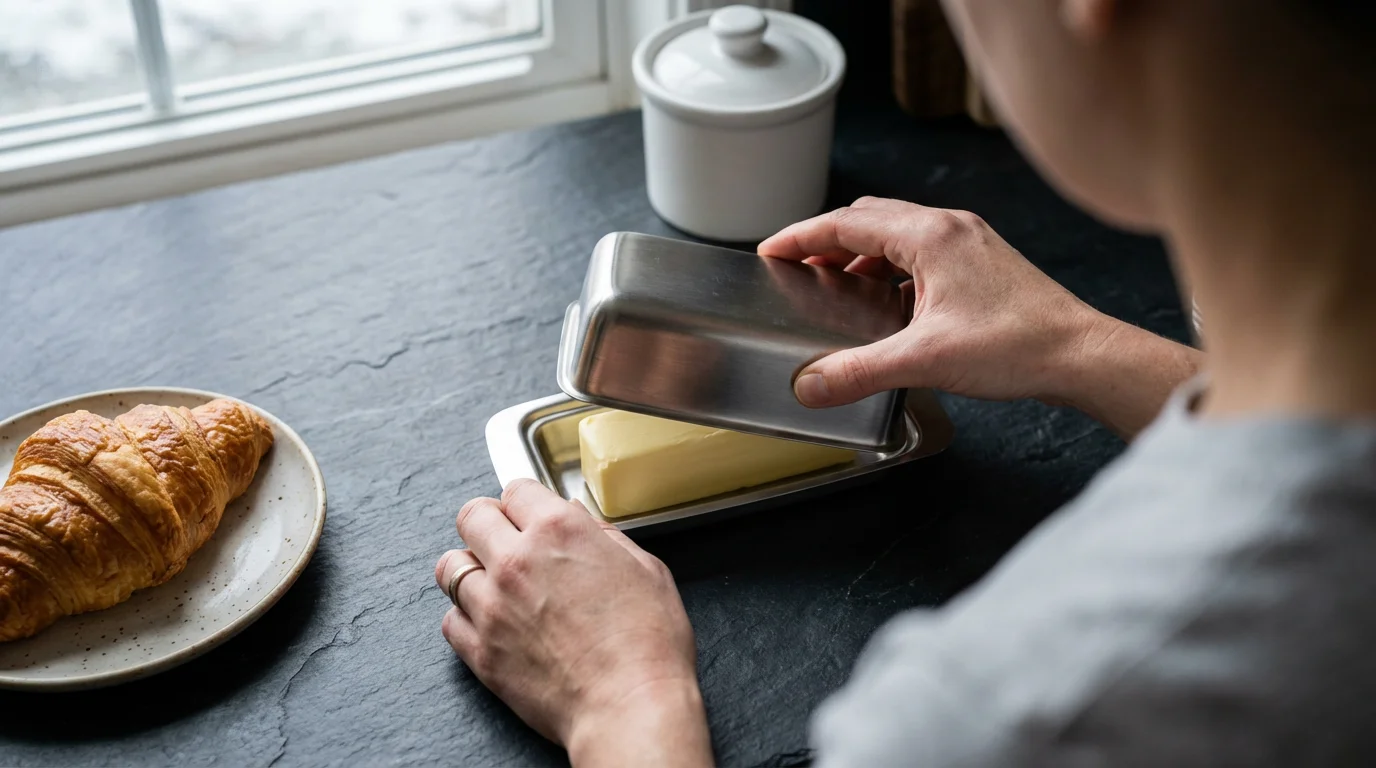
Styles Showdown: Standard Dishes vs. French Crocks
The market divides primarily into two categories: the standard covered dish and the French butter crock (often called a butter bell). Understanding the mechanics of each will help you decide which fits your cooking style.
The Standard Covered Dish
This is the classic design: a flat plate or tray with a dome-shaped lid. It relies on a simple physical barrier to keep dust and bugs out.
- Pros: Extremely easy to use; fits standard sticks directly from the wrapper; easy to clean; visual simplicity.
- Cons: Not airtight, so butter spoils faster than in a crock; if the kitchen is hot, the butter melts into a puddle.
- Best For: High-volume households that finish a stick of butter in 3-5 days.
The French Butter Crock
Originating in late 19th-century France, this device uses water to create an airtight seal. The unit consists of two parts: a base (which you fill with a small amount of water) and a bell-shaped lid (into which you pack the butter). When you place the lid into the base, the water rises around the butter, sealing it off from oxygen.
“The French butter crock is a brilliant piece of low-tech engineering, but it demands discipline. If you forget to change the water, you’re growing a science experiment, not storing breakfast ingredients.”
- Pros: Keeps butter fresh for up to 30 days without refrigeration; the water keeps the butter slightly cooler than room temperature, maintaining the perfect spreading consistency.
- Cons: Requires maintenance (changing water every 2-3 days); harder to load (you must squash the butter into the bell); prone to molding if crumbs get inside.
- Best For: Slower butter consumers or those in warmer climates who need that cooling effect.
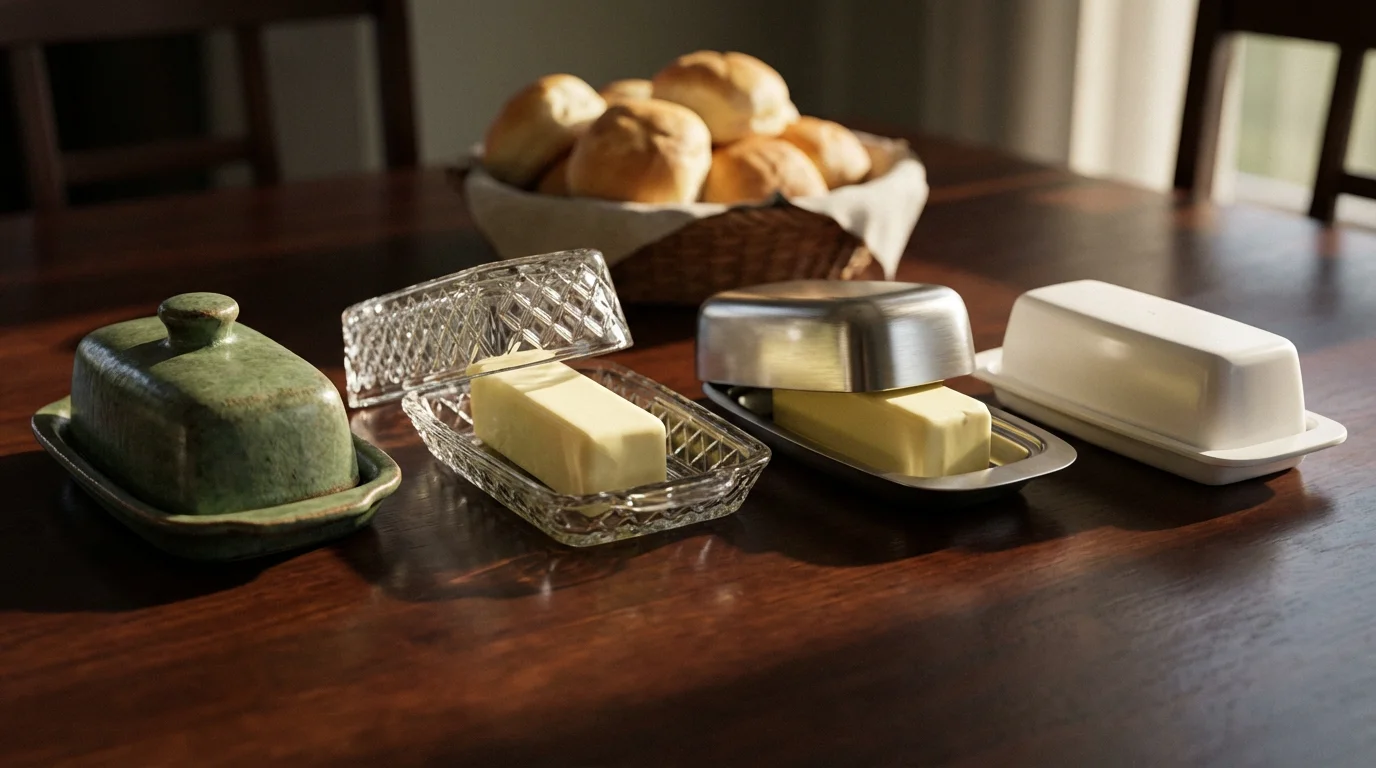
Material Matters: Ceramic, Glass, Steel, and Plastic
The material of your butter dish affects durability, insulation, and cleaning. Don’t choose based on color alone.
| Material | Durability | Insulation | Cleaning | Verdict |
|---|---|---|---|---|
| Stoneware / Ceramic | Moderate (Prone to chipping) | Excellent | Dishwasher Safe | Top Pick. The thick walls keep butter cool, and the weight prevents the dish from sliding while you scrape with a knife. |
| Stainless Steel | High (Indestructible) | Poor (Conducts heat) | Dishwasher Safe | Good Utility. Great for busy families with kids or stone countertops where dropped ceramic would shatter. |
| Glass | Low to Moderate | Moderate | Dishwasher Safe | Classic. Allows you to see how much butter is left, but clear glass lets in light, which speeds up oxidation. |
| Plastic / Acrylic | High (Scratches easily) | Poor | Check Label | Budget Option. Often lightweight, meaning it slides around the counter when you try to get a scoop of butter. Ensure it is BPA-free. |
| Bamboo / Wood | Moderate | Good | Hand Wash Only | Avoid. Porous materials absorb rancid fats over time and can harbor bacteria. Only acceptable as a base for a ceramic lid. |
According to extensive testing by Serious Eats, the weight of the dish is a critical, often overlooked factor. A lightweight plastic dish requires you to hold it down with one hand while scooping with the other. A heavy stoneware dish stays put, allowing for one-handed operation.
The Geography of Butter: East Coast vs. West Coast Sizing
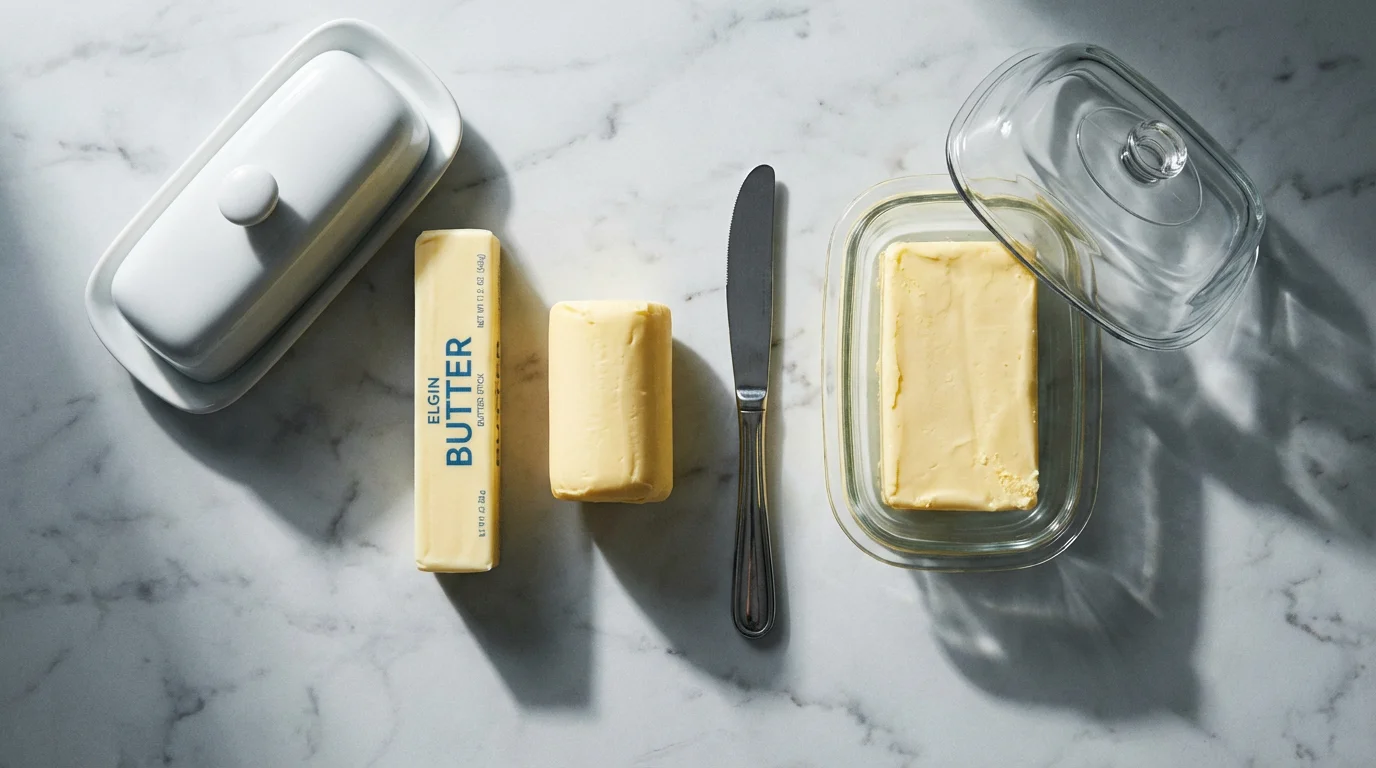
You might be surprised to learn that butter sticks are not universal in the United States. This geographical quirk causes significant headaches when buying a butter dish.
The Elgin Stick (East Coast): Long and skinny. This is the dominant shape east of the Rocky Mountains.
The Western Stubbies (West Coast): Short and thick. Common in California and the West.
Many butter dishes, particularly those imported from Europe or designed solely for the Elgin shape, are too narrow for Western stubbies. If you live on the West Coast, you must verify the width of the dish’s interior. A dish needs to be at least 1.5 to 2 inches wide to comfortably accommodate a Western stick without the lid smearing the sides. Conversely, European butter often comes in 8-ounce blocks (double the size of a US stick), requiring an “extra-wide” or “European style” dish.
Ergonomics: Handles, Lips, and Mess Prevention
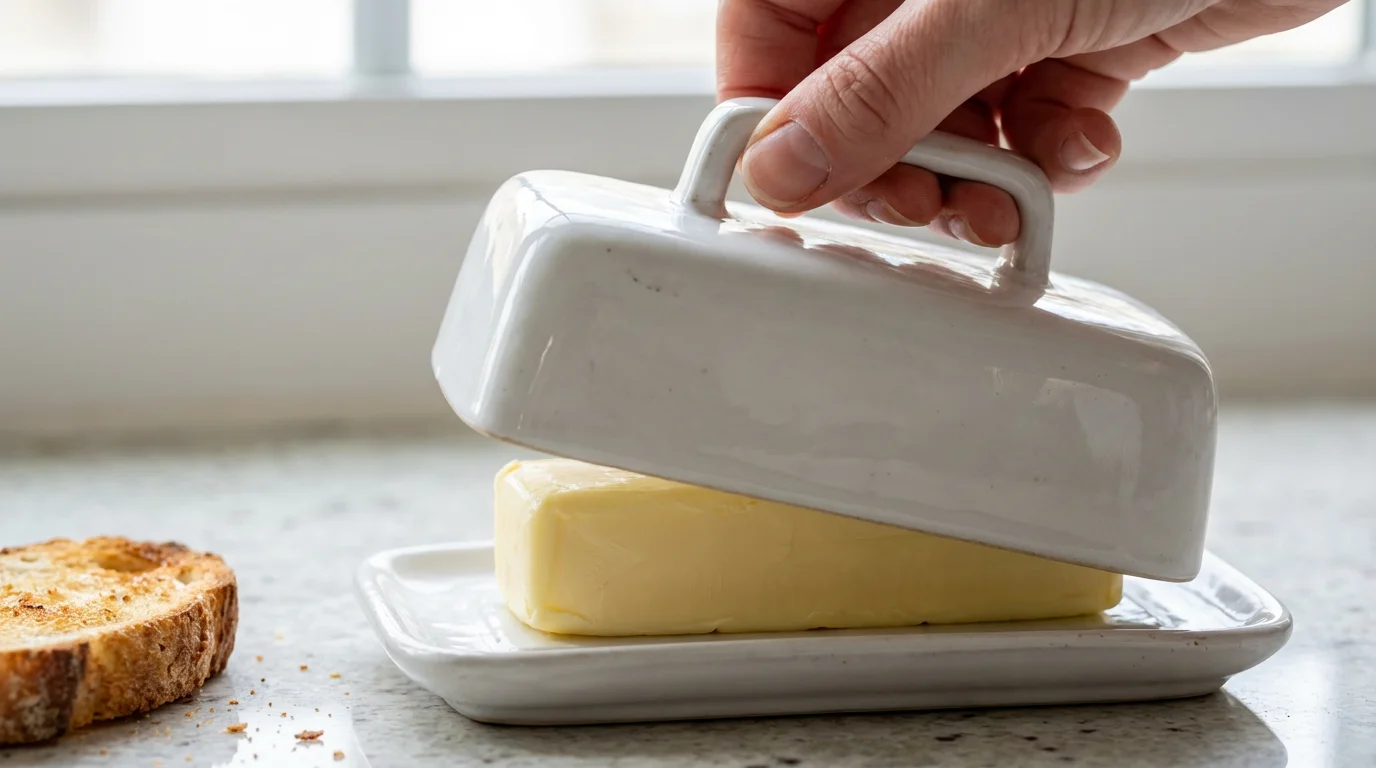
You have just made toast. Your hands are likely slightly greasy or you are in a rush. This is where the ergonomic design of the butter dish lid becomes critical.
The Handle Problem
Smooth, round knobs on heavy ceramic lids are a recipe for disaster. If your fingers are even slightly slippery, you will drop that lid. Look for:
- Loop handles: You can hook a finger through them for a secure grip.
- Rectangular/Bar handles: These offer more surface area for gripping than a small round knob.
- Textured grips: Ridges or relief patterns that provide friction.
The “Stopper” Edge
On a flat-base butter dish, the lid usually sits on the plate. Better designs feature a raised ridge or a “stopper” around the perimeter of the base. This ridge keeps the lid from sliding off if you bump it and prevents the lid from sliding directly into the butter block, which keeps the inside of the lid clean.
Butter Gadgets vs. Traditional Keepers
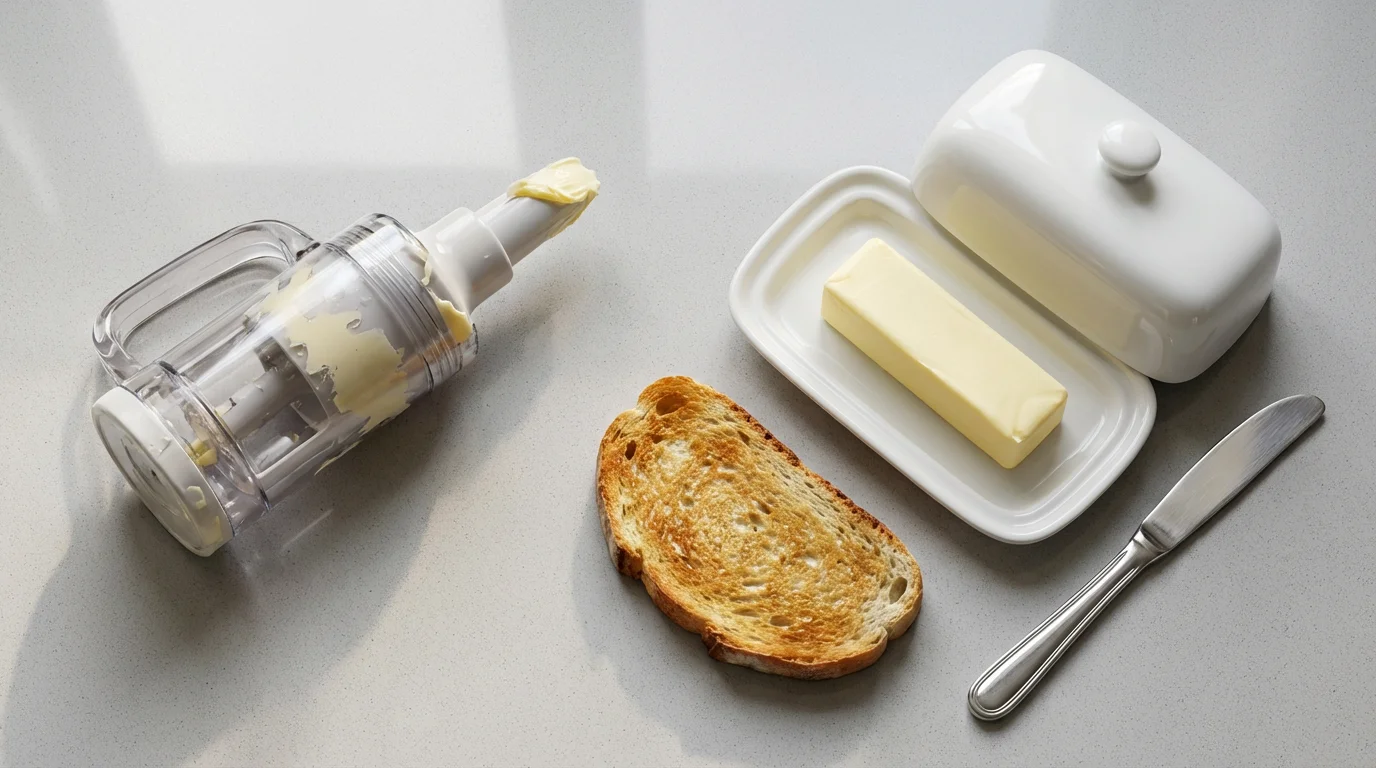
In the world of kitchen tools, there is a constant battle between simple tools and complex gadgets. You may have seen “butter slicers,” “one-click dispensers,” or “ribbon graters” that claim to solve the issue of cold butter.
The One-Click Dispenser: These plastic devices hold a stick of butter and slice a pat off when you squeeze the handle. While they sound convenient, they are notorious unitaskers. They are difficult to clean (butter gets stuck in the internal springs), they often jam with soft butter, and they only work with specific stick shapes.
The Butter Mill/Grater: These work like a pepper mill, extruding ribbons of butter. While effective for spreading cold butter, they require significant hand strength and are a nightmare to clean due to the many moving parts.
The Verdict: Skip the mechanical gadgets. As Wirecutter often notes in their kitchen organization reviews, the best tool is usually the one with no moving parts. A high-quality ceramic butter dish and a simple butter knife will outlast any plastic dispenser and take a fraction of the time to clean.

Cleaning and Maintenance for Longevity
Even though butter is resistant to bacteria, hygiene is non-negotiable. Rancid butter tastes like old pennies and can ruin a batch of cookies or your morning toast.
For Standard Dishes:
Wash the dish every time you finish a stick. Do not just drop a new stick on top of the old smear. Old butter oxidizes and will taint the fresh stick. Stainless steel and glass can go in the dishwasher. If you use a dish with a wooden base, hand wash it and dry it immediately to prevent warping or cracking.
For French Crocks (Critical):
Maintenance is the price you pay for freshness.
1. Change water every 2-3 days. If you leave it longer, mold will grow.
2. Use cold water. Warm water will melt the butter into the reservoir.
3. Pack it tight. When loading the bell, press the butter firmly to remove air pockets. Air pockets can cause the butter to fall out of the bell into the water.
4. Dry completely. Before reloading, ensure the bell is bone dry so the butter adheres to the ceramic.
Selecting the Right Keeper for Your Kitchen
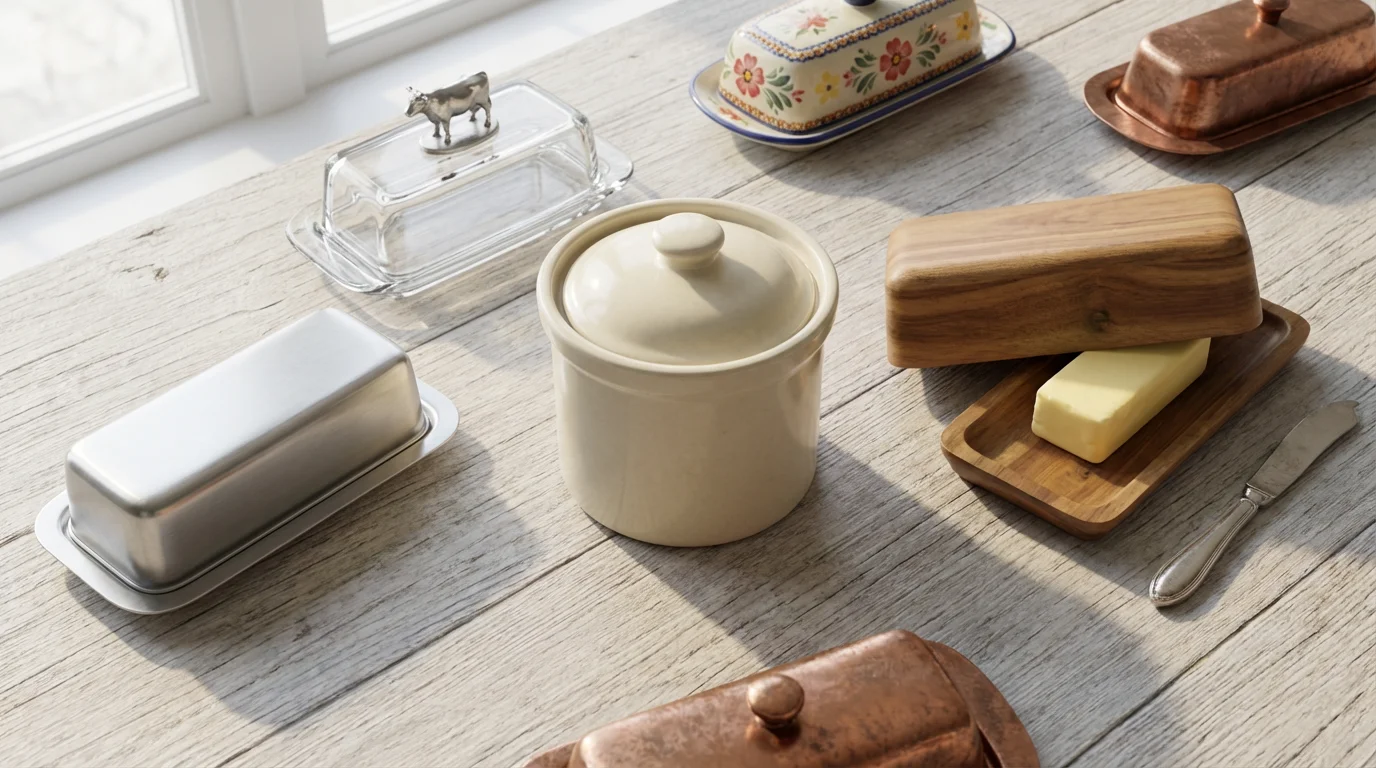
Your choice ultimately depends on your consumption habits and your kitchen environment. Use this checklist to make your final decision:
- Buy a French Butter Crock if: You have a warm kitchen, you eat butter slowly (taking more than a week to finish a stick), and you are disciplined enough to change the water every few days.
- Buy a Heavy Ceramic Dish if: You want a “set it and forget it” solution, you go through butter quickly, and you want a dish that doesn’t slide around the counter.
- Buy a Stainless Steel Dish if: You have young children, tile floors, or simply want a utility tool that will never break.
- Check Dimensions if: You live on the West Coast or buy Kerrygold/European blocks. Ensure the dish is wide enough.
Investing in a proper vessel for your butter changes it from a rock-hard frustration into a ready-to-use ingredient. Whether you choose the old-world charm of a crock or the durability of steel, the goal is the same: better butter, every time.
Frequently Asked Questions
How long can I leave butter out in a dish?
Salted butter can safely sit out at room temperature (68-72°F) for about two weeks. Unsalted butter is more prone to spoilage and should generally be eaten within a few days or kept in the fridge. If your kitchen is consistently above 75°F, keep the butter in the fridge or use a water-cooled French crock.
Why does my butter fall out of my French butter crock?
This usually happens for two reasons: the butter was too soft when you packed it, or you left air pockets inside the bell. To fix this, ensure the butter is slightly cool (but malleable) when packing, and press it firmly into the crock to eliminate air gaps. Also, ensure the interior of the crock is completely dry before loading.
Is it safe to leave unsalted butter on the counter?
It is riskier than salted butter. Salt acts as a preservative that inhibits bacterial growth. While you can leave unsalted butter out for short periods (1-2 days) for baking prep, it is safer to store unsalted butter in the refrigerator or a French crock if you plan to keep it longer.
Can I put my butter dish in the dishwasher?
Most ceramic, glass, and stainless steel butter dishes are dishwasher safe. However, plastic dishes may warp in high heat, and wooden bases must always be hand-washed. Always check the manufacturer’s instructions, specifically looking for “top rack only” warnings for plastics.
Disclaimer: Product prices and availability change frequently. Prices shown were accurate at time of writing but may have changed. We may earn a small commission from purchases made through links on this site, at no extra cost to you. Always verify current pricing on the retailer’s website before purchasing.



Leave a Reply