
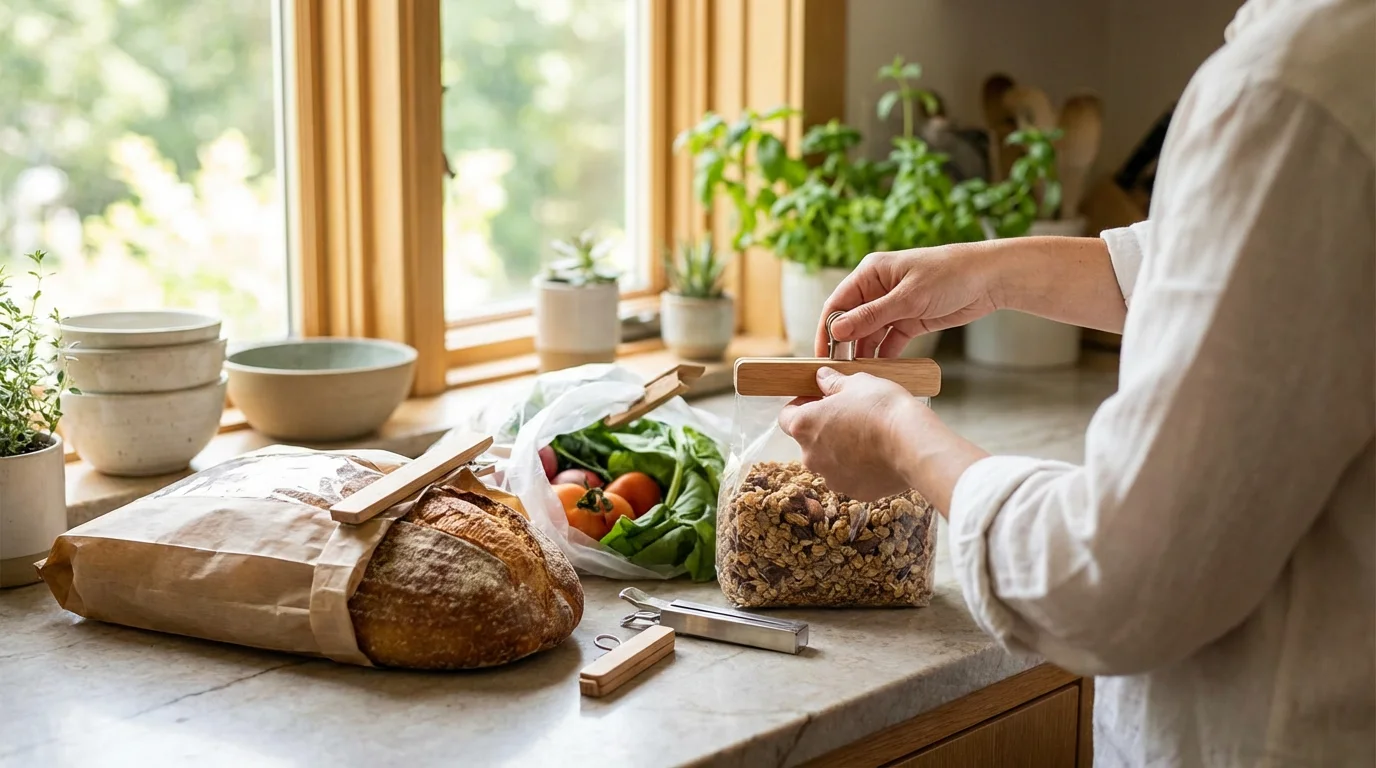
You might think a bag clip is just a bag clip. It is perhaps the most humble tool in the kitchen, often an afterthought thrown into a shopping cart near the checkout line. Yet, few things are as frustrating as reaching for a bag of premium coffee beans or your favorite tortilla chips, only to find them stale, limp, and flavorless because the closure failed. Worse, a weak clip can lead to the dreaded pantry spill, covering your floor in flour or rice.
Many home cooks rely on a chaotic drawer full of rubber bands, wooden clothespins, and cheap plastic clips that snap in half after a month of use. If you are serious about reducing food waste and keeping your pantry organized, you need to upgrade your strategy. We have tested dozens of closure methods to determine which gadgets actually maintain a seal and which are destined for the landfill.
Why Most Bag Closures Fail
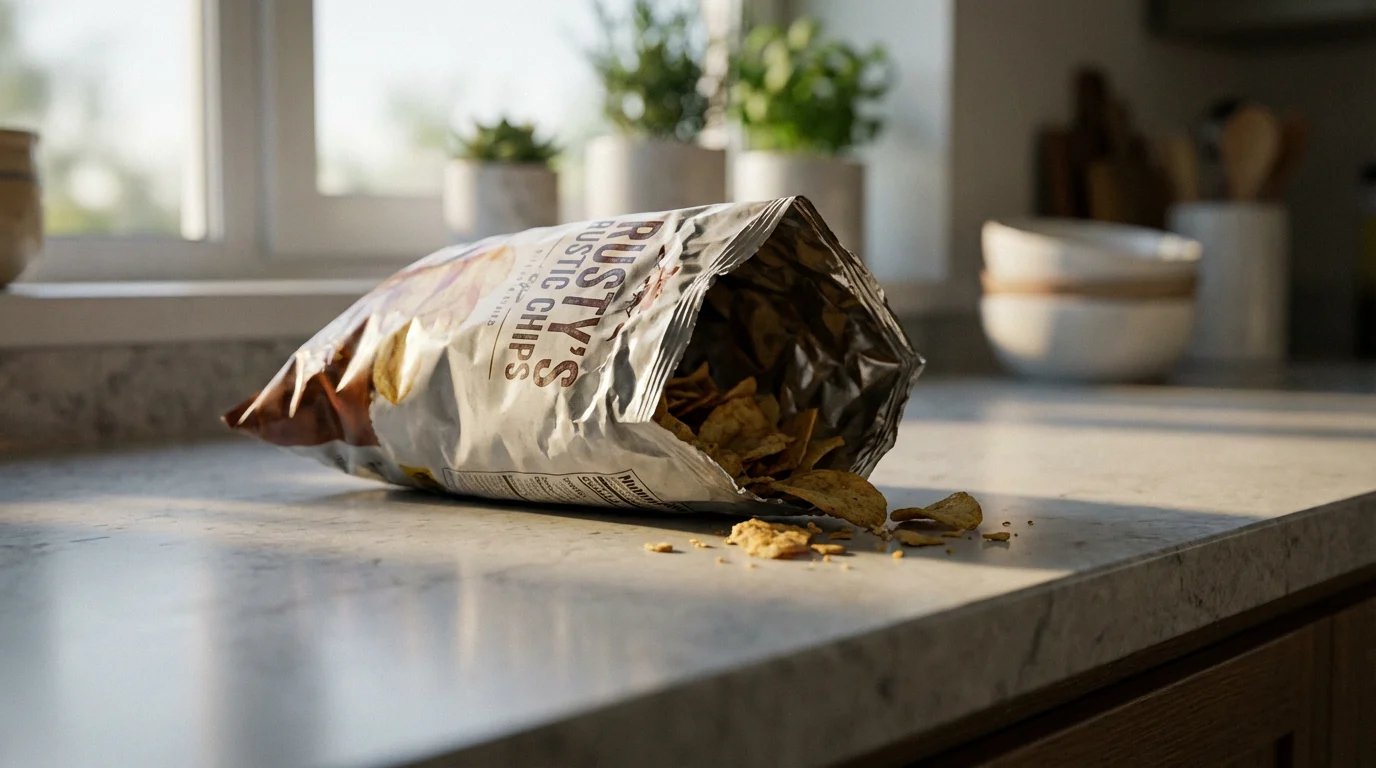
To understand what makes a great clip, you must first understand the enemy: air and moisture. Oxidation turns fats rancid (ruining nuts and chips), while moisture absorption destroys the texture of crackers and sugar. The “twist and tuck” method—simply twisting the bag neck and shoving it under the bag—is rarely sufficient to stop this airflow.
Cheap clips often fail for two reasons: weak spring tension and poor contact geometry. If a clip has a strong spring but the plastic edges are bowed or uneven, air channels remain open. Conversely, a clip might have a flat seal but a spring so weak that the weight of the bag pops it open. Serious Eats emphasizes that for equipment to be worth its space, it must perform its primary function better than a makeshift alternative. In this case, if a clip seals worse than a piece of tape, it is useless.
Material Matters: Plastic vs. Steel vs. Wood
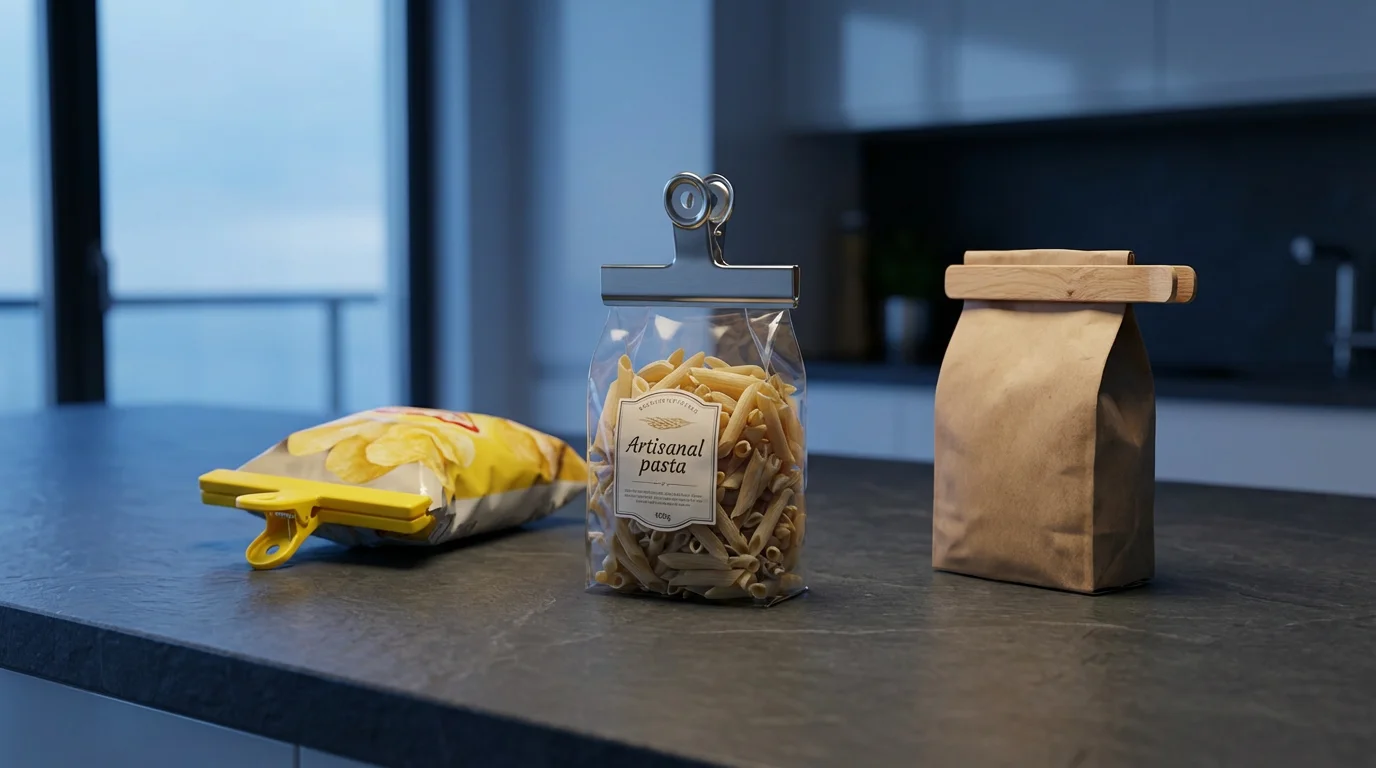
The lifespan of your kitchen gadgets often comes down to materials. In the world of bag clips, you generally have three choices, each with distinct pros and cons.
Plastic
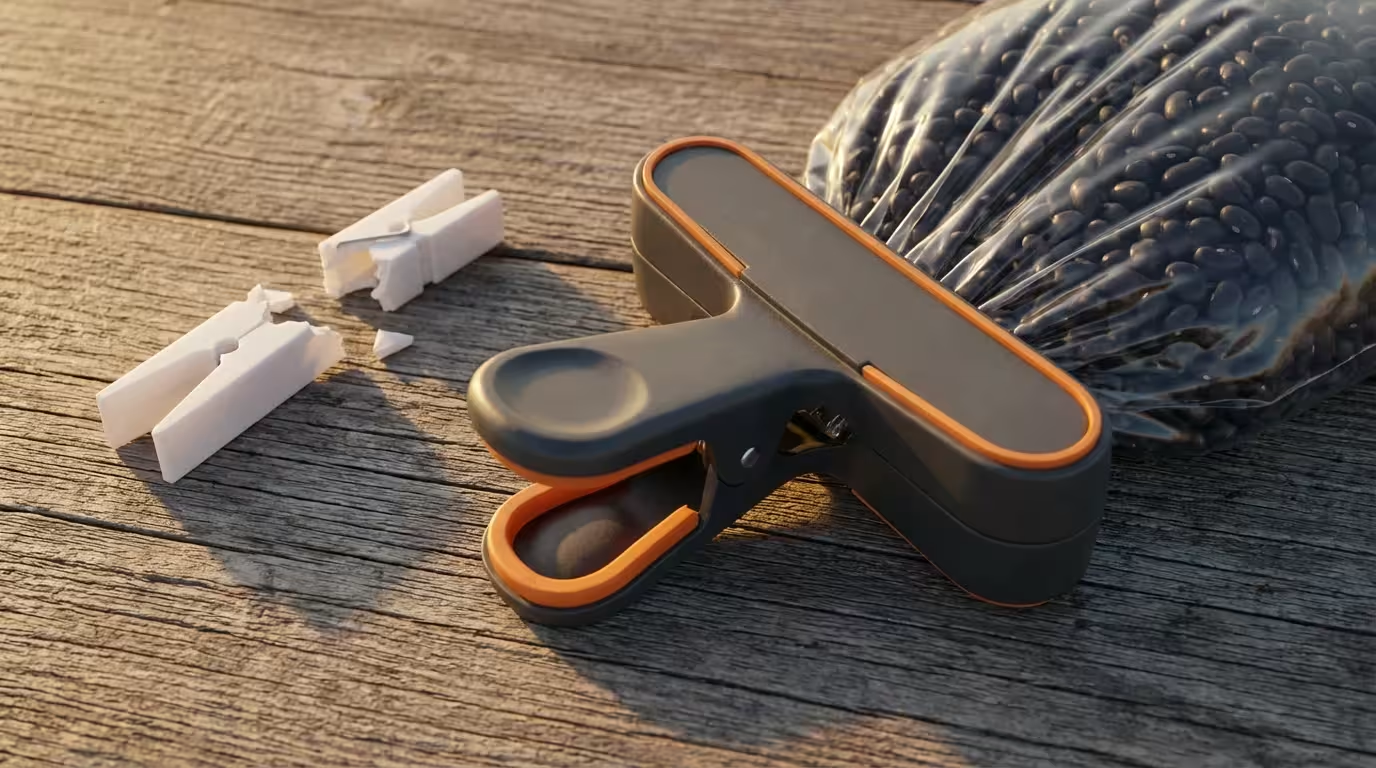
Most clips on the market are plastic. They are inexpensive, often sold in large variety packs, and come in bright colors that make them easy to spot. However, plastic becomes brittle over time, especially if you use these clips in the freezer. The pivot point—where the two halves meet—is the most common failure point. Look for heavy-duty ABS plastic rather than the thin, translucent variety.
Stainless Steel
Stainless steel (a durable metal that resists rust and staining) is the gold standard for longevity. These clips provide superior clamping force and will not snap if you accidentally step on one. The downside? They can have sharp edges that might tear thinner produce bags. They also tend to be more expensive upfront, though their lifespan usually justifies the cost.
Wood
Wooden clips, often resembling oversized clothespins, offer a rustic aesthetic. While they are environmentally friendly, wood expands and contracts with humidity. Over time, the wood can warp, reducing the effectiveness of the grip. They are fine for short-term storage of dry goods like pasta, but avoid using them for moisture-sensitive items like brown sugar.
Styles Explained: Clamps, Rods, and Wire
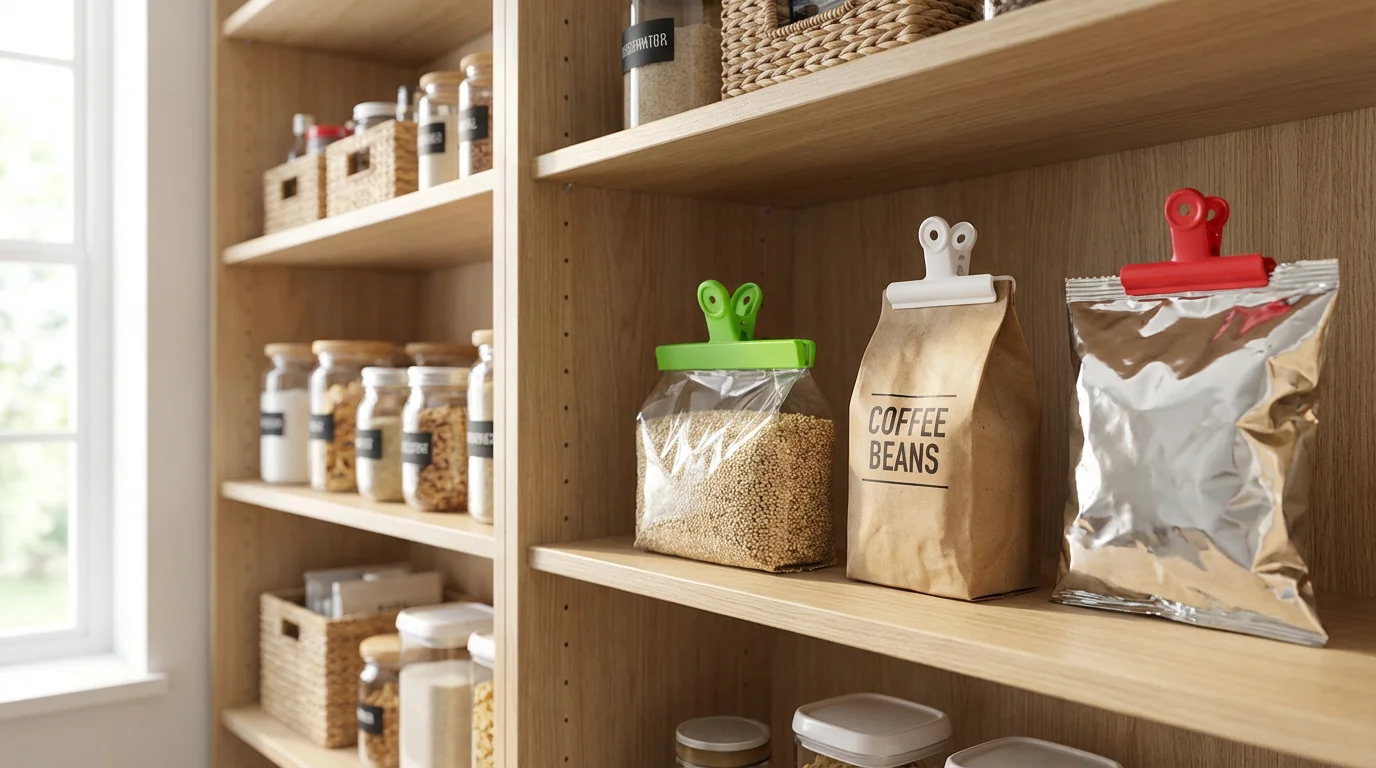
Not all clips operate the same way. Matching the clip style to the packaging type is the secret to a fresh pantry.
The Classic Clamp (Alligator Style)
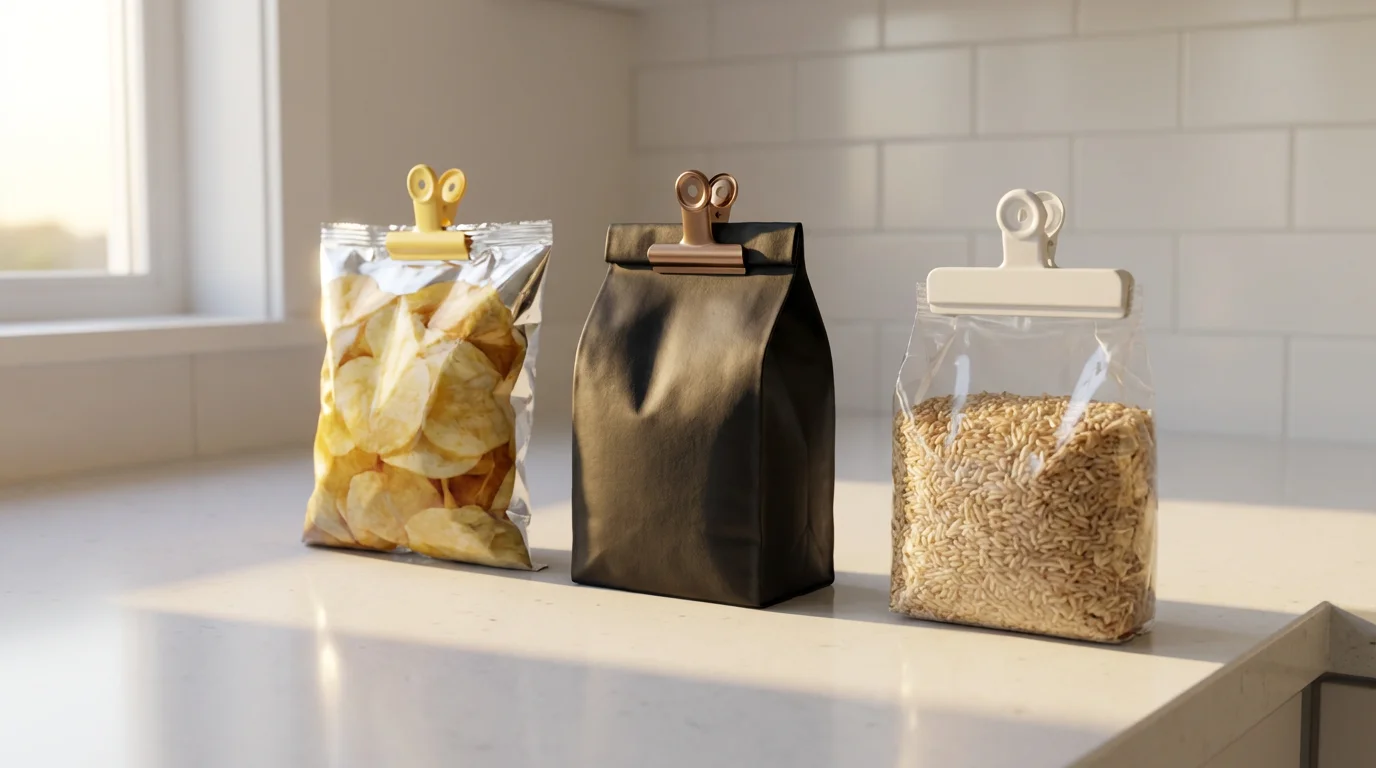
These are the standard “pinch to open” clips. They are excellent for quick access items like chip bags or frozen vegetable sacks.
Pros: Easy to use with one hand; fits most thick bags.
Cons: Bulky; often leaves gaps at the corners of stiff bags.
The Slide-on Rod
This design involves a plastic rod with a channel. You fold the bag over and slide the rod across the entire width.
Pros: Creates a near-airtight seal; extremely low profile in drawers.
Cons: Fiddly to apply; requires the bag to be relatively flat and unwrinkled; difficult to use on thick paper bags.
Wire Binder Clips
Yes, the same clips you use for office documents. Many professional chefs swear by these. They are incredibly cheap, virtually indestructible, and have a very strong grip.
Pros: Strongest grip per dollar; available in many sizes.
Cons: Hard to open for people with arthritis; metal handles can get in the way.
The Durability and Grip Test
We believe in stress-testing claims. To evaluate these gadgets, we didn’t just look at them; we abused them. Our testing protocol involved three main challenges:
- The Heavy Hang: We clipped a 2-pound bag of frozen peas and held it solely by the clip. Weak clips let the bag slide out immediately. Standard plastic clips often failed this test, while those with non-slip grips (rubberized contact points) held firm.
- The Freezer Burn: We placed clips in a deep freeze (-5°F) for 48 hours, then immediately tested the spring mechanism. Cheap plastic shattered or lost tension. Silicone and stainless steel remained unaffected.
- The Drop Test: We dropped the clips from counter height onto a tile floor. This mimics real-life kitchen accidents. If a gadget breaks on the first drop, it is not practical for a busy home.
The results were clear: Clips featuring a silicone lining or rubberized mouth outperformed hard plastic-on-plastic designs significantly. The friction provided by the rubber prevents the bag from slipping, even if the spring tension isn’t massive.
Specialty Clips: Spouts and Dates
Beyond the standard closure, you will find “unitaskers”—gadgets designed for a single, specific purpose—claiming to revolutionize your pantry. Are they worth it?
Pour-Spout Clips
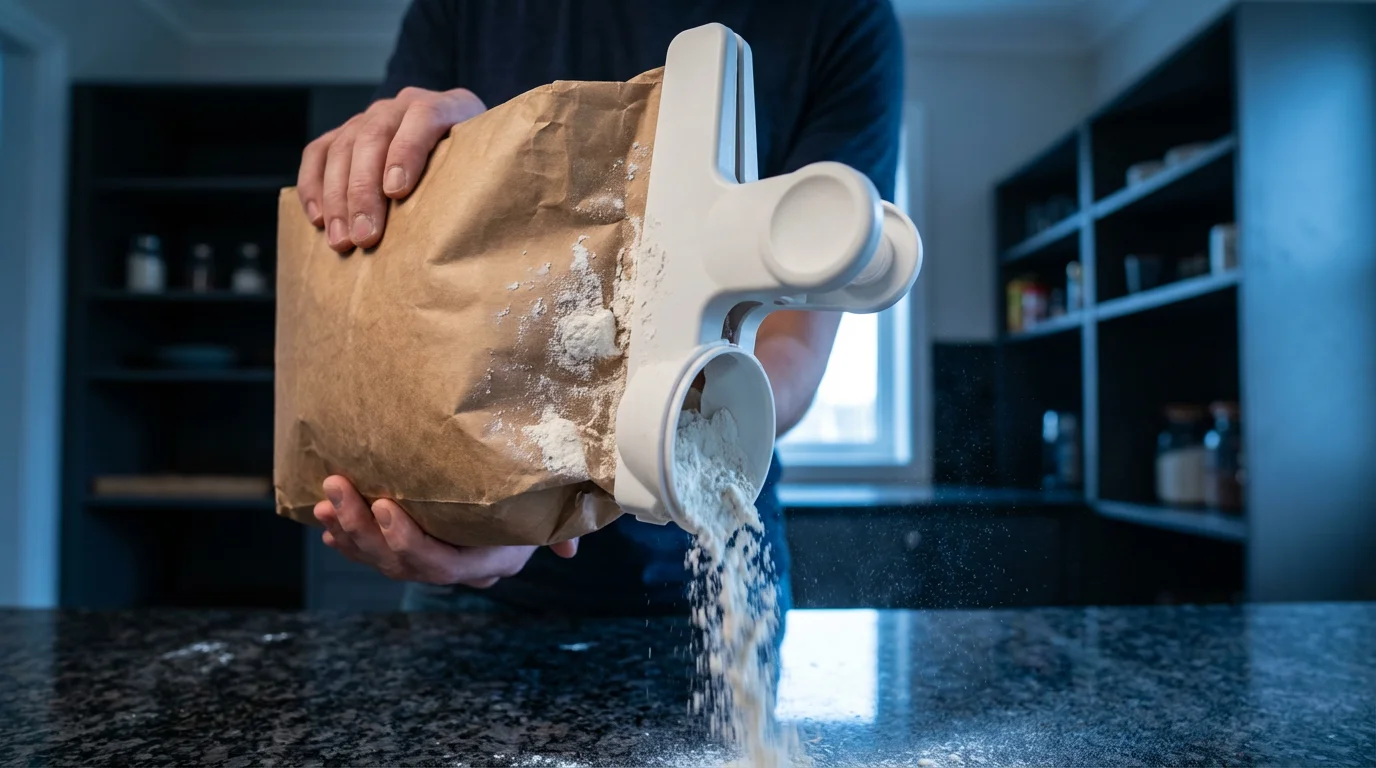
These large clips attach a plastic spout and lid to your bag. The idea is that you clip it onto a bag of flour or sugar and pour directly through the gadget. In practice, these are often more trouble than they are worth. Unless the seal is perfect, powder leaks out the sides. Furthermore, the opening is often too narrow for chunky items like chocolate chips. Wirecutter often advises against over-complicated gadgets that replace simple skills; pouring from a bag is a skill you already have. We recommend skipping these unless you have specific mobility issues that make holding a heavy bag difficult.
Date-Dial Clips
These clips feature a small rotating dial to indicate the month or day you opened the product. While the concept is sound, the execution is usually flimsy. The dials are tiny, hard to read, and easy to accidentally bump. A better solution? A roll of masking tape and a Sharpie marker. It is cheaper, clearer, and never breaks.
Storage and Organization Tips
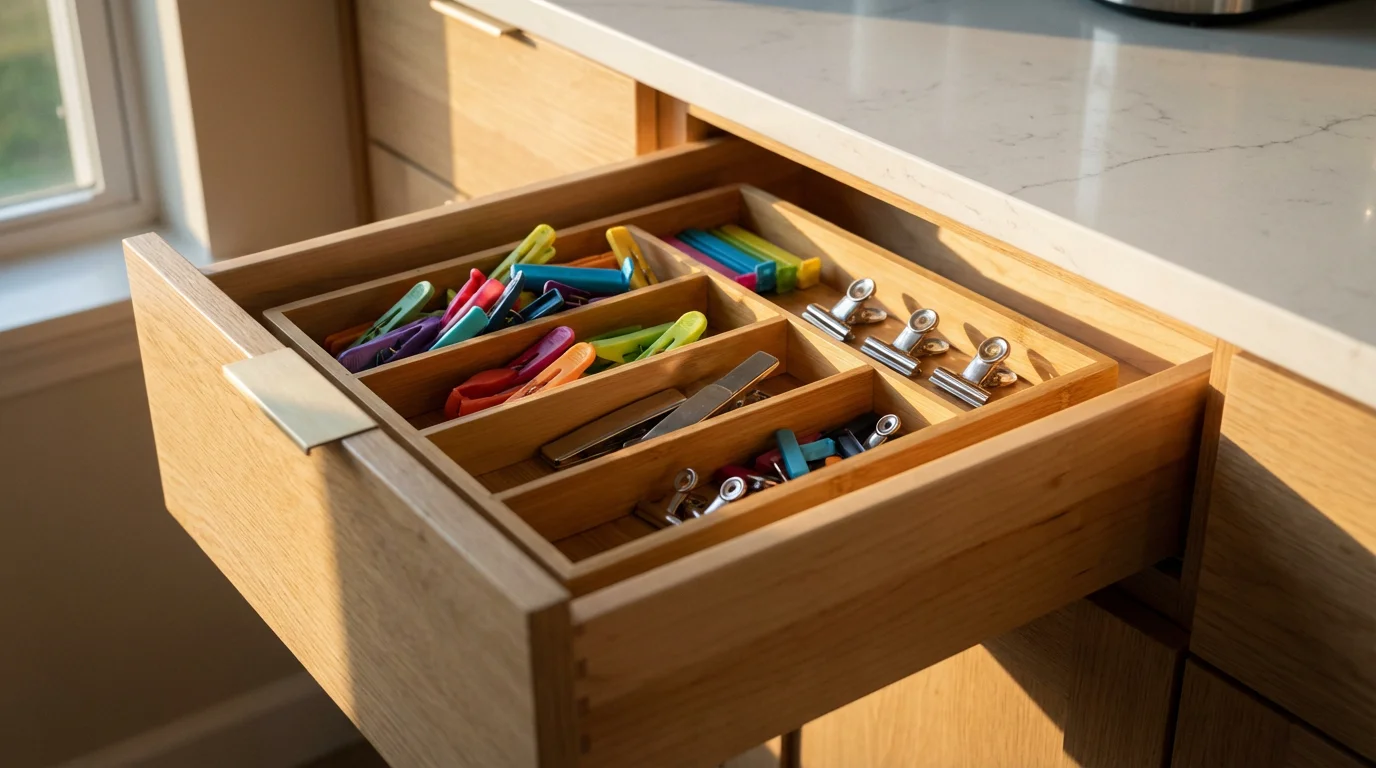
Ironically, the tools meant to organize your food often clutter your drawers. Bag clips are notorious for tangling together. To keep your kitchen functional, consider these storage methods:
- The Magnetic Strip: Many premium clips come with magnets on the back. Stick them to the side of your refrigerator or range hood. This keeps them accessible and out of the drawer.
- The Clip Chain: Clip them onto each other in a long chain, or clip them all onto the rim of a small basket inside your pantry.
- The Container Method: Dedicate a small, wide-mouthed jar (like an old pickle jar) on the counter specifically for clips. This prevents them from jamming your silverware drawer.
Bag Clip Comparison Matrix
Use this table to decide which type of clip suits your household needs best.
| Clip Type | Seal Quality | Durability | Ease of Use | Best For |
|---|---|---|---|---|
| Rubberized Spring Clip | Good | High | High | Chips, Frozen Veggies, Pretzels |
| Slide-on Rod | Excellent | High | Low | Coffee, Crackers, Cereal |
| Wire Binder Clip | Good | Very High | Medium | Flour, Sugar, Bulk Bags |
| Wooden Peg | Fair | Low | High | Crafts, Short-term storage |
| Spout Clip | Poor/Variable | Medium | Low | Specific mobility needs |
“The best kitchen gadget is one you’ll actually use every week—not the one with the most Amazon reviews. If a clip is too hard to close, your food will go stale regardless of the technology.”
Frequently Asked Questions
Here are the most common questions we receive about maintaining food freshness with bag clips.
Can I wash bag clips in the dishwasher?
It depends on the materials. Stainless steel and silicone clips are generally dishwasher safe. However, standard plastic clips with metal springs can rust or warp in high heat. We recommend placing small clips in the utensil basket or a mesh bag to prevent them from flying around during the wash cycle. Wooden clips must be hand-washed and dried immediately.
Are expensive brand-name clips worth the money?
In many cases, yes. Brands that focus on ergonomic design (making the tool comfortable to hold and use) invest in better springs and higher-quality plastics (often BPA-free). Generic dollar-store clips often use brittle plastic that snaps under pressure. Investing a few extra dollars for a set that lasts five years is cheaper than replacing a broken set every six months.
Do bag clips work in the freezer?
Not all of them. Standard plastic becomes brittle at freezing temperatures and can snap when you try to open it. Look for clips specifically labeled “freezer safe” or opt for stainless steel wire clips, which are unaffected by cold temperatures. This is vital for preventing freezer burn on open bags of frozen fruit or vegetables.
What is the best way to fold a bag before clipping?
The “accordion fold” is often superior to the simple roll. Squeeze as much air out of the bag as possible, flatten the top, and fold the corners in toward the center to create a triangle, then roll down. This creates a tighter seal that prevents air from entering the corners—a common weak spot for standard clips.
Disclaimer: Product prices and availability change frequently. Prices shown were accurate at time of writing but may have changed. We may earn a small commission from purchases made through links on this site, at no extra cost to you. Always verify current pricing on the retailer’s website before purchasing.

Leave a Reply