
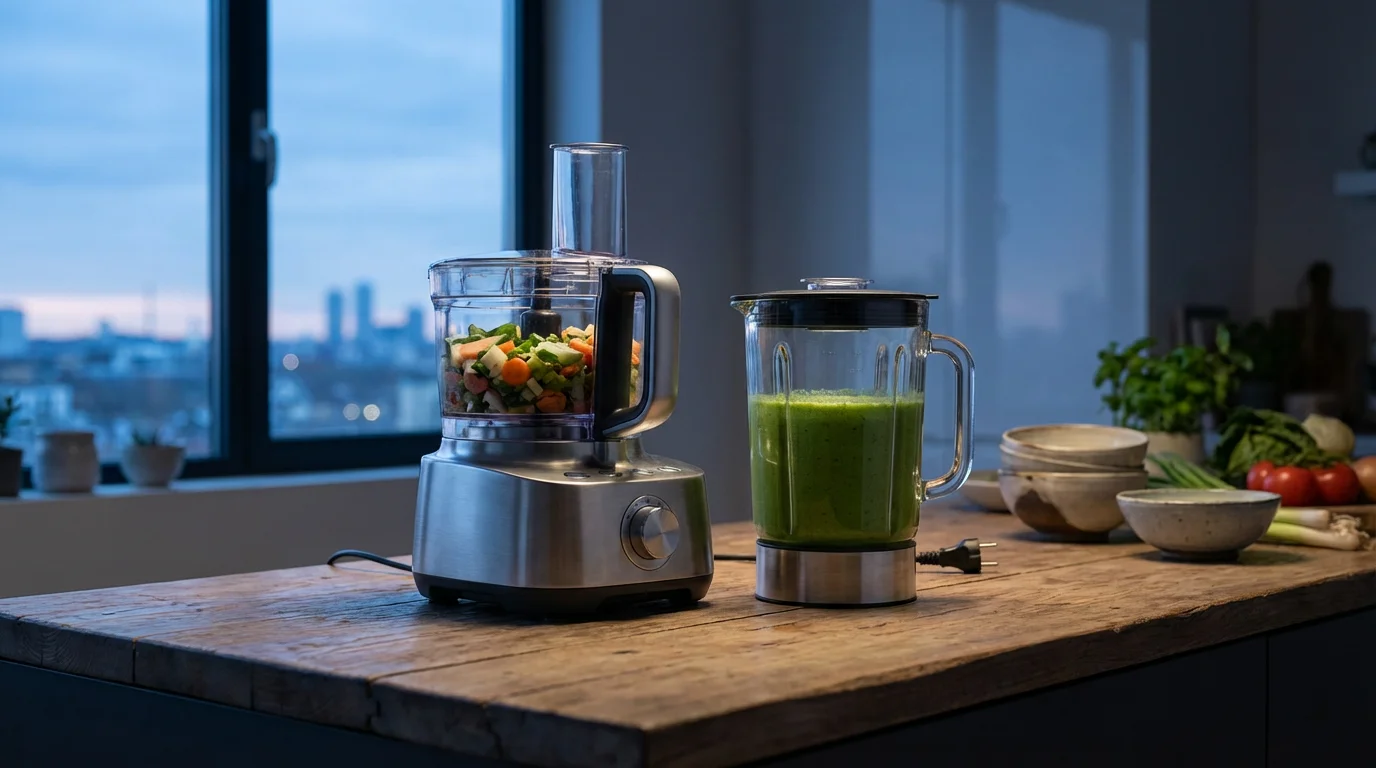
Navigating the world of kitchen appliances can feel overwhelming, especially when two powerful tools, the food processor and the blender, seem to offer similar benefits. Both promise to simplify your food preparation, but they excel in different areas. Understanding their core functionalities helps you make an informed decision, ensuring you invest in the right chopping appliance for your cooking needs. You want to work smarter in the kitchen, and selecting the correct tool saves you time, effort, and frustration.
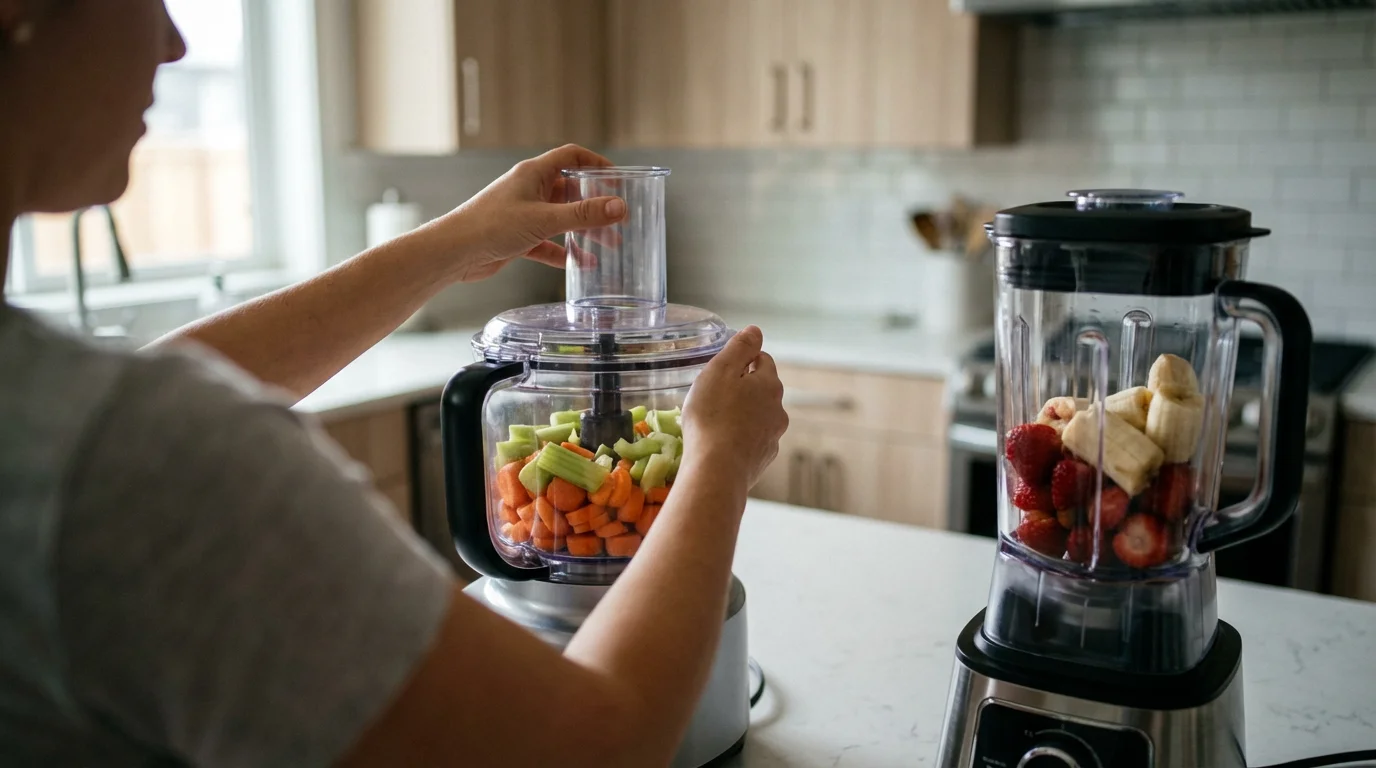
Understanding Your Kitchen Powerhouses: Food Processors and Blenders
For many home cooks in the USA, the debate of food processor vs blender which should I buy comes down to versatility versus specialization. Both machines aim to reduce manual labor, but they achieve this through different means, optimized for distinct textures and consistencies. Your choice hinges on the types of dishes you prepare most often and the specific prep tasks you aim to streamline. We will explore the strengths and weaknesses of each, helping you determine which appliance best fits your culinary style.
Consider your typical weekly cooking routine. Do you frequently chop vegetables for stir-fries, shred cheese for casseroles, or knead dough for homemade bread? A food processor likely offers the most benefit. If your routine involves daily smoothies, creamy soups, or homemade nut milks, a blender becomes indispensable. While some overlap exists, thinking about your primary needs clarifies the decision. Many people wonder, can food processor replace blender for certain tasks? We will address that in detail, examining situations where one might substitute for the other and when a dedicated tool is essential.
The Core Distinction: Blades, Bowls, and Motor Power
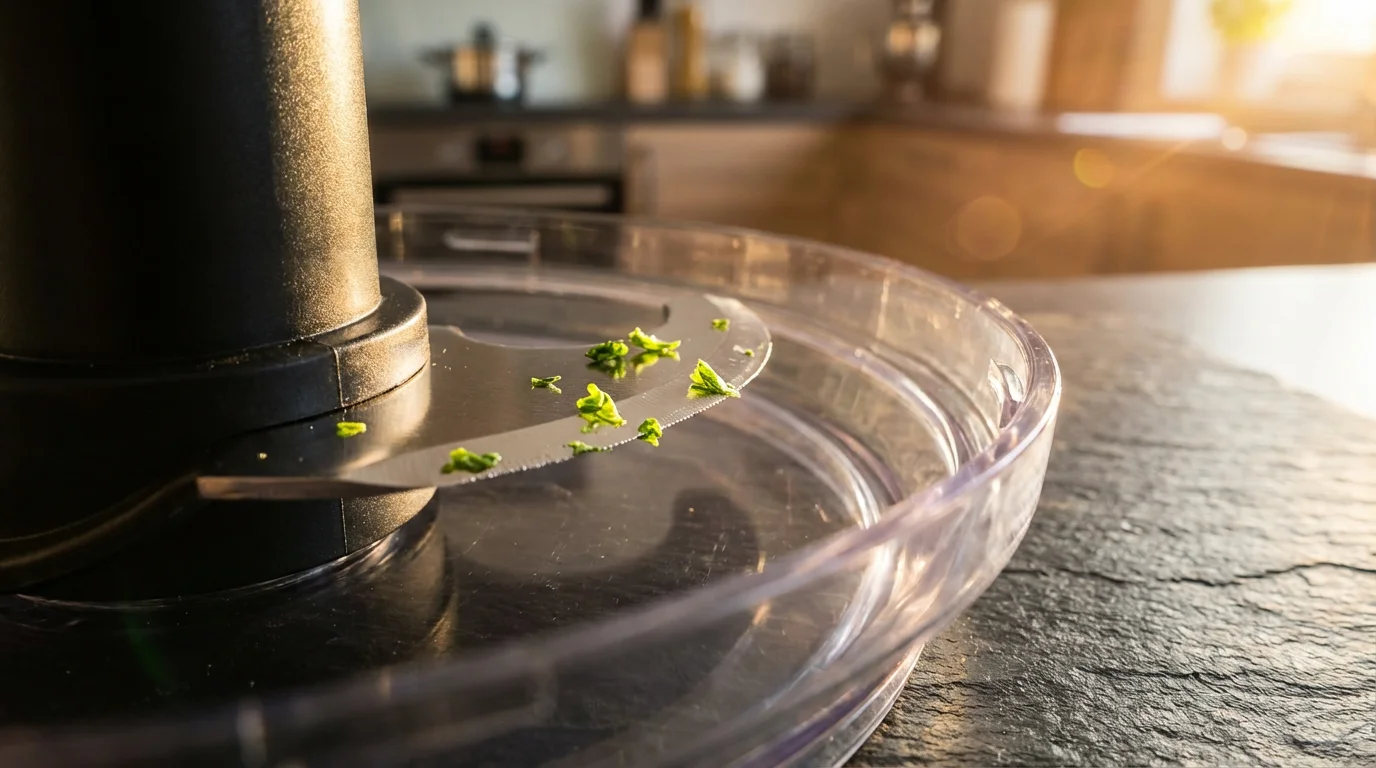
The fundamental difference between a food processor and a blender lies in their design and mechanics, which dictate their ideal applications. Both use motorized blades, but everything else is optimized for different purposes.
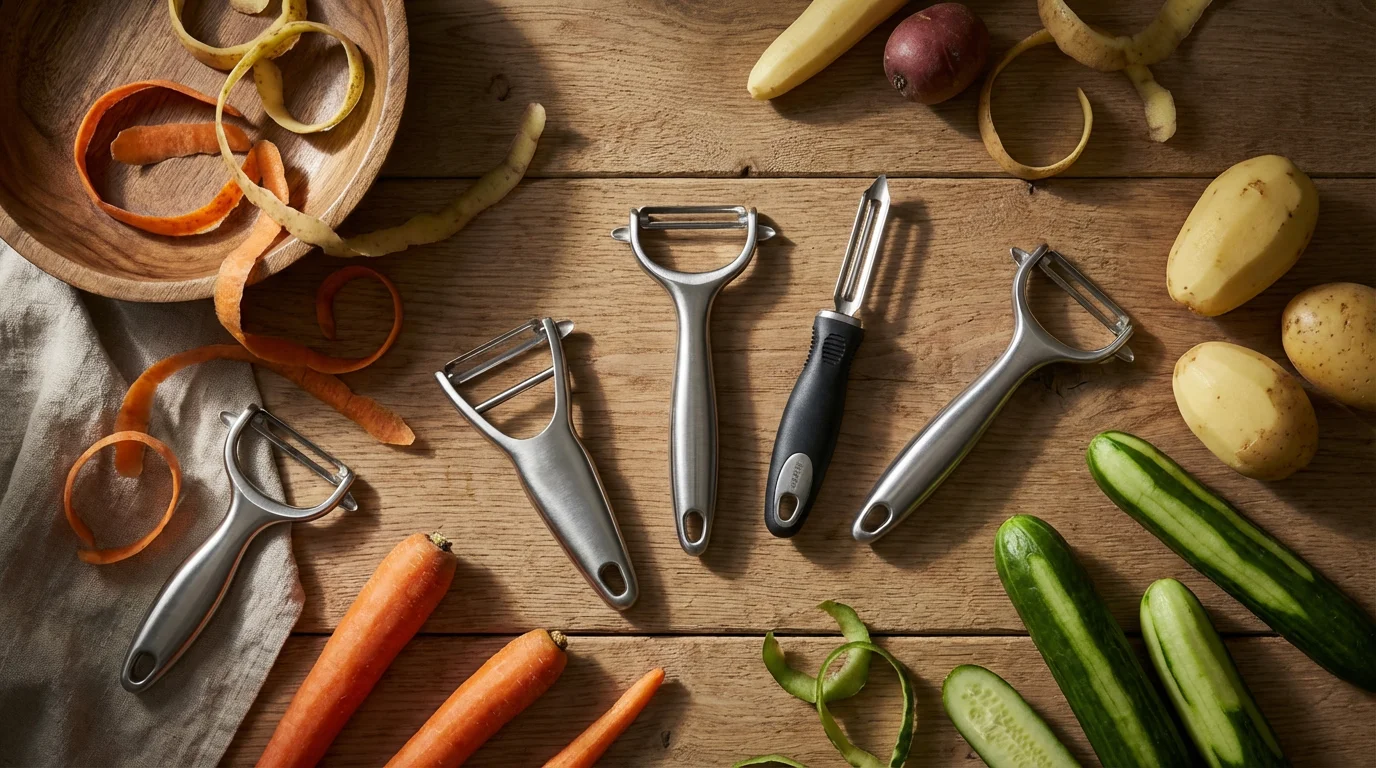
Proper prep starts even before the motor turns on; using efficient vegetable peelers can save you just as much time as the processor itself.
- Food Processors: These appliances feature a wide, relatively shallow work bowl and a set of interchangeable blades and discs. The main S-blade sits low in the bowl, designed to chop, mince, mix, and purée semi-solid or solid foods. They also include slicing and shredding discs that attach to a central shaft, processing ingredients uniformly as they pass through. Food processors typically have powerful motors, often ranging from 400 to 1200 watts, and excel at tasks requiring less liquid. The pulse function, short bursts of power, gives you precise control over texture, preventing over-processing.
- Blenders: Blenders, by contrast, utilize a tall, narrow pitcher or jar with fixed blades at the bottom. These blades, combined with the jar’s shape, create a vortex that pulls ingredients down, ensuring consistent blending. Blenders are designed for liquids or foods with significant liquid content, achieving smooth purées, emulsifications, and crushing ice effectively. Their motors can vary widely, from modest 200-watt immersion blenders to high-performance blenders boasting over 1500 watts, capable of pulverizing tough ingredients into incredibly smooth textures.
The shape of the container and the blade configuration are critical. A food processor’s wide bowl accommodates larger volumes of solid ingredients and allows for direct access for scraping down sides or adding ingredients mid-process. A blender’s narrow pitcher is built to circulate liquids, ensuring everything passes through the blades for maximum smoothness. As Consumer Reports frequently highlights in their appliance ratings, matching the appliance’s design to your intended use ensures optimal performance and satisfaction.
Food Processors: Mastering Prep and Chopping
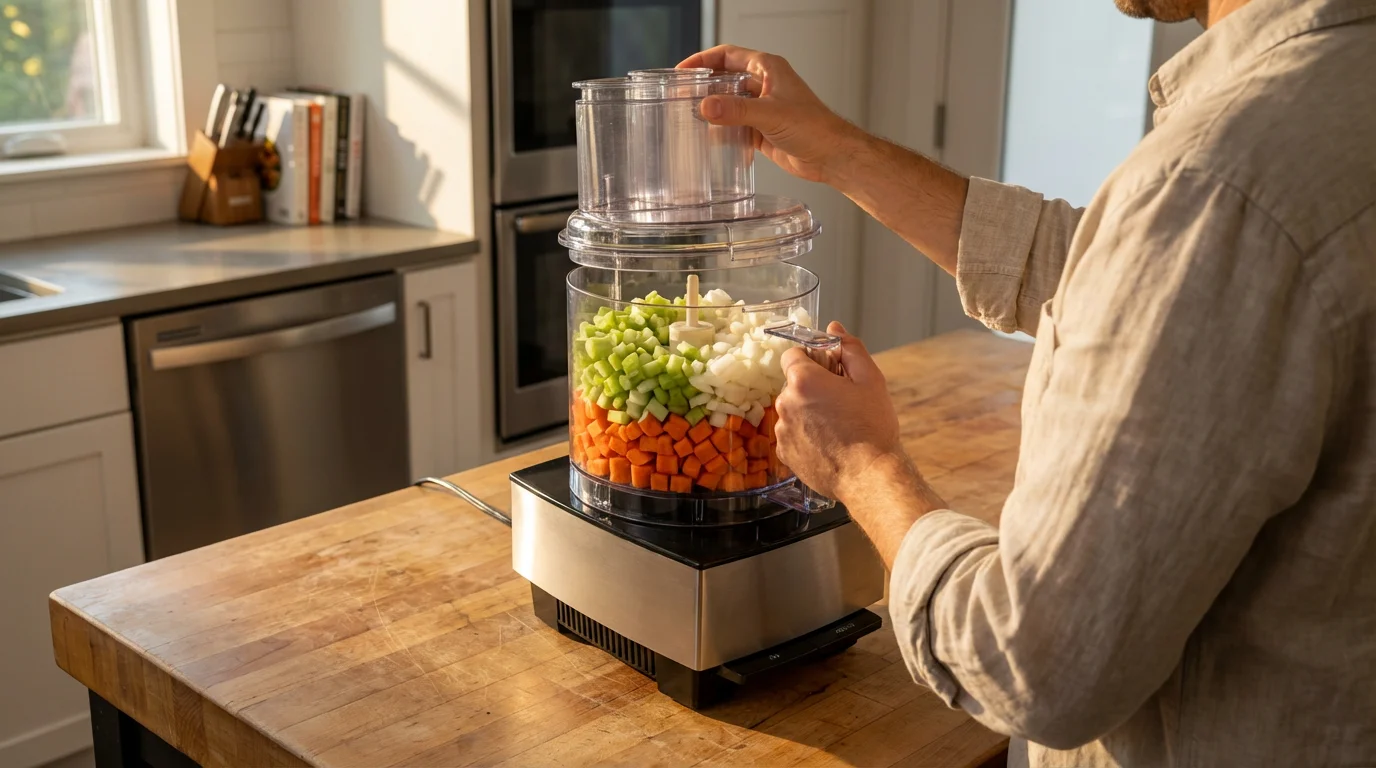
A food processor is your ultimate ally for efficient, high-volume food preparation. It transforms time-consuming tasks like chopping, slicing, and shredding into quick, hands-off operations. This appliance truly shines when you are preparing meals for a crowd, batch cooking, or simply aiming to reduce your manual knife work.
What Food Processors Do Best
- Chopping and Mincing: From onions and garlic to herbs and nuts, a food processor chops ingredients quickly and consistently. The S-blade efficiently breaks down solids, creating uniform pieces far faster than hand chopping. This makes it ideal for salsas, pestos, or mirepoix.
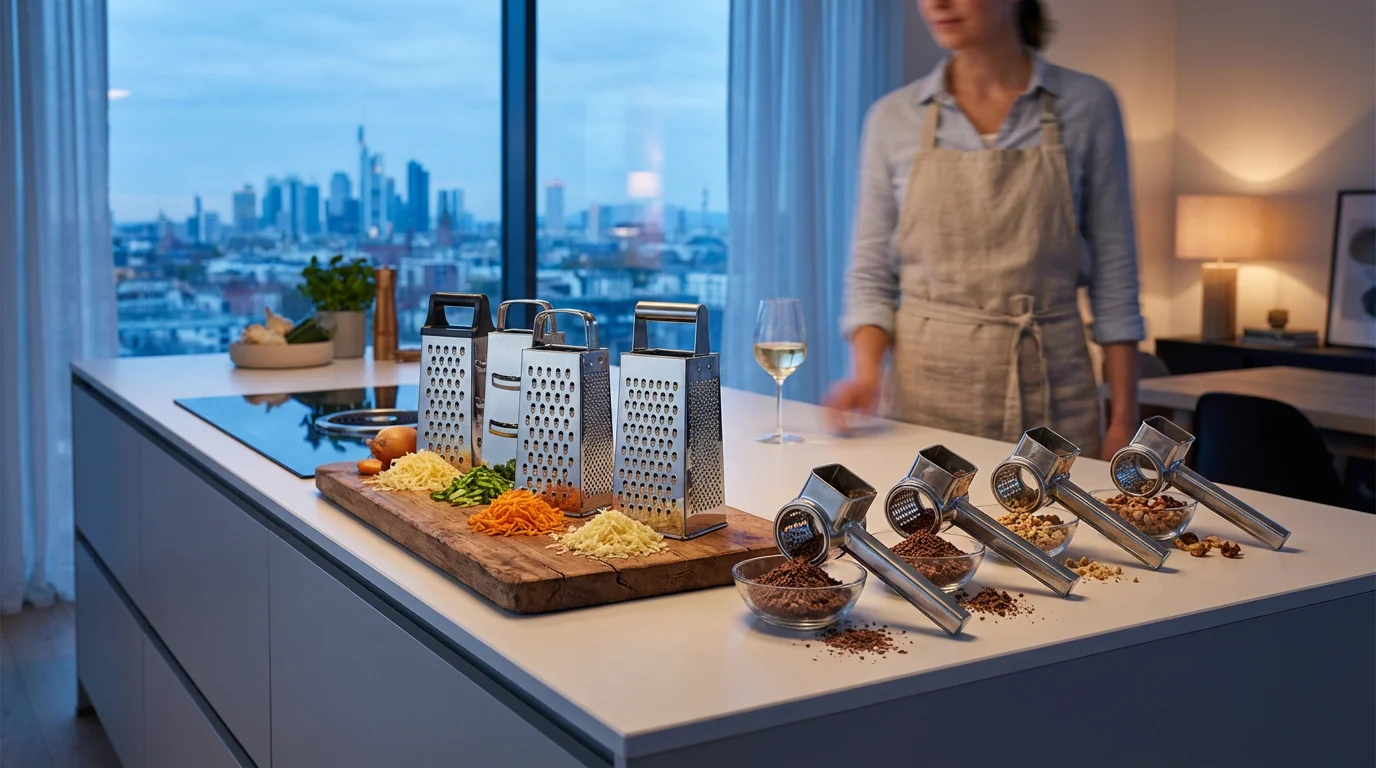
- Slicing and Shredding: With specialized discs, food processors slice vegetables like cucumbers or potatoes with precision, and shred cheese, cabbage, or carrots in seconds. Imagine shredding an entire block of cheese in less than a minute, saving significant time compared to a box grater.
- Mixing and Kneading: Many food processors come with a dough blade, allowing you to mix and knead bread or pastry dough without manual effort. This feature is a game-changer for bakers.
Features to Look For
- Bowl Capacity: Food processor bowls typically range from 3 cups (mini choppers) to 16 cups. A 10-12 cup model offers versatility for most home cooks, accommodating both small and medium-sized tasks without needing to work in multiple batches.
- Motor Power: Look for a motor between 600-1200 watts. Higher wattage translates to more power for tough ingredients and larger loads, reducing strain on the motor and extending the appliance’s life.
- Attachments and Discs: A good food processor includes an S-blade, a slicing disc (often adjustable for thickness), and a shredding disc (fine or coarse). Some models add a dough blade, a whisk attachment, or a smaller inner bowl for tiny tasks.
- Feed Tube Size: A wider feed tube minimizes the need to pre-cut ingredients, allowing you to insert whole vegetables like potatoes or smaller apples.
Safety and Maintenance
Food processor blades are incredibly sharp. Always handle them with extreme caution. When assembling or disassembling, hold blades by their plastic hub, never the cutting edge. Ensure the lid is securely locked before operating the machine. Many models include safety interlocks that prevent the motor from running if the bowl or lid is not properly aligned.
For cleaning, most food processor bowls, lids, and discs are dishwasher-safe, but always check your manufacturer’s instructions. Hand washing is often recommended for longevity, especially for plastic components to prevent clouding. Remove the blade carefully, rinse thoroughly, and use a brush for any stuck-on food. Wipe down the motor base with a damp cloth; never immerse it in water.
“A food processor offers speed and consistency for volume prep. If you frequently chop, slice, or shred large quantities of ingredients, its efficiency is unmatched, saving valuable time in the kitchen.”
Blenders: Smooth Creations and Liquid Magic
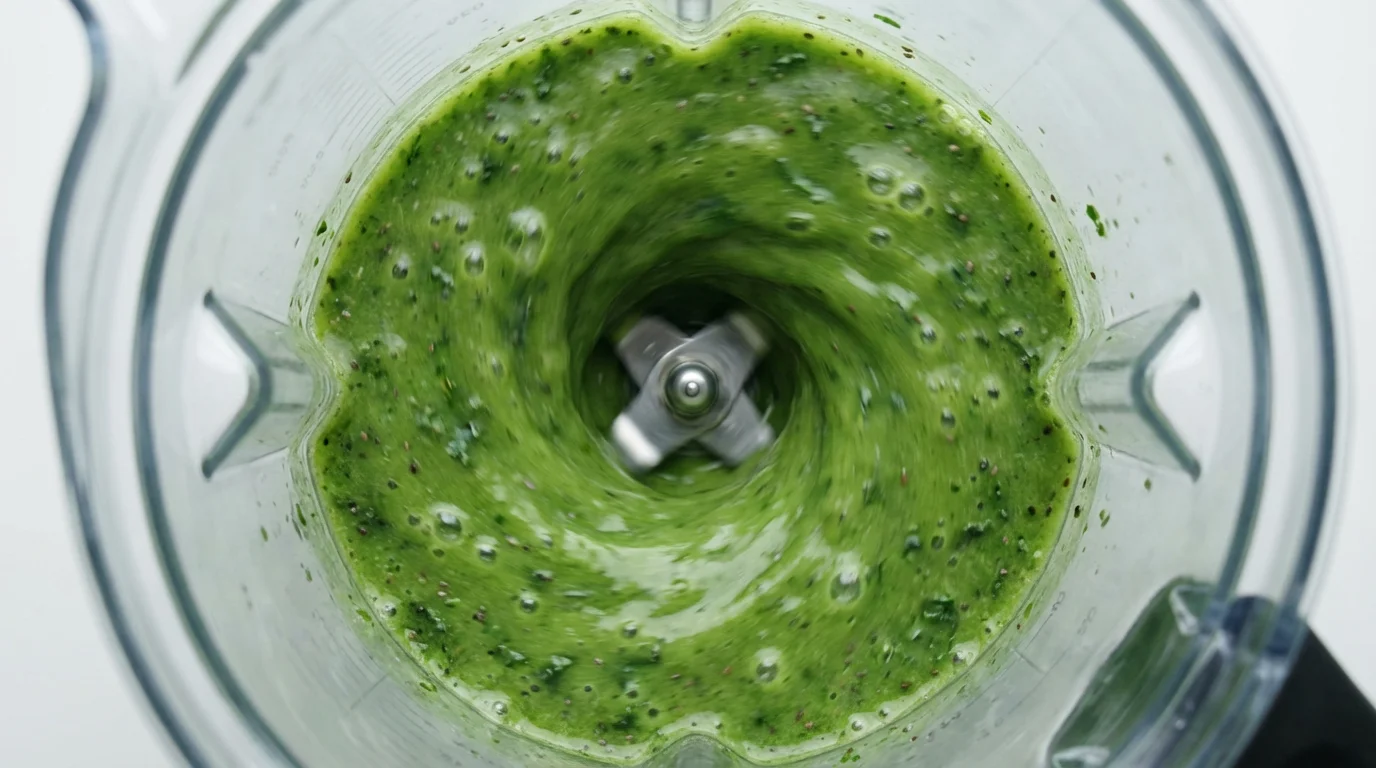
Blenders are champions of smoothness and liquefaction. When you need to transform ingredients into a silky purée, a frothy beverage, or a uniform batter, a blender is the optimal choice. Its design is specifically engineered to handle liquids and break down fibrous ingredients into an unrecognizably smooth consistency.
What Blenders Do Best
- Smoothies and Shakes: This is the blender’s undisputed specialty. From kale and spinach to frozen fruit and ice, a good blender creates perfectly smooth, lump-free beverages.
- Soups and Sauces: Achieve restaurant-quality creamy soups and sauces by blending cooked vegetables. High-speed blenders can even heat soup through friction, delivering a warm, velvety texture directly from the jar.
- Purées and Baby Food: Create silky fruit and vegetable purées for desserts, sauces, or homemade baby food.
- Nut Butters and Milks: While demanding on the motor, powerful blenders can process nuts into smooth butters and extract plant-based milks from oats, almonds, or cashews.
- Crushing Ice: Essential for cocktails and frozen drinks, blenders with strong motors and robust blades make quick work of ice cubes.
Types of Blenders
- Countertop Blenders: These are the traditional workhorses, featuring a motor base and a removable pitcher. They offer the most power and versatility for a wide range of tasks.
- Immersion Blenders: Also known as stick blenders, these handheld devices are perfect for blending directly in pots or bowls. They are excellent for puréeing soups, making mayonnaise, or blending small batches without transferring ingredients. They are compact and easy to clean, though less powerful than countertop models.
- Personal Blenders: Designed for single servings, these blenders typically come with a small cup that doubles as a blending jar and a travel mug. They are convenient for quick smoothies or protein shakes.
Features to Look For
- Motor Power: For general use, 500-1000 watts is sufficient. For high-performance tasks like crushing ice, blending tough greens, or making nut butters, look for 1000 watts or more. These higher wattage models often come with robust stainless steel blades that withstand heavy use.
- Jar Material and Capacity: Glass jars are durable and scratch-resistant but heavy. Plastic (BPA-free) jars are lighter and more shatterproof. Look for capacity appropriate for your needs, typically 48-64 ounces for a family blender.
- Blade Design: While fixed, blade design varies. Some high-end blenders feature unique asymmetric blade designs or specialized “wave action” jars to optimize vortex creation.
- Variable Speed Control: This offers more precision than simple high/low settings, allowing you to incrementally increase speed for better control over texture.
Safety and Maintenance
Always ensure the blender lid is securely on before operating, especially with hot liquids, as pressure can build. Never overfill the jar, as this can lead to spills or strain the motor. Be cautious when blending hot liquids; vent the lid or use an immersion blender to prevent pressure buildup. Hot liquids can expand, causing the lid to pop off.
Blender jars are often dishwasher-safe on the top rack, but hand washing with warm, soapy water is a gentle alternative. Many blenders offer a self-cleaning function: fill the jar halfway with warm water and a drop of dish soap, then run on high for 30-60 seconds, then rinse. Clean the motor base with a damp cloth, ensuring no liquids drip into the vents.
Detailed Comparison: Food Processor vs. Blender
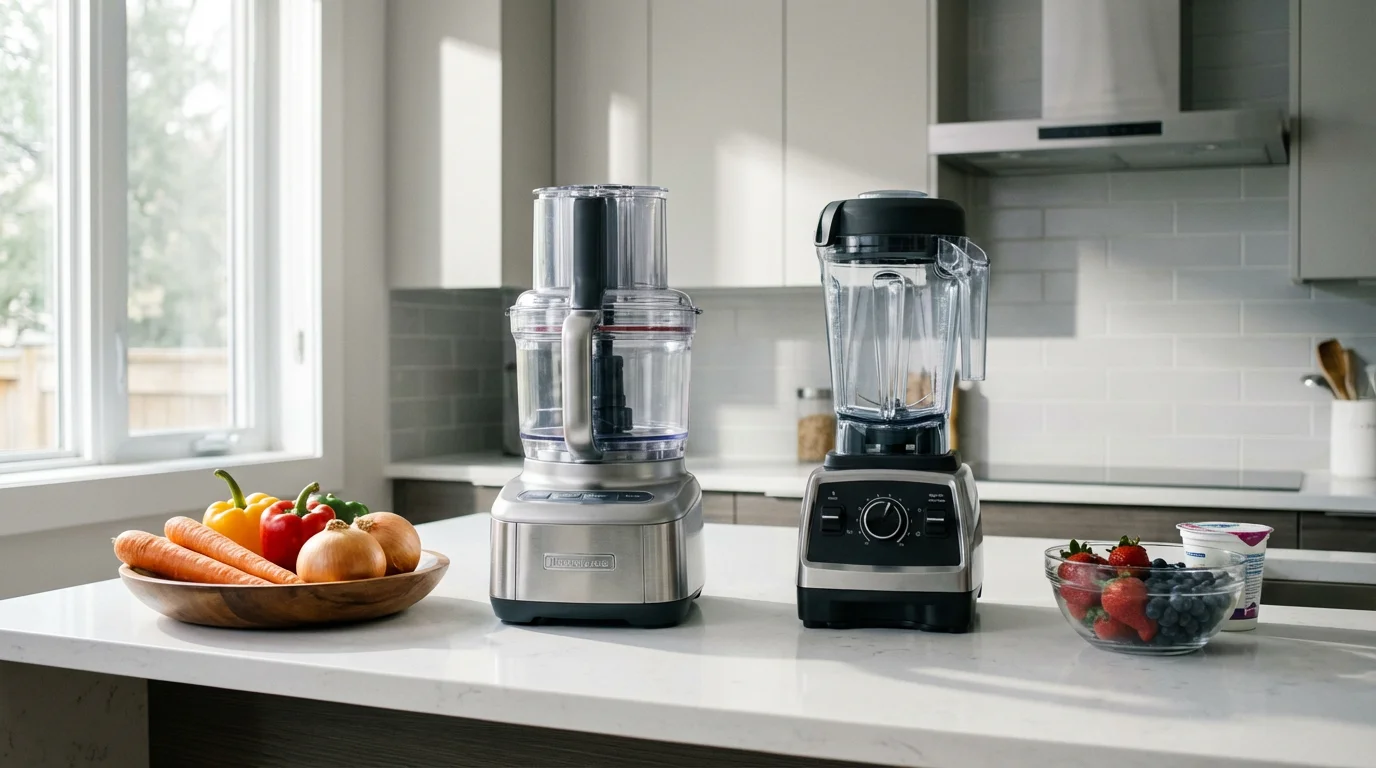
To help you decide which chopping appliance is right for your kitchen, let’s lay out their capabilities side-by-side. The decision often comes down to the primary texture you want to achieve and the amount of liquid involved in your recipes.
For those focused on healthy eating, combining your processor’s power with the right salad making tools streamlines your entire meal prep routine.
Functional Differences Table
| Feature | Food Processor | Blender |
|---|---|---|
| Primary Function | Chopping, slicing, shredding, grating, mixing dough, thick purées | Liquefying, puréeing, emulsifying, crushing ice, smoothies |
| Ideal for | Solid ingredients, semi-solid foods, low-liquid recipes | Liquids, high-liquid recipes, achieving smooth consistency |
| Blade Type | Interchangeable S-blade, slicing/shredding discs | Fixed blades at bottom, optimized for vortex creation |
| Container Shape | Wide, shallow bowl (e.g., 8-12 cups) | Tall, narrow pitcher (e.g., 48-64 oz) |
| Texture Achieved | Chopped, minced, shredded, sliced, grated, coarse purées, mixed dough | Smooth, creamy, frothy, pulverized, liquid consistency |
| Motor Power | Typically 400-1200 watts | Typically 200-1500+ watts (varies by type) |
| Key Controls | Pulse, On/Off, often 2-3 speeds | Variable speeds, Pulse, pre-programmed settings |
| Examples of Use | Salsa, hummus, shredded cheese, chopped nuts, vegetable slices, pie crust dough | Smoothies, soups, milkshakes, sauces, nut milks, crushed ice |
According to Wirecutter’s extensive kitchen reviews, most home cooks will get more daily utility from a food processor if they regularly prepare multi-ingredient meals requiring chopping and slicing. However, if your diet leans heavily into beverages and very smooth textures, a high-quality blender is non-negotiable.
Can a Food Processor Replace a Blender (and Vice Versa)?
This is a common question, and the answer is nuanced. While some overlap exists, neither appliance fully replaces the other without significant compromise. Understanding these limitations helps you appreciate the distinct value of each.
While these appliances handle larger tasks, for simple aromatics, using specialized garlic tools is often more efficient than firing up a motor.
Food Processor as a Blender Substitute (Limited Success)
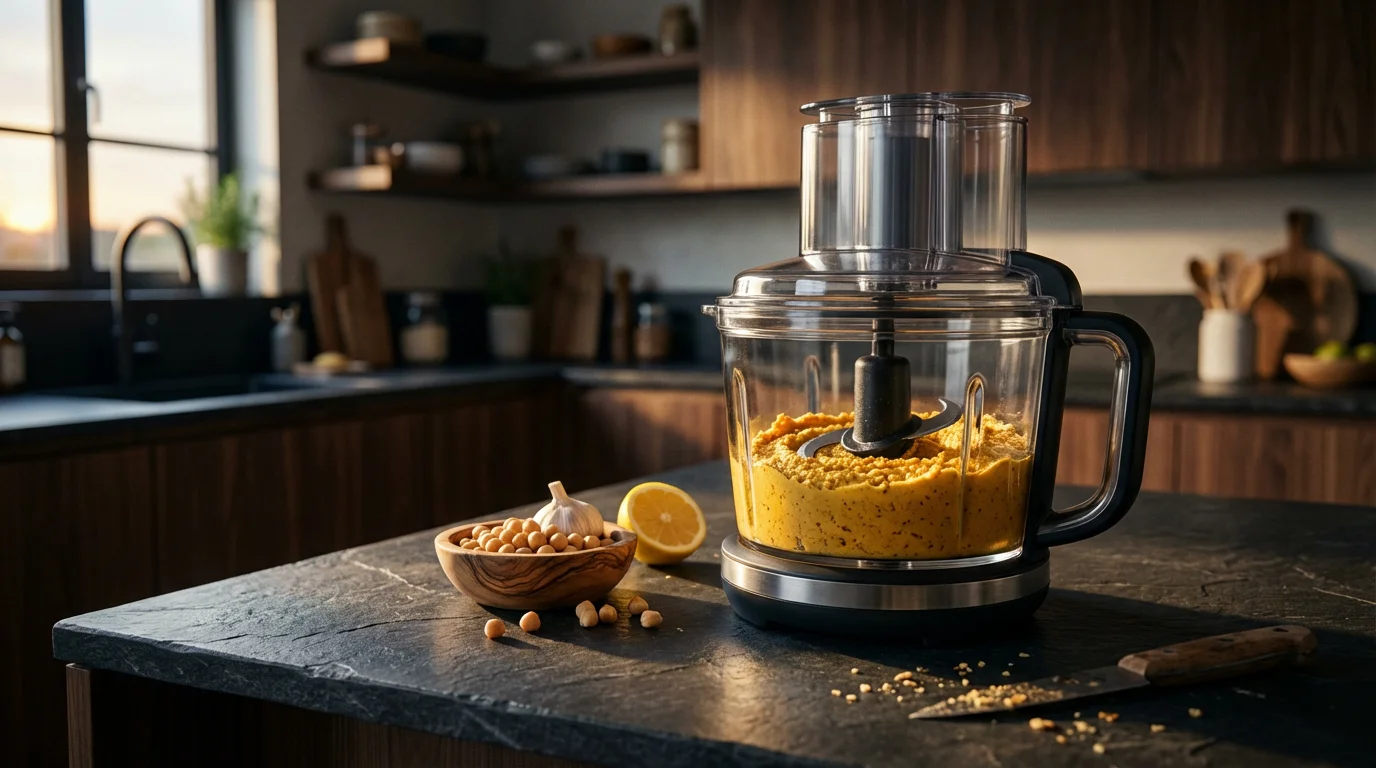
A food processor can attempt some blending tasks, particularly for thicker, chunkier purées. Think homemade pesto, a chunky salsa, or a thick hummus. For these, the S-blade and wider bowl work effectively, allowing you to control texture with the pulse function. However, when it comes to truly smooth liquids like fruit smoothies, delicate salad dressings, or silky soups, a food processor struggles. It lacks the intense vortex action of a blender, which is essential for pulling all ingredients into the blades and eliminating fibrous bits. You often end up with grainy or inconsistent results, and adding too much liquid can lead to leaks around the lid or spindle.
Blender as a Food Processor Substitute (Even More Limited)
Using a blender for traditional food processing tasks is generally less successful. Blenders excel at liquefying, not chopping or shredding. If you try to “chop” vegetables in a blender, you typically get either unevenly pulverized mush at the bottom and large chunks at the top, or a completely puréed liquid. The blades are designed to create a flow for liquids, not to chop dry, solid ingredients. While powerful blenders can sometimes handle grinding nuts or making breadcrumbs with minimal liquid, they are not ideal for precise chopping, slicing, or shredding. They also lack the interchangeable discs that give food processors so much versatility.
When to Consider Both
For serious home cooks who enjoy a wide variety of culinary tasks, owning both a food processor and a blender offers the most flexibility and best results. A small, inexpensive personal blender for daily smoothies can complement a full-sized food processor for all your chopping and slicing. Alternatively, a high-quality immersion blender can handle many small-batch blending tasks without the footprint of a large countertop blender, working alongside a food processor.

Beyond the Basics: Enhancing Your Prep with Specialized Tools
While food processors and blenders are kitchen workhorses, other specialized tools can further optimize your meal prep, particularly when you need precision or are dealing with specific ingredient types. These tools do not replace your primary appliances, but they can enhance efficiency and safety for certain tasks.
- Mini Choppers: These are essentially small food processors, typically with 1-3 cup capacities. They are perfect for mincing garlic, chopping herbs, or making small batches of dressing. They are quicker to clean and store than a full-sized food processor, making them ideal for everyday small tasks.
- Immersion Blenders: As mentioned, these handheld blenders are fantastic for puréeing soups directly in the pot, blending small amounts of dressing, or making mayonnaise without needing to transfer hot liquids or dirty a large blender jar. They are compact and often come with a whisk attachment.
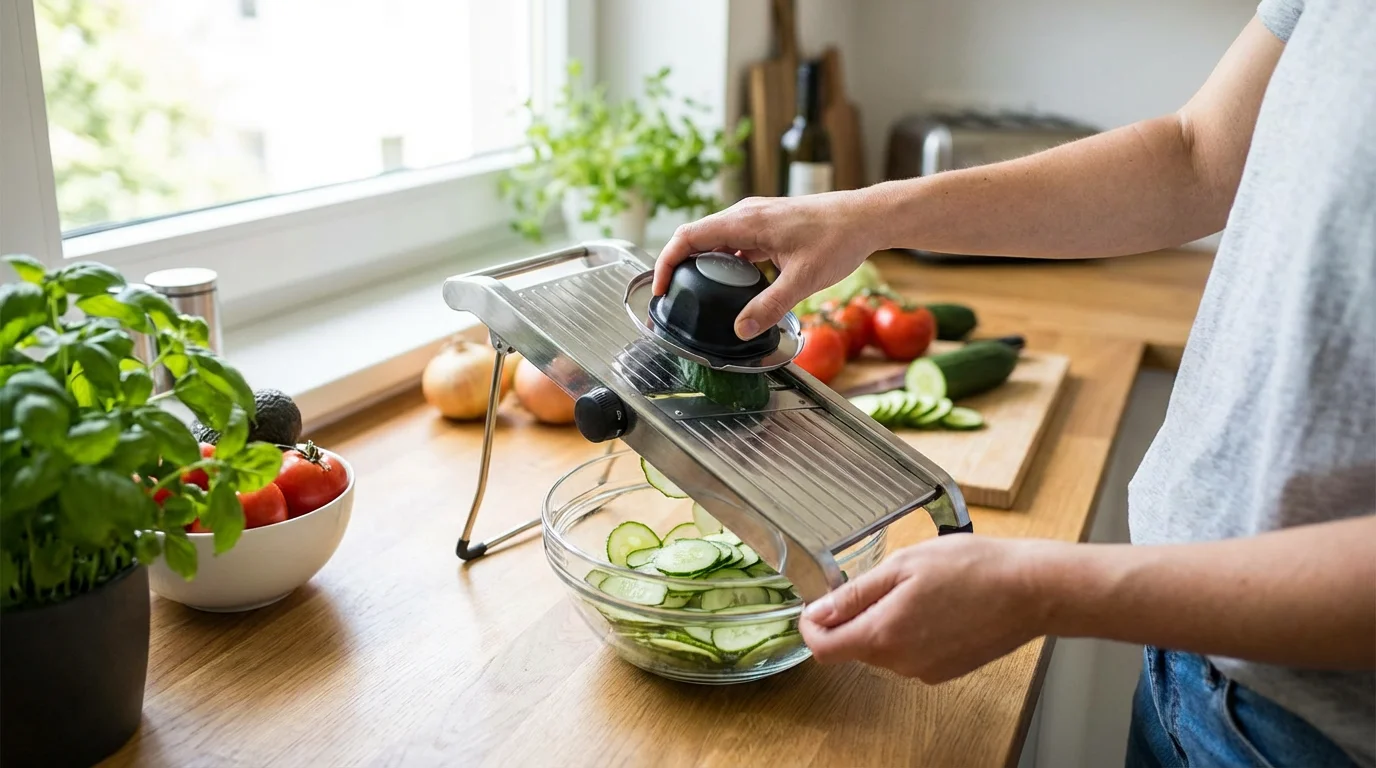
- Mandolines: A mandoline is a flat cutting tool with adjustable blades designed for uniform slicing. If you need perfectly thin potato slices for gratins, consistent cucumber rounds, or precise julienne cuts (cutting vegetables into thin matchstick strips), a mandoline is invaluable. Exercise extreme caution when using one, as the blades are razor-sharp. Always use the provided hand guard to protect your fingers.
- Spiralizers: For creating “zoodles” (zucchini noodles) or other vegetable spirals, a spiralizer is a fun and healthy tool. It transforms vegetables into pasta-like strands, adding variety to your meals.
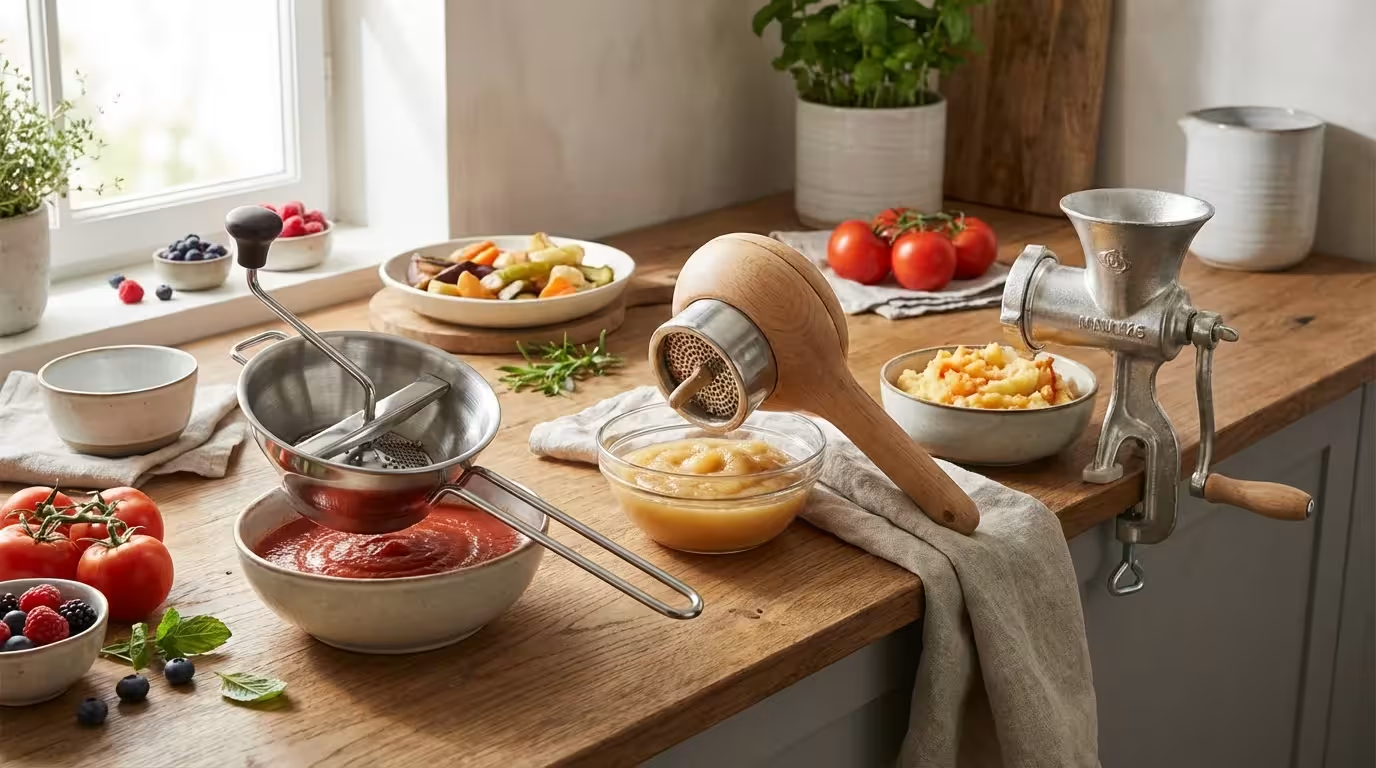
- Food Mills: While more traditional, a food mill is excellent for puréeing soft fruits and vegetables, especially for sauces, jams, or baby food, while simultaneously removing skins and seeds. It creates a rustic, smooth texture.
These tools, when used thoughtfully, contribute to the efficiency and precision of your mise en place, which means having all ingredients prepped and ready before cooking. Serious Eats, in their equipment reviews, often emphasizes that the right tool for the job not only speeds things up but also improves the quality of your finished dish.
Making Your Choice: Recommendations for Every Cook
Your ideal chopping appliance depends on your cooking habits, budget, and kitchen space. Here are some recommendations based on different user profiles:
Best for Beginners and Occasional Cooks
If you are just starting out, or only cook occasionally but want to simplify basic prep:
- Food Processor: A medium-sized (7-9 cup) food processor offers good versatility without a huge footprint. Look for models around 600-800 watts. These handle everyday chopping, slicing, and shredding tasks efficiently.
- Blender: A sturdy personal blender (300-600 watts) or a basic countertop blender (500-750 watts) is excellent for daily smoothies, protein shakes, and simple sauces. An immersion blender is also a fantastic entry point for blending tasks directly in the pot.
Best for Serious Cooks and Frequent Meal Preppers
For those who cook frequently, experiment with recipes, or engage in weekly meal prep:
- Food Processor: Invest in a full-sized (10-14 cup) food processor with a powerful motor (1000+ watts) and a range of attachments. Look for models with adjustable slicing discs and a wide feed tube. This allows you to process large quantities of vegetables, shred cheese for a week’s worth of meals, or knead dough with ease.
- Blender: A high-performance countertop blender (1200+ watts) is a worthwhile investment. These blenders pulverize even the toughest ingredients, create incredibly smooth textures, and can often handle grinding grains or making hot soups. Brands like Vitamix or Blendtec are popular choices for their durability and power.
Best Value Picks
If you are looking for solid performance without breaking the bank:
- Food Processor: Many brands offer reliable 8-10 cup food processors in the $100-$150 range that deliver excellent value. Focus on wattage and the included basic attachments.
- Blender: Look for blenders in the 700-1000 watt range from reputable brands, often found between $80-$120. These provide a significant step up from basic models without the premium price of high-performance blenders. An immersion blender with multiple attachments often offers great versatility for its price point.
When making your selection, also consider how easy the unit is to clean and store. A powerful appliance that you dread using because of cleanup becomes a neglected gadget quickly. Prioritize dishwasher-safe components where possible, or designs that disassemble easily for hand washing. Ergonomics also play a role; consider the weight and grip of a blender pitcher or the stability of a food processor base if you plan on extended prep sessions.
Frequently Asked Questions
What is the main advantage of a food processor over a blender?
The main advantage of a food processor is its versatility with solid and semi-solid ingredients. It excels at chopping, slicing, shredding, and grating, as well as mixing dough, tasks that blenders cannot perform effectively or at all. Its wide bowl and interchangeable blades are specifically designed for these types of precise, less-liquid-dependent preparations.
Can I make smoothies in a food processor?
You can make very thick smoothies or smoothie bowls in a food processor, but it typically will not achieve the silky-smooth, pourable consistency of a blender. The S-blade design and wider bowl are less efficient at creating the vortex needed to fully integrate liquids and fibrous ingredients. You may end up with a chunkier texture.
Which appliance is better for making nut butter?
A food processor is generally better for making nut butter. Its powerful motor and S-blade are designed to process thick, dense ingredients like nuts, gradually breaking them down into a creamy butter. While a high-end blender can also make nut butter, it often requires more frequent scraping and can put more strain on the motor if not done correctly.
Is a food processor or a blender easier to clean?
Ease of cleaning depends on the specific model and design. Many food processor bowls, lids, and blades are dishwasher-safe, but the multiple components can sometimes make thorough cleaning cumbersome. Blender jars are often simple to rinse or run through a self-clean cycle, and most are also dishwasher-safe. For both, always follow manufacturer instructions for cleaning, and hand wash blades carefully.
Do I need both a food processor and a blender?
For many home cooks, having both a food processor and a blender offers the greatest versatility for a wide range of recipes and ensures optimal results for different tasks. If your budget or kitchen space is limited, choose the appliance that best suits your most frequent cooking needs. A robust food processor can handle some thicker blending tasks, and a powerful blender can sometimes make coarse breadcrumbs or chop nuts if used carefully, but neither fully replaces the other’s specialized functions.
Disclaimer: Product prices and availability change frequently. Prices shown were accurate at time of writing but may have changed. We may earn a small commission from purchases made through links on this site, at no extra cost to you. Always use cutting tools carefully and follow manufacturer safety guidelines.
Leave a Reply