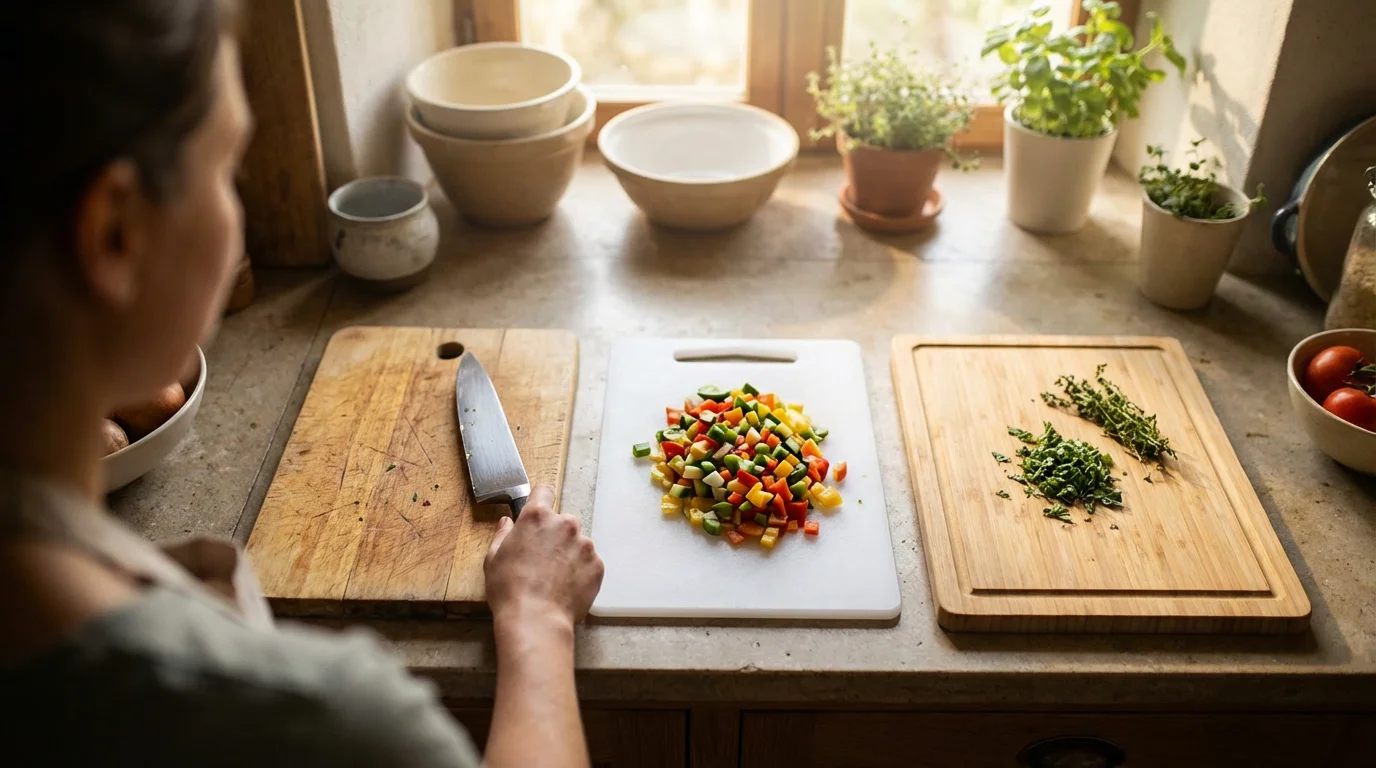
Your kitchen’s efficiency and safety begin long before you turn on the stove. At the heart of most meal preparation tasks lies the cutting board. Choosing the right one significantly impacts your knife’s longevity, your food’s safety, and your overall cooking experience. With a market full of options, distinguishing between wood, plastic, and bamboo cutting boards requires understanding their unique properties and how they perform under different kitchen demands.
This article delivers practical insights to help you select a cutting board that supports your cooking style, enhances safety, and stands the test of time. We will analyze the strengths and weaknesses of each material, considering factors like hygiene, knife friendliness, durability, and maintenance.
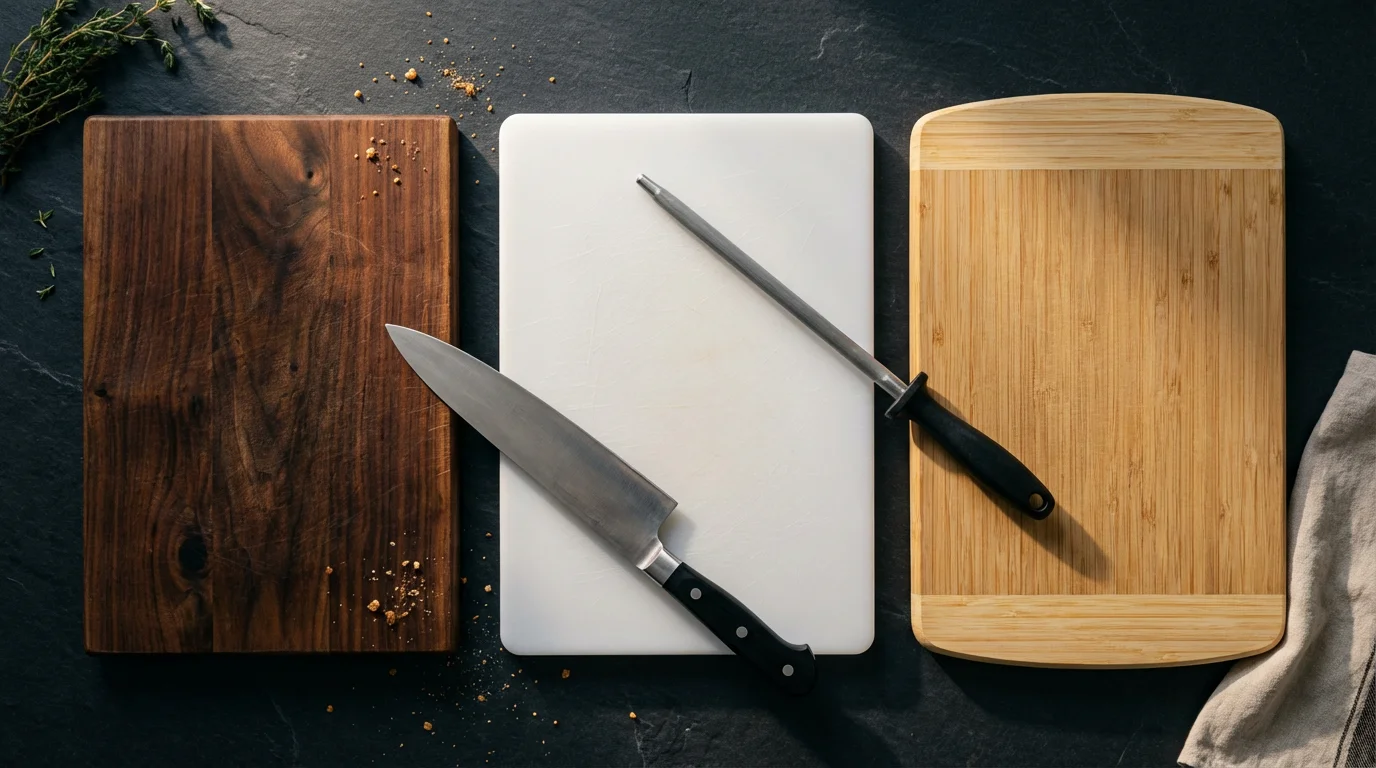
Making Your Cutting Board Decision
Selecting the ideal cutting board is more complex than grabbing the first available option. You need to consider what you typically prepare, how often you cook, and your comfort level with maintenance. A good cutting board provides a stable, knife-friendly surface that prevents cross-contamination and makes your meal prep quicker and safer.
Many home cooks find themselves intimidated by the array of choices, questioning whether a wood vs plastic cutting board for meat offers better protection, or which option is truly the best cutting board material for knives. We will break down these considerations, offering clear guidance on each material’s suitability for various tasks. Your goal should be to find a kitchen board that integrates seamlessly into your routine, making tasks like chopping vegetables or slicing raw proteins more manageable.
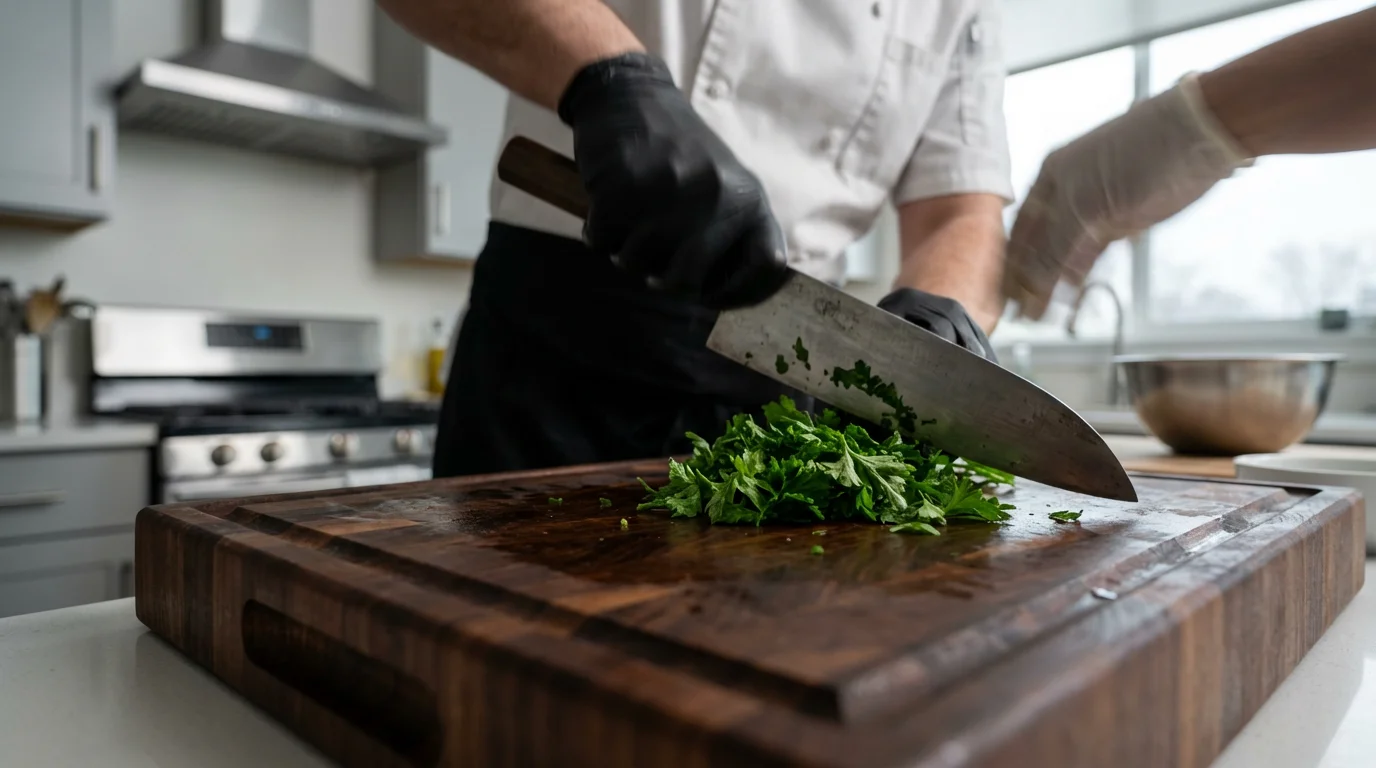
Smaller tasks, such as using paring knives for detailed kitchen work, also benefit from the stability of a high-quality cutting surface.
Wood Cutting Boards: Classic Appeal and Performance
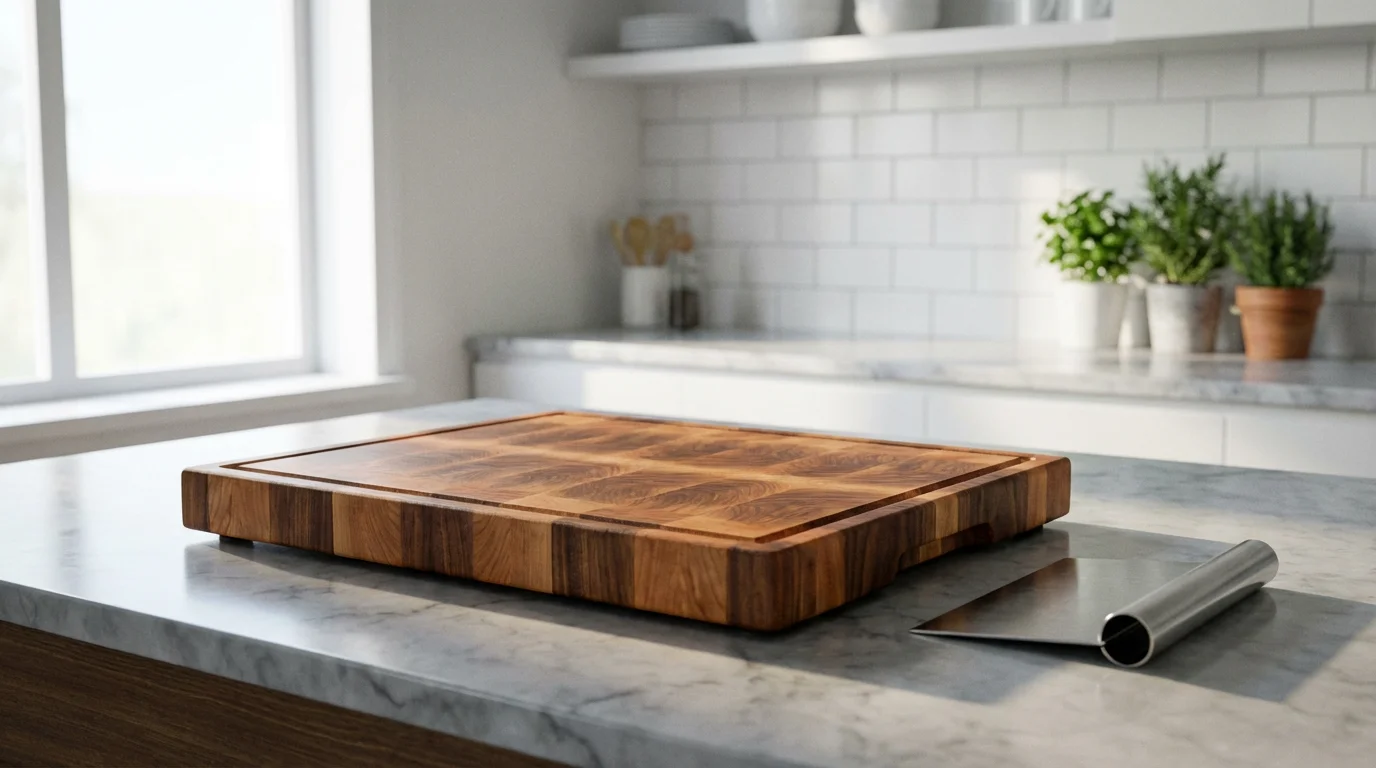
Wood cutting boards are a long-standing favorite in kitchens worldwide, prized for their natural beauty and functional benefits. Typically made from hardwoods like maple, cherry, or walnut, these boards come in two main constructions: edge grain and end grain. Edge grain boards feature long strips of wood glued together, presenting the side of the wood grain as the cutting surface. End grain boards display the ends of the wood fibers, resembling a checkerboard pattern.
Pros of Wood Cutting Boards
Using bench scrapers and dough cutters is an efficient way to clear your board without damaging your knife’s edge.
- Knife Friendliness: Wood is generally considered the best cutting board material for knives. Its softer surface “gives” slightly as your knife cuts, protecting the blade’s edge. End grain boards are particularly gentle because the knife blade slips between the wood fibers rather than directly against them, significantly reducing dulling. This means you spend less time honing, or realigning the blade edge, and sharpening, or actually removing metal to create a new edge, your valuable kitchen knives.
- Durability and Longevity: With proper care, a high-quality wood chopping board can last for decades. Its robust construction resists warping and splitting better than some other materials.
- Self-Healing Properties: Especially with end grain boards, small knife marks can “close up” as the wood fibers recover, extending the board’s useful life and maintaining a smoother surface.
- Aesthetic Appeal: Wood adds warmth and a professional touch to any kitchen. Many consider a beautiful wood kitchen board a centerpiece.
- Natural Antimicrobial Properties: Research, including studies from the University of California, Davis, suggests that wood naturally inhibits bacterial growth. Bacteria tend to sink into the wood fibers and die, rather than multiplying on the surface. According to America’s Test Kitchen, wood boards often harbor less bacteria than plastic boards over time if properly cared for.
- Stability: Wood boards are typically heavy, providing a stable surface that does not slide around during vigorous chopping. This enhances safety, reducing the risk of accidental cuts.
Cons of Wood Cutting Boards
- Maintenance Requirements: Wood boards demand regular oiling and conditioning to prevent drying, cracking, and warping. You must hand-wash them; dishwashers cause irreparable damage.
- Weight: Their substantial weight, while good for stability, makes them less convenient for moving or cleaning.
- Porous Nature: If not properly sealed and maintained, wood can absorb odors and stains from strong foods like garlic, onions, or beets. This also makes them less suitable for raw meat unless you have a dedicated board for this purpose and meticulously sanitize it.
- Cost: High-quality wood boards, particularly end grain constructions, represent a significant upfront investment compared to plastic or bamboo options.
Plastic Cutting Boards: Practicality and Hygiene
Plastic cutting boards, often made from high-density polyethylene (HDPE), are ubiquitous in both home and professional kitchens. They offer a contrast to wood in terms of maintenance and cost, making them a popular choice for many tasks.
Pros of Plastic Cutting Boards
When working with tougher cuts on your plastic board, using the best meat tenderizers can help prepare the protein for cooking.
- Hygiene and Sanitation: Plastic boards are non-porous and generally dishwasher-safe, making them extremely easy to sanitize. This makes them an excellent choice for handling raw meats, poultry, and fish, as you can subject them to high temperatures and harsh detergents without damage. This addresses the common concern about a wood vs plastic cutting board for meat. Many cooks use separate color-coded plastic boards for different food types to prevent cross-contamination.
- Lightweight and Easy to Handle: Most plastic boards are lighter than wood or bamboo, simplifying transport from sink to counter and easy storage.
- Affordability: Plastic cutting boards are the most budget-friendly option, allowing you to purchase multiple boards for different food types without a large investment.
- Durability: While not as knife-friendly as wood, good quality plastic boards resist warping and cracking.
Cons of Plastic Cutting Boards
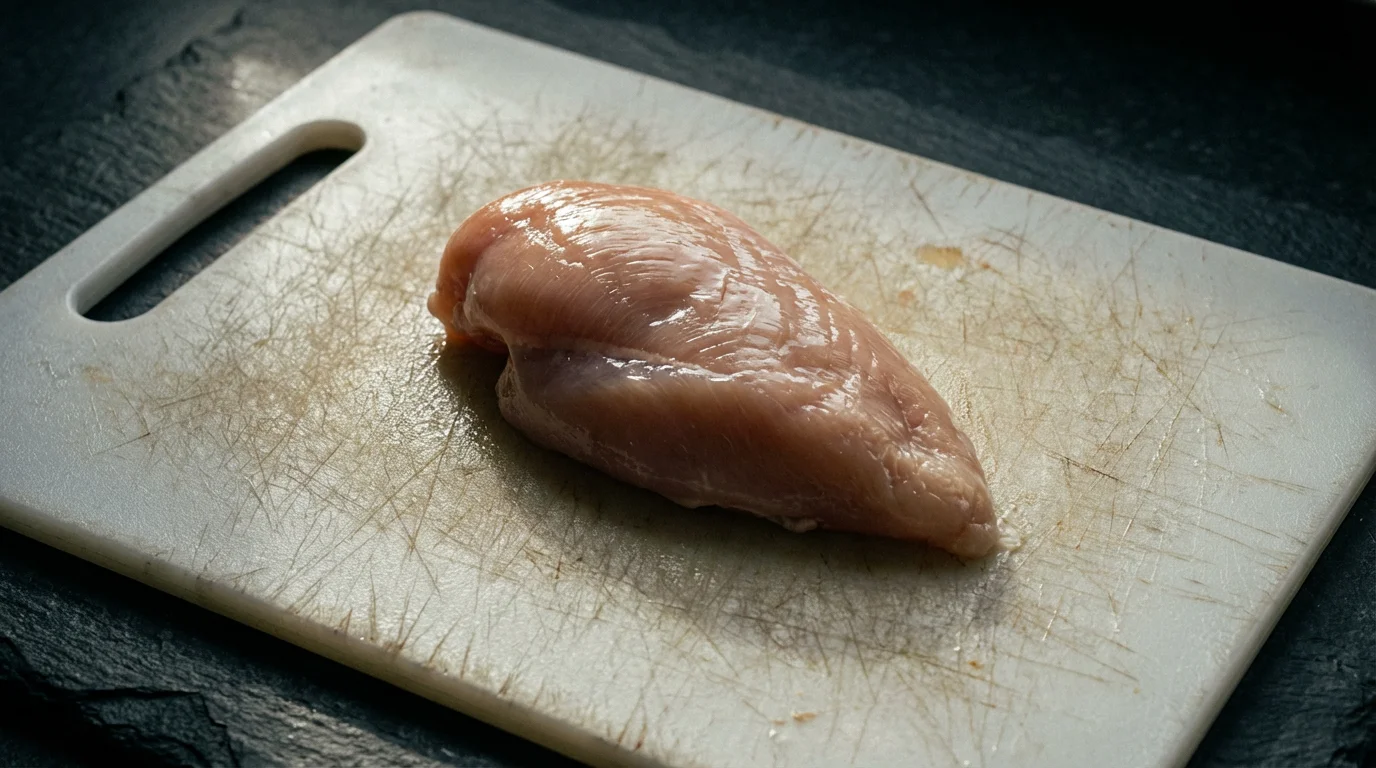
- Knife Damage: Plastic is harder than wood, causing knives to dull faster. Over time, knife blades carve deep grooves into the surface. These grooves become breeding grounds for bacteria, even after washing, and are difficult to clean effectively. As Wirecutter consistently notes in its kitchen tool reviews, plastic’s impact on knife edges is a significant drawback.
- Bacterial Traps: Once deep grooves form, bacteria can hide, posing a hygiene risk. You need to replace plastic boards more frequently than wood boards once significant scoring occurs.
- Less Stable: Lighter plastic boards can slide on countertops during vigorous chopping, requiring you to place a damp cloth underneath for stability.
- Environmental Impact: Plastic is not biodegradable and contributes to waste. Even recycled plastic options raise environmental concerns regarding their production and disposal.
Bamboo Cutting Boards: Sustainable and Stylish
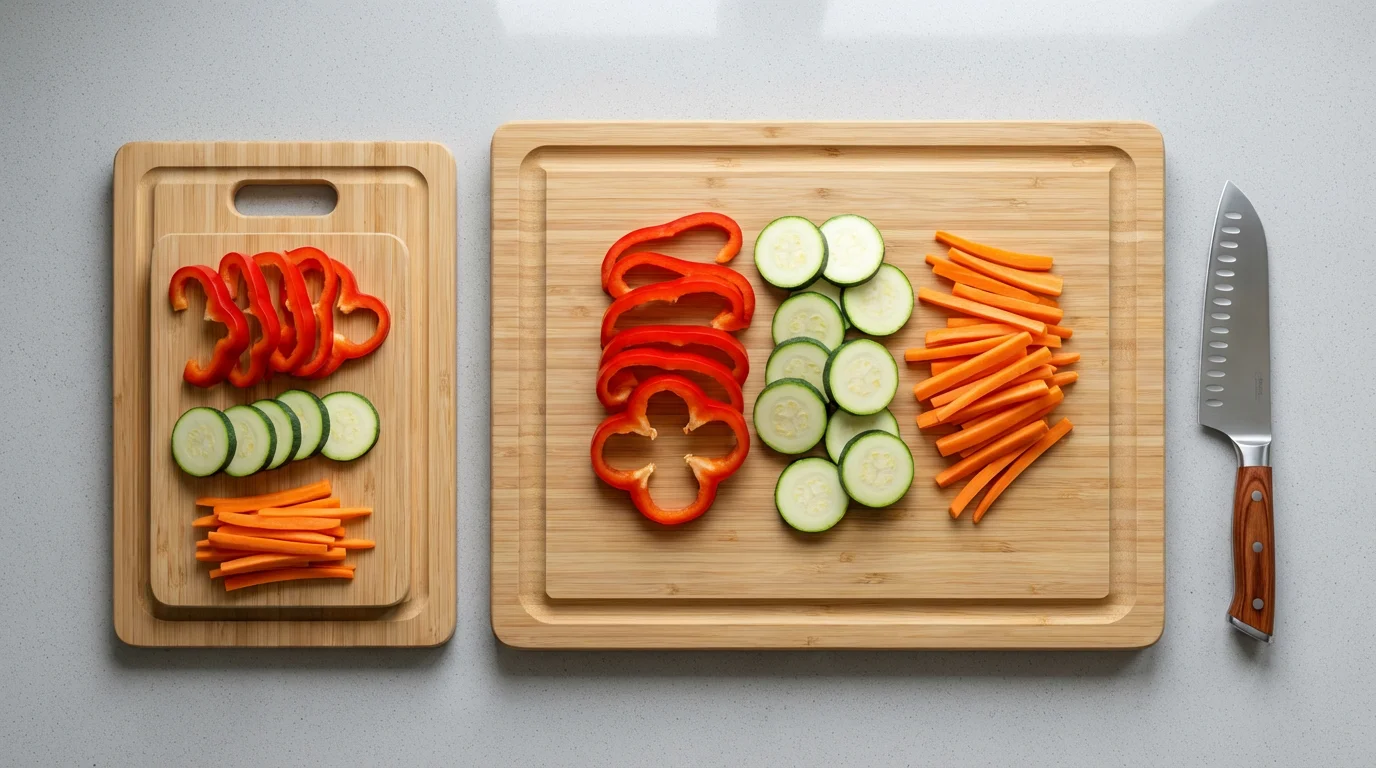
Bamboo has gained significant popularity as a sustainable alternative to traditional wood. Technically a grass, not a tree, bamboo grows rapidly and regenerates quickly, making it an environmentally friendly choice. Bamboo cutting boards are typically constructed from strips of bamboo compressed together with adhesive.
Pros of Bamboo Cutting Boards
If you often slice crusty artisan loaves, pairing your board with serrated bread knives ensures clean cuts without damaging the bamboo surface.
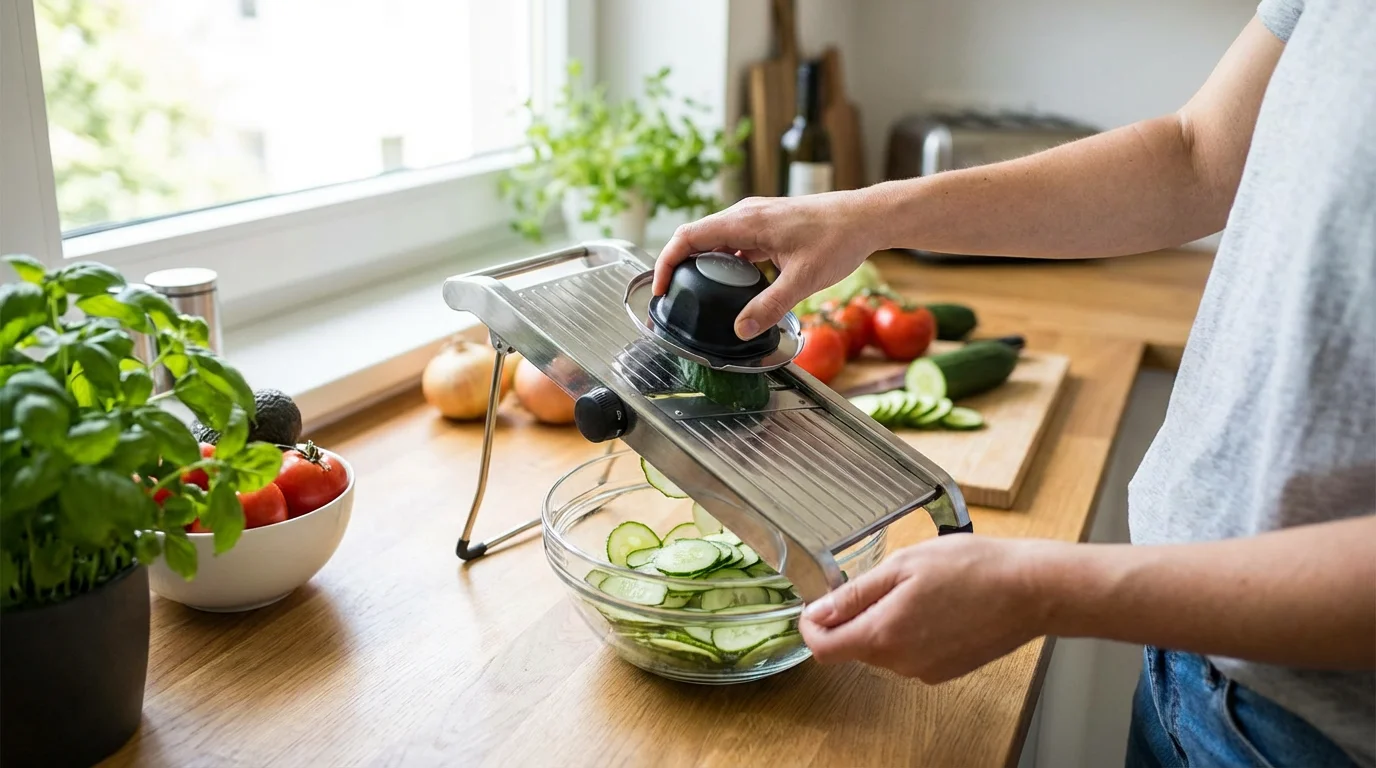
For tasks requiring perfectly uniform slices, mandoline slicers can be used alongside your board to speed up preparation.
- Sustainability: Bamboo is highly renewable and grows much faster than hardwoods, making it an eco-conscious option.
- Hardness and Durability: Bamboo is incredibly hard and dense, making it very durable and resistant to knife marks. It generally resists absorbing water more effectively than some traditional woods.
- Lightweight: Bamboo boards are typically lighter than solid wood boards of comparable size, offering some of the handling benefits of plastic.
- Aesthetic Appeal: Bamboo boasts a distinct, elegant grain that adds a modern touch to kitchens.
- Affordability: Bamboo boards generally fall into a mid-range price point, more expensive than basic plastic but often less than premium hardwood boards.
Cons of Bamboo Cutting Boards
- Knife Damage: The very hardness that makes bamboo durable also makes it harsh on knife edges. Your knives will dull more quickly on bamboo than on wood, requiring more frequent honing and sharpening. This contradicts the goal of finding the best cutting board material for knives that preserves their edge.
- Adhesive Concerns: Bamboo strips are glued together. The quality of the adhesive varies; cheaper boards may use glues containing formaldehyde, which you should avoid for food contact. Always look for boards certified as food-safe.
- Cracking and Warping: While durable, bamboo boards can be prone to cracking or splitting if not properly maintained, especially if exposed to excessive moisture or extreme temperature changes. They also require hand-washing.
- Maintenance: Similar to wood, bamboo boards benefit from regular oiling to prevent drying and maintain their integrity, though perhaps less frequently than some hardwoods.
Cutting Board Material Comparison at a Glance
This table summarizes the key characteristics of wood, plastic, and bamboo cutting boards, helping you quickly identify which material aligns best with your priorities.
| Feature | Wood (Hardwood, End Grain) | Plastic (HDPE) | Bamboo |
|---|---|---|---|
| Knife Friendliness | Excellent (protects edge, reduces dulling) | Poor (dulls knives quickly, creates grooves) | Fair (dulls knives faster than wood due to hardness) |
| Hygiene/Sanitation | Good (natural antimicrobial, hand-wash only) | Excellent (dishwasher-safe, non-porous) | Good (dense, hand-wash only) |
| Durability | Excellent (long-lasting with care, self-healing) | Good (resists warping, needs replacement when deeply scored) | Good (hard, dense, can crack if not maintained) |
| Maintenance | High (oiling, conditioning, hand-wash) | Low (dishwasher-safe, easy cleaning) | Medium (occasional oiling, hand-wash) |
| Cost | High | Low | Medium |
| Weight | Heavy (stable) | Light (portable) | Medium (lighter than wood) |
| Environmental Impact | Moderate (slow-growing, long lifespan) | High (non-biodegradable) | Low (rapidly renewable) |
| Best For | General prep, frequent use, knife enthusiasts | Raw meats, quick sanitization, budget-conscious | Eco-conscious, moderate use, aesthetic appeal |
Safety, Hygiene, and Knife Care for Your Boards
Regardless of the cutting board material you choose, safety and hygiene practices remain paramount. An unstable board, dull knife, or cross-contaminated surface poses significant risks in the kitchen.
“Always prioritize stability. A cutting board that slides across your counter is a serious safety hazard, regardless of its material. Place a damp cloth or a non-slip mat underneath any board prone to slipping.”
Preventing Cross-Contamination
Cross-contamination occurs when bacteria from raw meat, poultry, or fish transfer to other foods, especially those eaten raw like salads. This is a primary reason many professional chefs and home cooks use multiple cutting boards.
- Dedicated Boards: Assign a specific board for raw proteins (e.g., a red plastic board) and another for fruits, vegetables, and cooked foods (e.g., a green or white plastic board, or a wood board). This is where the wood vs plastic cutting board for meat debate finds a practical solution: use plastic for meat where deep sanitization is easy, and wood for everything else.
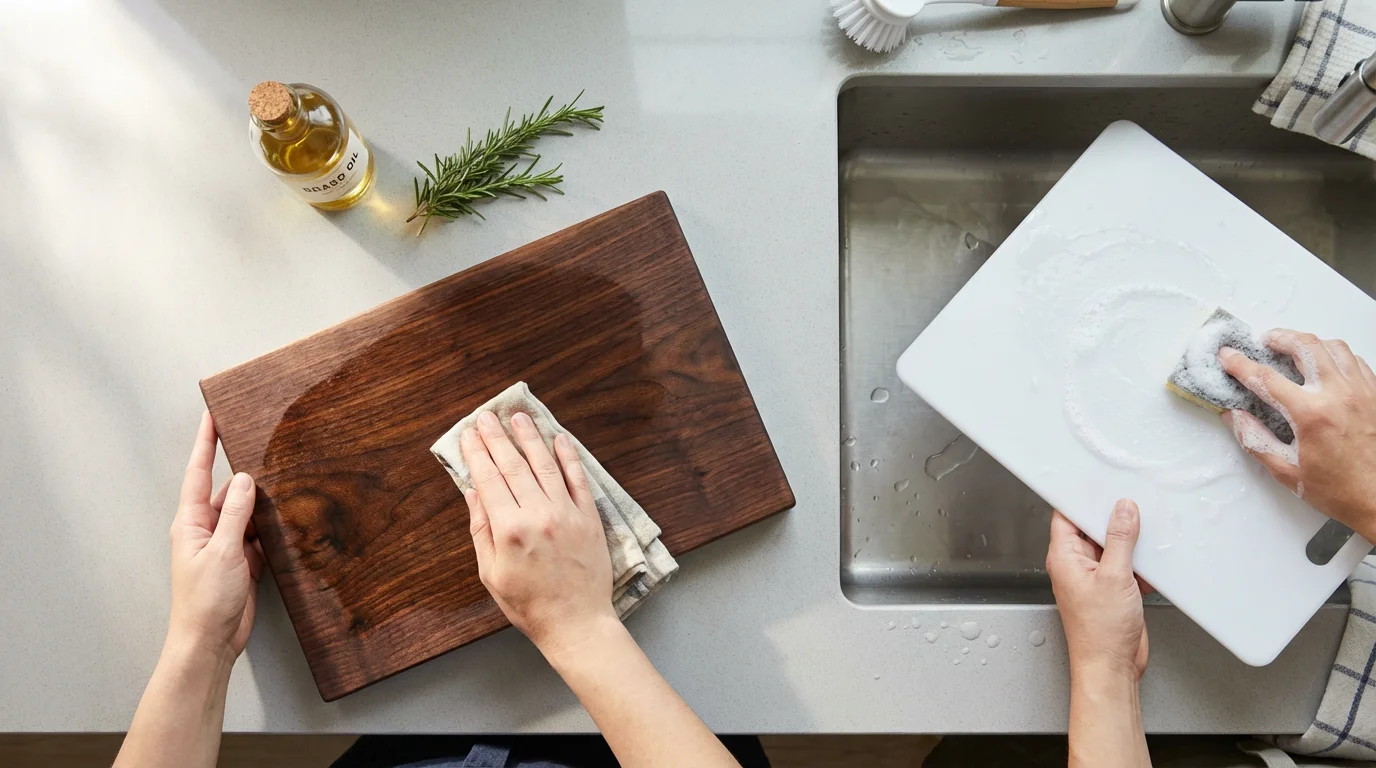
- Immediate Cleaning: After cutting raw meat, poultry, or fish, immediately wash your cutting board with hot, soapy water. If it is dishwasher-safe, run it through a hot cycle. For wood or bamboo, use a diluted bleach solution (one teaspoon of liquid bleach per quart of water) or hydrogen peroxide, rinse thoroughly, and allow to air dry.
- Surface Integrity: Replace any cutting board, especially plastic ones, once it develops deep grooves that you cannot clean effectively. These grooves harbor bacteria even after washing.
Knife Care and Board Choice
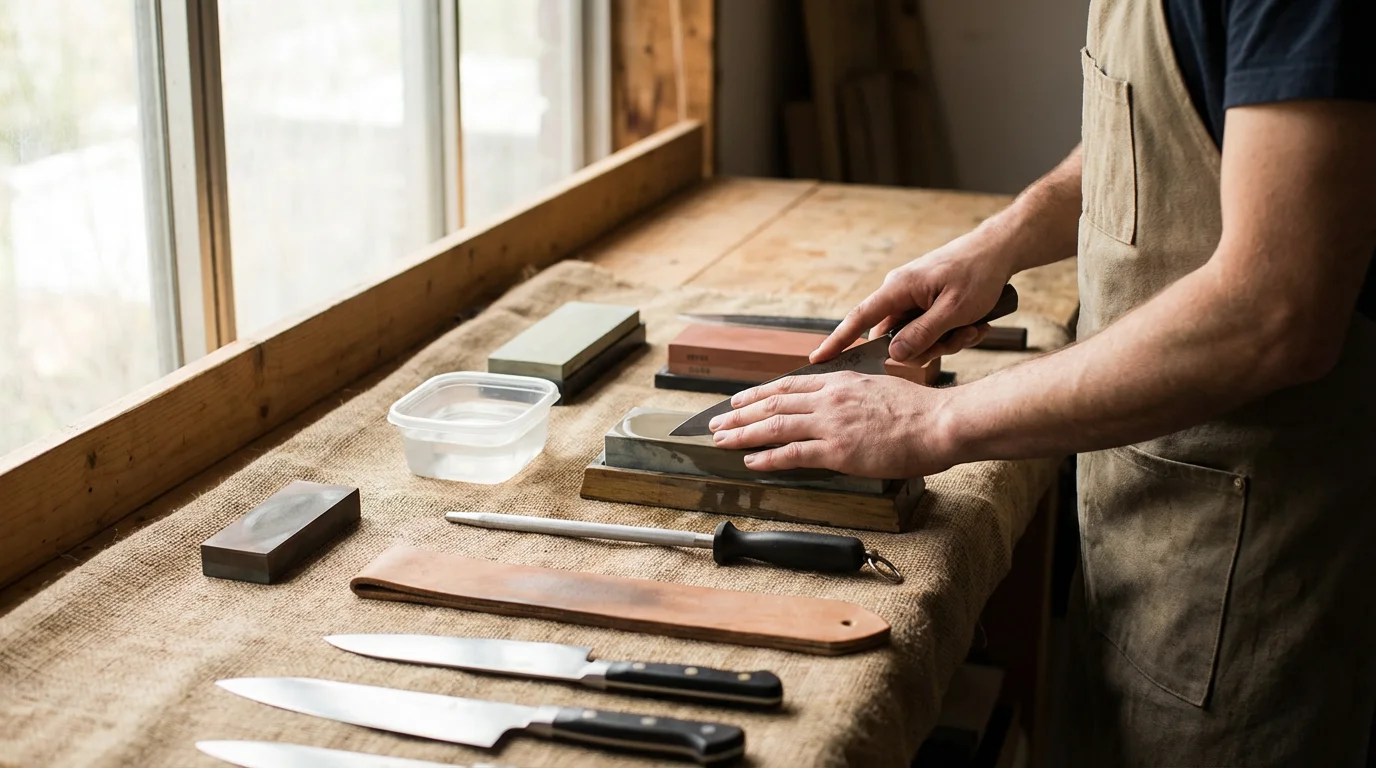
The best cutting board material for knives significantly impacts how often you need to maintain your blades. A sharp knife is a safe knife; a dull blade requires more force, increasing the risk of slips and injury. Honing, which realigns the blade edge, and sharpening, which removes metal to create a new edge, become more frequent tasks when you use a hard cutting surface.
- Wood for Blade Longevity: Hardwood, particularly end grain boards, offers the most forgiving surface for your knives. The wood fibers separate rather than resist, preserving the delicate edge of your blade. This means less frequent sharpening and a longer life for your knives.
- Avoid Hard Surfaces: Never cut directly on countertops made of stone (granite, marble), glass, or ceramic. These materials will instantly dull and even damage your knife blades.
- Stability is Key: A stable cutting surface prevents your knife from slipping erratically. Ensure your cutting board remains firmly in place, either due to its weight or by using a non-slip mat underneath.
Maintaining Your Cutting Boards for Longevity
Proper care extends the life of your cutting boards and ensures they remain hygienic. Different materials require different approaches.
Wood and Bamboo Maintenance
These natural materials require specific care to prevent drying, cracking, and warping. They are never dishwasher-safe.
- Hand Wash Only: Always hand wash wood and bamboo boards immediately after use with hot, soapy water. Avoid soaking them, as this can lead to warping and splitting.
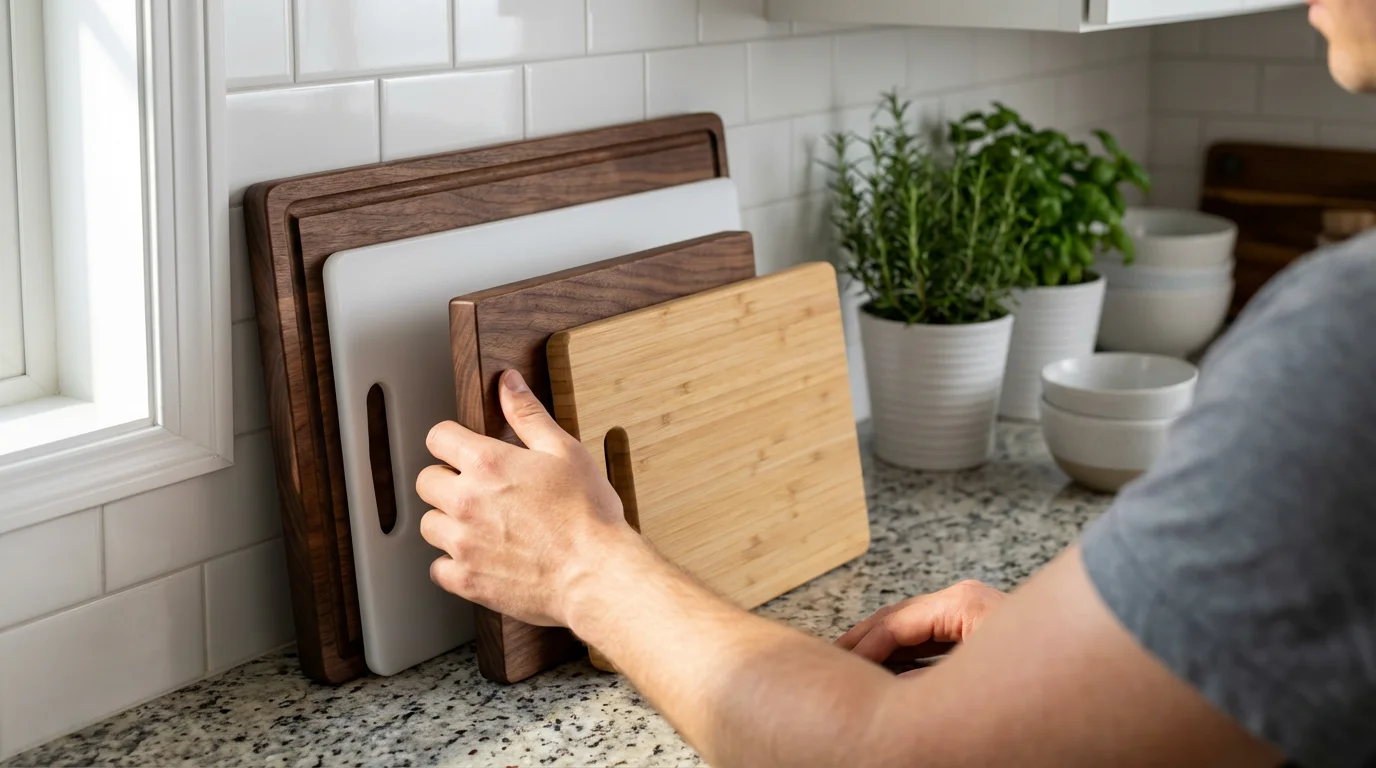
- Rinse and Dry: Rinse thoroughly and wipe dry with a clean cloth. Allow the board to air dry completely, standing it on edge so air circulates around all surfaces.
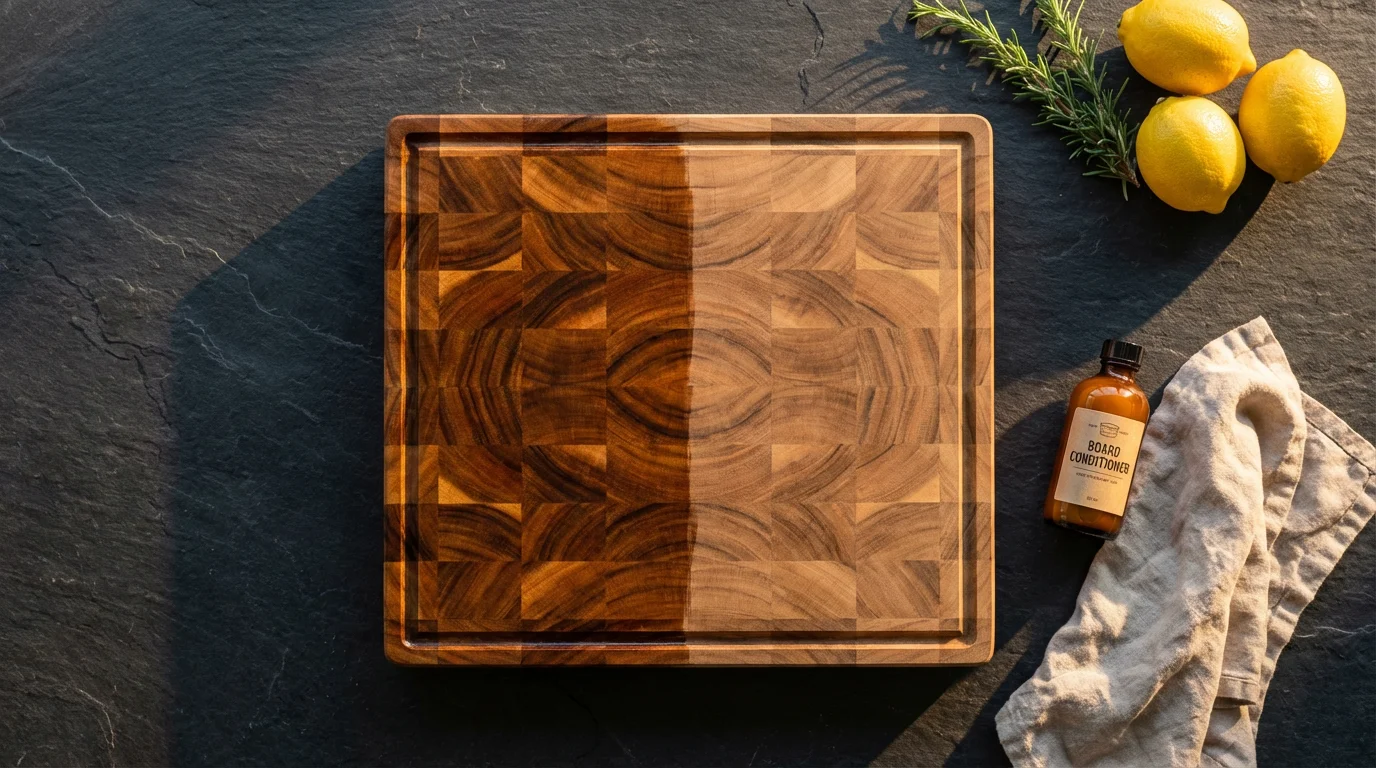
- Regular Oiling: Condition your wood or bamboo board regularly with food-grade mineral oil, butcher block oil, or a beeswax conditioner. Frequency depends on usage; once a month for moderate use is a good starting point. Apply a generous amount, let it soak in for several hours or overnight, then wipe off any excess. This keeps the wood hydrated, prevents cracking, and creates a barrier against moisture and stains.
- Sanding and Revitalization: For deeply scarred wood boards, you can lightly sand them with fine-grit sandpaper (e.g., 220-grit), then re-oil. This helps restore a smooth, clean surface.
Plastic Cutting Board Maintenance
Plastic boards are generally low-maintenance, but they also have a lifespan.
- Dishwasher-Safe: Most plastic cutting boards are dishwasher-safe, offering convenient and effective sanitization. Use the hottest cycle available.
- Hand Washing: If hand washing, use hot, soapy water and a stiff brush to scrub away food particles.
- Disinfecting: For extra sanitation, especially after handling raw meat, poultry, or fish, you can soak plastic boards in a diluted bleach solution (1 teaspoon bleach per quart of water) for a few minutes before rinsing thoroughly.
- Replace When Scored: The most crucial maintenance for plastic is knowing when to replace it. Once deep knife grooves appear, they become impossible to clean fully and can harbor harmful bacteria. Do not try to extend the life of a deeply scored plastic cutting board; replace it.
Frequently Asked Questions
Can I use the same cutting board for meat and vegetables?
We do not recommend using the same cutting board for raw meat, poultry, or fish and then for ready-to-eat foods like vegetables or cooked meats without thorough cleaning and sanitization in between. To ensure safety and prevent cross-contamination, use separate, dedicated cutting boards for raw proteins and produce. Plastic boards are often preferred for raw meat due to their ease of deep sanitization in a dishwasher.
What is the best cutting board material for knives?
Wood, particularly an end grain hardwood board, is widely considered the best cutting board material for preserving knife edges. Its softer fibers allow the knife blade to slip between them, reducing friction and preventing the edge from dulling as quickly as it would on harder surfaces like plastic or bamboo. This significantly extends the time between honing and sharpening your knives.
How often should I oil my wood or bamboo cutting board?
The frequency depends on how often you use and wash your board. As a general rule, oil your wood or bamboo cutting board once a month for moderate use. If your board looks dry, feels rough, or starts to lighten in color, it needs oiling sooner. Consistent oiling prevents cracking, warping, and helps the board resist moisture and stains.
Are bamboo cutting boards really eco-friendly?
Yes, bamboo is an exceptionally sustainable material. It is a fast-growing grass that regenerates quickly after harvesting, requiring minimal water and no pesticides. This makes bamboo a more environmentally conscious choice compared to hardwoods, which take decades to grow to maturity, or plastic, which is non-biodegradable and derived from fossil fuels. When choosing bamboo, look for boards using food-safe adhesives.
How do I make my cutting board more stable on the counter?
To prevent your cutting board from sliding around during use, place a damp kitchen towel, a non-slip mat, or a silicone gripper pad underneath it. The friction created by these materials will hold the board firmly in place, significantly improving safety and making your chopping tasks more efficient. This is particularly useful for lighter plastic or thinner bamboo boards.
Disclaimer: Product prices and availability change frequently. Prices shown were accurate at time of writing but may have changed. We may earn a small commission from purchases made through links on this site, at no extra cost to you. Always use cutting tools carefully and follow manufacturer safety guidelines.


Leave a Reply