

Selecting your first quality chef’s knife marks a significant step toward more efficient and enjoyable cooking. Many home cooks feel intimidated by the array of options, uncertain how to choose a knife that performs well, fits their hand, and enhances their kitchen experience without breaking the bank. This guide cuts through the confusion, offering practical advice and actionable insights to help you choose a durable, safe, and effective cooking knife. Investing in the right chef knife transforms meal preparation, making tasks like chopping vegetables, slicing meats, and mincing herbs faster and safer. You need a tool that feels like an extension of your arm, making every cut precise and effortless. Let’s explore how to find that perfect first chef’s knife.
Understanding the Chef’s Knife: Anatomy and Purpose
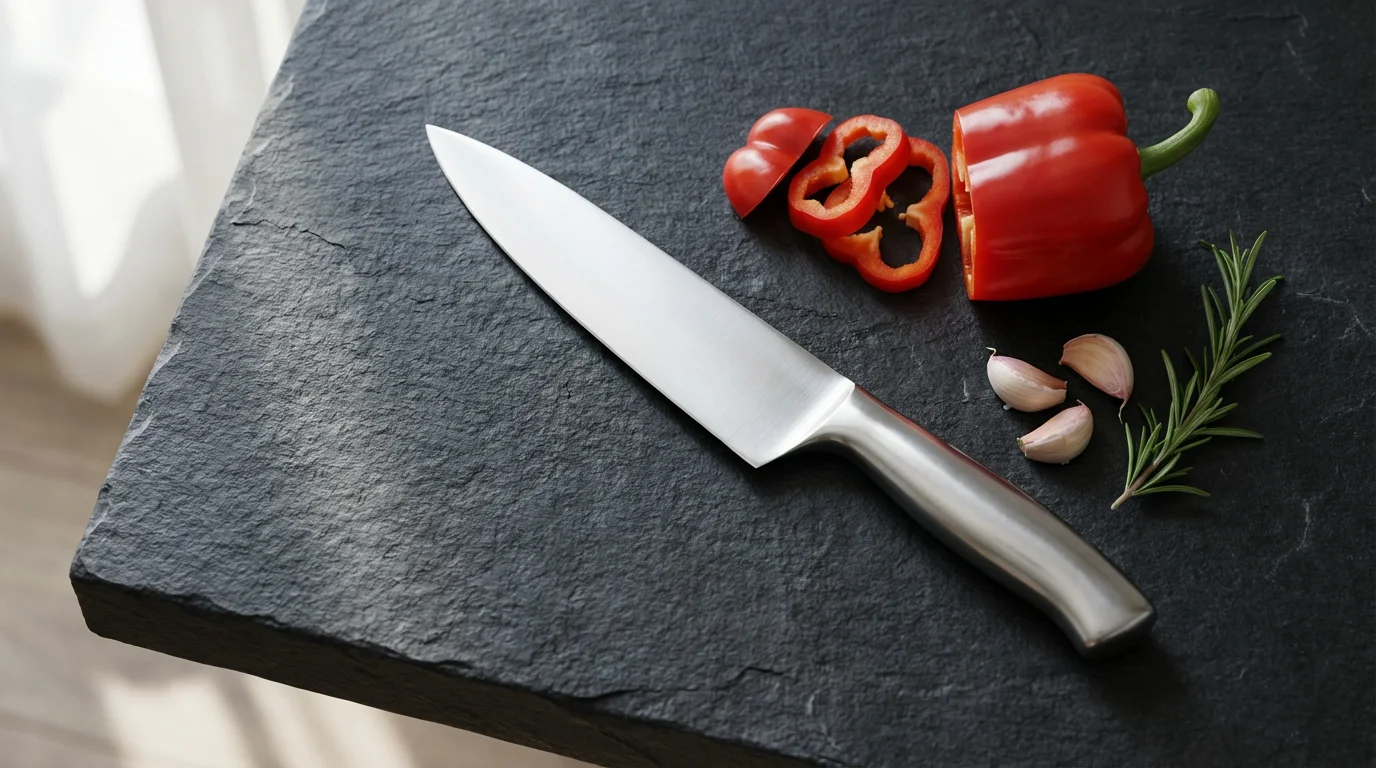
A chef’s knife is the workhorse of your kitchen. It is a versatile tool designed for a wide range of tasks, including chopping, slicing, dicing, mincing, and even scooping ingredients. Understanding its various parts helps you appreciate its design and functionality, which in turn informs your purchasing decision.
Every good kitchen knife consists of several key components:
- Blade: This is the cutting part of the knife, typically made from steel.
- Tip: The pointed end, useful for fine detail work like coring tomatoes or scoring dough.
- Edge: The sharpened part of the blade that performs the cutting. A sharp edge is crucial for safety and efficiency.
- Spine: The non-sharpened top edge of the blade, often used to tap the knife when dicing or transferring food.
- Heel: The rear part of the blade near the bolster, ideal for tasks requiring more force, such as cutting through tough root vegetables or breaking down a chicken.
- Bolster: This is the thick part where the blade meets the handle. It provides balance, adds weight for stability, and offers a protective finger guard, preventing your hand from slipping onto the blade during use.
- Tang: The section of the blade that extends into the handle. A knife with a full tang means the blade material extends all the way through the handle. This construction provides superior balance, strength, and durability compared to partial tang designs, which you often find in cheaper, less reliable knives.
- Handle: The part you grip. Its material and shape significantly impact comfort, control, and hand fatigue. Handles can be made from wood, synthetic polymers, or composite materials.
- Rivets: These metal pins secure the handle scales (the two halves of the handle) to the tang, ensuring the handle remains firmly attached.
Blade Materials: Stainless Steel vs. High-Carbon Steel
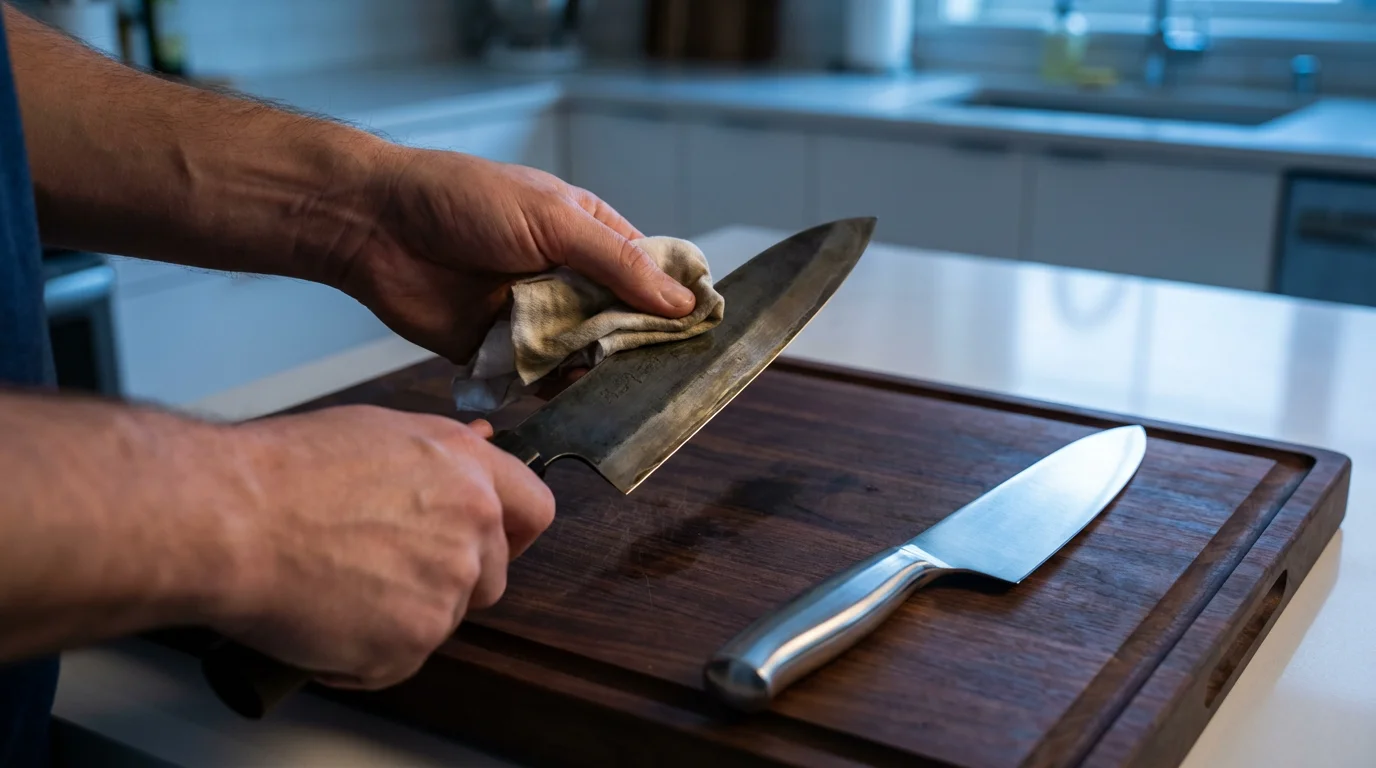
The material of your chef knife’s blade directly influences its performance, sharpness retention, and maintenance needs. Most chef knives fall into two primary categories: stainless steel and high-carbon steel.
According to Wirecutter’s kitchen knife guides, the best everyday chef knives balance edge retention with ease of sharpening and rust resistance.
Stainless Steel
Modern stainless steel knives use alloys that blend steel with elements like chromium, which provides excellent corrosion resistance.
- Pros: Highly resistant to rust and staining, making them relatively low-maintenance. They do not react with acidic foods, which preserves the food’s flavor and prevents discoloration. They are generally durable and flexible, resisting chipping.
- Cons: Stainless steel typically does not hold an edge as long as high-carbon steel. This means you need to hone and sharpen them more frequently to maintain optimal performance.
- Best For: Beginners and everyday home cooks who prioritize ease of care and durability over maximum edge retention. They forgive occasional neglect, an ideal trait for a first cooking knife.
High-Carbon Steel
High-carbon steel blades contain a higher percentage of carbon, leading to a much harder blade.
- Pros: Achieves and retains a significantly sharper edge for longer periods compared to stainless steel. This translates to less frequent sharpening and more efficient cutting. Many professional chefs prefer carbon steel for its superior cutting performance and ability to develop a unique patina over time.
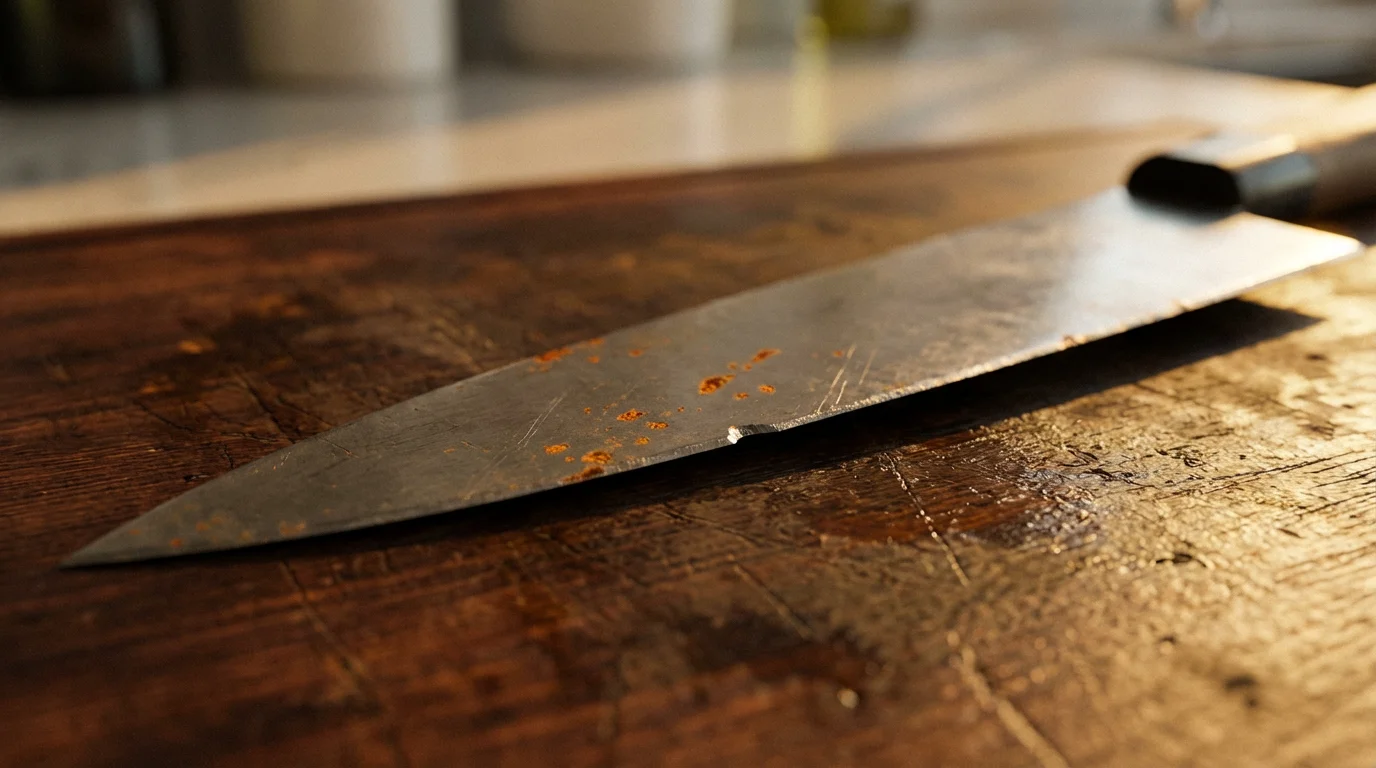
- Cons: Susceptible to rust and discoloration if not meticulously cleaned and dried immediately after use. Acidic foods can stain the blade and impart a metallic taste if left in contact. They can also be more brittle, making them prone to chipping if mishandled or used on hard surfaces.
- Best For: Experienced cooks or those committed to rigorous knife care. Not typically recommended as a first chef knife for beginners due to the higher maintenance requirements.
Ceramic Blades (Briefly)
While known for extreme sharpness and not reacting to food, ceramic knives are very brittle. They chip and break easily if dropped or twisted, and you cannot sharpen them with standard home sharpeners. For your first general-purpose chef knife, ceramic is not a practical choice.
Size, Weight, and Ergonomics: Finding Your Balance
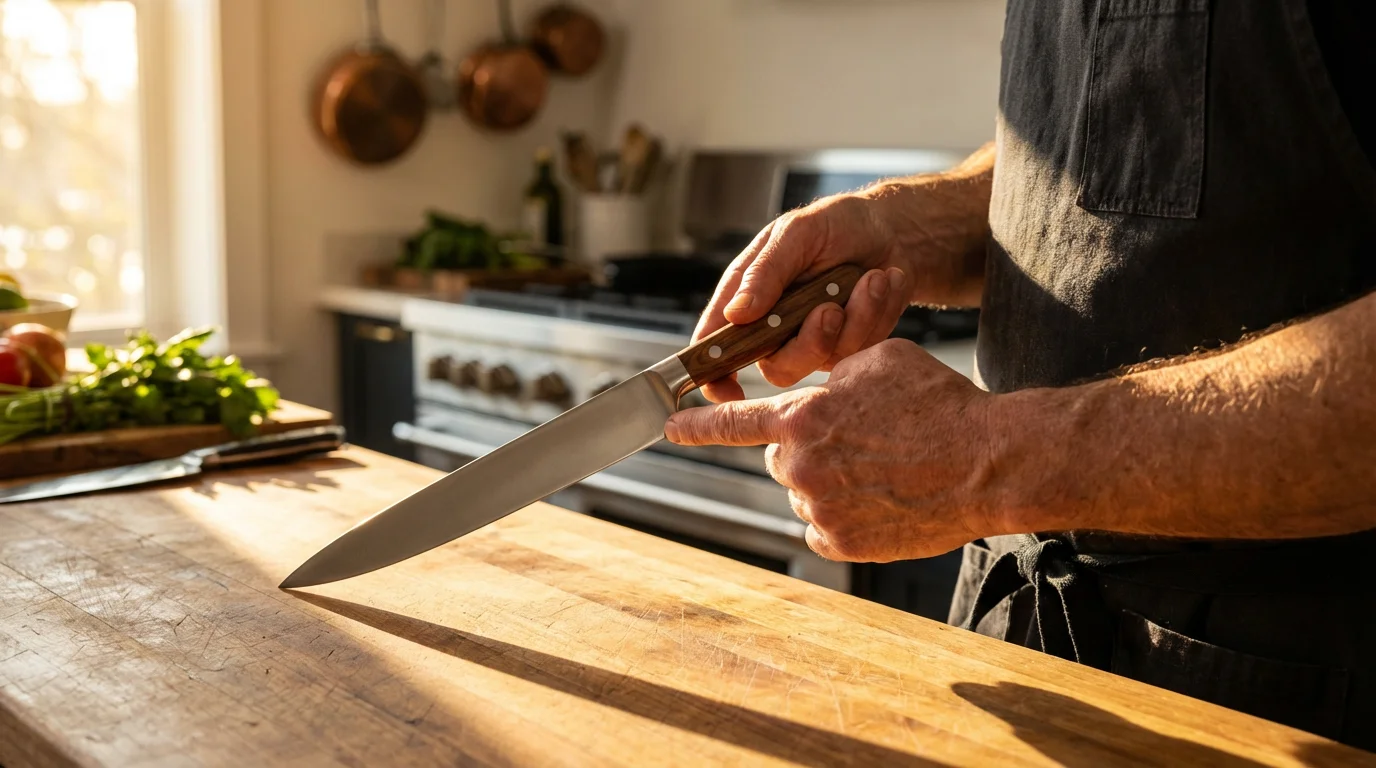
The right chef knife feels balanced and comfortable in your hand. This personal preference significantly impacts your control, safety, and how long you can prep ingredients without fatigue.
Blade Length
Chef knives typically range from 6 to 12 inches in blade length. For most home cooks, an 8-inch chef knife offers the best balance of versatility and control.
- 6-inch: Suitable for smaller hands or for tasks requiring more precision, though it offers less knuckle clearance and a shorter cutting stroke.
- 8-inch: The standard recommendation for most home cooks. It provides ample length for chopping large vegetables, slicing roasts, and managing a wide range of ingredients while remaining maneuverable. Many consider it the ideal “how to choose first chef knife” size.
- 10-inch: Best for larger quantities of food, professional kitchens, or cooks with larger hands. It requires more counter space and can feel unwieldy for smaller tasks or hands.
Weight and Balance
A well-balanced knife distributes its weight evenly between the blade and the handle, or slightly forward into the blade. You should feel comfortable holding it for extended periods.
- Heavier knives: Can feel more substantial and provide momentum for chopping tough ingredients. Some find them less agile.
- Lighter knives: Offer greater maneuverability and reduce hand fatigue, especially during long prep sessions.
Pick up a few different knives if you can. What feels balanced to one person might feel blade-heavy to another. Your comfort is paramount.
“A knife that feels like an extension of your hand enhances your control and significantly reduces the risk of accidents. Never compromise on fit and comfort.”
Handle Materials and Ergonomics
The handle’s design and material are critical for comfort and grip security.
- Synthetic handles (e.g., Fibrox, G10): Often textured for a non-slip grip, even when wet or greasy. They are hygienic, durable, and generally dishwasher safe (though hand washing is always recommended for blades). This makes them excellent for a best chef knife for beginners under 50.
- Wood handles: Beautiful and comfortable, offering a warm feel. They require more care, needing occasional oiling and never being put in a dishwasher, as water can cause cracking or warping.
- Composite handles (e.g., Micarta): Combine natural and synthetic materials for durability, good grip, and attractive aesthetics, balancing the pros of both types.
Consider how the handle fits your hand. Does it fill your palm comfortably? Do your fingers have enough room? A good handle prevents hand fatigue during extended cooking sessions.
Edge Geometry: The Importance of Sharpness
A truly sharp chef knife is not just about having a thin edge; it is about the entire blade profile and how it interacts with food. Understanding edge geometry helps you appreciate why certain knives cut better and how to maintain them.
Why Sharpness Matters for Your Cooking Knife
For tasks requiring perfectly uniform thickness, many cooks supplement their knife work with safe mandoline slicers.
A sharp knife cuts cleanly and efficiently. This preserves the cellular structure of food, which can affect its flavor and appearance. More importantly, a sharp knife is a safe knife. Dull blades require more force to cut, increasing the likelihood of the blade slipping and causing injury.
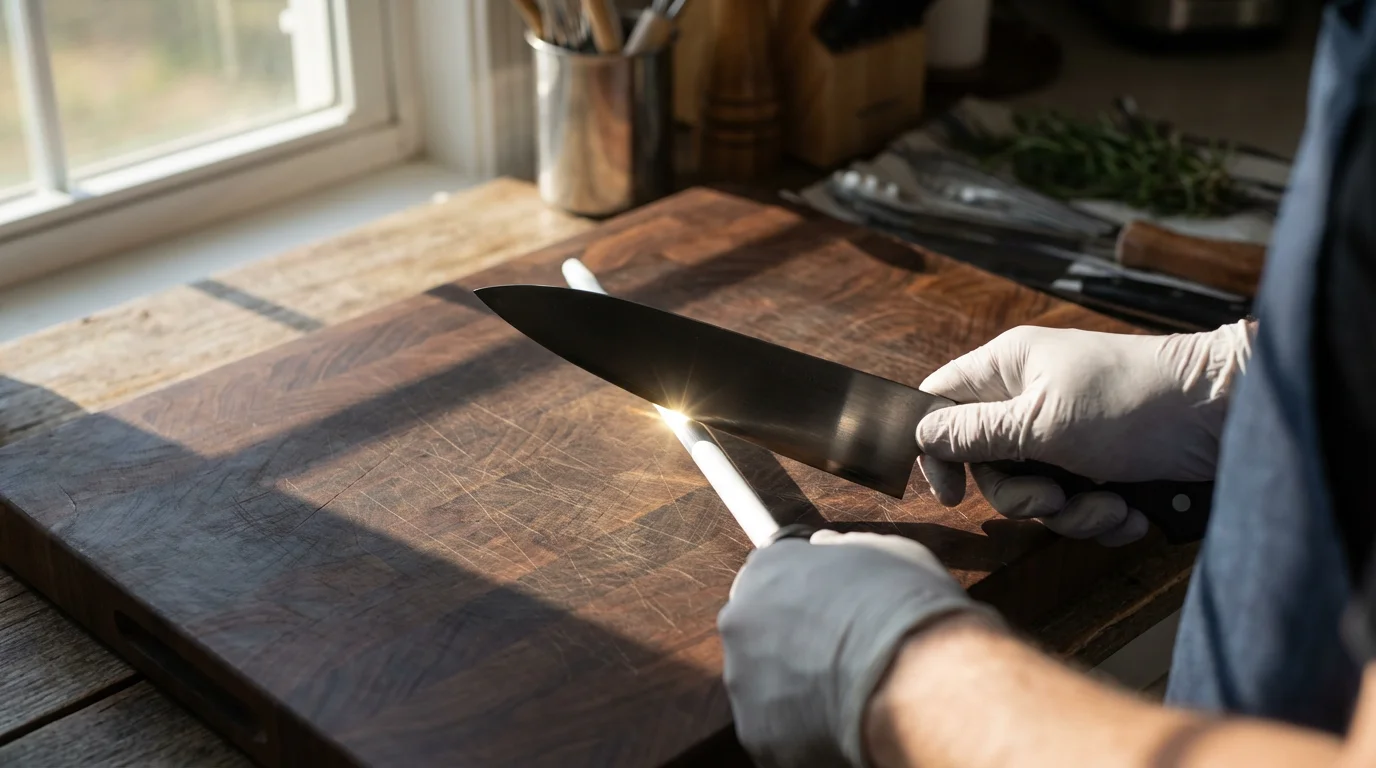
Honing involves realigning the microscopic edge of your blade, straightening out any bends or imperfections that occur with regular use. A honing steel does not remove metal; it simply pushes the edge back into alignment, restoring much of its cutting ability. You should hone your knife frequently, perhaps before or after every use.
Sharpening, by contrast, removes a small amount of metal from the blade to create a new, fresh edge. This is necessary when honing no longer restores the blade’s sharpness, typically every few months to a year depending on usage. You can sharpen knives using whetstones, pull-through sharpeners, or by sending them to a professional.
Western vs. Asian Edges
Most chef knives feature one of two primary edge styles:
- Western-style (double-bevel): Symmetrical grind, typically sharpened to an angle of 20-22 degrees per side (40-44 degrees inclusive). This provides a robust edge suitable for heavy-duty tasks and maintains durability.
- Asian-style (often single-bevel or thinner double-bevel): Many traditional Japanese cooking knives have a single-bevel edge, creating an extremely sharp, delicate cutting surface. Double-bevel Japanese-style knives often have a thinner blade profile and are sharpened to a narrower angle, such as 15 degrees per side (30 degrees inclusive), for superior slicing precision.
For your first general-purpose cooking knife, a Western-style or a hybrid Western-Japanese style with a slightly thicker, more durable edge provides a good balance of sharpness and robustness.
Proper Grip and Safe Cutting Techniques
Even the best chef knife is only as safe and effective as the hand holding it. Mastering a proper grip and basic cutting techniques is paramount for efficiency and preventing injuries.
The Pinch Grip
Keep your prepped ingredients organized by transferring them into appropriately sized mixing bowls before you begin cooking.
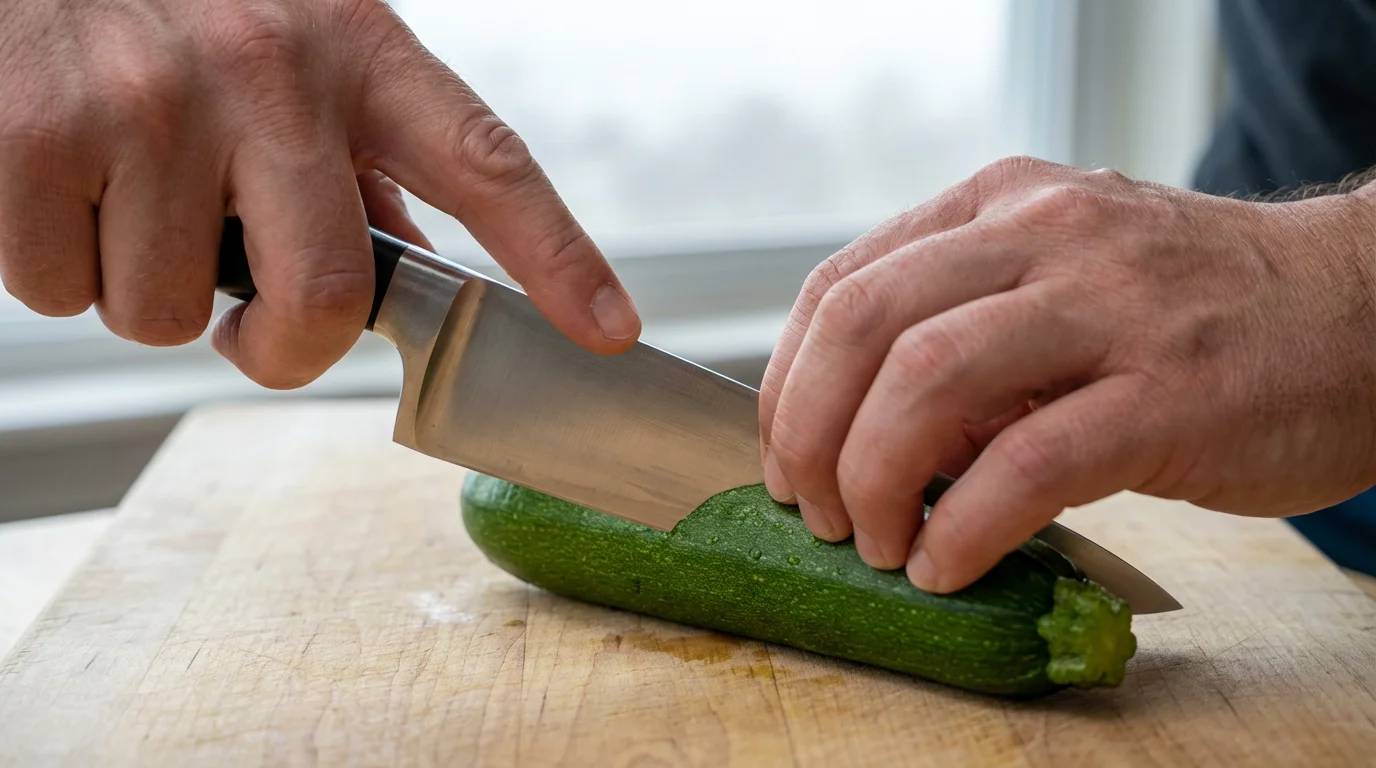
The pinch grip is the safest and most recommended way to hold a chef’s knife. You grip the blade near the bolster with your thumb on one side and your index finger pinched on the opposite side of the blade. The remaining three fingers wrap around the handle for support. This grip gives you maximum control over the blade, improving precision and reducing strain on your wrist.
The Claw Grip
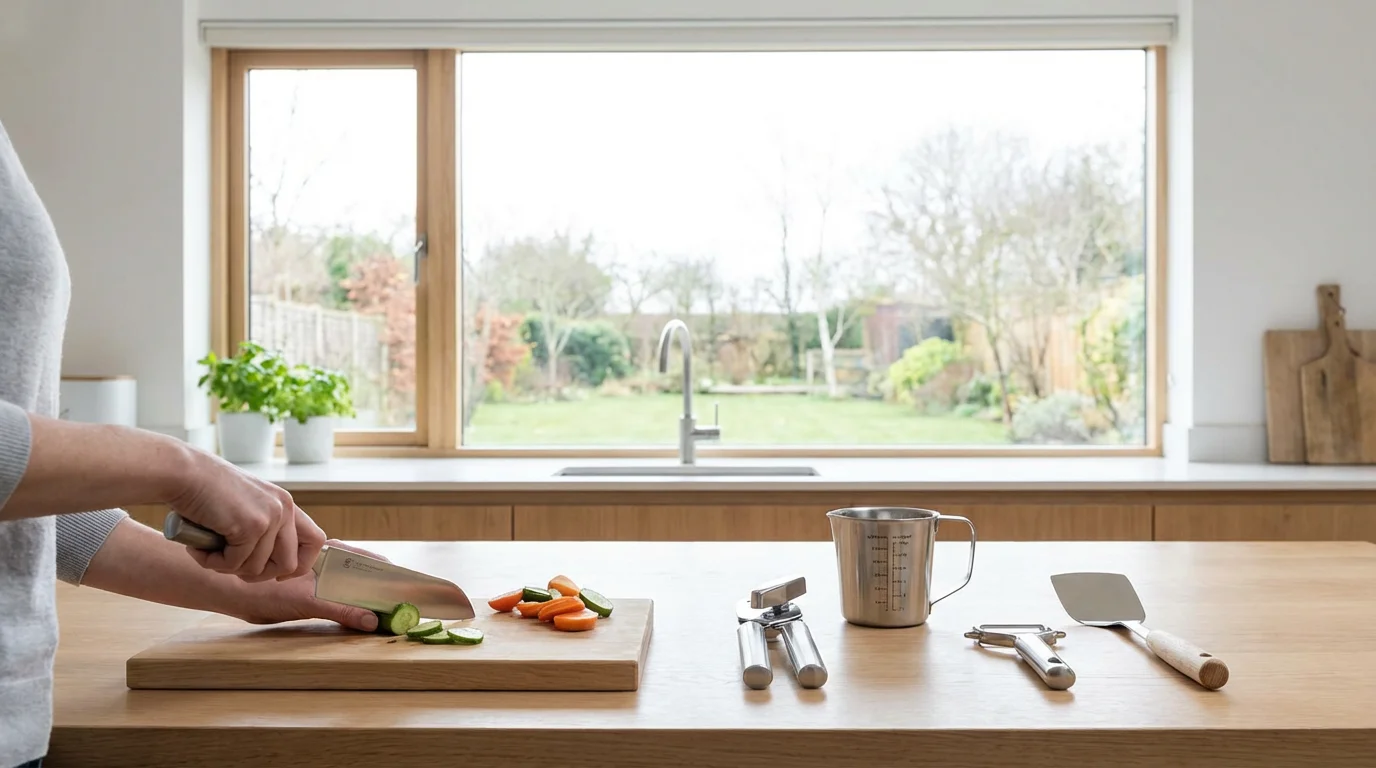
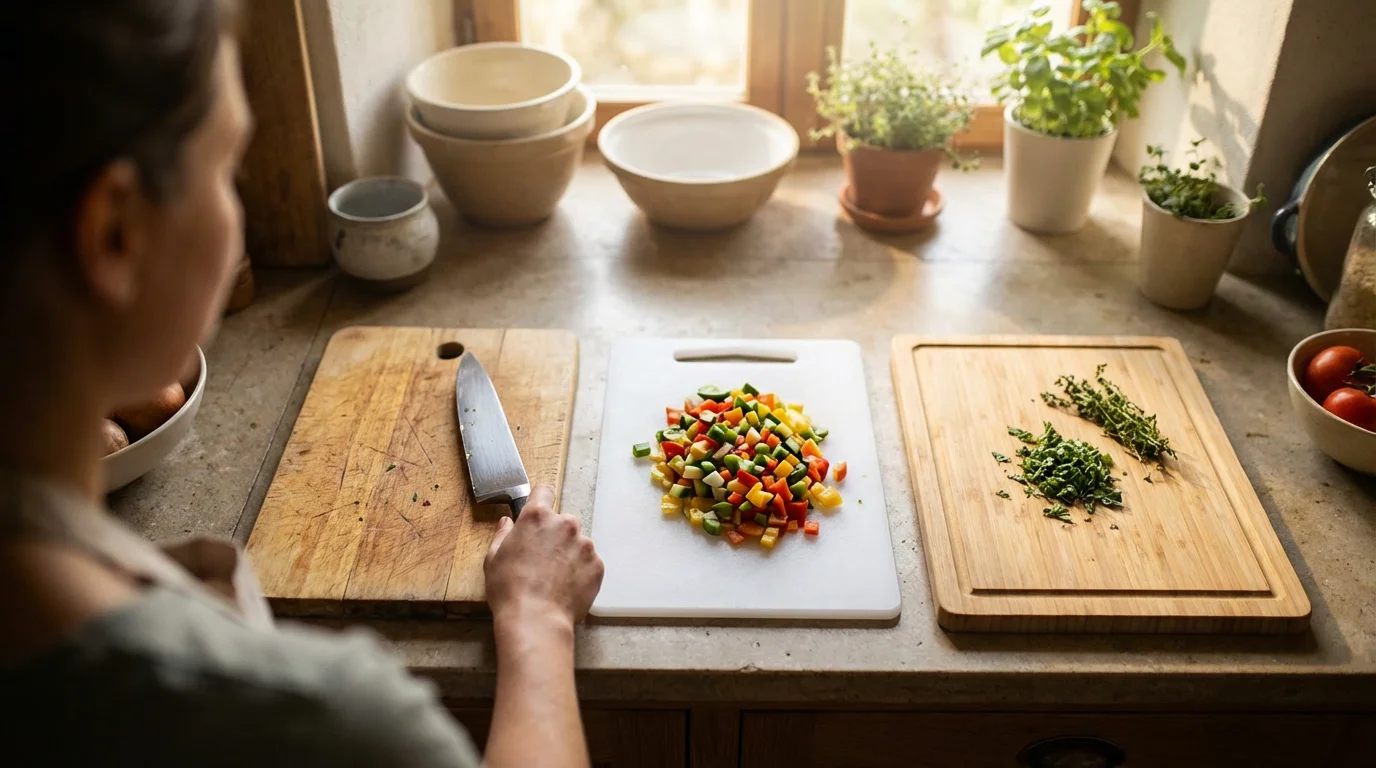
When cutting, your non-dominant hand acts as a guide, holding the food securely. Curl your fingertips inward, creating a “claw” shape. The knuckles of your guiding hand should rest against the flat side of the knife blade, acting as a protective barrier and guiding the knife safely as you cut. This keeps your fingertips tucked away from the sharp edge.
Fundamental Safety Rules
- Always use a stable cutting board: Place a damp cloth or non-slip mat under your cutting board to prevent it from sliding.
- Cut away from yourself: Direct the blade’s movement away from your body and fingers.
- Keep knives sharp: A dull knife is more dangerous than a sharp one because it requires more force and can slip.
- Focus on the task: Avoid distractions while using a knife.
- Do not catch a falling knife: Let it drop. Your fingers are more valuable than the knife.
Common Chef Knife Applications
Different parts of the blade excel at different tasks.
| Blade Section | Primary Use | Example Tasks |
|---|---|---|
| Tip | Fine detail work, scoring | Mincing garlic, coring tomatoes, scoring bread dough |
| Middle Belly | General slicing, rocking cuts | Chopping onions, slicing vegetables, mincing herbs |
| Heel | Tasks requiring force | Cutting through tough squash, breaking down poultry, chopping chocolate |
Maintenance Essentials: Keeping Your Knife Performing
Proper care extends the life of your chef knife, maintains its sharpness, and ensures it remains safe to use. Neglecting maintenance quickly degrades even a high-quality cooking knife.
Hand Washing is a Must
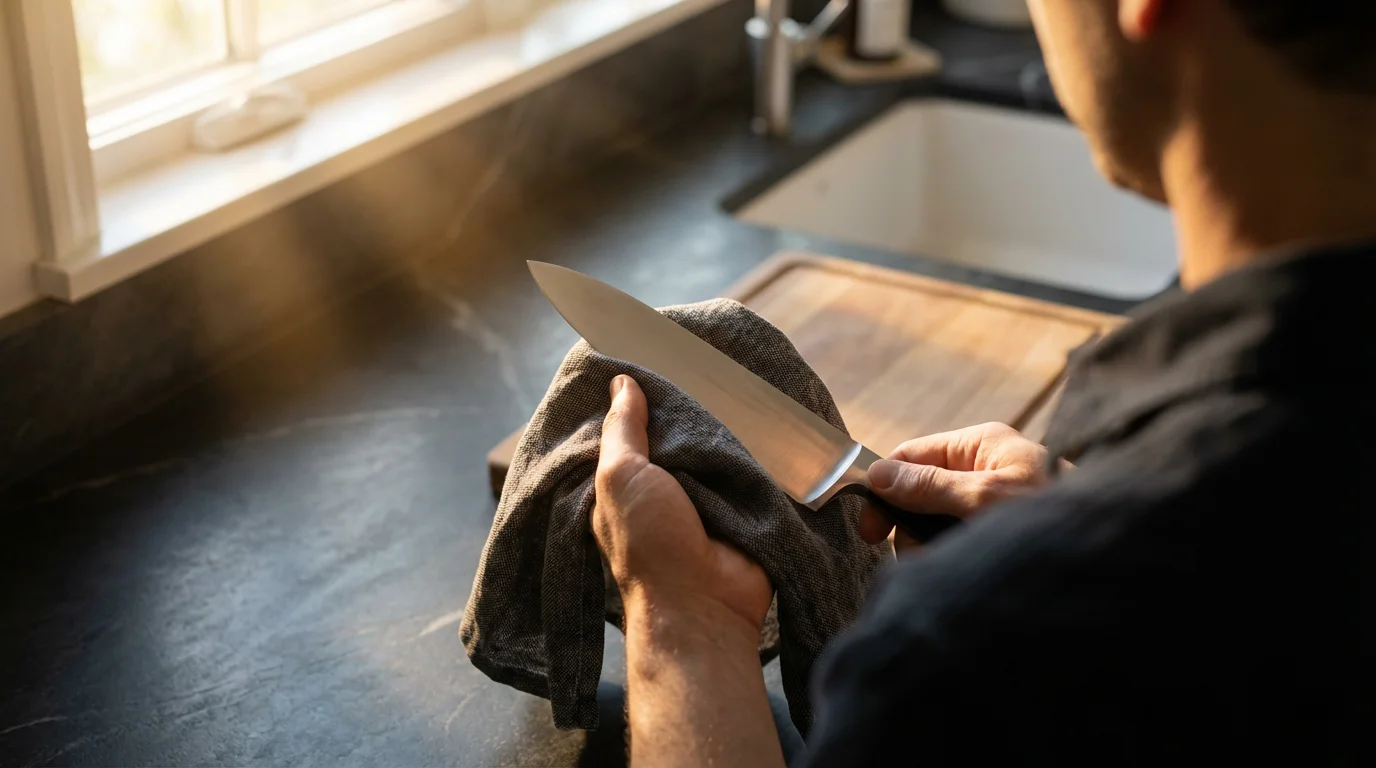
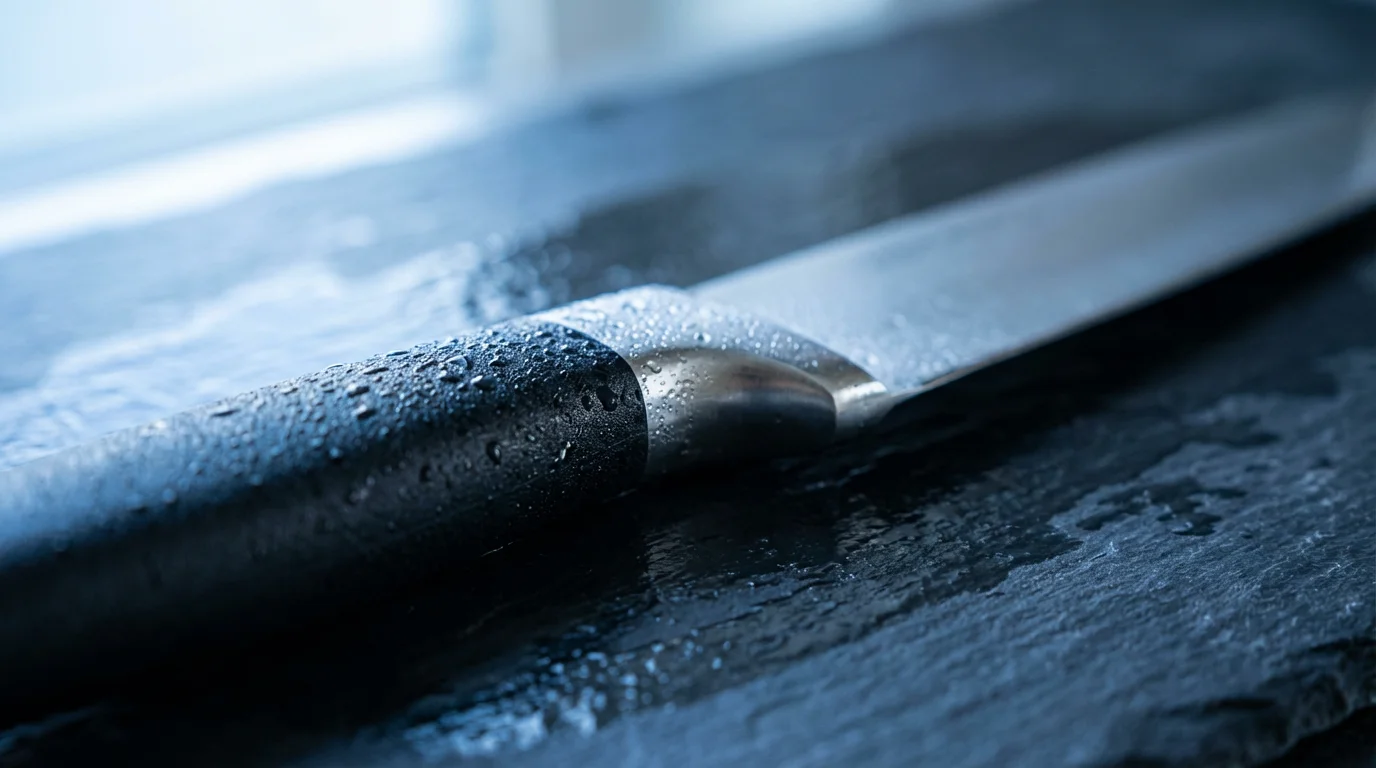
Never put your good kitchen knife in the dishwasher. The harsh detergents, high heat, and jostling against other items dull the blade, damage the handle, and can cause pitting or rust on the steel. Always hand wash your knife immediately after use with warm, soapy water. Dry it thoroughly with a soft towel to prevent water spots and rust.
Proper Storage
Storing your knife correctly protects its edge and keeps it safe.
- Knife Block: A common and safe storage solution that protects the blade.
- Magnetic Strip: Saves counter space and displays your knives, but requires careful placement to avoid edge damage.
- In-drawer Knife Tray: Keeps knives protected and organized within a drawer, preventing them from banging against other utensils.
Never store your knife loosely in a drawer where it can collide with other utensils, dulling the edge and posing a safety hazard when reaching in.
Honing and Sharpening Schedule
Regular honing is the most critical maintenance task for daily use.
- Hone Frequently: Use a honing steel before or after every few uses to realign the edge. This takes only a few seconds.
- Sharpen as Needed: Depending on frequency of use, your knife will need actual sharpening every few months to a year. You can use a whetstone, a manual pull-through sharpener, or an electric sharpener. For beginners, a simple pull-through sharpener or taking your knife to a professional sharpener initially is a great option.
Serious Eats’ equipment reviews frequently emphasize the importance of regular honing and occasional sharpening to maintain knife performance and safety.
Choosing Your First Chef’s Knife: Recommendations for Beginners
When selecting your first good cooking knife, prioritize value, durability, ease of maintenance, and comfort. You do not need to spend hundreds of dollars to get an excellent performing chef knife. Many quality options exist that serve beginners well and offer exceptional value.
Key Considerations for a Beginner’s Chef Knife
- Comfort and Balance: This is non-negotiable. The knife should feel natural in your hand.
- Blade Material: Stainless steel or a high-carbon stainless steel blend offers a good balance of edge retention and rust resistance for ease of care.
- Full Tang Construction: Ensures durability and balance.
- Ergonomic Handle: A comfortable, non-slip handle reduces hand fatigue and improves safety.
Best for Beginners and Best Value Under $50
For many years, one knife consistently stands out for its incredible value and performance:
Victorinox Fibrox Pro 8-inch Chef’s Knife: This knife regularly earns top marks from experts and home cooks alike. It features a high-carbon stainless steel blade that holds a decent edge and sharpens easily. The Fibrox handle is textured, offering an exceptional non-slip grip even when wet. It is lightweight, well-balanced, and performs like knives costing several times more. Its price point frequently places it well under $50, making it an ideal candidate for the best chef knife for beginners under 50. It’s a tool that allows you to develop your knife skills without fear of damaging an expensive blade and without sacrificing performance.
Consumer Reports’ kitchen appliance ratings often highlight the Victorinox Fibrox Pro as a top choice for its excellent performance and value.
Best Upgrade for Serious Beginners (Under $100)
If your budget allows a bit more, you open up options that offer slightly better edge retention or a more refined feel.
- Wüsthof Classic 8-inch Chef’s Knife (often found on sale): While typically over $100, sales sometimes bring it into this range. It features forged German high-carbon stainless steel, known for its robustness and edge retention. The full bolster and classic handle provide excellent balance and a sturdy feel.
- Mac Mighty MTH-80 8-inch Chef’s Knife: This Japanese-made knife uses a thinner, harder steel (similar to high-carbon stainless) sharpened to a sharper angle than most Western knives. It offers exceptional cutting performance and a lightweight, agile feel. Its balance makes it a joy to use for precise tasks.
These options represent an excellent investment for learning how to choose first chef knife that will grow with your skills.
Avoiding Common Pitfalls
Many common mistakes can prematurely damage your chef knife or lead to accidents. Steer clear of these habits to ensure the longevity and safety of your culinary tool.
- Using the Wrong Cutting Surface: Never cut directly on glass, ceramic, stone countertops, or metal surfaces. These materials are harder than your knife blade, immediately dulling it and increasing the risk of chipping. Always use cutting boards made from wood, bamboo, or high-density plastic.
- Dishwasher Abuse: As discussed, dishwashers are the enemy of good knives. The high heat, harsh detergents, and jostling dull the blade, can damage the handle, and encourage rust. Always hand wash and dry your knife immediately after use.
- Neglecting Sharpness: A dull knife is a dangerous knife. It requires more force, increases the chance of slipping, and makes prep work frustrating. Hone your knife frequently and sharpen it regularly.
- Using the Knife as a Tool: Avoid using your chef knife to open cans, pry lids, or scrape tough residues off surfaces. These actions can bend or chip the blade.
- Improper Storage: Do not toss your knife into a cluttered drawer. This dulls the edge, can damage the blade or handle, and creates a significant safety hazard. Use a knife block, magnetic strip, or in-drawer tray.
Frequently Asked Questions
What is the ideal blade length for a beginner’s chef knife?
An 8-inch chef knife is the most versatile and highly recommended length for beginners. It offers sufficient blade length for handling larger ingredients and performing a wide range of tasks while remaining manageable for most home cooks.
Do I need a full knife set, or just one good chef knife?
For beginners, investing in one quality 8-inch chef knife is far more beneficial than purchasing a cheap, comprehensive knife set. A good chef knife handles most kitchen tasks, allowing you to develop essential knife skills. You can add other specialized knives, like a paring knife or a bread knife, as your needs evolve.
How often should I sharpen my chef knife?
You should hone your chef knife frequently, ideally before or after every few uses, to maintain its edge alignment. Actual sharpening, which removes metal to create a new edge, depends on your usage but generally ranges from every few months to once a year for a home cook. If your knife struggles to slice through a ripe tomato easily, it is time for sharpening.
Can I put my chef knife in the dishwasher?
You should never put a good chef knife in the dishwasher. The harsh detergents, high heat, and potential for the blade to knock against other items will dull the edge, damage the handle, and can cause rust or discoloration. Always hand wash your knife with warm, soapy water and dry it immediately.
Disclaimer: Product prices and availability change frequently. Prices shown were accurate at time of writing but may have changed. We may earn a small commission from purchases made through links on this site, at no extra cost to you. Always use cutting tools carefully and follow manufacturer safety guidelines.
While the chef’s knife is a general-purpose tool, smaller tasks are often better handled by paring knives for detailed kitchen work.
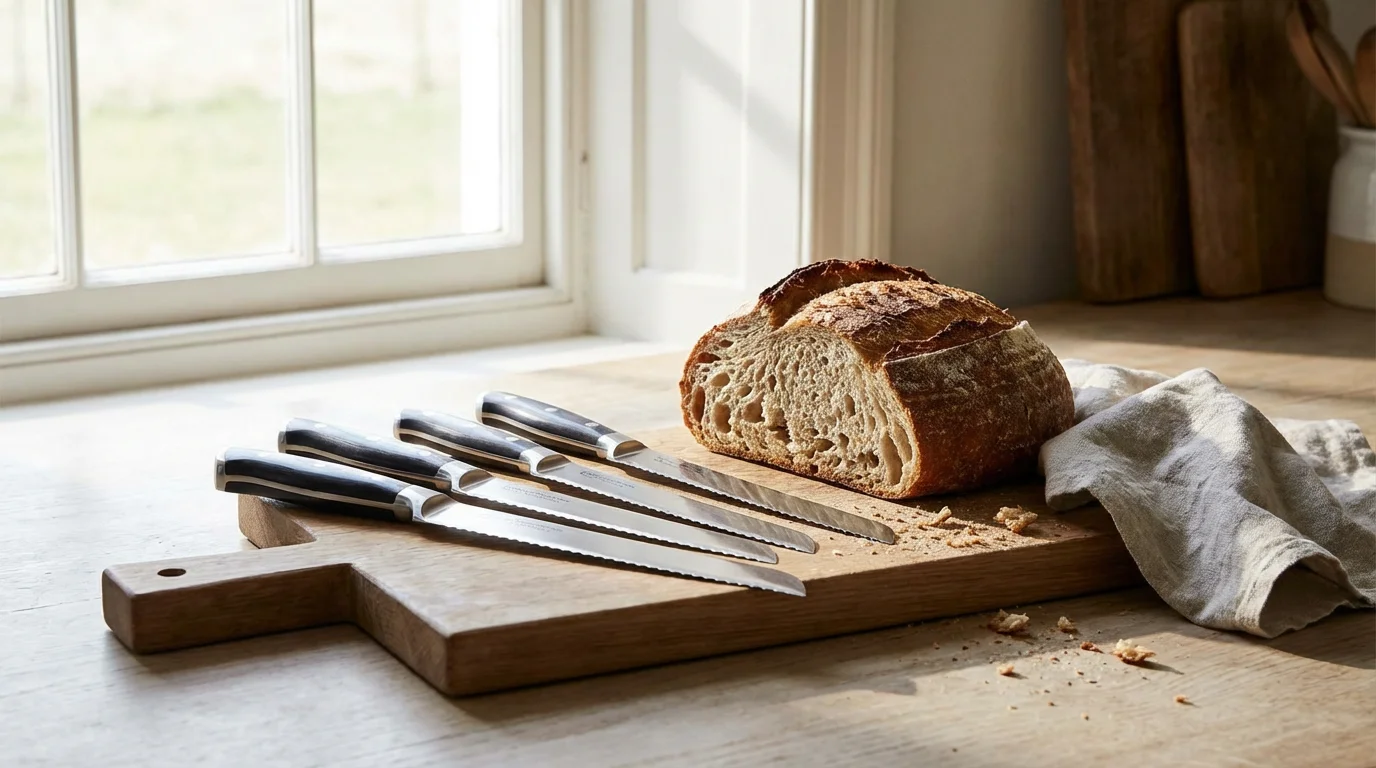
In addition to your primary knife, most kitchens also benefit from serrated bread knives for cutting through crusty loaves without crushing them.



Leave a Reply