

Efficient meal preparation hinges on selecting the right tools for the task. Among the most fundamental yet often overlooked kitchen implements are graters. You might assume all graters perform the same function, but a significant difference exists between a standard Serious Eats’ equipment reviews frequently highlight the importance of choosing the correct tool for optimal results. Understanding the unique strengths and limitations of box graters and rotary graters empowers you to shred cheese, zest citrus, and prepare vegetables more quickly, safely, and effectively. This guide helps you navigate their features, best uses, and maintenance requirements, ensuring your kitchen arsenal supports your culinary ambitions.
Choosing between a box grater and a rotary grater goes beyond mere preference; it impacts your efficiency, safety, and the quality of your grated ingredients. Whether you are a beginner cook building your essential tools or an experienced home chef seeking to optimize your prep, this comparison provides the practical insights you need. We break down what each type offers, allowing you to make an informed decision for your specific cooking needs.
Understanding the Box Grater
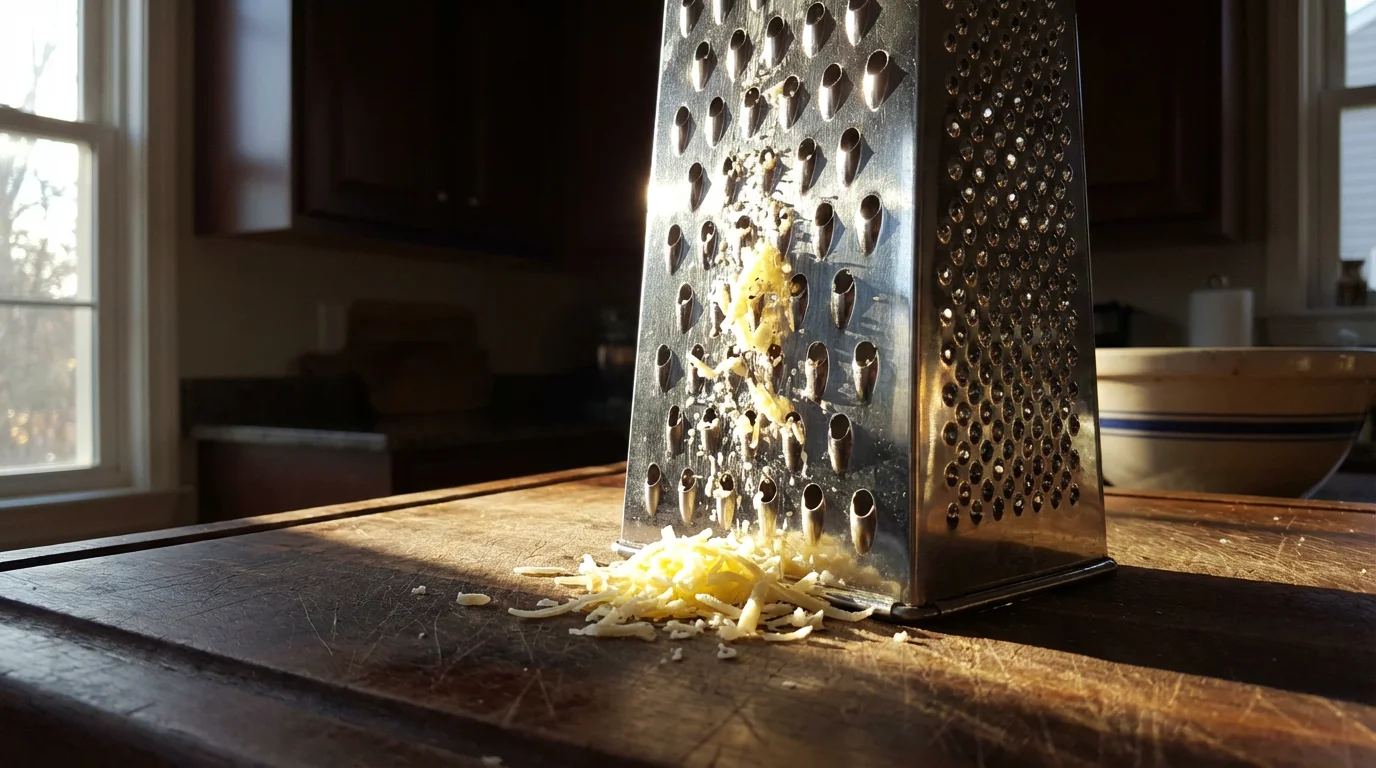
The box grater, a four-sided kitchen staple, stands as a testament to versatile design. You likely already own one, recognizing its pyramidal shape and multiple grating surfaces. Typically crafted from stainless steel with a sturdy handle at the top, this common cheese grater offers various hole sizes and patterns, each designed for a distinct type of shredding.
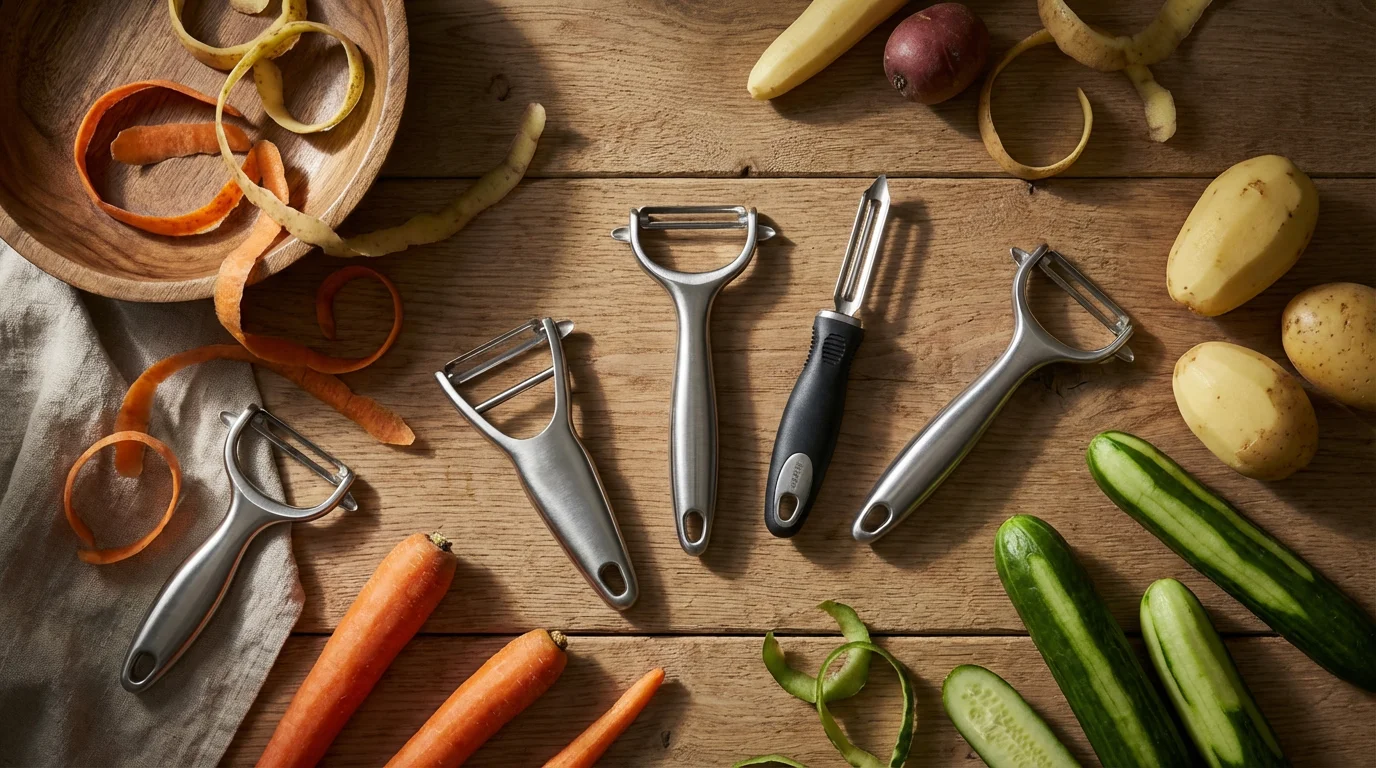
Before you begin shredding, ensure your produce is skin-free with one of the best vegetable peelers for a smoother grating experience.
Features and Design
Most box graters feature four distinct grating surfaces:
- Coarse Shredding Holes: These larger, tear-drop shaped holes are ideal for grating semi-hard cheeses like cheddar or mozzarella, potatoes for hash browns, or vegetables for slaws. You get substantial, fluffy shreds that melt beautifully or add hearty texture.
- Medium Shredding Holes: Slightly smaller than coarse, these holes produce finer shreds, perfect for hard cheeses like Parmesan, carrots for salads, or apples for baking. They strike a balance between fine and coarse.
- Fine Grating Holes (often a microplane-style surface): These tiny, sharp holes create a powdery texture, excelling at zesting citrus, grating ginger, or turning nutmeg into a fine spice. This surface often fuels the discussion around a box grater vs microplane for cheese. While a box grater’s fine side works, a dedicated microplane often offers superior sharpness and efficiency for very fine tasks.
- Slicing Slot: One side typically features a single, wide slot for creating thin slices of vegetables such as cucumbers, potatoes, or radishes. While convenient, it does not replace a dedicated mandoline for uniform, high-volume slicing.
The construction material usually involves stainless steel blades, which resist rust and offer decent sharpness, and a handle, often made from plastic or stainless steel, designed for grip. Some models include a non-slip base, a crucial safety feature that prevents the grater from sliding on your countertop during use.
Best Uses and Practicality
You find the box grater indispensable for tasks requiring a variety of textures or when grating larger quantities of softer ingredients. It shines when you need:
- Shredding blocks of cheddar for tacos or mac and cheese.
- Grating potatoes for latkes or hash browns.
- Preparing carrots or zucchini for baked goods.
- Zesting lemons or limes for recipes.
Its open design allows grated ingredients to collect inside, providing a simple, contained system for your prep work. This makes it a go-to tool for everyday cooking.
Pros and Cons
| Aspect | Pros of Box Graters | Cons of Box Graters |
|---|---|---|
| Versatility | Offers multiple grating surfaces for various textures. | Fine grating surface often less effective than a dedicated microplane. |
| Capacity | Internal cavity collects large volumes of grated food. | Can become clogged with softer, stickier ingredients like mozzarella. |
| Cost & Storage | Generally inexpensive and compact for multi-functionality. | Awkward shape to store in some drawers or cabinets. |
| Safety | Relatively stable when used with a non-slip base. | Exposed blades increase risk of knuckle scrapes, requires careful technique. |
| Cleaning | Dishwasher safe for many models. | Food often gets stuck in crevices, making handwashing tedious. |
Exploring the Rotary Grater
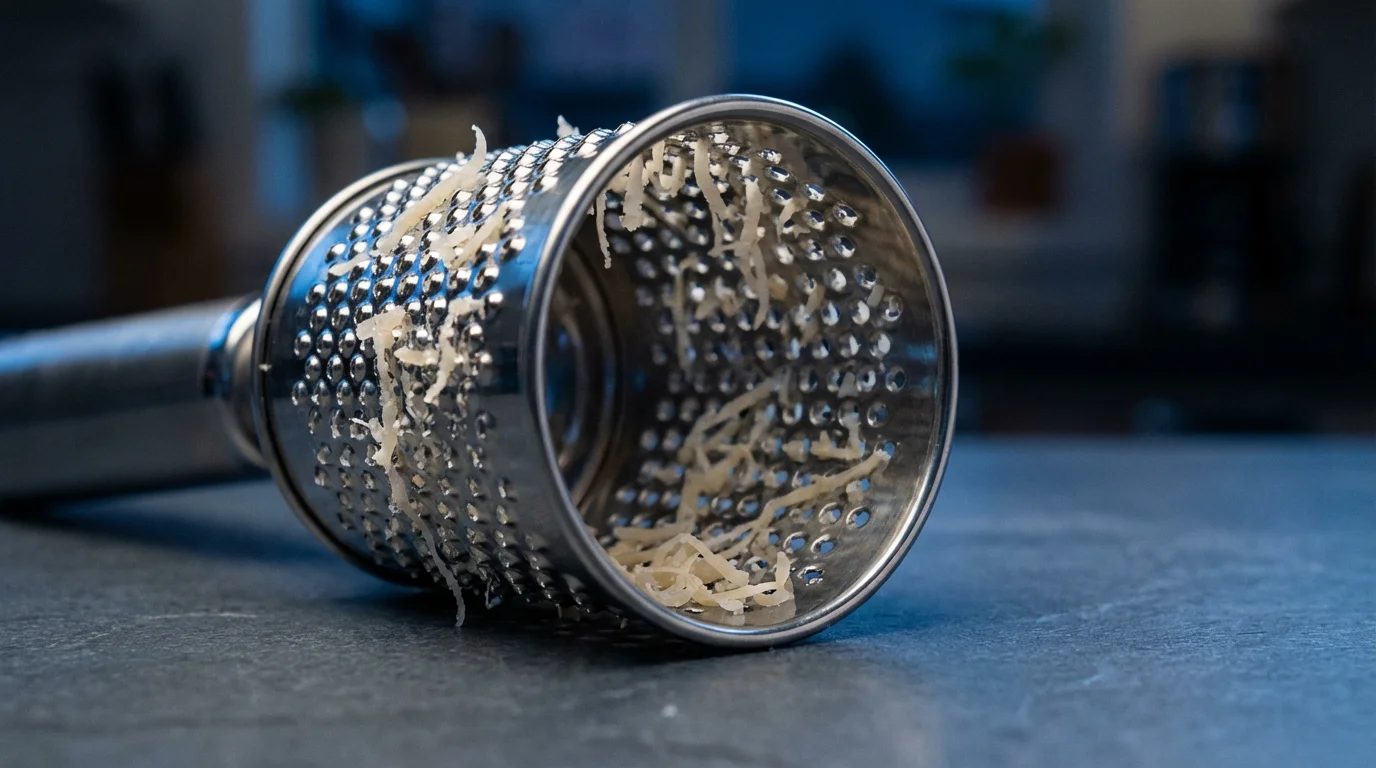
The rotary grater presents a different approach to grating, emphasizing safety and ease of use, particularly with hard cheeses. You operate this device by placing food into a chamber and turning a crank that rotates a cylindrical grating drum against the ingredient. This design separates your hand from the cutting surface, significantly reducing the risk of injury.
Once you have finished grating, transferring your ingredients into appropriate mixing bowls makes the rest of your prep work seamless.
Features and Design
Rotary graters primarily feature a cylindrical grating drum, a food chamber, a handle, and a turning crank. The drum, typically made of stainless steel, features various hole sizes, similar to a box grater but within a confined cylinder. Most models come with interchangeable drums to achieve different textures, from fine powder to coarse shreds. You often find these referred to as the best rotary grater for hard cheese, given their efficiency with firm blocks of Parmesan or Pecorino Romano.
Construction materials usually include durable plastics for the body and housing, alongside stainless steel for the drums. Some premium models feature full stainless steel construction for enhanced durability and hygiene. The design prioritizes ergonomics, with handles shaped for comfortable gripping and a smooth cranking mechanism to minimize hand fatigue, especially during extended grating sessions.
Best Uses and Practicality
The rotary grater excels in specific scenarios where consistency, safety, and efficiency with firm ingredients are paramount. Consider it your preferred tool for:
- Grating hard cheeses like Parmesan directly over pasta dishes at the table.
- Processing nuts for baking or garnishes.
- Shredding chocolate for desserts.
- Grating harder vegetables like carrots or radishes into very fine strips or shreds.
The enclosed design means less mess, as the grated product often falls directly where you aim it. Its ability to process ingredients into very fine, light shreds makes it ideal for garnishes or where even dispersion is key, such as in pesto or finely grated zest.
Pros and Cons
| Aspect | Pros of Rotary Graters | Cons of Rotary Graters |
|---|---|---|
| Safety | Enclosed design keeps hands away from blades, significantly reduces injury risk. | Can still require careful handling when disassembling for cleaning. |
| Ergonomics | Crank mechanism reduces hand fatigue, especially for large quantities. | Some cheaper models can be stiff or uncomfortable to crank. |
| Specific Tasks | Excellent for hard cheeses, nuts, and chocolate. | Limited versatility; struggles with softer, stickier, or larger ingredients. |
| Cleaning | Usually disassembles for easier cleaning, often dishwasher safe. | Multiple parts mean more components to wash. |
| Efficiency | Quickly processes small to medium amounts of firm ingredients. | Slower for very large quantities compared to a food processor. |
Key Differences: Box Grater vs Rotary Grater
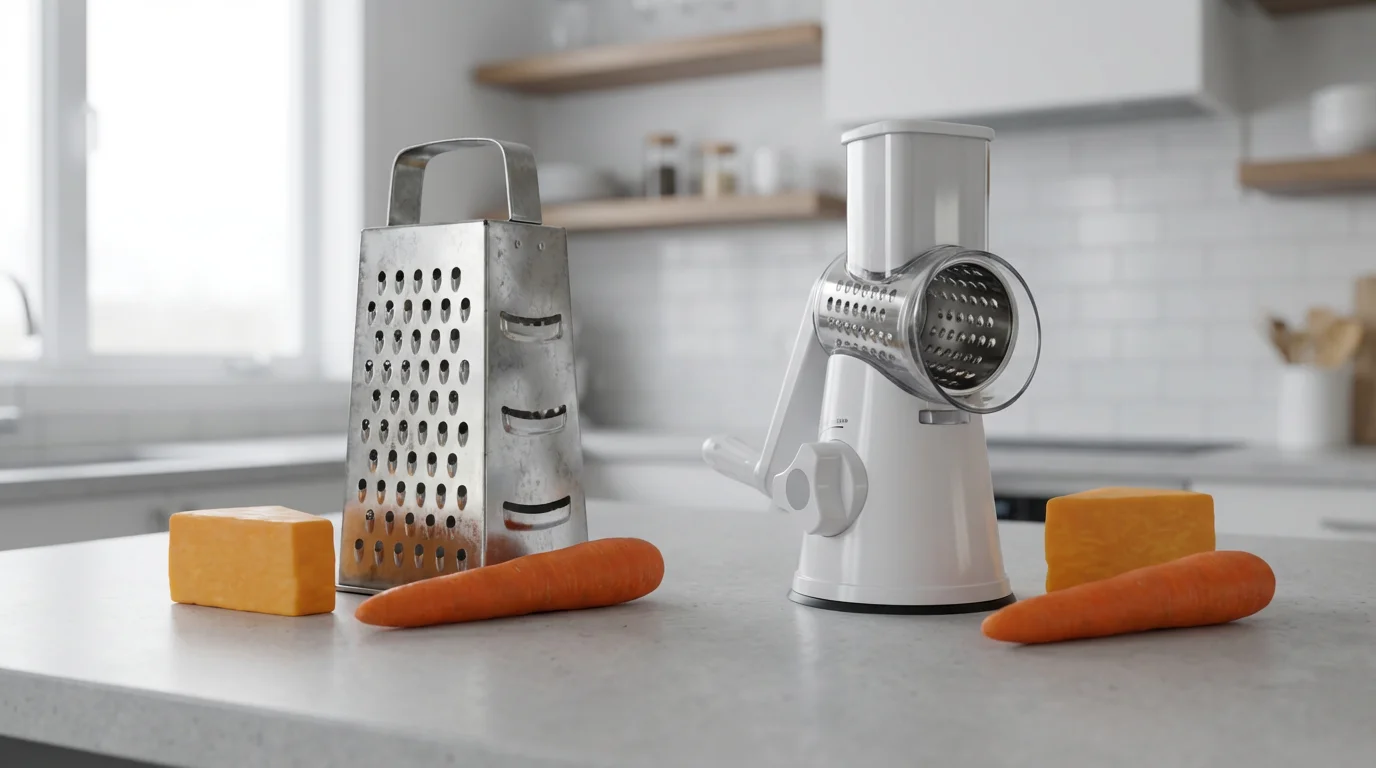
When you stand at the crossroads of buying a new grater, understanding the fundamental differences between these two types becomes crucial. Your choice impacts not only the types of foods you can process but also the ease, safety, and speed of your meal preparation.
Design and Mechanism
The most apparent difference lies in their design. A box grater features stationary, exposed blades on its sides, requiring you to move the food item manually against the grating surface. This traditional design offers simplicity but demands direct contact with the blade surface. In contrast, the rotary grater employs a moving drum housed within a chamber. You feed the ingredient into the chamber and turn a crank, allowing the rotating drum to do the work. This mechanical action means your hands remain safely away from the sharp edges.
Safety Profile
Safety stands as a primary differentiator. With a box grater, the risk of scraping knuckles or fingertips is inherent due to the exposed blades. Experienced cooks develop techniques to minimize this, but the potential always exists. Consumer Reports consistently emphasizes safety in kitchen tools, noting how design directly impacts injury rates. A rotary grater, by design, offers a superior safety profile. Its enclosed mechanism prevents direct contact between your hand and the grating surface, making it an excellent choice for individuals concerned about knife-related injuries or those with limited dexterity.
Versatility and Food Types
The box grater boasts greater overall versatility for various food types and textures. Its multiple sides handle everything from soft cheeses and vegetables to firm potatoes and citrus zest. However, it struggles with very hard items and can leave you with larger chunks. The rotary grater, while highly efficient for hard cheeses, nuts, and chocolate, lacks the box grater’s breadth. It cannot effectively grate softer cheeses, large vegetables, or produce broad shreds. You will find it less useful for general-purpose vegetable grating and more specialized for dense, firm ingredients.
Ease of Use and Ergonomics
For large blocks of cheese or firm vegetables, the box grater can demand considerable physical effort and can lead to hand fatigue. You apply direct pressure, often bracing the grater against a cutting board, which can feel strenuous over time. The rotary grater, with its crank mechanism, generally offers a more ergonomic experience. The turning action distributes effort, making it easier to process ingredients, especially for those with weaker grip strength or arthritis. However, you must apply consistent pressure to the plunger to ensure the ingredient makes good contact with the drum.

Beyond Cheese: Versatility and Specific Tasks
While the image of grating cheese often dominates the discussion, both box and rotary graters offer capabilities extending far beyond dairy. Understanding these broader applications helps you maximize your tool’s utility and efficiency in your kitchen.
The Box Grater’s Broad Applications
Your box grater serves as a workhorse for a wide range of ingredients:
- Vegetables: Shred carrots, zucchini, or potatoes for fritters, salads, or quick breads. The coarse side provides excellent texture for vegetable-laden dishes.
- Fruits: Grate apples for sauces or pies. Zest citrus fruits like lemons, limes, and oranges with the fine side for adding vibrant flavor to dressings, marinades, or baked goods.
- Spices: Use the fine side to grate whole nutmeg or cinnamon sticks for freshly ground spices, providing superior aroma and flavor compared to pre-ground options.
- Breadcrumbs: Turn stale bread into fresh breadcrumbs using the coarse side, a simple way to reduce food waste and enhance your cooking.
The discussion of box grater vs microplane for cheese often centers on efficiency and specific texture. While a box grater’s fine side works for Parmesan, a dedicated microplane, with its razor-sharp, tiny blades, excels at producing incredibly fine, feathery piles of cheese, perfect for melting instantly on pasta or for delicate garnishes. A microplane also performs exceptionally for ginger, garlic, and whole spices, often without the pulp a box grater might leave.
The Rotary Grater’s Precision Tasks
The rotary grater, while less versatile overall, shines in its specific niches, offering precision and safety:
- Nuts: Grind almonds, walnuts, or pecans for baking, toppings, or nut flours. The controlled rotation prevents the nuts from turning into paste, which can happen in a food processor if over-processed.
- Chocolate: Produce fine, delicate curls or dust from chocolate bars for garnishing desserts, hot cocoa, or pastries. The enclosed design keeps chocolate contained and easy to direct.
- Harder Vegetables: For recipes requiring very fine shreds of firm vegetables like carrots or beets, a rotary grater can yield a beautiful, uniform product, albeit in smaller quantities than a box grater or a food processor.
- Garlic and Ginger: While a microplane is often preferred, a rotary grater with a fine drum can process garlic or ginger into a paste-like consistency, ideal for marinades or sauces, while keeping your hands clean and odor-free.
“Mise en place, which means ‘everything in its place,’ forms the foundation of efficient cooking. Having your ingredients prepped and ready, whether finely grated cheese or perfectly zested citrus, allows you to focus on the cooking process without interruption.” — Culinary Expert

Safety and Ergonomics in Grating
Working with sharp kitchen tools always demands attention to safety. Graters, with their exposed blades and potential for hand contact, require specific techniques and considerations to prevent injuries and minimize strain. Prioritizing safety and ergonomic design improves your kitchen experience significantly.
Box Grater Safety Tips
When using a box grater, you must remain vigilant to protect your hands:
- Secure Your Grater: Always place your box grater on a stable, non-slip surface, like a damp kitchen towel or a silicone mat, to prevent it from sliding during use. Many models come with rubberized feet for this purpose.
- Use a Guard (When Available): Some box graters include a small handguard or pusher. If yours has one, use it, especially as the food item becomes smaller.
- Maintain a Firm Grip: Hold the handle firmly and apply steady, even pressure when grating. Avoid jerky movements.
- Protect Your Knuckles: As you grate, keep your knuckles tucked back, away from the grating surface. Consider wearing a cut-resistant glove for added protection, particularly when processing small pieces.
- Know When to Stop: Stop grating before the food item becomes too small to safely hold. Discard or manually dice the last bit rather than risking injury.
Hand fatigue can set in quickly with a box grater, especially when processing large quantities. The repetitive motion and direct pressure on the food item can strain your wrists and hands. Taking short breaks or alternating hands can help.
Rotary Grater Safety and Ergonomics
Rotary graters offer a built-in safety advantage due to their enclosed design, but you still need to follow best practices:
- Proper Assembly: Ensure all parts are correctly assembled before use. A loose drum or cover can create a hazard.
- Secure Grip: Hold the body of the grater firmly and crank smoothly. Some models offer ambidextrous designs, allowing you to switch hands to reduce strain.
- Use the Plunger: Always use the food plunger or pusher provided. This keeps your fingers away from the rotating drum and ensures consistent contact with the grater surface. Never use your fingers to push food directly into the drum.
- Steady Surface: If your rotary grater has a suction base, ensure it securely adheres to your countertop before use. For handheld models, make sure your grip is firm and stable.
Ergonomically, rotary graters generally excel, especially for those with less hand strength. The cranking motion distributes the effort, making it less strenuous for extended periods compared to the back-and-forth motion of a box grater. However, you should choose a model with a comfortable handle and a smooth, easy-to-turn crank to prevent wrist strain. Wirecutter’s kitchen tools reviews frequently evaluate ergonomic design as a key factor in their recommendations.

Maintenance and Longevity of Your Grater
Proper care significantly extends the lifespan of your kitchen tools. Graters, with their many small holes and sharp edges, require specific cleaning and storage routines to maintain their performance and hygienic qualities. Neglecting maintenance can lead to dull blades, rust, and bacterial buildup.
Cleaning Your Box Grater
Box graters can be notoriously tricky to clean. Food particles, especially sticky cheeses or fibrous vegetables, often get lodged in the grating holes. Here’s how you can best clean yours:
- Immediate Rinse: Rinse the grater immediately after use. This prevents food from drying and hardening, making it much easier to remove.
- Warm Soapy Water: Use warm, soapy water and a stiff-bristled brush to scrub both the inside and outside of the grater. Pay close attention to the grating surfaces, brushing in the direction of the holes, not against them, to avoid injury.
- Dishwasher Safety: Many stainless steel box graters are dishwasher-safe. Check your manufacturer’s instructions. While convenient, the dishwasher might not always remove all trapped particles, and harsh detergents can potentially dull blades over a long period. Handwashing often provides a more thorough clean.
- Drying: Ensure the grater is thoroughly dry before storing to prevent rust, especially if it is stainless steel. Air drying or wiping with a towel works effectively.
Material quality plays a role in longevity. High-quality stainless steel resists rust and corrosion better than cheaper alternatives. Handles made of durable plastic or stainless steel also withstand repeated washing without degradation.
Cleaning Your Rotary Grater
Rotary graters, while having more components, are often easier to clean thanks to their ability to disassemble:
- Disassembly: Take the grater apart immediately after use. Separate the housing, drum, crank, and plunger.
- Rinse and Brush: Rinse each component under warm water to remove loose food. Use a small brush, often provided with the grater, to clean the holes of the grating drum.
- Soapy Wash: Wash all parts in warm, soapy water. For stubborn bits, allow them to soak for a few minutes before scrubbing.
- Dishwasher Safety: Most rotary graters, particularly those with plastic bodies and stainless steel drums, are dishwasher-safe. Placing the smaller components in a mesh bag can prevent them from falling through the racks. Always refer to your product manual.
- Drying and Reassembly: Dry all components thoroughly before reassembling. Reassemble only when completely dry to prevent moisture trapping and potential bacterial growth or rust.
The plastic components of rotary graters should be durable and BPA-free. The stainless steel drums should be resistant to rust and maintain their sharpness over time. Choosing a model with easily removable and cleanable parts significantly impacts its long-term usability. Good Housekeeping’s kitchen appliance reviews often include insights into the ease of cleaning and durability of various kitchen tools.
General Blade Maintenance
Unlike knives, you do not typically sharpen grater blades. Their sharpness relies on the initial manufacturing quality. However, proper cleaning and storage prevent dulling from corrosion or damage. Store graters in a way that protects the blades from impacts, for instance, by using blade covers for box graters or storing rotary graters in their original box.
Choosing the Right Grater for Your Kitchen
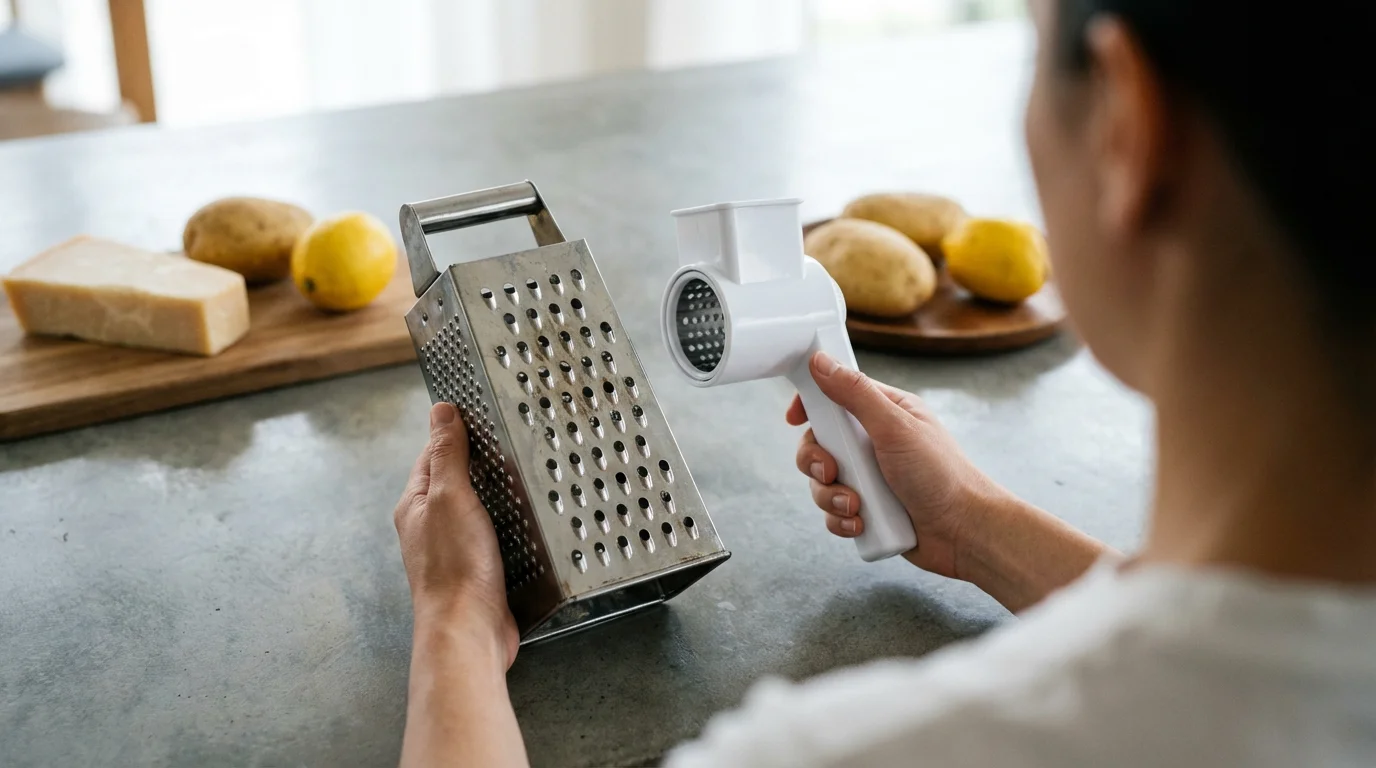
Your ideal grater depends on your cooking habits, the types of food you frequently prepare, and your priorities regarding safety and convenience. Consider your typical meal prep tasks to make the most informed decision.
Best for Beginners
If you are just starting your culinary journey or want a single, versatile tool for occasional grating, a high-quality box grater is an excellent choice. It provides multiple grating surfaces in one compact unit, handling a wide array of ingredients. Look for models with a comfortable, non-slip handle and a stable, rubberized base to enhance safety and ease of use. This covers most basic grating needs without requiring a specialized purchase.
- Recommendation: Seek a stainless steel box grater with at least three grating sizes (coarse, medium, fine) and a non-slip base.
- Why: Offers general versatility, handles common ingredients like cheese and vegetables, and provides a foundational grating experience.
Best for Serious Cooks
Experienced home cooks often value efficiency, safety, and specialized performance. For you, owning both a quality box grater and a dedicated rotary grater offers the best of both worlds. The box grater handles larger volumes and general-purpose vegetable grating, while the rotary grater excels with hard cheeses, nuts, and chocolate, providing superior safety and finer, more consistent results for specific tasks. Consider adding a microplane separately if you frequently zest or grate very fine ingredients.
- Recommendation: Invest in a durable, all-stainless steel box grater and a robust rotary grater, potentially with interchangeable drums.
- Why: This combination maximizes versatility, safety, and precision for a broad range of culinary applications, addressing specialized needs that one grater alone cannot fulfill.
Best Value
For those prioritizing value without compromising too much on functionality, a well-chosen box grater often represents the best investment. You get multiple grating options in one tool, making it highly cost-effective. Focus on models with durable stainless steel construction and a design that prioritizes stability. If budget allows, a simple, handheld microplane can be a valuable addition for fine grating, offering superior performance for a relatively low additional cost.
- Recommendation: A sturdy box grater with sharp, corrosion-resistant stainless steel blades and a comfortable, secure grip.
- Why: Offers the most utility for its price, covering most grating tasks adequately.
Ultimately, your choice should align with how you cook. Do you shred large quantities of cheddar weekly, or do you primarily grate Parmesan over pasta? Answering these questions guides you to the right tool, ensuring your kitchen is equipped for faster, safer, and more efficient meal prep.
Frequently Asked Questions
What is the main difference between a box grater and a rotary grater?
The main difference lies in their operation and versatility. A box grater has stationary, exposed grating surfaces for various tasks and larger volumes, requiring you to move the food against the blades. A rotary grater uses a rotating drum enclosed in a chamber, which processes food by turning a crank, offering enhanced safety and precision, especially for hard cheeses, nuts, and chocolate.
Can a box grater replace a microplane for zesting?
A box grater’s fine grating side can zest citrus, but it is generally less efficient and effective than a dedicated microplane. A microplane has much sharper, finer blades designed to remove only the zest, leaving behind the bitter white pith. A box grater’s fine side often creates a coarser zest and can sometimes remove too much pith.
Are rotary graters only for cheese?
No, rotary graters are excellent for hard cheeses, but you can also use them for grating other firm ingredients like nuts, chocolate, and harder vegetables (such as carrots or ginger) into very fine shreds. They are not suitable for soft, sticky cheeses or large-volume vegetable shredding.
How do I prevent injury when using a box grater?
To prevent injury with a box grater, always use a stable, non-slip surface, keep your knuckles tucked back, and stop grating when the food piece becomes too small to hold safely. Consider using a cut-resistant glove or a handguard if your grater provides one, especially when processing smaller ingredients.
Are these graters dishwasher safe?
Most modern box graters and rotary graters, particularly those made from stainless steel and durable plastics, are dishwasher safe. However, always check the manufacturer’s instructions. Handwashing immediately after use often provides a more thorough clean, preventing food buildup in crevices, and can prolong the sharpness of the blades by avoiding harsh dishwasher detergents.
Disclaimer: Product prices and availability change frequently. Prices shown were accurate at time of writing but may have changed. We may earn a small commission from purchases made through links on this site, at no extra cost to you. Always use cutting tools carefully and follow manufacturer safety guidelines.







Leave a Reply