
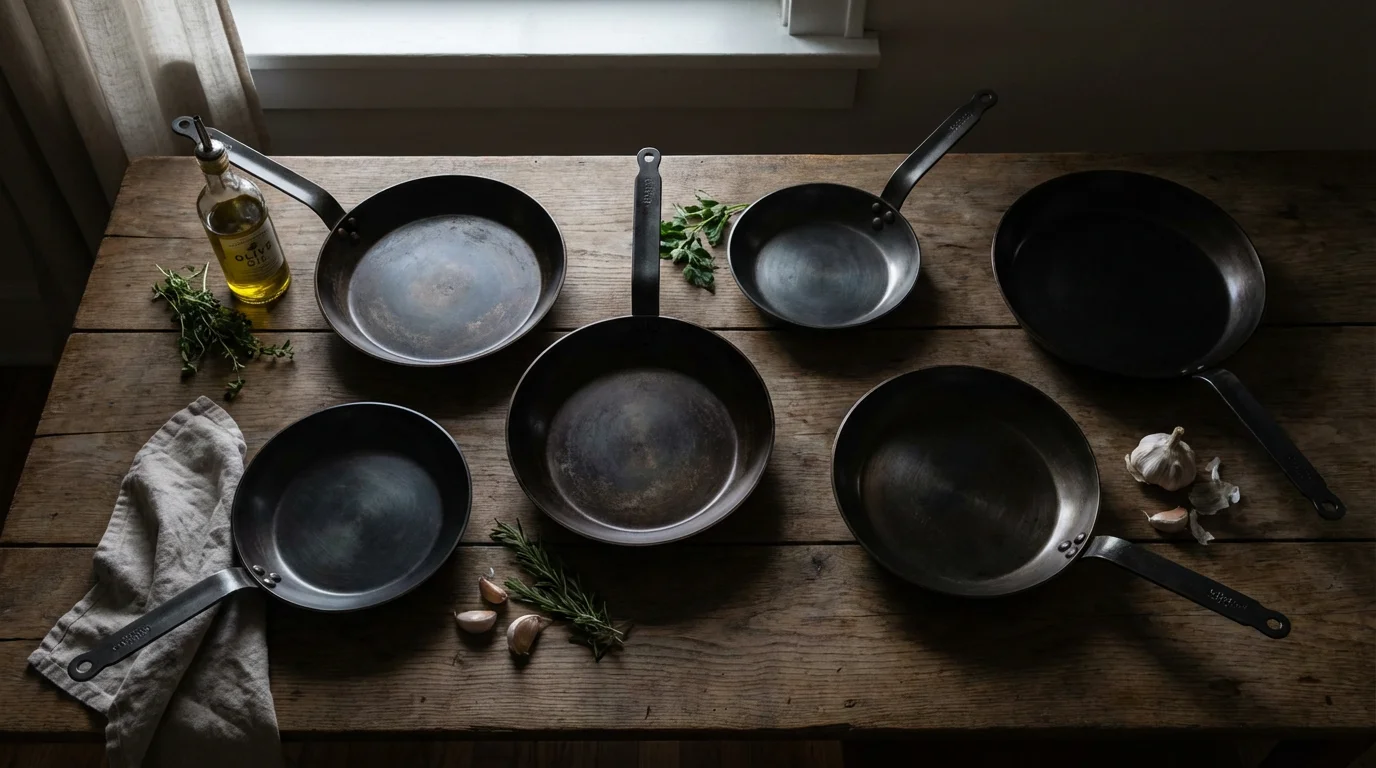
You want cookware that performs, lasts, and feels good in your hands. For years, cast iron has stood as the king of durability and high-heat searing. Yet, a formidable contender offers similar benefits with a lighter touch and faster response: the carbon steel pan. Often hailed as the professional chef’s secret weapon, carbon steel brings a unique blend of properties to your kitchen, potentially becoming your new favorite everyday skillet. This guide cuts through the confusion, helping you understand when carbon steel excels, how it compares to cast iron, and why it deserves a spot in your cookware arsenal.
Understanding Carbon Steel: What is it?
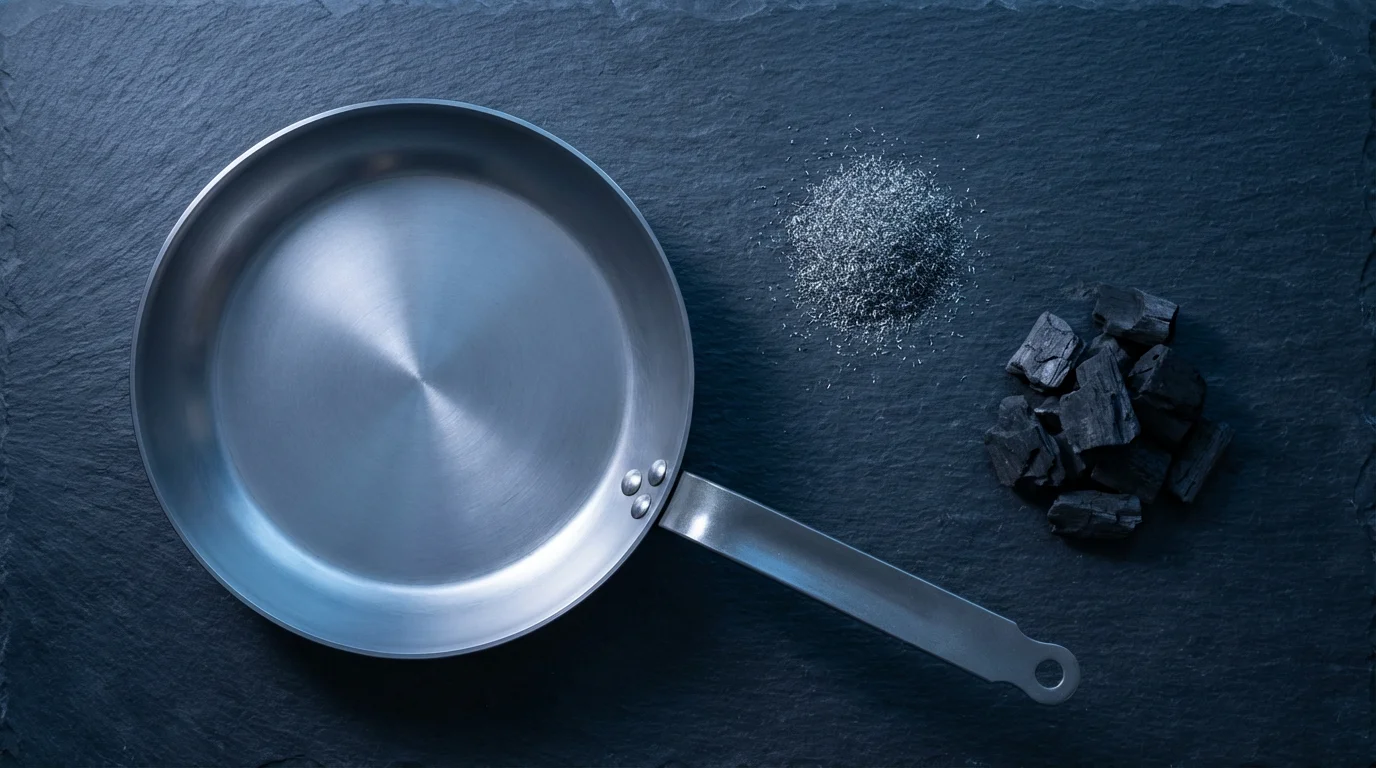
Carbon steel occupies a fascinating middle ground between cast iron and stainless steel. It is an iron alloy, primarily composed of iron and a small percentage of carbon, typically less than 2%. This specific composition gives it remarkable strength and durability while retaining flexibility not found in its more brittle cousin, cast iron. The term french pan often refers to traditional carbon steel skillets, highlighting their long history in professional kitchens across Europe.
When you examine a carbon steel pan, you immediately notice its smooth, polished surface, which contrasts sharply with the often textured finish of cast iron. This smoothness allows for a naturally developing non-stick surface once properly seasoned, a process we will detail later. The metal’s gauge, which refers to its thickness, plays a crucial role in its performance. Lower gauge numbers indicate thicker metal, which translates to better heat retention and less warping over time. A thicker carbon steel pan will generally be heavier, but still significantly lighter than a comparable cast iron piece.
The manufacturing process for carbon steel pans typically involves stamping a sheet of carbon steel into the desired shape. This method results in a thinner, lighter, and often more agile pan than cast iron, which is usually molded. This difference in manufacturing contributes to carbon steel’s quicker response to temperature changes, making it a favorite for tasks demanding precise heat control.
“Carbon steel’s secret lies in its composition. Less carbon than cast iron makes it more forgiving, while still delivering that incredible searing power and natural non-stick surface professional chefs demand.”
Carbon Steel vs. Cast Iron: A Head-to-Head Comparison
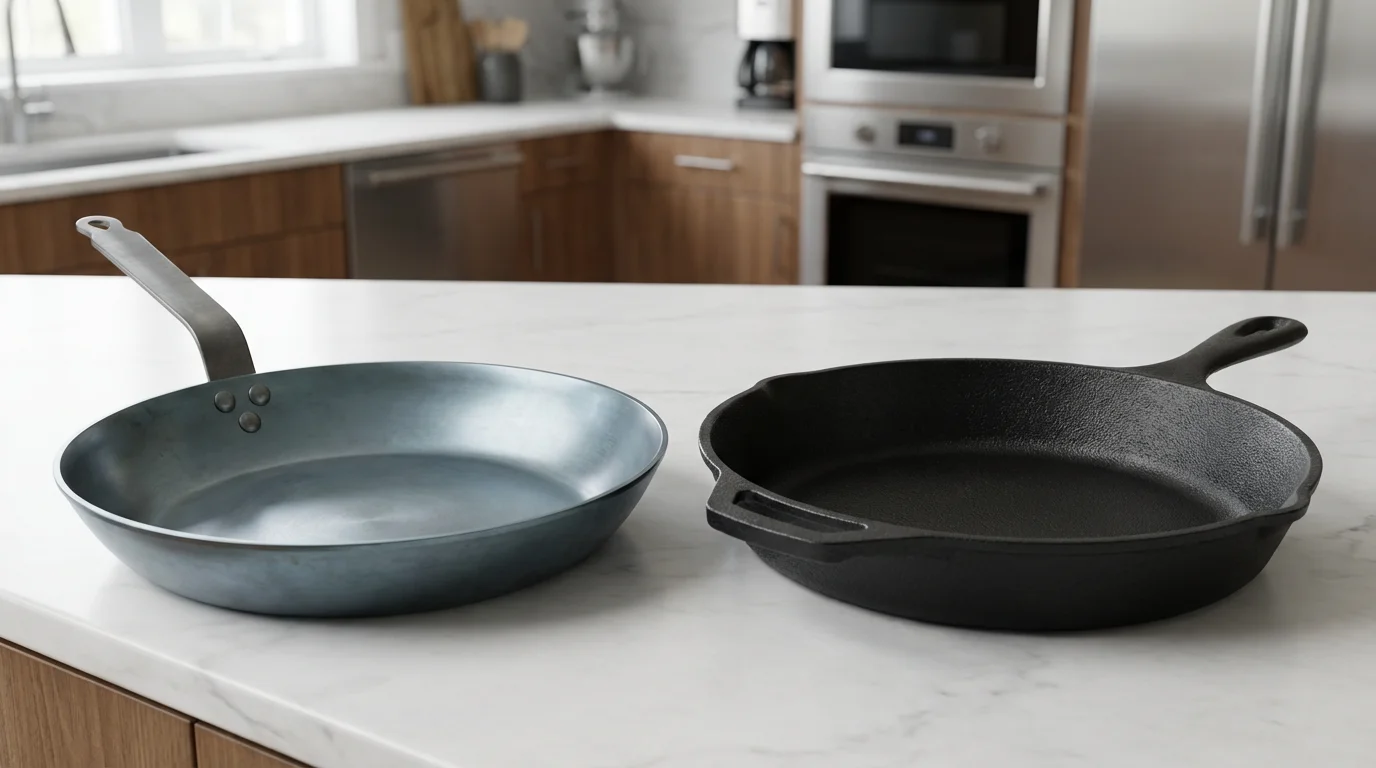
When considering whether a carbon steel pan or a cast iron skillet is better for your kitchen, a direct comparison reveals distinct advantages for each. Both materials excel at high-heat cooking and develop a natural non-stick surface through seasoning, but their fundamental differences impact usability and specific culinary applications.
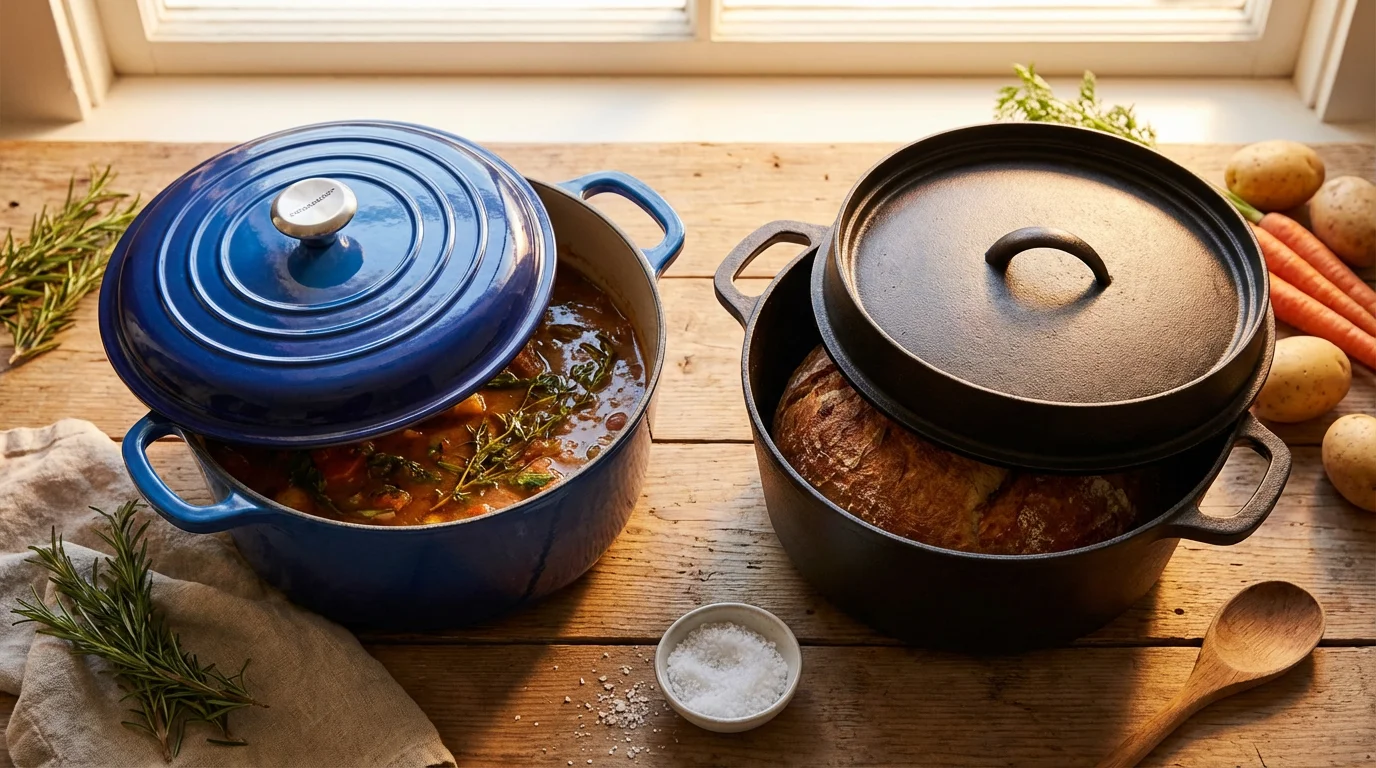
While carbon steel offers agility, heavy Dutch ovens are still the better choice for long braises and slow-cooked stews.
Heat Distribution and Retention
Carbon steel offers superior heat distribution compared to cast iron. It heats up faster and typically spreads heat more evenly across its surface, reducing hot spots. This responsiveness makes it excellent for quick temperature adjustments during cooking. Cast iron, conversely, takes longer to heat up, but once hot, it retains heat exceptionally well. This makes cast iron ideal for dishes requiring consistent, sustained heat, such as deep frying or slow braising. If you need a pan that gets hot fast and cools down quickly when removed from heat, carbon steel is the winner.
Weight and Maneuverability
This is where many cooks find carbon steel’s primary appeal. A carbon steel skillet is considerably lighter than a cast iron skillet of the same size. This reduced weight makes it easier to lift, toss ingredients, and handle, especially for those with wrist issues or when preparing larger quantities of food. The lighter weight also means less strain when moving the pan from stovetop to oven.
Seasoning and Non-stick Properties
Both materials require seasoning for optimal performance and to develop a non-stick surface. Carbon steel typically seasons faster than cast iron due to its smoother, less porous surface. It often achieves a slicker, more consistent non-stick layer more quickly. Cast iron’s porous nature means its seasoning layer can take longer to build up but tends to be more robust once established. With proper care, both offer excellent natural non-stick performance, eliminating the need for delicate non-stick coatings like PTFE or ceramic coating, which degrade over time.
Durability and Reactivity
Carbon steel is less brittle than cast iron, making it more resistant to cracking or breaking if dropped. It possesses a degree of flexibility that cast iron lacks. Both are incredibly durable when properly maintained and can last for generations. Neither material reacts significantly with food once well-seasoned, but acidic foods can strip seasoning from both if cooked for extended periods, leading to metallic flavors or sticking.
Here’s a quick comparison:
| Feature | Carbon Steel Pan | Cast Iron Skillet |
|---|---|---|
| Weight | Lighter, easier to maneuver | Heavier, more stable on burner |
| Heat Up Time | Fast | Slow |
| Heat Retention | Good, but less than cast iron | Excellent, holds heat for a long time |
| Heat Distribution | Very even, quick response | Even, but slower response, can have hot spots |
| Natural Non-stick | Develops quickly, very slick | Develops robustly, excellent |
| Durability | Very durable, less brittle | Extremely durable, but can be brittle |
| Maintenance | Similar to cast iron, requires seasoning | Similar to carbon steel, requires seasoning |
| Searing Ability | Excellent, faster sear | Excellent, deep crust |
| Oven-Safe | Yes, often higher temps than typical non-stick | Yes, very high temperatures |
| Induction Compatible | Yes | Yes |
Ultimately, the choice between a carbon steel pan and a cast iron skillet often comes down to personal preference for weight, heat responsiveness, and how you prioritize these factors in your daily cooking. For many, carbon steel represents an ideal middle ground.
The Art of Seasoning Your Carbon Steel Pan
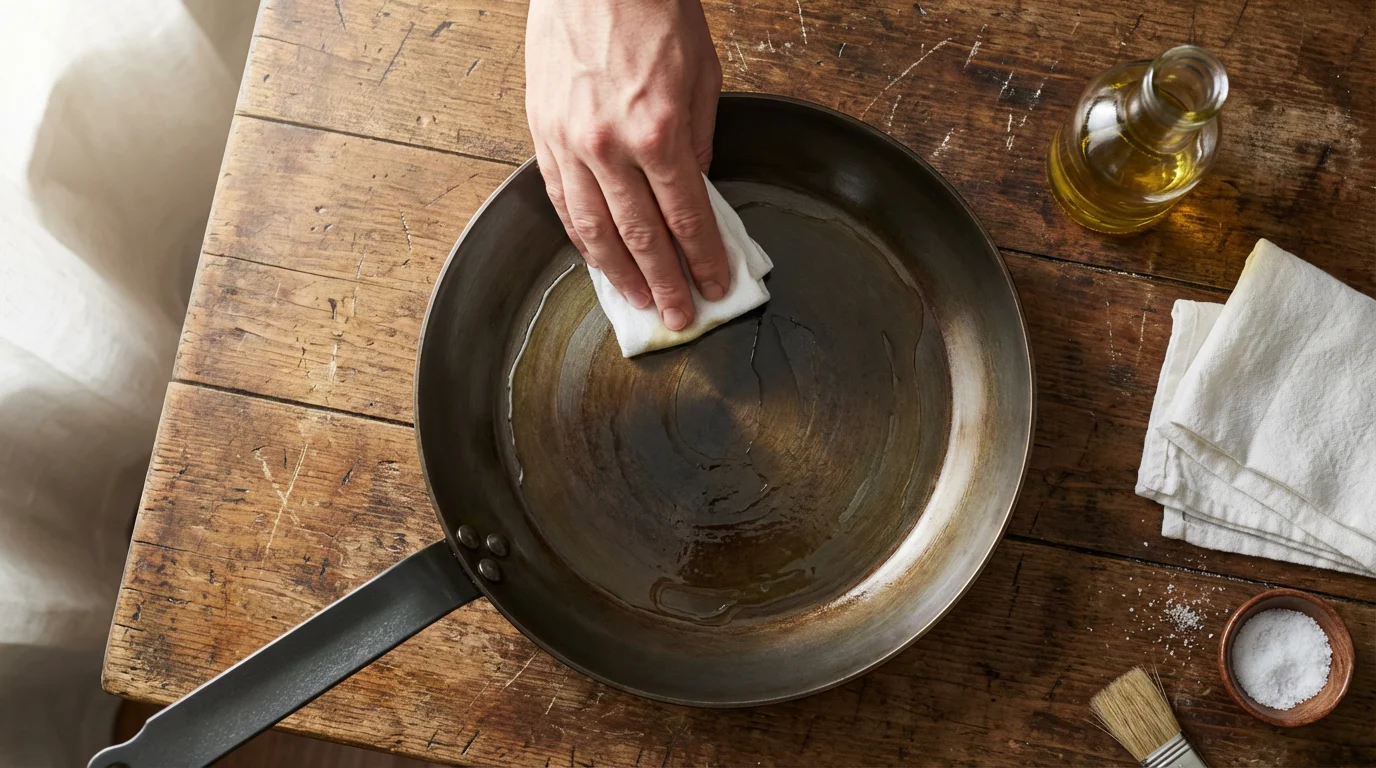
Seasoning transforms a raw carbon steel pan into a non-stick workhorse, protecting it from rust and imparting a distinctive patina. It is the application of thin layers of oil that polymerize, or bake onto the metal, creating a slick, dark coating. Knowing how to season carbon steel pan correctly is crucial for its performance and longevity.
Initial Seasoning Steps:
- Clean Thoroughly: Many new carbon steel pans come with a protective wax or oil coating to prevent rust during shipping. You must remove this completely. Use hot water and soap, scrubbing vigorously with a stiff brush or steel wool. Ensure all residues are gone. Dry the pan immediately and completely with a towel, then place it over low heat on the stovetop for a few minutes to evaporate any remaining moisture.
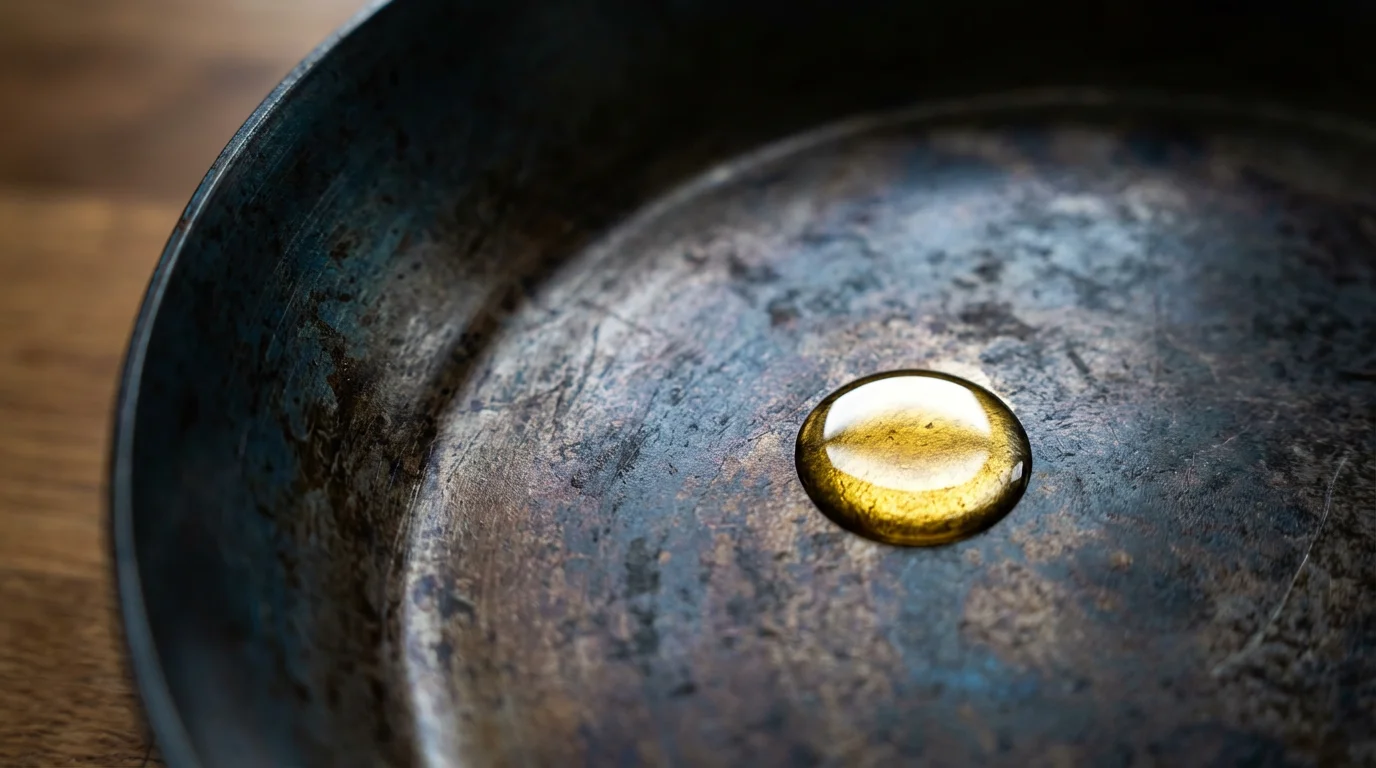
- Apply a Thin Layer of Oil: Once dry and slightly warm, apply a very thin layer of high smoke point oil. Grapeseed oil, flaxseed oil, or canola oil work well. “Thin” is the key here—it should barely be visible. Too much oil creates a sticky, gummy mess rather than a smooth, hard coating. Use a paper towel to wipe off any excess. It should look almost dry.
- Heat the Pan: Place the oiled pan upside down in an oven preheated to 400-450°F (200-230°C). Baking it upside down prevents oil from pooling and creating uneven seasoning. Bake for one hour.
- Cool and Repeat: Turn off the oven and let the pan cool completely inside the oven. Once cool, remove it, and repeat the oiling and heating process at least 3-4 more times for a robust initial seasoning. The more layers, the better the non-stick properties and protection.
Maintaining Seasoning:
After initial seasoning, daily cooking helps build up the layer. Always dry your pan immediately after washing. A quick wipe with a paper towel and a few minutes over low heat on the stovetop ensures it is completely dry. Avoid harsh abrasive cleaners or dishwashers, as these will strip the seasoning. If food starts to stick, or if the seasoning looks patchy, simply re-season the pan as needed, focusing on the affected areas.
Why Choose Carbon Steel? Its Culinary Strengths
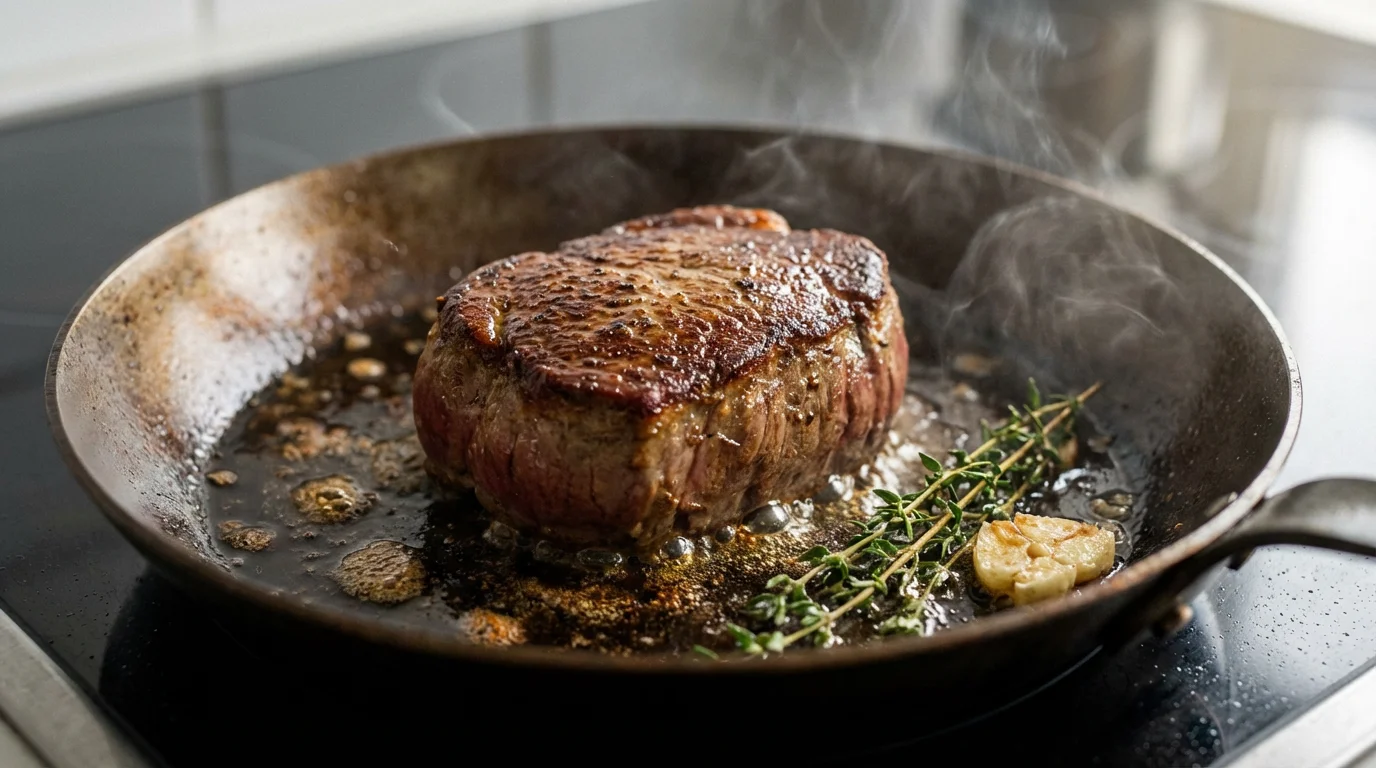
A well-seasoned carbon steel skillet becomes an indispensable tool for a wide array of cooking tasks, often outperforming other materials in specific scenarios. Its unique properties make it exceptional for high-heat cooking and achieving professional results in your home kitchen.
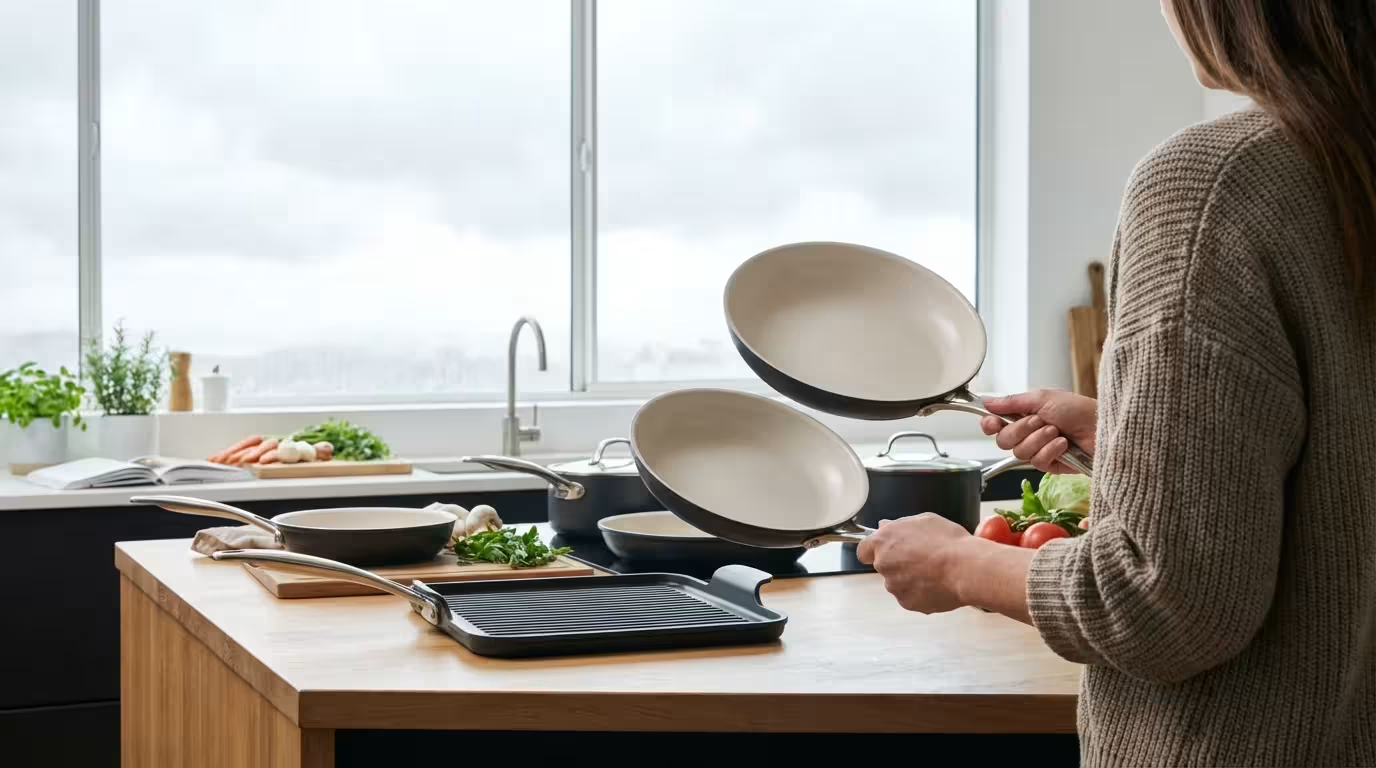
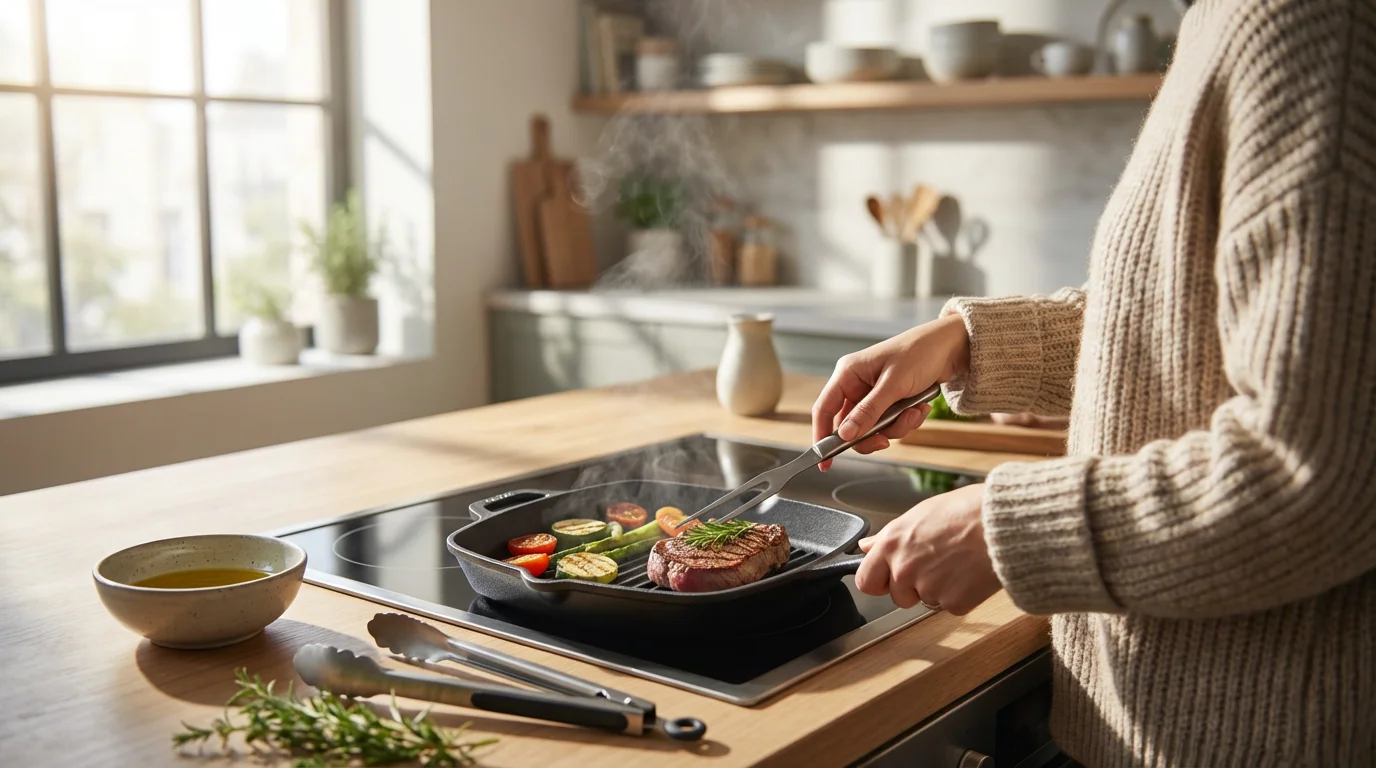
If you enjoy the high-heat performance of carbon steel but want classic char marks, consider adding grill pans for indoor grilling to your kitchen arsenal.
Superior Searing
Carbon steel truly shines when it comes to searing. Its ability to heat up quickly and maintain high, consistent temperatures makes it perfect for creating a deep, flavorful crust on steaks, chops, chicken, and fish. The smooth surface, once seasoned, allows proteins to release easily, preventing sticking and ensuring an even sear. According to Serious Eats, the high thermal conductivity of carbon steel contributes to a superior Maillard reaction, yielding richer flavors and textures in seared foods.
Excellent for Frying and Sautéing
From crispy fried potatoes to delicate omelets, carbon steel handles a variety of frying and sautéing tasks with ease. The natural non-stick surface, built up through seasoning, allows eggs to glide effortlessly from the pan. For stir-frying, a carbon steel wok heats up intensely, caramelizing vegetables and proteins quickly while locking in flavors.
Oven-Safe Versatility
Most carbon steel pans are entirely oven-safe, meaning you can start cooking on the stovetop and transfer the pan directly to the oven to finish dishes. This is invaluable for recipes like frittatas, oven-finished steaks, or skillet cornbread. Always check the manufacturer’s specifications for maximum oven temperature, especially if your pan has a silicone or wooden handle, but typically, bare carbon steel can withstand very high temperatures, often exceeding 500°F (260°C).
Induction Cooktop Compatibility
Because carbon steel contains a high percentage of iron, it is inherently induction compatible. This means it works efficiently on modern induction cooktops, which use electromagnetic fields to heat the pan directly. This compatibility makes carbon steel a versatile choice for any kitchen setup, ensuring you do not need separate cookware for induction.
Beyond the Skillet: Other Carbon Steel Cookware
While the carbon steel skillet is undoubtedly the star of the show, carbon steel’s excellent thermal properties extend to other specialized cookware pieces, each designed to optimize specific cooking methods.
Carbon Steel Woks
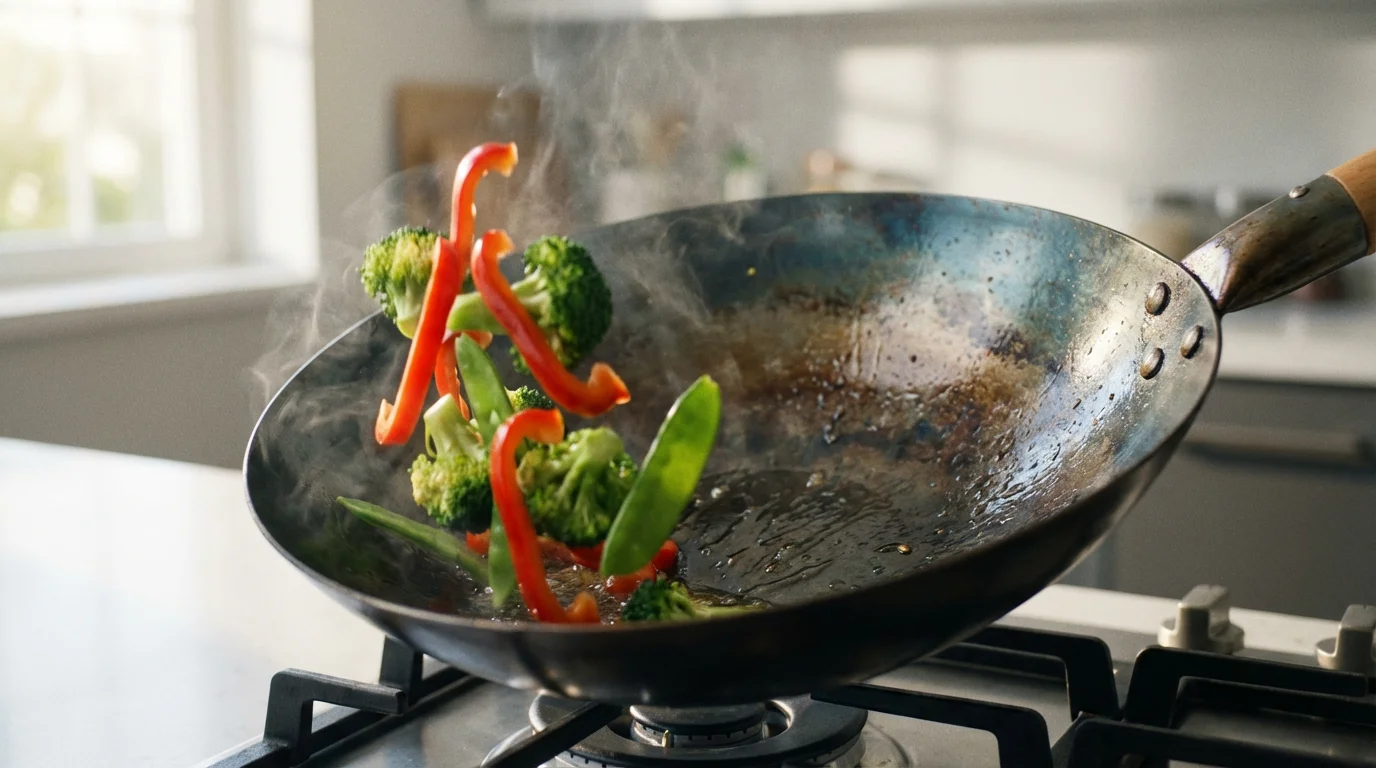
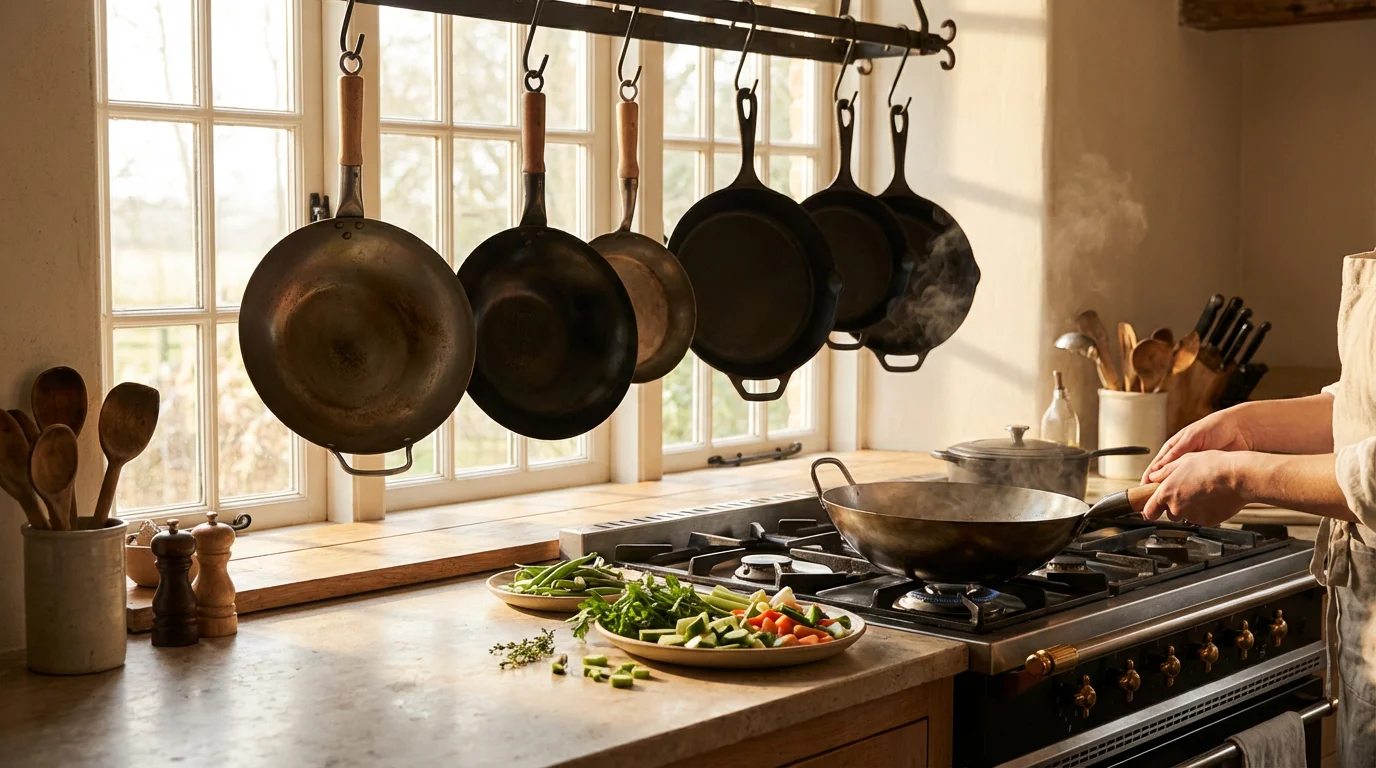
For authentic Asian cuisine, a carbon steel wok is unparalleled. Its thin walls and high carbon content allow for incredibly fast and intense heating, crucial for stir-frying. The sloped sides make tossing ingredients easy, and the rapid heat ensures vegetables stay crisp and vibrant while meats cook quickly. A seasoned carbon steel wok provides a naturally non-stick surface for stir-fries, absorbing the flavors of previous meals to enhance future dishes.
Paella Pans
Traditional paella pans are often made from carbon steel. Their wide, shallow design and excellent heat distribution are perfect for creating the coveted “socarrat,” the crispy rice crust at the bottom of a well-made paella. The material’s ability to handle high, direct heat ensures the rice cooks evenly and develops rich flavor.
Roasting Pans
While less common than stainless steel or aluminum versions, some carbon steel roasting pans exist. They offer the benefit of excellent heat retention and the ability to go from stovetop to oven, allowing you to sear meats on the stovetop before roasting them. The heavier gauge can provide a more even roast, similar to cast iron, but with a slightly lighter lift.
Exploring these additional forms of carbon steel cookware broadens your culinary horizons, leveraging the material’s strengths for specialized cooking tasks that benefit from its heat responsiveness and developing non-stick surface.
Brand Spotlight: Top Carbon Steel Picks & Budget Alternatives
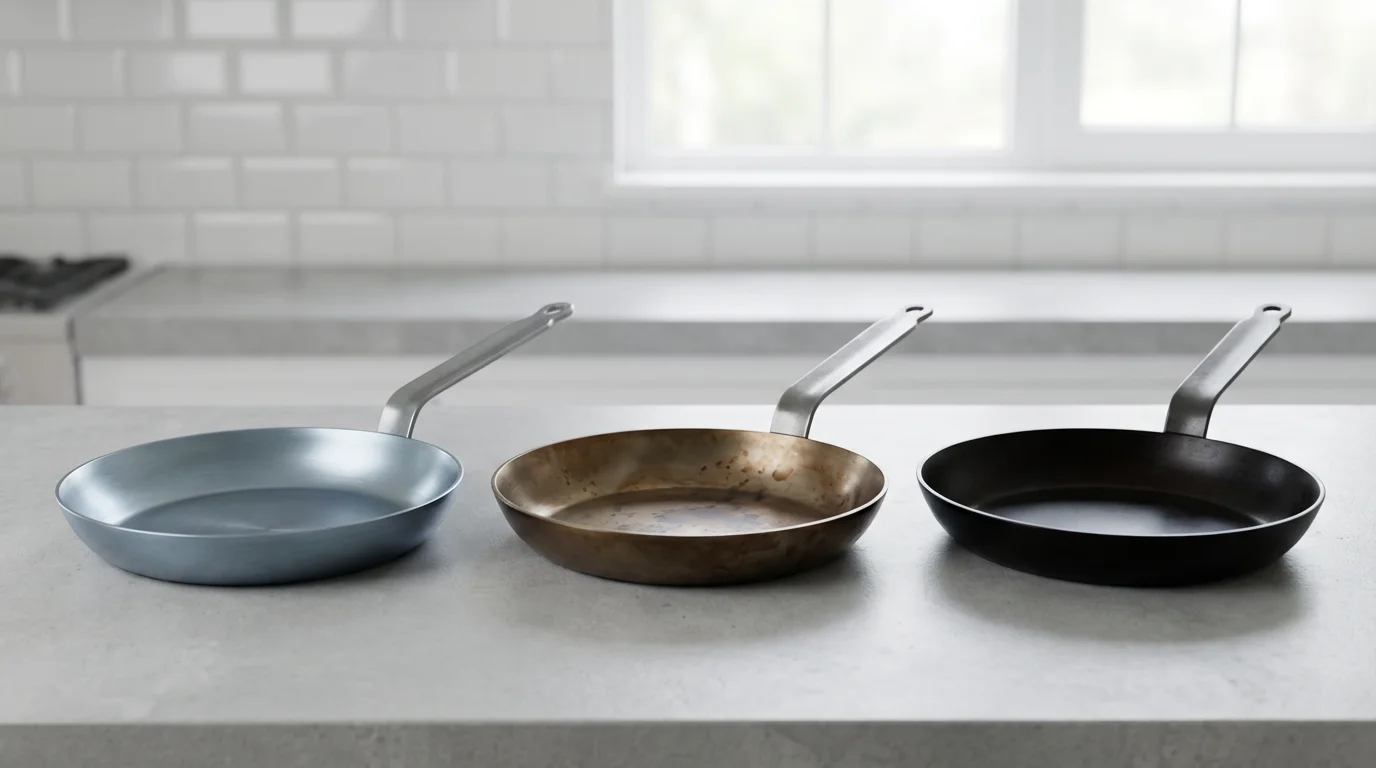
The market offers a range of carbon steel pans, from heirloom-quality professional tools to accessible entry-level options. Understanding the key players and what they offer helps you make an informed decision based on your needs and budget.
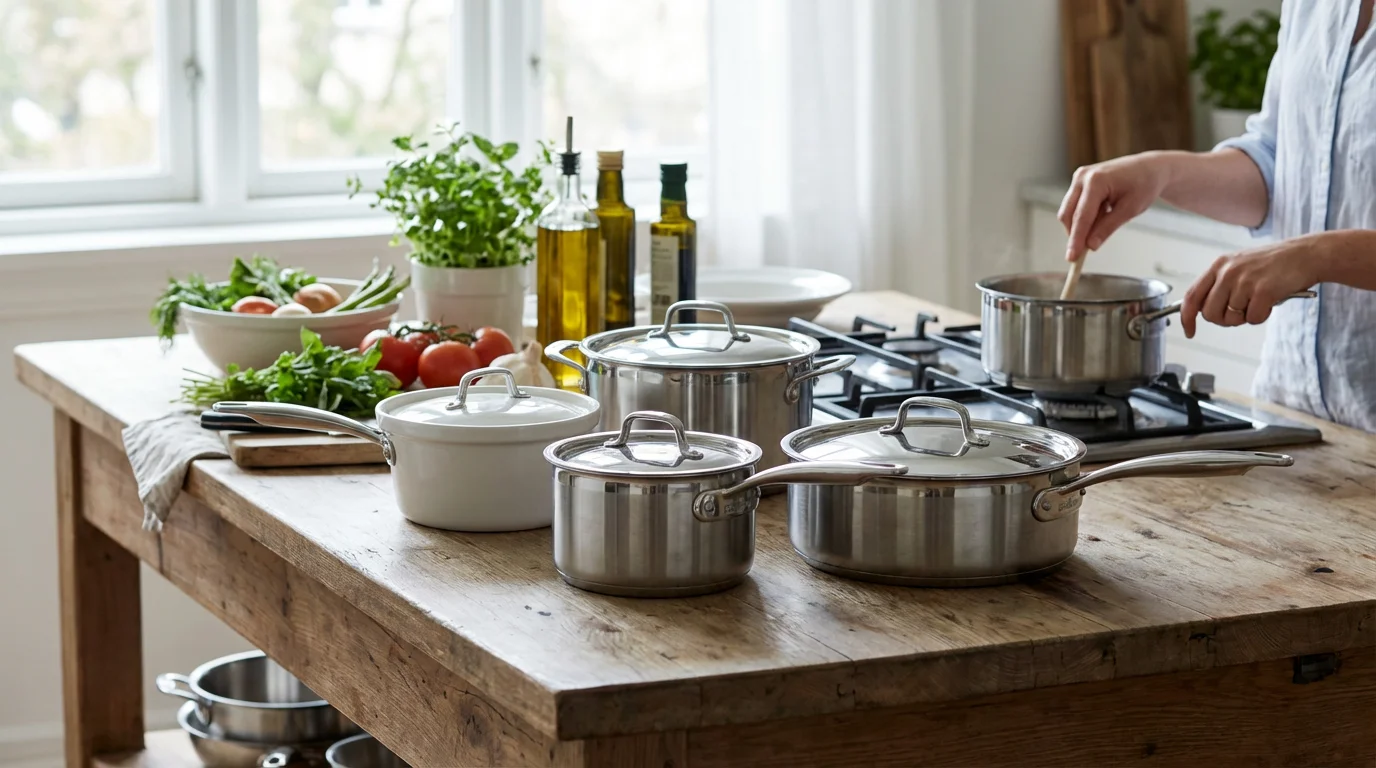
To balance your collection of skillets, ensure you have the best saucepans available for boiling, simmering, and making delicate sauces.
Premium Professional Choices:
- De Buyer: A renowned French manufacturer, De Buyer offers some of the most respected carbon steel pans, often known as french pan in the culinary world. Their Mineral B line features thicker gauge steel, superior heat distribution, and durable riveted handles. They require initial seasoning but develop an incredible patina and non-stick surface over time. These are an investment, but many users report them lasting a lifetime.
- Matfer Bourgeat: Another high-quality French brand, Matfer Bourgeat pans are typically lighter than De Buyer, featuring a welded handle rather than riveted, which eliminates food traps and makes them easier to clean. They also provide excellent heat responsiveness and searing capabilities. Like De Buyer, they come unseasoned, ready for your custom touch.
- Made In: A newer American brand that has quickly gained popularity for its well-crafted, durable carbon steel cookware. Made In pans often feature a thicker gauge, ergonomic handles, and a balance of performance and aesthetics. They represent a strong contender for those seeking premium quality with a modern design sensibility.
Reliable Mid-Range & Entry-Level Options:
- Lodge: Famous for its cast iron, Lodge also produces carbon steel pans. Their offerings are generally pre-seasoned, making them more convenient for beginners. While perhaps not as thick-gauged as the French brands, they offer excellent value and performance for the price, serving as a great entry point into carbon steel cooking.
- Cuisinart: While not a primary focus, Cuisinart occasionally offers carbon steel options, often as part of larger cookware lines. These can be a budget-friendly way to experiment with the material, usually offering a more lightweight experience suitable for everyday use.
Budget Alternatives:
Several smaller, lesser-known brands or imported options provide carbon steel pans at lower price points. Look for pans with solid, unpainted steel handles (for oven safety) and a decent metal thickness. While these might not offer the same heirloom quality as De Buyer or Matfer, they can be excellent for those wanting to test the waters of carbon steel without a significant investment. Just be prepared to put in the initial seasoning work, as they are rarely pre-seasoned.
When selecting a pan, consider the handle design, as some cheaper options might have flimsy handles or painted handles that cannot go into a hot oven. Prioritize a sturdy, oven-safe handle and a smooth cooking surface for the best experience.
Care and Maintenance for Long-Lasting Carbon Steel
The beauty of carbon steel lies in its durability and its ability to improve with age and use, provided you follow a few simple care guidelines. Proper maintenance ensures your pan remains perfectly seasoned, non-stick, and rust-free for decades.
Cleaning Your Carbon Steel Pan:
- Immediate Cleaning: Clean your pan immediately after use while it is still warm. This prevents food from drying and sticking.
- Hot Water and Stiff Brush: For most cleaning, hot water and a stiff brush or non-abrasive sponge are sufficient. Avoid soap if possible, as it can strip the seasoning. If you must use a tiny amount of mild dish soap for stubborn residue, be prepared to perform a quick re-seasoning afterwards.
- Stubborn Food: For stuck-on food, deglaze the pan with water while it is still warm. You can also use a small amount of coarse salt as an abrasive with a paper towel, gently scrubbing to remove residue. Rinse thoroughly.
- Never Dishwasher Safe: Carbon steel pans are never dishwasher safe. The harsh detergents and prolonged moisture will destroy the seasoning and lead to rust.
Drying and Storage:
This is arguably the most critical step after cleaning. Moisture is the enemy of carbon steel.
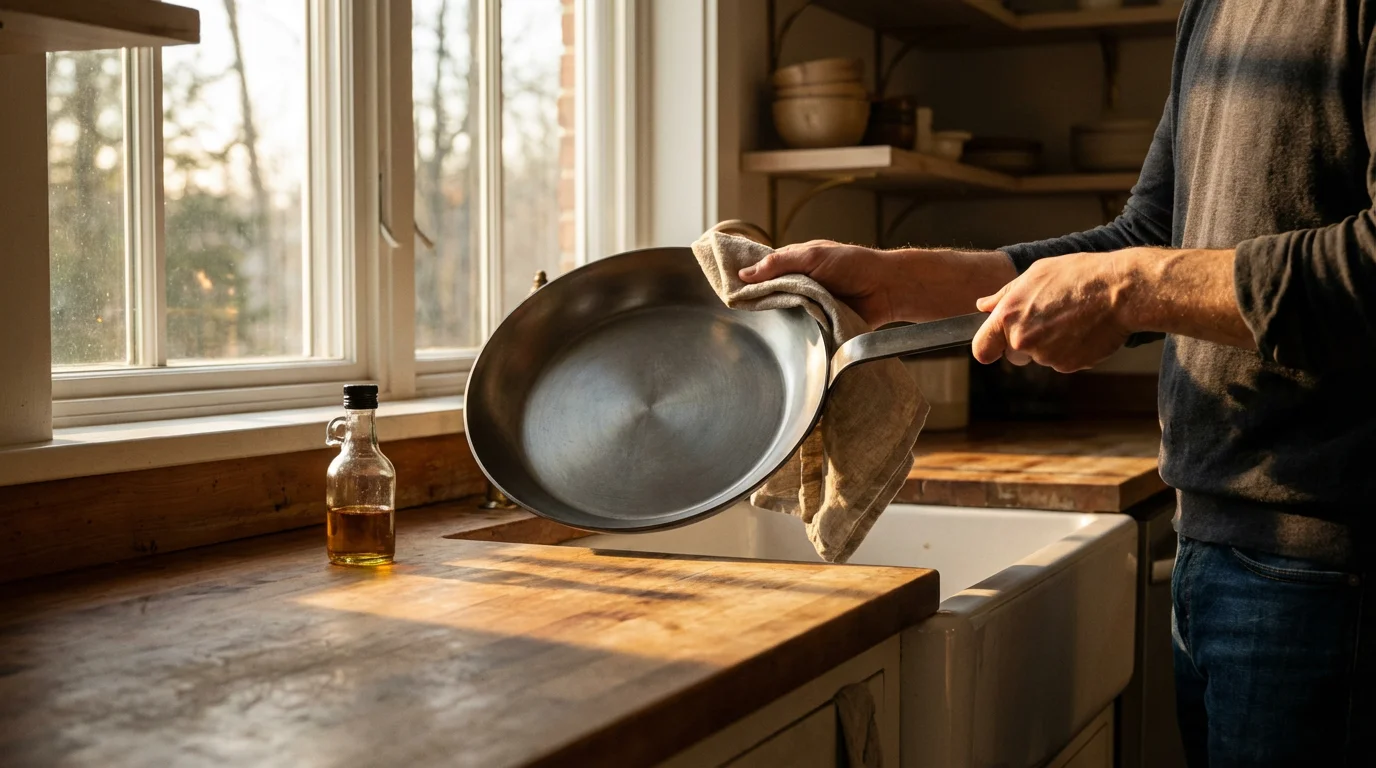
- Dry Immediately: After washing, dry the pan completely with a clean towel.
- Stovetop Dry: Place the pan over low heat on the stovetop for 1-2 minutes until any remaining moisture evaporates. You will see steam rising if there is any water left.
- Light Oil Coat: Once completely dry, rub a very thin layer of cooking oil onto the interior surface of the pan with a paper towel. This adds another micro-layer of seasoning and protects against rust.
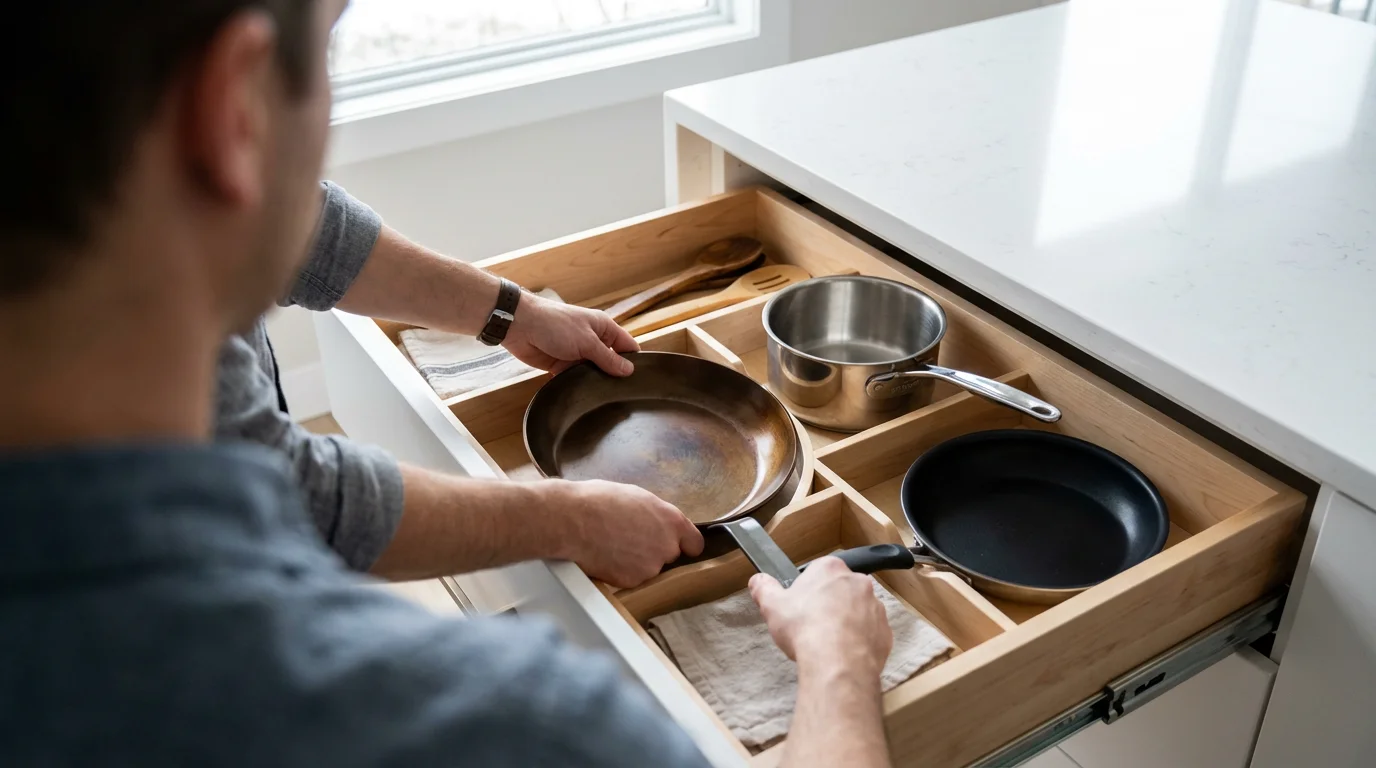
- Store Dry: Store your pan in a dry cabinet or hung in the open air. If stacking, place a paper towel between pans to absorb any potential moisture and prevent scratches.
Dealing with Rust or Sticking:
If rust appears, do not panic. Scrub the rusted area with steel wool or an abrasive sponge until the rust is gone. Wash, dry, and then perform a full re-seasoning on the affected area, or the entire pan if needed. If food starts to stick, it usually means your seasoning needs refreshing. Simply clean the pan well and apply a fresh layer of seasoning, focusing on the cooking surface.
Common Carbon Steel Myths and Misconceptions
Like any specialized cookware, carbon steel often falls prey to misunderstandings that can deter potential users. Let us debunk some common myths surrounding the carbon steel pan.
Myth: Carbon steel is too much work to maintain.
Reality: While it requires different care than non-stick or stainless steel, carbon steel maintenance is straightforward and becomes second nature quickly. It is very similar to caring for cast iron. The initial seasoning takes some effort, but daily use and proper drying with a thin oil wipe are all that is typically needed. You are investing a little time for a pan that improves with age and avoids the eventual disposal of damaged non-stick pans.
Myth: Food sticks to carbon steel unless it is perfectly seasoned.
Reality: While a well-established seasoning layer is crucial for non-stick performance, even a moderately seasoned carbon steel pan, when used correctly, offers excellent release. The key is to preheat the pan properly before adding food and to use enough fat. Foods stick primarily to cold or improperly heated surfaces. As America’s Test Kitchen often demonstrates, understanding heat management is just as important as the seasoning itself for non-stick success.
Myth: Carbon steel is only for professional chefs.
Reality: Carbon steel is a staple in professional kitchens precisely because of its reliability, performance, and durability. However, these same attributes make it incredibly valuable for home cooks. The learning curve for seasoning and care is minimal, and the rewards, such as superior searing and naturally non-stick cooking, are well within reach of any enthusiastic home cook.
Myth: You cannot cook acidic foods in carbon steel.
Reality: You can cook acidic foods in carbon steel, but with a caveat. Prolonged cooking of highly acidic foods (like tomato sauce or lemon juice) can strip away the seasoning, potentially leading to sticking and a metallic taste. For quick deglazing with wine or a short simmer, it is generally fine, especially with a robust seasoning. For long-simmering acidic sauces, stainless steel or enameled cast iron (like a Dutch oven) are better choices.
Building Your Cookware Collection: Where Carbon Steel Fits
A functional kitchen relies on a diverse set of tools, each excelling in its specific role. Carbon steel plays a vital part, but it is one piece of a larger puzzle. Understanding the strengths of different materials helps you build a versatile collection without unnecessary clutter.
The Essential Starter Set Considerations:
- Carbon Steel Pan (10-12 inches): Your go-to for searing meats, frying eggs, sautéing vegetables, and achieving perfect crusts. Its responsiveness and natural non-stick make it incredibly versatile.
- Stainless Steel Skillet (10-12 inches): Indispensable for acidic sauces, pan gravies (where deglazing is key), or dishes where you need to see the fond (browned bits) without a dark seasoning layer. Stainless steel is also ideal for tasks requiring frequent stirring or higher liquid volumes. A tri-ply stainless steel pan, featuring layers of aluminum or copper between stainless steel, offers excellent heat distribution and prevents hot spots.
- Enameled Cast Iron Dutch Oven (5-7 quarts): Perfect for soups, stews, braises, deep frying, and baking bread. Brands like Le Creuset and Lodge offer exceptional enameled Dutch ovens that are non-reactive and retain heat beautifully.
- Non-stick Pan (8-10 inches): While carbon steel can become non-stick, a dedicated non-stick pan (often with a PTFE or ceramic coating) still offers unmatched release for the most delicate items, especially at lower temperatures or with minimal fat. Use it for truly sticky situations or for new cooks. Remember, these have a shorter lifespan.
- Stockpot (8-12 quarts): Essential for making stocks, boiling pasta, and large batches of soup. Usually stainless steel.
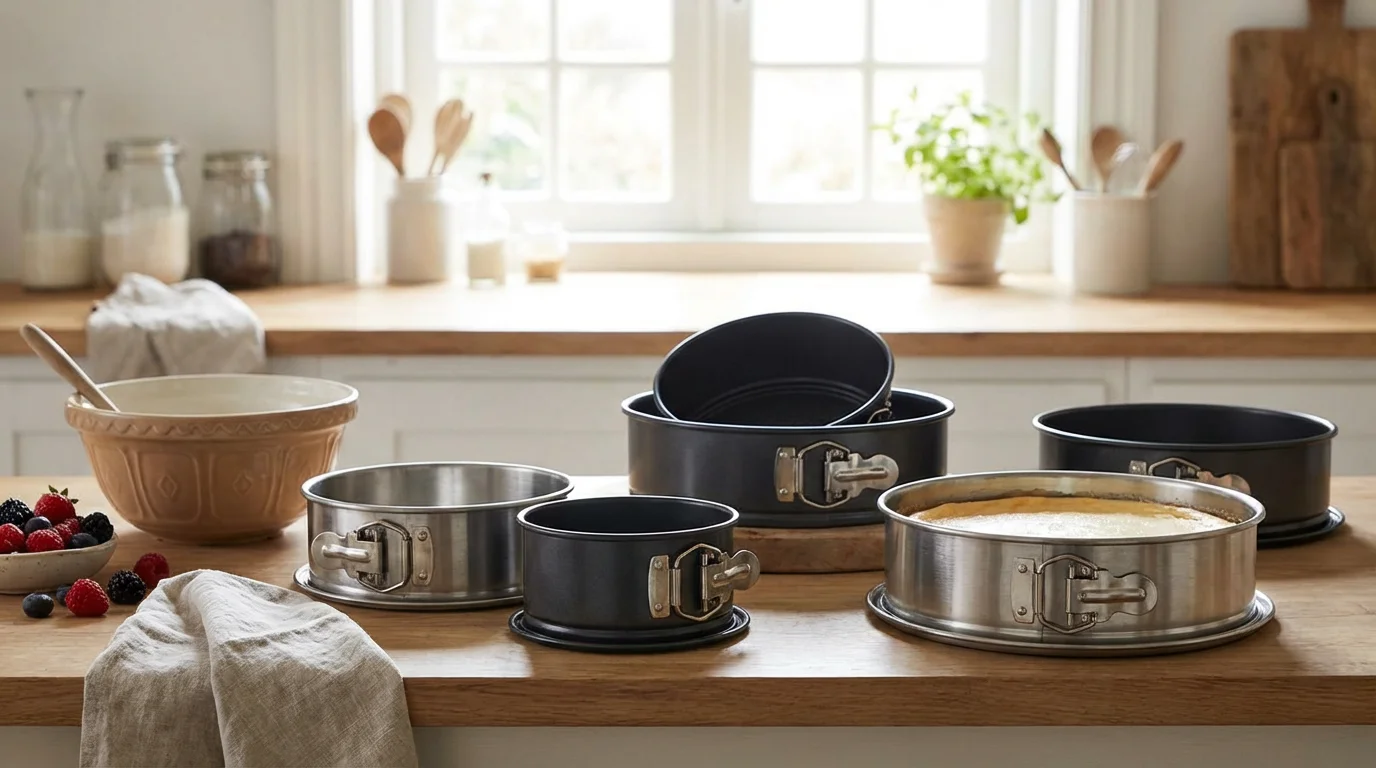
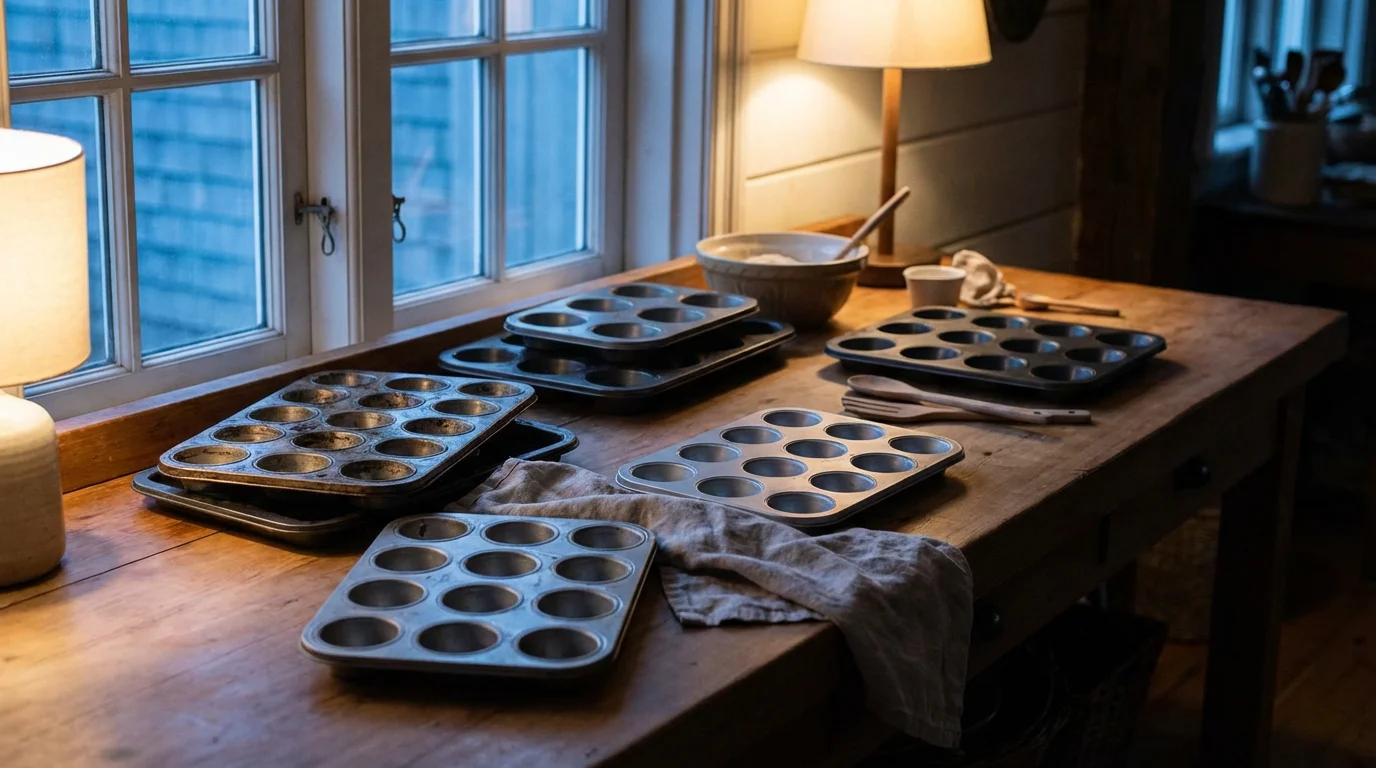
- Baking Sheets and Cake Pans: Typically aluminum or aluminized steel for even baking, these are fundamental for roasting vegetables, baking cookies, and making cakes. Muffin tins and roasting pans fall into this category as well.
Cookware Sets vs. Individual Pieces:
You often face the choice between buying a complete cookware set or purchasing individual pieces. While sets can seem economical, they frequently include pieces you might not need or use, or they might compromise on the quality of individual items. Often, you gain more value and functionality by carefully selecting individual pieces based on your cooking style and needs. For example, rather than buying a set that includes a mediocre non-stick pan, invest in a high-quality carbon steel skillet, a robust stainless steel pan, and a reliable Dutch oven. This approach ensures every piece in your kitchen is a workhorse, rather than a space filler.
By thoughtfully curating your collection, incorporating carbon steel alongside other essential materials, you equip yourself with the tools to tackle any recipe with confidence and achieve consistent culinary success.
Frequently Asked Questions
Can I cook acidic foods in carbon steel?
You can cook acidic foods for short durations in a well-seasoned carbon steel pan without significant issues. For example, a quick deglaze with wine is generally fine. However, prolonged simmering of highly acidic foods like tomato sauces or lemon-based dishes will strip the seasoning, potentially causing food to stick and imparting a metallic taste. For these tasks, stainless steel or enameled cast iron are better choices.
How do I know when my carbon steel pan is properly seasoned?
A properly seasoned carbon steel pan will have a dark, even, and slick surface. Food will release easily, especially eggs or delicate items, with minimal sticking. Over time, the pan’s surface will deepen in color, turning from gray to a deep blackish-brown. If food starts to stick consistently, or if the surface looks patchy or dull, it is a sign that your seasoning needs refreshing or rebuilding.
Is carbon steel dishwasher safe?
No, carbon steel pans are not dishwasher safe. The harsh detergents and prolonged exposure to moisture in a dishwasher will aggressively strip the seasoning layer and almost certainly lead to immediate rust. Always hand wash carbon steel pans with hot water and dry them thoroughly on the stovetop immediately after cleaning.
What’s the best oil for seasoning carbon steel?
For initial seasoning, high smoke point oils work best because they polymerize effectively without burning or leaving a sticky residue. Grapeseed oil, flaxseed oil, and canola oil are excellent choices. Many home cooks also have success with vegetable oil or shortening. The most important factor is applying extremely thin layers of oil, rather than the specific type of oil.
Can carbon steel replace all my other pans?
While a carbon steel pan is incredibly versatile and can handle many tasks traditionally performed by non-stick, cast iron, or even some stainless steel pans, it cannot completely replace all other cookware. It excels at high-heat searing and frying but is not ideal for highly acidic dishes, or for very delicate, low-fat cooking where a dedicated non-stick surface might be preferred. A balanced kitchen includes carbon steel alongside stainless steel and enameled cast iron for maximum versatility.
Disclaimer: Product prices and availability change frequently. Prices shown were accurate at time of writing but may have changed. We may earn a small commission from purchases made through links on this site, at no extra cost to you. Always verify current pricing on the retailer’s website before purchasing.
Leave a Reply