

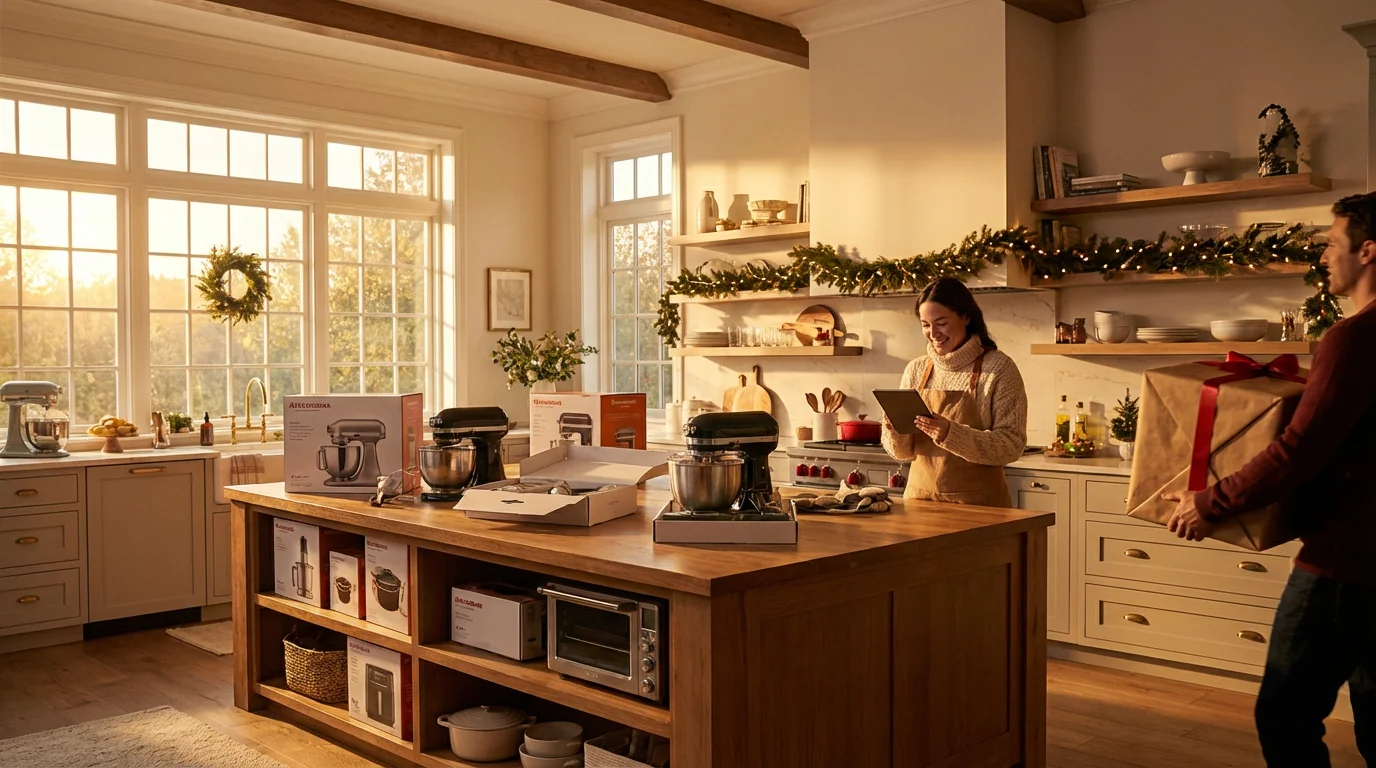
Embarking on a kitchen upgrade feels exciting yet daunting. You face an overwhelming array of choices, from gleaming stand mixers to seemingly endless knife sets. Understanding where to make a significant `cooking investment` and `where to save money on kitchen items` becomes critical. This guide cuts through the clutter, offering practical, actionable insights on smart `kitchen spending` to help you build a functional, efficient, and enjoyable kitchen without overspending.
We provide research-driven, unbiased recommendations, ensuring you find the right products for your specific needs and budget. We focus on identifying `what kitchen tools are worth spending more on` to deliver lasting value and superior performance, alongside strategies for saving on essentials where premium features offer diminishing returns. Prepare to make confident purchasing decisions for your `kitchen upgrade`.
Understanding Your Kitchen Upgrade Philosophy
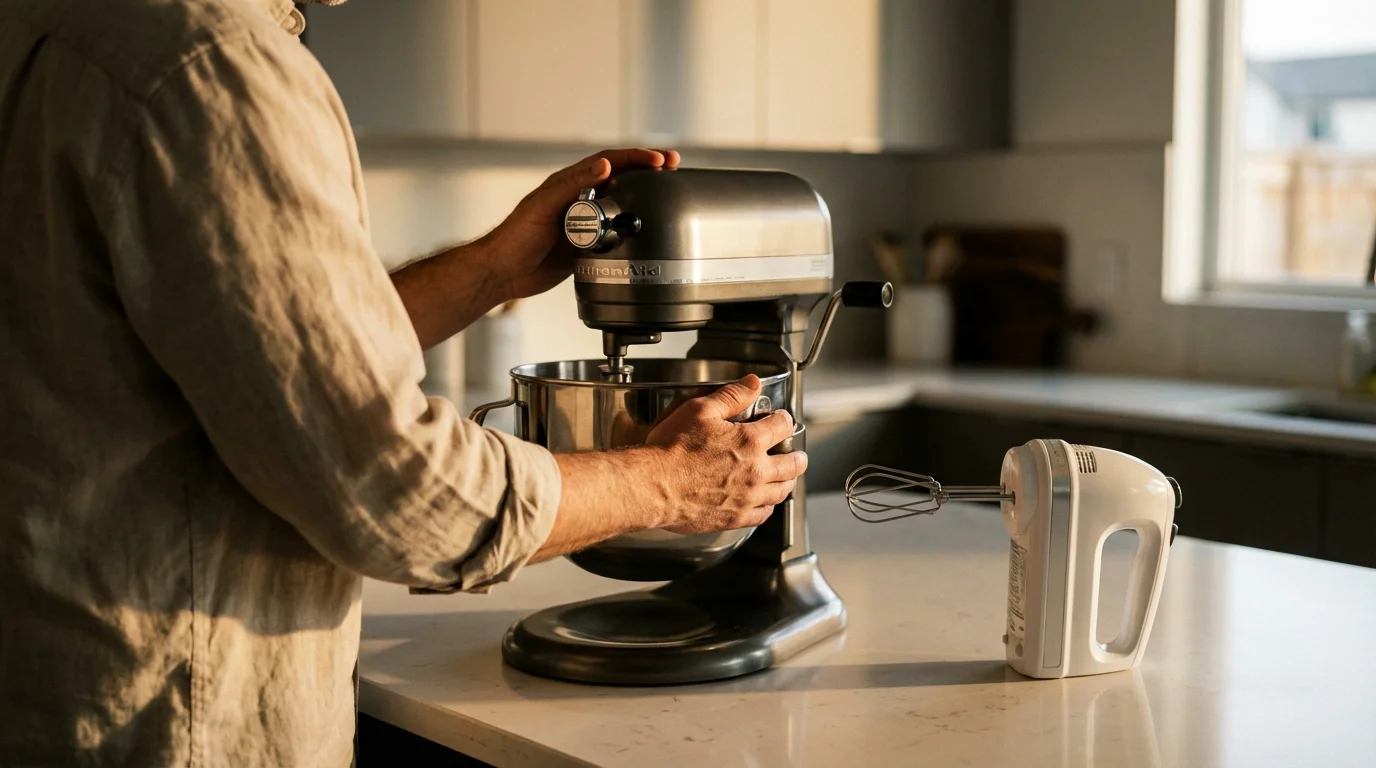
Your kitchen upgrade journey begins with a clear philosophy: prioritize tools you use most frequently or those performing critical, performance-dependent tasks. High-quality tools in these categories elevate your cooking experience and offer greater durability. Conversely, everyday items that perform simpler tasks often do not require a premium price tag to deliver satisfactory results. This targeted approach to `kitchen spending` ensures every dollar contributes meaningfully to your cooking enjoyment.
If you are starting your collection from scratch, you may want to review our guide on first kitchen essentials before making larger investments.
Consider your cooking style. Do you bake extensively? A powerful stand mixer becomes a worthy `cooking investment`. Are you a daily home chef? Investing in superior knives makes a tangible difference. This personalized strategy avoids unnecessary expenditures on features you will not use, focusing instead on tools that genuinely enhance your culinary efforts.
Where to Invest: The Core Cooking Investment Pieces
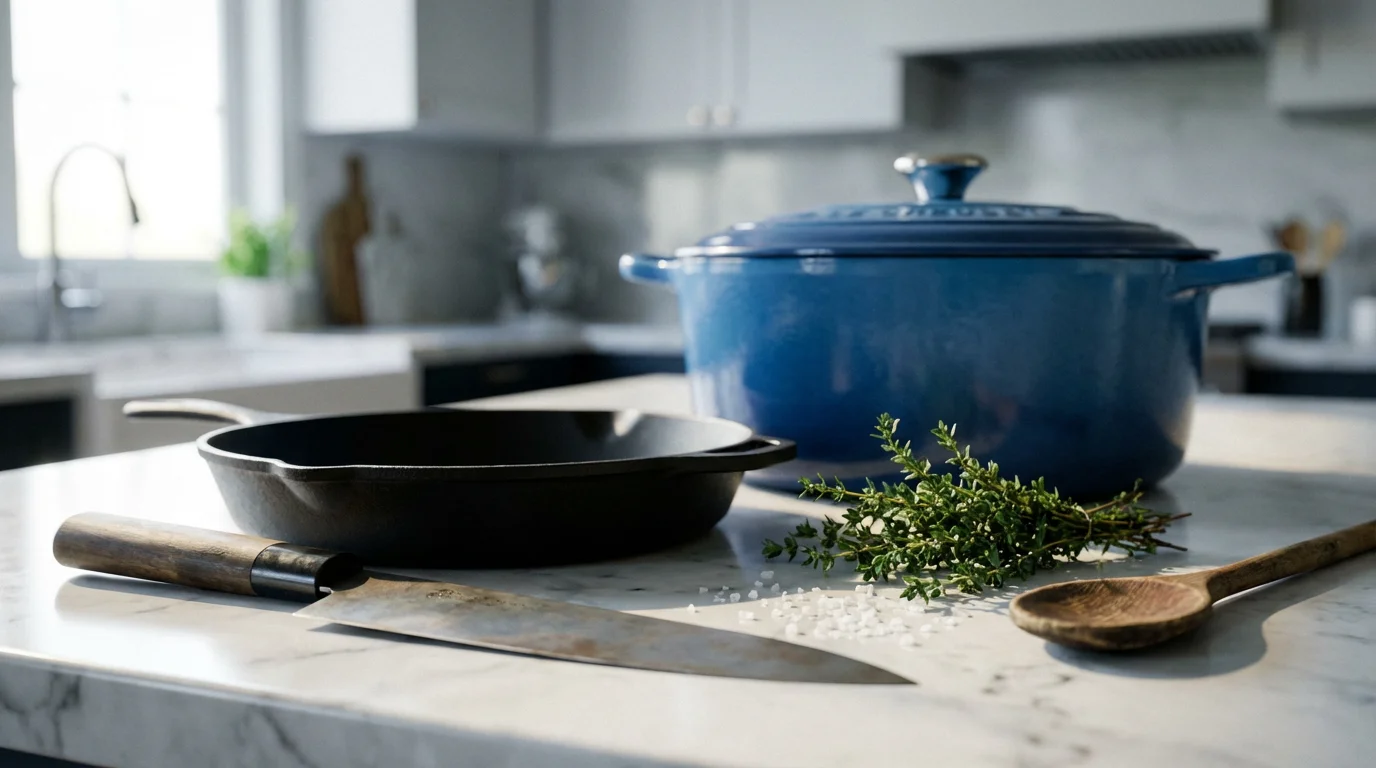
Certain kitchen items demand a higher initial `cooking investment` due to their impact on cooking results, durability, and safety. These items represent the backbone of your kitchen. Investing in them upfront saves you money in the long run by avoiding frequent replacements and delivering consistent, high-quality performance. These are `what kitchen tools are worth spending more on`.
- Cookware: Quality pots and pans distribute heat evenly, prevent sticking, and last for decades.
- Knives: Sharp, well-balanced knives improve safety, efficiency, and the pleasure of food preparation.
- Stand Mixer: For bakers and frequent entertainers, a robust stand mixer handles heavy doughs and large batches with ease.
- Food Processor: A powerful food processor streamlines chopping, shredding, and pureeing tasks, saving significant time.
According to Wirecutter’s extensive testing, top-tier kitchen equipment often justifies its price through superior performance and longevity, making it a wise long-term `cooking investment`.
Cookware: A Deeper Dive into Investment Pieces
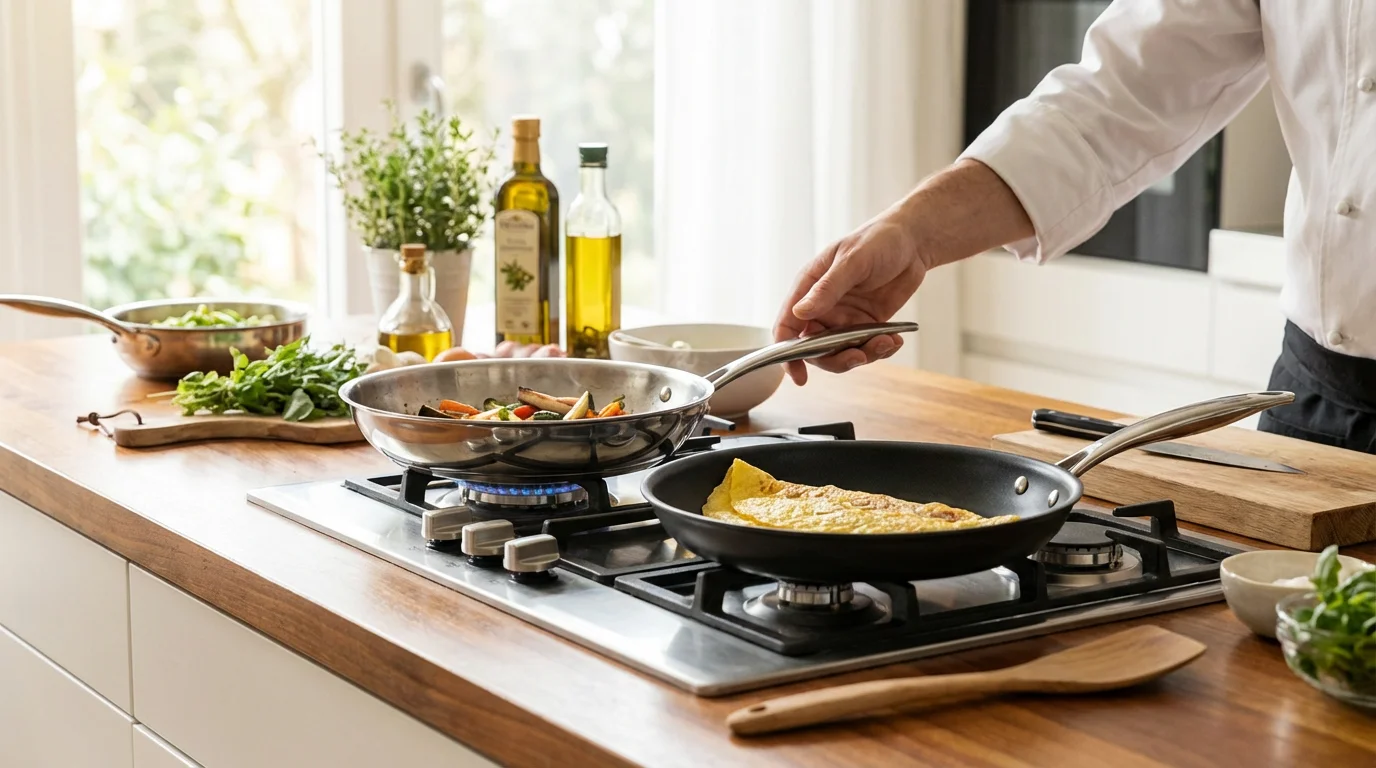
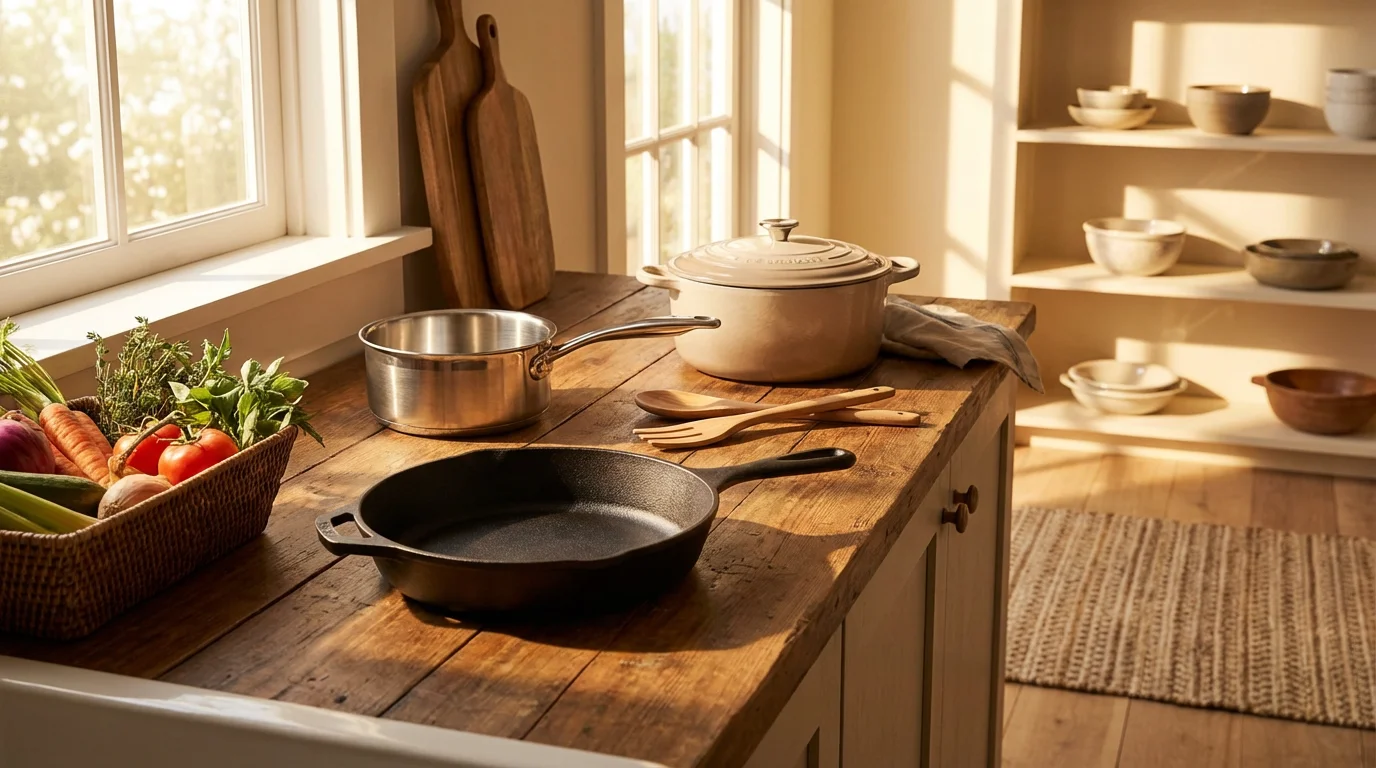
Your cookware forms the foundation of almost every meal. Opting for quality here directly impacts your food’s texture and flavor. We recommend focusing your `kitchen spending` on durable, high-performance materials like stainless steel and cast iron.
Stainless Steel Cookware
Stainless steel offers excellent heat distribution, non-reactivity with acidic foods, and durability. Look for sets with an encapsulated aluminum or copper core for superior performance. These are the workhorses of your kitchen, handling everything from searing to simmering. The `warranty` often spans a lifetime, underscoring their lasting value.
Value Pick: Cuisinart Multiclad Pro Stainless Steel 12-Piece Cookware Set
- Price: Around $300-$400
- Key Specs: Tri-ply construction (aluminum core for even heating), induction-ready, oven-safe up to 550°F, dishwasher-safe.
- Best For: Most home cooks seeking professional-grade performance without a premium price tag. The `specs` on this set rival much more expensive options.
- Bottom Line: This set delivers exceptional value. It performs reliably, heats evenly, and withstands heavy use.
- Skip if: You prefer non-stick surfaces for all cooking, or if you exclusively cook at very low temperatures.
Upgrade Pick: All-Clad D3 Stainless Steel 10-Piece Cookware Set
- Price: Around $700-$1,000
- Key Specs: Tri-ply bonding all the way to the rim, optimized for induction, oven-safe up to 600°F, superior heat responsiveness.
- Best For: Serious home cooks and those who demand precision and control in their cooking. This is a significant `cooking investment`.
- Bottom Line: All-Clad sets the standard for stainless steel cookware. Its performance justifies the higher cost for those who cook frequently and appreciate meticulous results.
- Skip if: Your budget is constrained, or if you only cook occasionally.
Cast Iron Cookware
Cast iron provides unparalleled heat retention, perfect for searing, frying, and baking. While it requires seasoning and specific care, its durability means it can last generations. This is a true `cooking investment`.
Value Pick: Lodge Cast Iron Skillet (12-inch)
- Price: Around $30-$50
- Key Specs: Pre-seasoned, robust construction, works on all cooktops including induction, oven-safe.
- Best For: Every kitchen needs a basic cast iron skillet. Lodge offers incredible `value pick` performance at an unbeatable price.
- Bottom Line: Lodge proves you do not need to spend a fortune for quality cast iron. It performs just as well as pricier options for fundamental tasks.
- Skip if: You prefer lighter cookware, or if you dislike the seasoning and care requirements of traditional cast iron.
Splurge: Le Creuset Signature Round Dutch Oven (5.5-quart)
- Price: Around $350-$450
- Key Specs: Enameled cast iron, exceptional heat retention and distribution, chip-resistant enamel, large `capacity`, available in many colors.
- Best For: Enthusiasts who appreciate beautiful, heirloom-quality cookware for braising, stews, and baking sourdough. This is a true `splurge` item.
- Bottom Line: Le Creuset is an aspirational piece, offering aesthetic appeal alongside superior cooking performance. Its enamel coating simplifies care compared to traditional cast iron.
- Skip if: You need an everyday workhorse more than a statement piece, or if you already own sufficient braising vessels.
Knives: Precision Pays Off
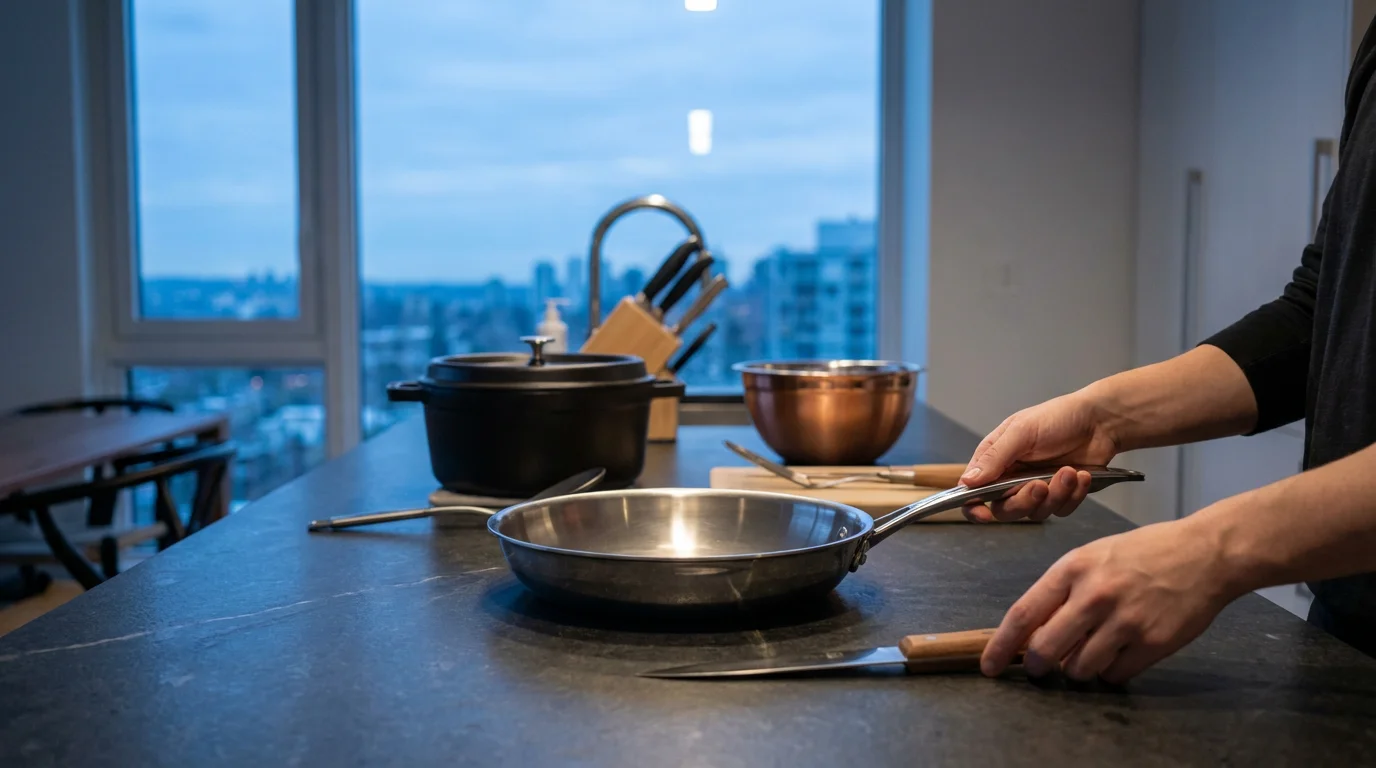
A sharp, comfortable chef’s knife transforms meal preparation. It makes chopping faster, safer, and more enjoyable. While a full block set can seem appealing, focus your `kitchen spending` on a few high-quality, essential knives. This is a prime example of `what kitchen tools are worth spending more on`.
Value Pick: Victorinox Fibrox Pro 8-inch Chef’s Knife
- Price: Around $40-$60
- Key Specs: High-carbon stainless steel blade, razor-sharp edge retention, comfortable non-slip Fibrox handle, NSF certified.
- Best For: Most home cooks seeking a professional-grade knife that is durable and easy to maintain. This `value pick` consistently tops professional reviews.
- Bottom Line: The Victorinox Fibrox Pro offers incredible performance for its price. It holds a sharp edge and handles everyday tasks with ease.
- Skip if: You prefer a heavier, more traditional German-style knife, or desire a premium aesthetic.
Upgrade Pick: Wüsthof Classic 8-inch Chef’s Knife
- Price: Around $150-$200
- Key Specs: Forged high-carbon stainless steel, full tang, triple-riveted synthetic handle, exceptional balance, precise control.
- Best For: Cooks who appreciate German craftsmanship and a knife with substantial weight and balance. It is a significant `cooking investment` for daily use.
- Bottom Line: The Wüsthof Classic is a benchmark for quality, offering superb edge retention and a comfortable feel for extended use. Its longevity makes it a smart investment.
- Skip if: You prefer lighter Japanese-style knives or a tighter budget.
Stand Mixers: Power and Versatility
For avid bakers or those who frequently entertain, a stand mixer is indispensable. It frees your hands, tackles heavy doughs, and expands your culinary repertoire with various attachments. This is definitely `what kitchen tools are worth spending more on` if you bake often.
Value Pick: KitchenAid Classic Series 4.5-Quart Stand Mixer
- Price: Around $250-$300
- Key Specs: 275-watt motor, 10 speeds, tilt-head design, 4.5-quart stainless steel bowl, includes dough hook, flat beater, wire whip.
- Best For: Home bakers who make occasional cakes, cookies, and lighter doughs. Its compact `footprint` fits most counters.
- Bottom Line: The Classic offers reliable KitchenAid performance at an accessible price. It is a solid `value pick` for typical baking needs, backed by a strong brand `warranty`.
- Skip if: You frequently make large batches of stiff dough or require more power for heavy-duty tasks.
Upgrade Pick: KitchenAid Artisan Series 5-Quart Stand Mixer
- Price: Around $380-$450
- Key Specs: 325-watt motor, 10 speeds, tilt-head design, 5-quart stainless steel bowl, more color options, wider range of attachments available.
- Best For: Frequent bakers, those tackling denser bread doughs, and cooks who appreciate a wider range of colors and slightly more power. This is a reliable `upgrade pick`.
- Bottom Line: The Artisan is the most popular KitchenAid model for a reason. It balances power, `capacity`, and versatility, making it an excellent long-term `cooking investment`.
- Skip if: You rarely bake, or if the Classic model already meets your needs.
Food Processors: Your Kitchen Workhorse
A good food processor saves hours of prep time. It chops vegetables, shreds cheese, purees sauces, and even kneads dough. A powerful motor and durable construction define a worthwhile `cooking investment` in this category.
Value Pick: Cuisinart DFP-14BCNY 14-Cup Food Processor
- Price: Around $200-$250
- Key Specs: 720-watt motor, large 14-cup `capacity`, simple on/off/pulse controls, includes stainless steel slicing disc, shredding disc, and chopping blade.
- Best For: Most families and home cooks who regularly prepare meals and need a reliable, powerful machine for various tasks. This `value pick` offers robust performance for its cost.
- Bottom Line: Cuisinart essentially invented the food processor category, and this model remains a consistent top performer. It offers ample power and `capacity` for virtually any home cooking need.
- Skip if: You have very limited counter space and only need to process small amounts of food.
Upgrade Pick: Breville Sous Chef 12-Cup Food Processor
- Price: Around $350-$400
- Key Specs: 1,000-watt induction motor, 12-cup main bowl and 2.5-cup mini bowl, variable slicing disc, multiple shredding discs, S-blade, dough blade.
- Best For: Enthusiastic cooks who value precision, versatility, and quiet operation. The powerful motor makes quick work of tough ingredients. This is a fantastic `upgrade pick`.
- Bottom Line: Breville delivers a premium experience with thoughtful design, exceptional power, and precise control, making it a dream machine for serious home chefs.
- Skip if: The higher price point strains your `kitchen spending` budget, or if simpler, more basic functionality suffices.
Where to Save: Smart Choices for Everyday Essentials
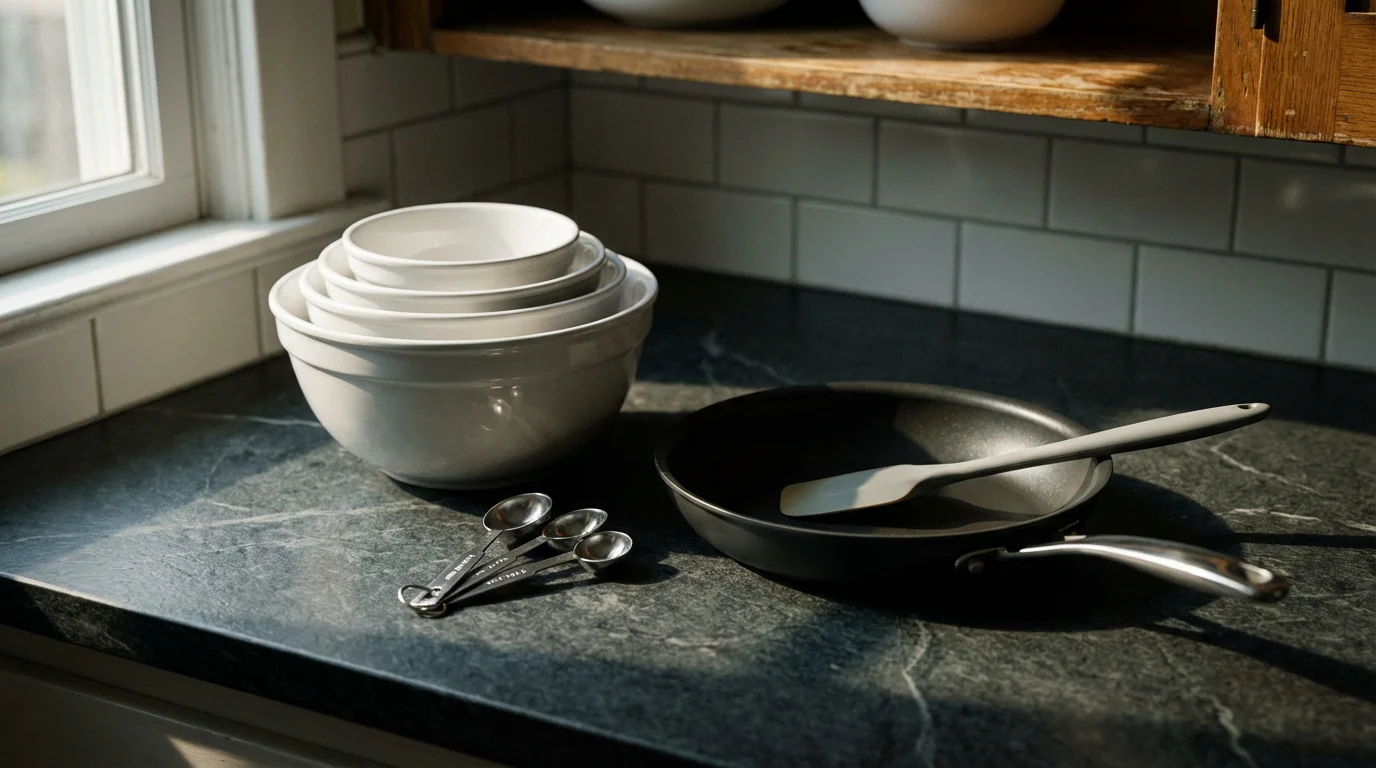
While some items demand a significant `cooking investment`, many others perform perfectly well at a lower price point. Resist the urge to `splurge` on every item. Smart `kitchen spending` means identifying areas where a `budget pick` or `value pick` delivers comparable functionality without the premium cost. These are the items `where to save money on kitchen items`.
Here are categories where you can confidently choose more affordable options:
- Bakeware: Unless you are a professional baker, standard aluminum or non-stick bakeware offers excellent results.
- Utensils: Spatulas, whisks, and ladles do not require high-end materials to function effectively.
- Storage Containers: Basic, stackable containers keep food fresh just as well as designer brands.
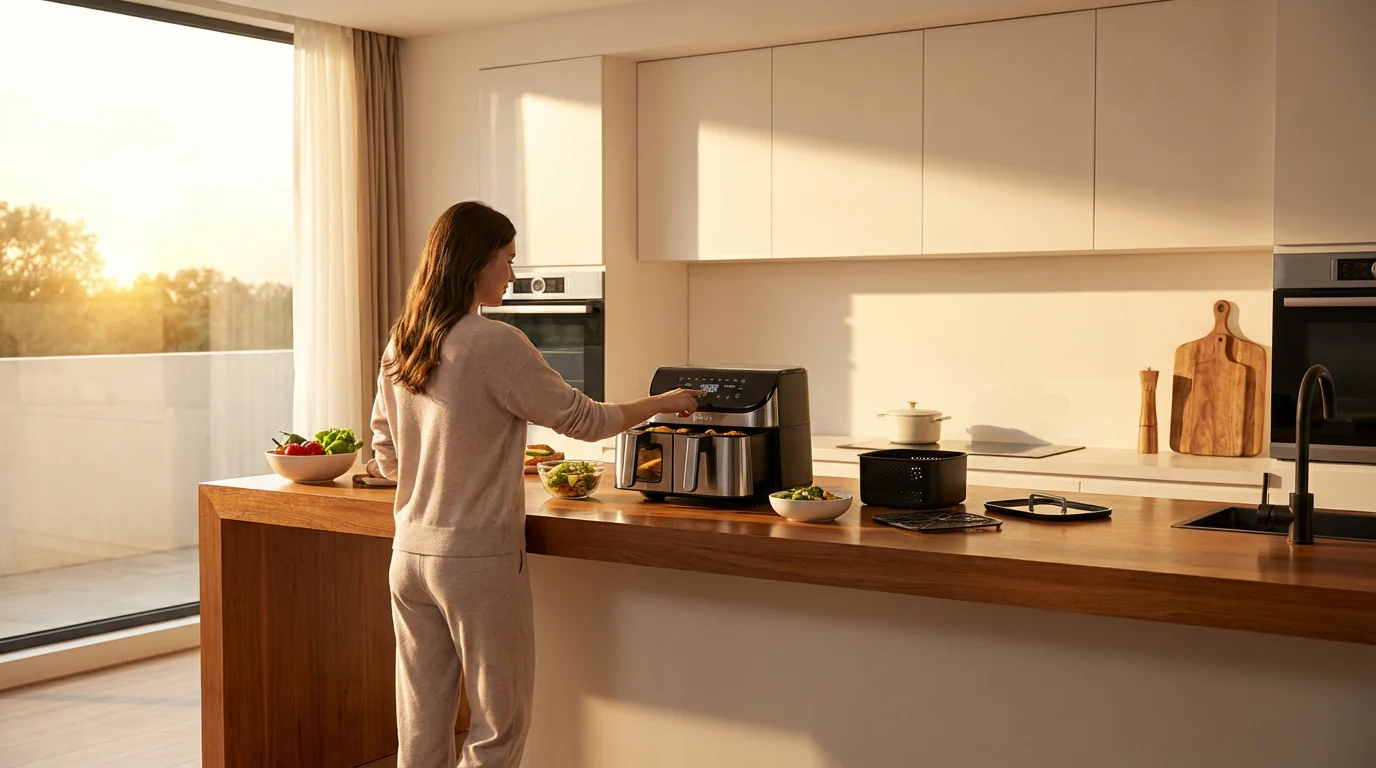
- Small Appliances (specific types): Certain blenders, toasters, and coffee makers offer great performance at budget-friendly prices for everyday use.
- Measuring Cups and Spoons: Simple sets are perfectly accurate and durable enough.
For example, Serious Eats equipment reviews often highlight excellent `value pick` options that perform nearly identically to their more expensive counterparts for many common tasks.
Blenders: When a Budget Pick Makes Sense
Blenders come in a wide range of powers and prices. Your choice depends heavily on what you blend. For occasional smoothies or pureeing soft soups, a `budget pick` excels. If you crush ice daily or make nut butters, a more powerful machine makes sense.
Budget Pick: Hamilton Beach Wave Crusher Blender
- Price: Around $30-$50
- Key Specs: 700-watt peak power, 40-oz glass jar, no-mess pour spout, dishwasher-safe parts.
- Best For: Light-duty blending like simple fruit smoothies, protein shakes, and pureeing cooked vegetables. This is a fantastic `budget pick` for basic needs.
- Bottom Line: For occasional use and softer ingredients, this blender delivers surprising power for its price. It proves you can save significant money on items `where to save money on kitchen items`.
- Skip if: You regularly blend ice, frozen fruits, or fibrous greens, as it may struggle with tougher tasks.
Value Pick: NutriBullet Pro 900 Personal Blender
- Price: Around $80-$100
- Key Specs: 900-watt motor, compact `footprint`, single-serve cups, powerful extraction blades.
- Best For: Individuals or couples making daily smoothies with moderate amounts of ice and frozen fruit.
- Bottom Line: The NutriBullet Pro is a powerhouse for personal blending, offering excellent performance and convenience at a reasonable price point.
- Skip if: You need to blend large batches or hot liquids, as its `capacity` and design are not suited for these.

Common Kitchen Upgrade Mistakes to Avoid
Many home cooks fall into common traps when upgrading their kitchen. Avoid these pitfalls to make your `kitchen spending` smarter and more effective:
- Buying a Full Set When You Only Need a Few: Resist the allure of matching sets for knives or cookware if you only use a few pieces regularly. Often, you get several mediocre items instead of a few excellent ones. Focus on buying individual pieces `what kitchen tools are worth spending more on`.
- Prioritizing Aesthetics Over Function: While a beautiful kitchen is nice, prioritize performance and durability. A flashy gadget that breaks easily or performs poorly is a waste of money.
- Ignoring Your Actual Cooking Habits: Do not buy a bread machine if you bake bread twice a year. Align your `cooking investment` with your real-world usage.
- Forgetting About Storage and `Footprint`: A massive stand mixer is useless if it lives in a box in the garage because it does not fit on your counter. Consider how items will integrate into your space.
- Not Checking `Warranty` and Customer Service: Especially for larger `cooking investment` items, a good `warranty` and responsive customer service add significant value and peace of mind.
- Paying Full Price for Last Year’s Model: Often, the previous year’s model of a small appliance offers nearly identical performance at a significantly reduced price, providing better `value pick` opportunities.
“Your kitchen should reflect how you cook, not how an influencer cooks. Invest in the tools that truly empower your personal culinary journey, not just the ones that look good on a shelf.” — QuickKitchenTools Expert Advice
As Consumer Reports often highlights, detailed research into product reliability and user satisfaction helps prevent costly mistakes.

Making Your Final Decisions
Your `kitchen upgrade` should feel empowering, not overwhelming. By strategically identifying `what kitchen tools are worth spending more on` and `where to save money on kitchen items`, you build a high-performing, cost-effective kitchen tailored to your unique needs.
Always consider these factors:
- Your Budget: Set realistic spending limits for each category.
- Your Cooking Frequency: Daily cooks benefit more from premium tools than occasional users.
- Your Storage Space: Ensure new items fit comfortably within your kitchen’s `footprint`.
- Maintenance Requirements: Some items, like cast iron, require more care.
Armed with this guidance on smart `kitchen spending`, you can confidently select the right products, transforming your kitchen into a space you love to cook in.
Frequently Asked Questions
Should I buy a full knife set or individual knives?
Most home cooks benefit more from investing in two to three high-quality individual knives, such as a chef’s knife, a paring knife, and a serrated utility knife, rather than a large, often mediocre, full set. This approach ensures you spend money on tools you will actually use and that perform exceptionally.
What is the most important item to splurge on in a new kitchen?
For most home cooks, a high-quality chef’s knife makes the most significant difference in daily cooking experience and safety. It is used constantly for nearly every meal preparation task. Cookware also represents a crucial `cooking investment` for long-term satisfaction.
Can I really save money on small kitchen appliances?
Yes, absolutely. For many small appliances like blenders (if used for basic tasks), toasters, or electric kettles, a `budget pick` or `value pick` often performs just as well as premium brands. Focus on finding products with good reviews for their specific function rather than brand name alone.
How often should I replace my non-stick cookware?
Non-stick cookware generally lasts 3-5 years with regular use and proper care. If you notice scratching, peeling, or food starting to stick, it is time for replacement. Consider a `value pick` for non-stick pans as their lifespan is inherently shorter than stainless steel or cast iron.
What does “footprint” mean in kitchen tools?
“Footprint” refers to the amount of counter or storage space a kitchen tool occupies. For example, a large stand mixer has a significant `footprint`, meaning it takes up a lot of space, which is an important consideration for small kitchens.
Disclaimer: Product prices, features, and availability change frequently. Prices shown were accurate at time of writing but may have changed. We may earn a small commission from purchases made through links on this site, at no extra cost to you. Always verify current pricing and specifications on the retailer’s website before purchasing.
A high-capacity processor is also one of the best kitchen tools for meal prep Sundays, as it handles bulk vegetable prep with ease.
Before buying, it’s helpful to learn how to choose the right blender for your needs to avoid overpaying for unnecessary horsepower.

Leave a Reply