
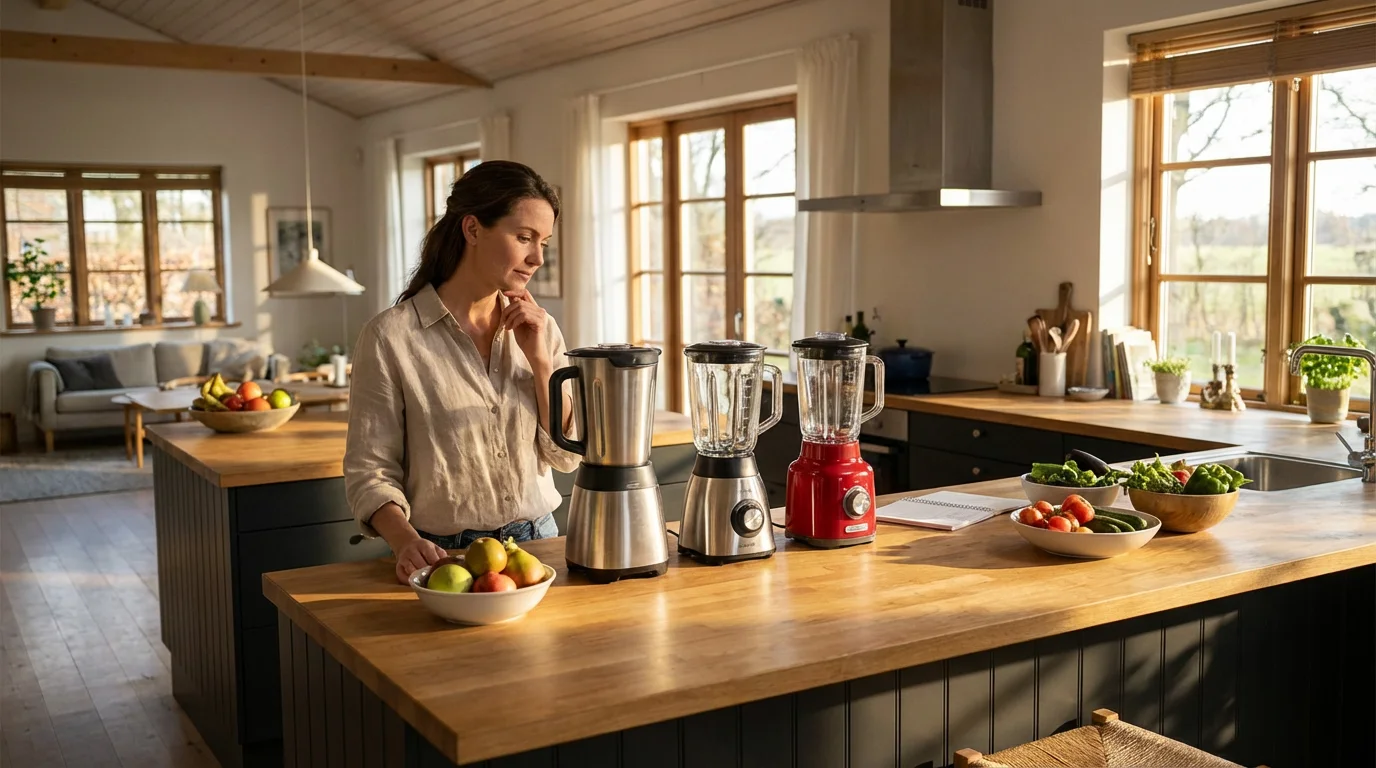
Choosing the right blender transforms your kitchen experience. You navigate a market flooded with options, from basic personal blenders to professional-grade machines. This comprehensive blender buying guide helps you cut through the noise, understand key blender features, and select the ideal appliance for your home, ensuring you invest wisely in a tool you will use for years.
Understanding Blender Types: What’s Right for You?
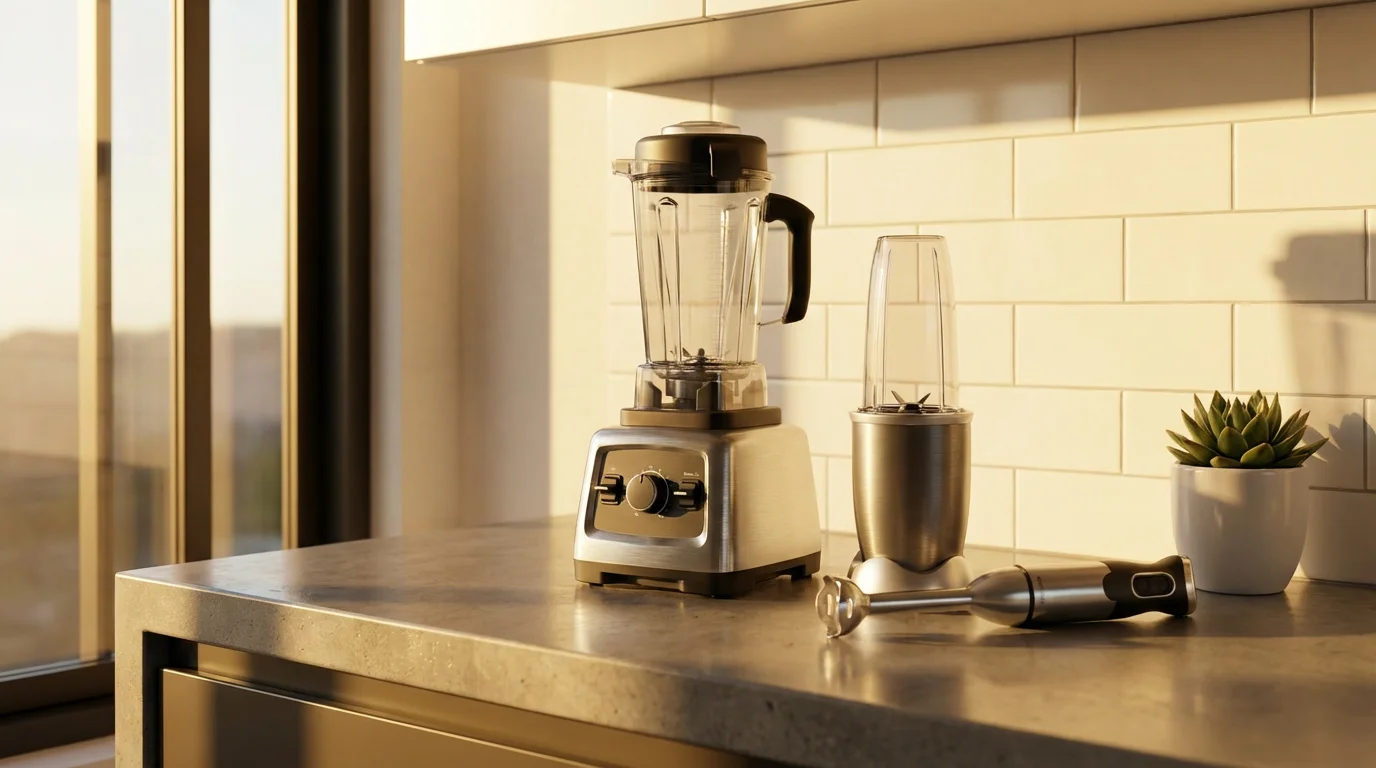
Blenders come in several primary categories, each designed for specific tasks. Your first step in this blender comparison is identifying which type best suits your lifestyle and cooking habits.
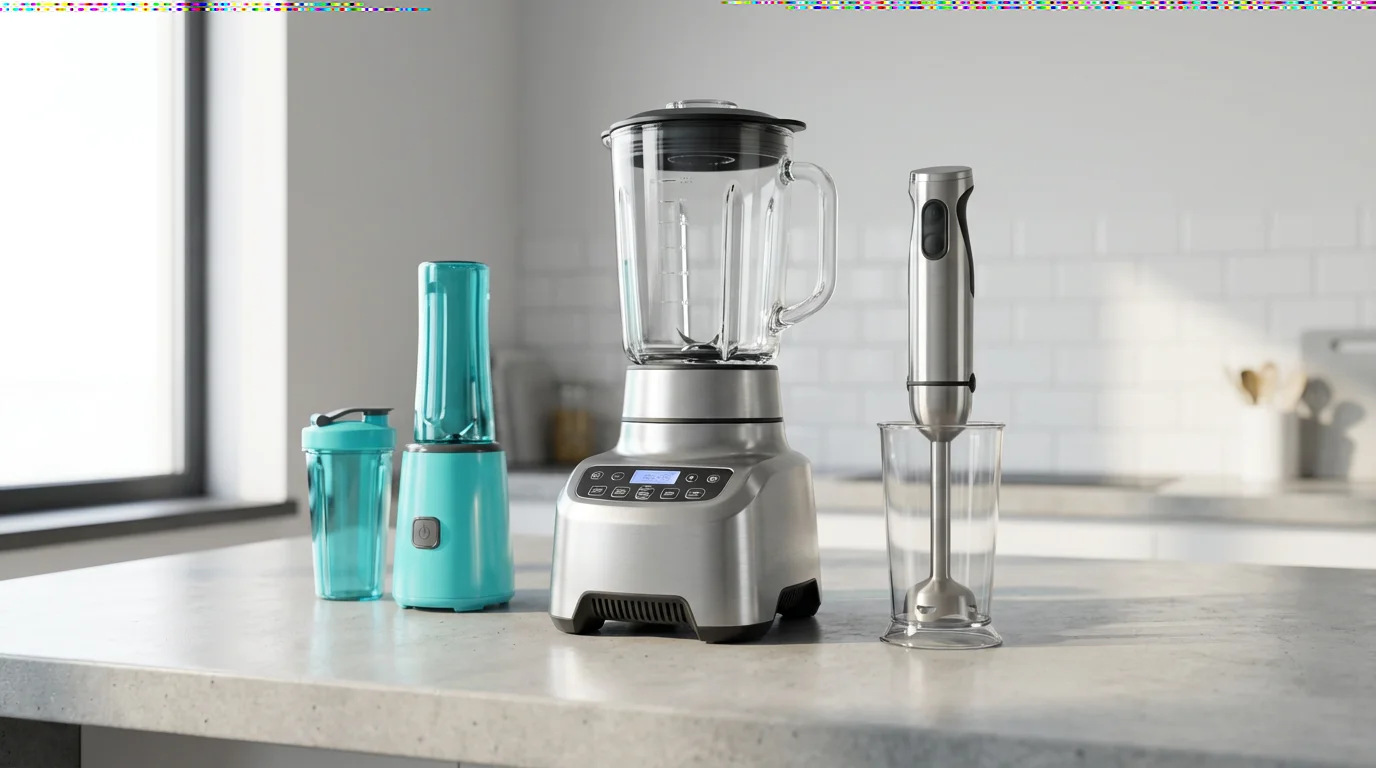
- Full-Size Countertop Blenders: These are the most common type, featuring a powerful motor base and a large pitcher. They excel at processing large batches, crushing ice, making smoothies, and preparing hot soups. Their versatility makes them a staple in many kitchens.
- Personal Blenders: Compact and convenient, personal blenders typically come with a small motor and a travel-friendly cup that doubles as the blending jar. They are perfect for single-serving smoothies, protein shakes, or small batches of sauces. If you ask, “what blender should I buy for smoothies for one?”, a personal blender is often your answer.
- Immersion Blenders (Hand Blenders): Unlike countertop models, immersion blenders have a long stick-like shaft with blades at the end. You submerge them directly into your pot, bowl, or jar. They are ideal for pureeing soups, sauces, or making mayonnaise without transferring ingredients. They offer unmatched convenience for specific tasks but lack the power and capacity for heavy-duty blending.
Key Blender Features to Consider
When you evaluate blender features, consider these critical elements that impact performance, durability, and ease of use.
- Motor Power (Watts/HP): Measured in watts or horsepower, the motor’s strength dictates how well your blender handles tough ingredients. Higher wattage motors (1000W+) effortlessly crush ice, blend frozen fruit, and process fibrous vegetables. Lower wattage motors suffice for softer ingredients or liquids. For heavy-duty tasks, look for at least 1000 watts.
- Capacity: This refers to how much a product can hold or process at once. Blender pitchers range from 16-ounce personal cups to large 72-ounce family-sized containers. Choose a capacity that matches your typical batch size. A 64-ounce pitcher generally serves a family of four comfortably.
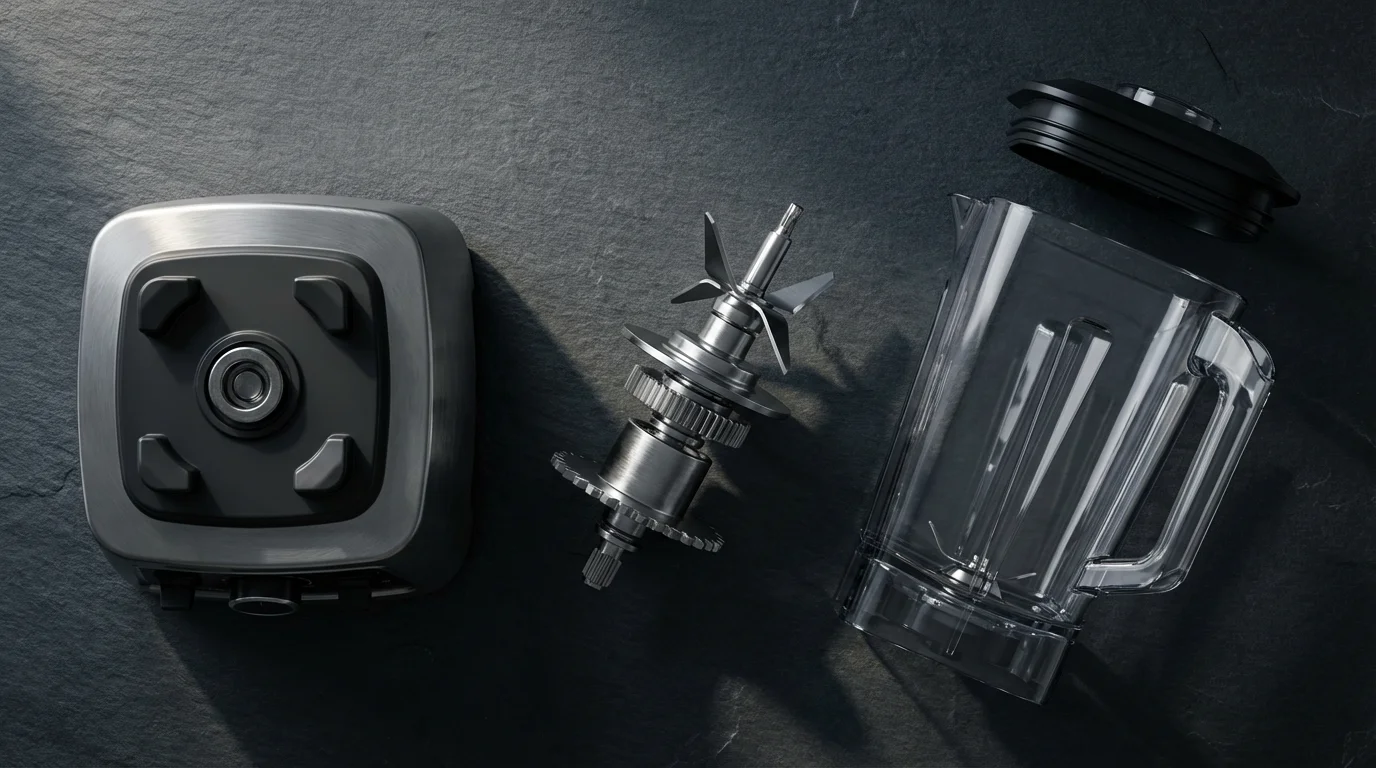
- Blade Material and Design: Most blenders use stainless steel blades. Pay attention to their design and sharpness. Some blenders feature stacked blade assemblies for more thorough blending, while others rely on powerful motors to drive traditional blade configurations effectively.
- Controls and Settings: Basic blenders offer simple on/off and pulse functions. Advanced models include variable speed dials, pre-programmed settings, for example, smoothie, ice crush, soup, and digital timers. Pre-sets simplify operation, taking the guesswork out of blending.
- Ease of Cleaning: Look for pitchers and lids that are dishwasher-safe. Many high-end blenders offer a self-cleaning function: add warm water and a drop of soap, then blend for 30-60 seconds. A removable blade assembly can also simplify cleaning but sometimes introduces leak points.
- Noise Level: Powerful blenders generate significant noise. While no blender is truly silent, some models incorporate noise-reduction technology or have better insulated motor housings. If noise is a major concern, research specific model reviews, as Good Housekeeping’s appliance reviews often include sound assessments.
- Durability and Warranty: The warranty is the manufacturer’s promise to repair or replace defective products. Longer warranties often indicate greater manufacturer confidence in product longevity. High-end blenders often carry 5-10 year warranties, while budget options might offer only 1-3 years. Consider the quality of materials, such as durable BPA-free plastic or tempered glass pitchers.
- Footprint: This refers to how much counter or storage space something takes up. Measure your available counter space and cabinet height, especially if you plan to store the blender under overhead cabinets.

High-Powered vs. Regular Blenders: Do You Need the Muscle?
The distinction between high-powered and regular blenders lies primarily in motor strength and engineering. Understanding this difference is crucial for your blender buying guide, especially if you aim for specific results like silky-smooth purees or perfectly crushed ice.
Deciding between power and price is a major part of upgrading your kitchen effectively.
Regular blenders typically feature motors ranging from 300 to 800 watts. These blenders handle basic tasks effectively: mixing batters, blending soft fruits for smoothies, and pureeing cooked vegetables. They are suitable for occasional use and lighter applications. They struggle with tough ingredients like frozen fruit chunks, nuts, or large ice cubes, often leaving behind unblended pieces or overheating.
High-powered blenders, often referred to as professional or commercial-grade blenders, boast motors of 1000 watts up to 1500+ watts. Beyond raw power, their design incorporates robust blade systems, durable components, and advanced cooling mechanisms. This combination allows them to pulverize anything you throw at them: whole fruits and vegetables, including skins and seeds, nuts into butter, grains into flour, and ice into a fine snow. According to Consumer Reports’ extensive testing, blenders with higher wattage consistently achieve smoother results and break down ingredients more thoroughly, especially for fibrous produce.
“Don’t buy the ‘best’ product. Buy the best product for how YOU cook and what YOU blend.” — Kitchen Equipment Expert
If your primary goal is daily smoothies with frozen ingredients, nut butters, hot soups made from raw vegetables, or intricate food prep that requires fine pulverization, invest in a high-powered blender. If you only need to mix protein shakes or occasional fruit smoothies with soft ingredients, a regular blender saves you money and serves your purpose adequately. Serious Eats also offers comprehensive insights into the performance differences, confirming that powerful motors are key for tasks like pulverizing nuts into butter without adding excessive liquid. You can explore their equipment reviews on Serious Eats for more details on specific performance benchmarks.
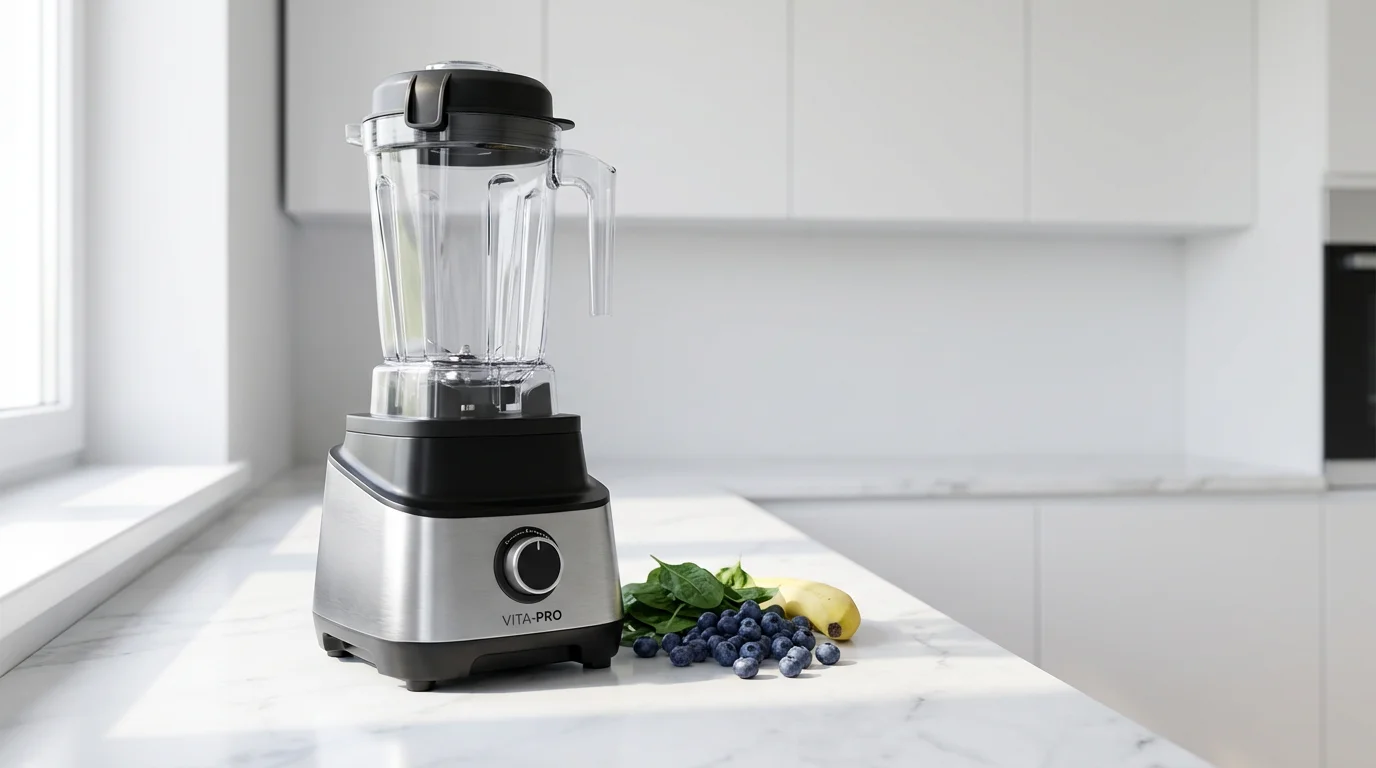
Our Top Blender Picks: Value, Budget, and Premium
We provide clear recommendations across different price points, focusing on performance, durability, and user experience. Remember, prices fluctuate, so verify current availability and pricing before purchasing.
Value Pick: Ninja Professional Plus Blender with Auto-iQ
The Ninja Professional Plus Blender with Auto-iQ represents our value pick, offering the best balance of quality and price for most people. This blender delivers strong performance without the premium price tag of a professional-grade machine.
- Specs: 1400-watt motor, 72-ounce pitcher capacity, stacked blade assembly, Auto-iQ pre-programmed settings (smoothie, ice crush, extract), single-serve cup compatibility (often included).
- Price Range: $120-$160
- Best For: Daily smoothies with frozen fruit and ice, crushing ice for margaritas, making large batches of sauces, and general kitchen food prep. Its powerful motor tackles many tasks that typically require a more expensive model.
- Skip If: You require the absolute smoothest consistency for green smoothies with tough greens or nut butters, or if you plan to make hot soups directly from raw vegetables. While strong, it does not match the pulverizing capability of ultra-high-end blenders for these specific tasks. Its noise level is also noticeable.
- Bottom Line: This Ninja blender offers exceptional power and versatility for its price. It’s a workhorse for most home cooks, reliably handling ice, frozen fruit, and everyday blending needs.
Budget Pick: Oster Reverse Crush Counterforms Blender
Our budget pick, the Oster Reverse Crush Counterforms Blender, provides good quality at the lowest price point, proving that you do not need to spend a fortune for effective blending.
- Specs: 1000-watt motor (600 blending watts), 6-cup (48-ounce) Boroclass glass pitcher, reversing blade technology, pre-programmed settings (smoothie, food chop).
- Price Range: $60-$80
- Best For: Basic smoothies with fresh or lightly frozen fruit, mixing batters, pureeing cooked vegetables, and occasional ice crushing. Its glass pitcher is durable and resistant to scratches. The reversing blade technology helps prevent jams.
- Skip If: You need to blend dense ingredients daily, require ultra-smooth textures, or want to process large quantities of frozen items. The motor handles ice but can struggle with larger, harder chunks. The glass pitcher, while durable, is heavier than plastic.
- Bottom Line: This Oster blender is a reliable, budget-friendly option for light to moderate blending tasks. It punches above its weight class, offering surprising power and functionality for its modest cost.
Upgrade Pick: Vitamix Explorian E310
The Vitamix Explorian E310 is our upgrade pick, a premium option for those willing to spend more on unmatched performance and durability. This model delivers the legendary Vitamix blending experience in a slightly more compact and affordable package than their flagship models.
- Specs: 2.0-peak horsepower motor, 48-ounce BPA-free pitcher, variable speed control, pulse feature, self-cleaning function.
- Price Range: $300-$380
- Best For: Achieving professional-grade smoothness for any ingredient, making hot soups from raw vegetables in minutes, grinding nuts into butter, pulverizing seeds and fibrous greens, and heavy-duty, daily use. Its compact footprint also suits smaller kitchens.
- Skip If: Your budget is strictly limited, or your blending needs are basic, for example, occasional protein shakes. While a fantastic machine, it is an investment. If you simply need a general-purpose blender, the Value Pick might suffice.
- Bottom Line: The Vitamix E310 is an investment in unparalleled blending power and longevity. It transforms tough ingredients into silky textures effortlessly, making it ideal for serious home cooks and health enthusiasts.
Splurge Pick: Vitamix Ascent Series A3500
For enthusiasts or heavy users who demand the absolute best, the Vitamix Ascent Series A3500 stands as our splurge option, offering top-tier performance, advanced features, and exceptional durability.
- Specs: 2.2-peak horsepower motor, 64-ounce low-profile BPA-free pitcher, 5 program settings (smoothies, hot soups, dips & spreads, frozen desserts, self-cleaning), touchscreen controls, built-in digital timer, wireless connectivity with the Vitamix Perfect Blend App.
- Price Range: $550-$700
- Best For: Professional chefs, health enthusiasts committed to daily, varied blending, or anyone who desires the ultimate in blending precision, convenience, and versatility. The programmable settings and smart features streamline complex recipes. Wirecutter’s extensive testing consistently places Vitamix blenders at the top for durability and blending performance, particularly their Ascent series. You can review Wirecutter’s kitchen and dining recommendations for more context.
- Skip If: You prioritize budget or only blend occasionally. The A3500 represents a significant investment, and its advanced features may be overkill for casual users. You can achieve excellent results with the Explorian E310 or even the Ninja.
- Bottom Line: The Vitamix A3500 sets the benchmark for blenders, combining raw power with smart technology for an unparalleled blending experience. It is a lifetime kitchen companion for those who demand perfection.
Blender Comparison Table
This table provides a quick overview of our top picks, highlighting their key specifications and best use cases for an easy blender comparison.
| Category | Product (Illustrative) | Price Range | Peak Motor Power | Pitcher Capacity | Key Features | Best For |
|---|---|---|---|---|---|---|
| Budget Pick | Oster Reverse Crush Counterforms | $60-$80 | 1000W (600 blending) | 48 oz (glass) | Reversing blade, pre-sets | Basic smoothies, occasional ice, light blending |
| Value Pick | Ninja Professional Plus with Auto-iQ | $120-$160 | 1400W | 72 oz (plastic) | Stacked blades, Auto-iQ pre-sets, single-serve | Daily smoothies, ice crushing, large batches, general prep |
| Upgrade Pick | Vitamix Explorian E310 | $300-$380 | 2.0 HP | 48 oz (plastic) | Variable speed, pulse, self-cleaning, compact | Smooth purees, hot soups, nut butters, daily heavy use |
| Splurge Pick | Vitamix Ascent Series A3500 | $550-$700 | 2.2 HP | 64 oz (plastic) | 5 programs, touchscreen, digital timer, smart features | Ultimate precision, complex recipes, enthusiast use, longevity |
What Blender Should I Buy for Smoothies and Beyond?
Your specific culinary ambitions dictate your ideal blender choice. Consider these common uses when deciding on your purchase.
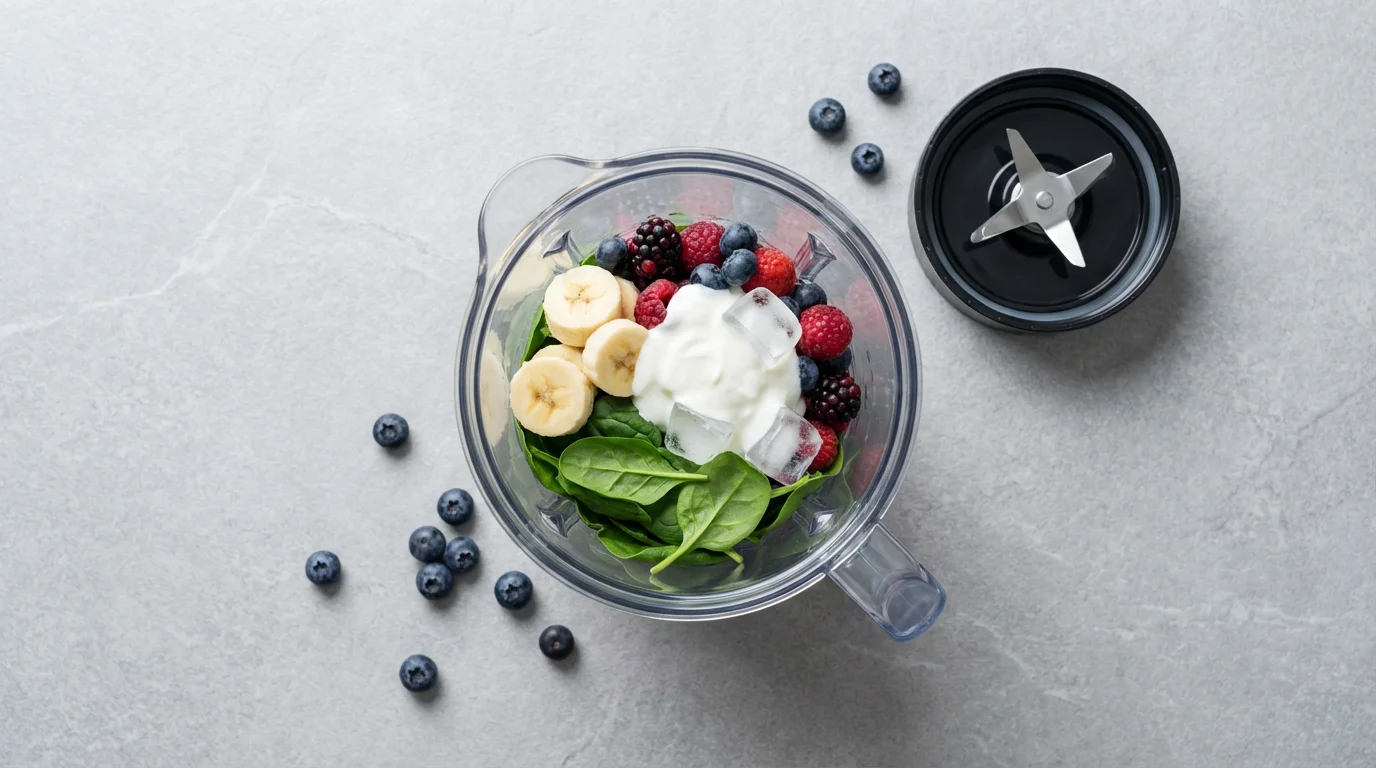
For Daily Smoothies and Shakes: If you primarily make smoothies with fresh or frozen fruits, a personal blender or a mid-range full-size blender like our Value Pick, the Ninja Professional Plus, offers ample power. Look for models with dedicated smoothie settings or strong pulse functions. Ensure it handles ice and frozen fruit effectively without bogging down. This addresses your question, “what blender should I buy for smoothies?”
For Hot Soups (from raw ingredients): Only high-powered blenders, such as the Vitamix Explorian E310 or Ascent Series A3500, generate enough friction to heat ingredients from room temperature to steaming hot in minutes. This capability is a hallmark of professional-grade blenders. Regular blenders are not designed for this task and can overheat.
For Nut Butters and Flours: This demands significant power and sustained operation. High-powered blenders excel here, turning nuts into creamy butter or grinding grains into flour with ease. The Vitamix models are particularly adept at these tasks, consistently producing smooth, consistent results that other blenders struggle to achieve without strain or overheating.
For Crushing Ice: Most blenders can crush some ice, but for large quantities or consistent snow-like texture for cocktails, a powerful motor (1000 watts minimum) and robust blades are essential. Our Value Pick, the Ninja Professional Plus, handles ice crushing admirably for most home needs.
For Food Prep (Chopping, Pureeing): Many full-size blenders can act as a rudimentary food processor for chopping vegetables or pureeing ingredients for sauces. Blenders with variable speed control give you more precision for these tasks. However, for precise chopping, a dedicated food processor remains superior.
Blender Maintenance and Longevity
Proper care significantly extends your blender’s lifespan. Follow these practical tips:
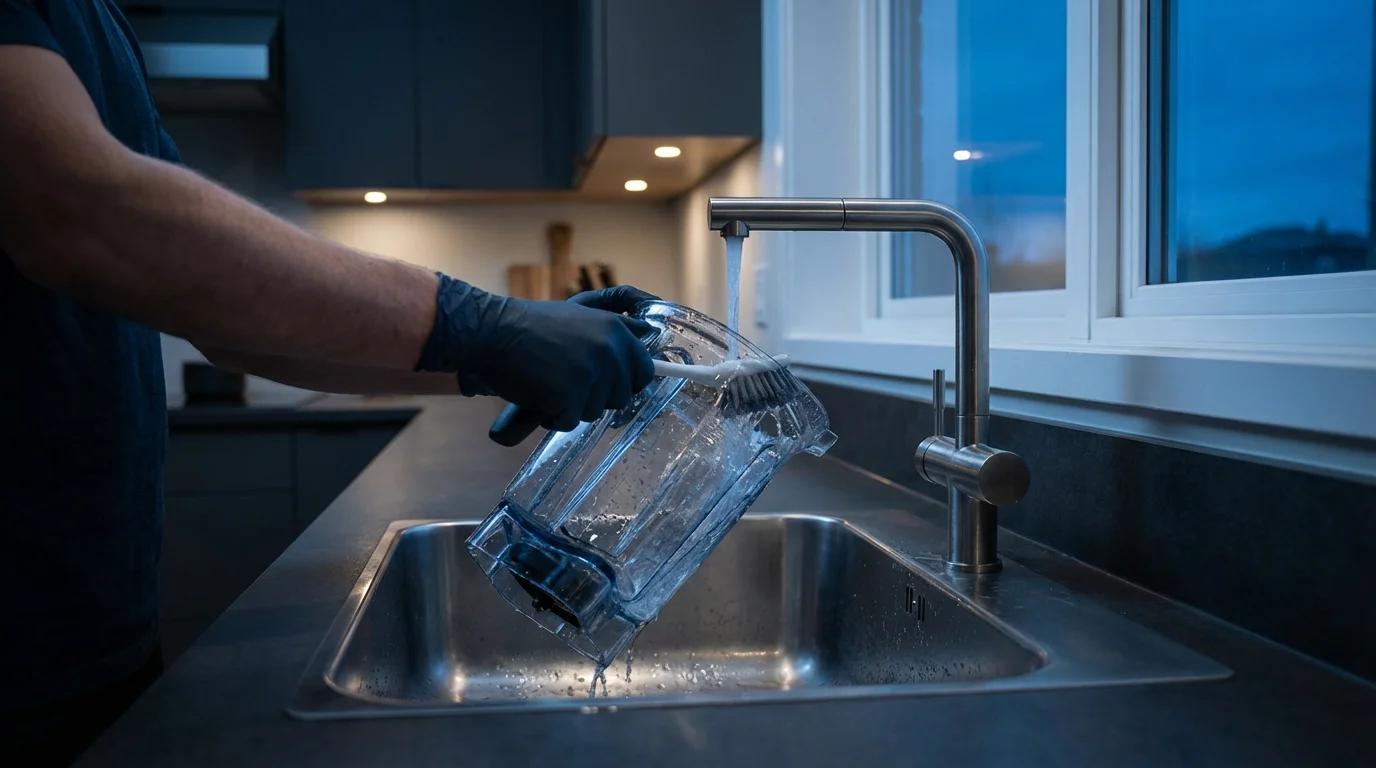
- Clean Immediately: Rinse the pitcher and blades immediately after use. Food particles dry quickly and become much harder to remove. For sticky or tough residues, use the self-cleaning method: fill the pitcher halfway with warm water, add a drop of dish soap, and run the blender on high for 30-60 seconds.
- Handle Blades with Care: Blender blades are sharp. Exercise caution when hand-washing to avoid cuts. If your blender has removable blades, disassemble them for thorough cleaning and ensure they are reassembled correctly before the next use to prevent leaks.
- Avoid Overfilling: Respect the maximum fill line on your pitcher. Overfilling can lead to leaks, motor strain, and less effective blending.
- Pre-Cut Ingredients: Cut hard fruits, vegetables, and ice into smaller, manageable chunks. This reduces strain on the motor and blades, prolonging their life and ensuring smoother results.
- Allow to Cool: If you perform multiple heavy-duty blending tasks in succession, give your blender’s motor a few minutes to cool down between uses. Overheating shortens motor life.
- Check Seals and Gaskets: Periodically inspect the rubber seals and gaskets for wear or damage. Worn seals can lead to leaks. Replace them if you notice any degradation.

Common Blender Buying Mistakes to Avoid
Prevent buyer’s remorse by sidestepping these frequent errors:
- Underestimating Power Needs: Many consumers buy a budget blender only to find it cannot handle frozen fruit or ice for their daily smoothies. If you blend tough ingredients regularly, invest in a higher-wattage model. You need adequate power to prevent motor burnout and achieve desired results.
- Ignoring Capacity Requirements: Purchasing a personal blender for a family of four results in constant re-blending. Conversely, a large 72-ounce pitcher might be cumbersome for single servings. Match capacity to your typical usage.
- Neglecting Footprint and Storage: A powerful blender is useless if it does not fit on your counter or in your cabinet. Always measure your available space before buying, especially for taller high-end models.
- Overlooking Warranty Information: A blender is a significant appliance. Check the warranty for duration and coverage. A longer warranty, especially for the motor, provides peace of mind. As America’s Test Kitchen often highlights in their equipment reviews, product longevity and reliable customer service are crucial for kitchen tools that see frequent use.
- Falling for Gimmicks: Fancy lights or excessive pre-programmed settings do not always equate to better performance. Focus on core blending power, pitcher quality, and ease of use. Sometimes, last year’s model of a well-regarded brand offers excellent value, providing similar performance to the newest version without the premium for minor updates.
Frequently Asked Questions
How many watts do I need for a good smoothie blender?
For consistently smooth results with frozen fruit and ice, aim for a blender with at least 1000 watts. If you primarily blend soft fruits and liquids, 600-800 watts can suffice. High-powered blenders (1200+ watts) easily pulverize tougher ingredients and seeds.
Can I make hot soup in any blender?
No, you should only make hot soup from raw ingredients in blenders specifically designed for that task. These are typically high-powered blenders, like Vitamix or Blendtec, that use friction to heat ingredients. Using a regular blender for hot liquids can be dangerous due to steam pressure buildup and potential damage to the motor or pitcher.
What is the best way to clean my blender?
For most blenders, the easiest way to clean is to add warm water halfway, a drop of dish soap, and blend on high for 30-60 seconds. Rinse thoroughly. For deep cleaning, check if the pitcher and lid are dishwasher-safe. Always clean immediately after use to prevent food from drying onto the blades and pitcher walls.
Is a glass or plastic blender pitcher better?
Glass pitchers offer scratch resistance and do not absorb odors or stains, but they are heavier and susceptible to breaking. High-quality, BPA-free plastic pitchers, like Tritan, are lighter, more shatter-resistant, and commonly used in high-powered blenders. Your choice depends on personal preference for weight, durability, and material properties.
Disclaimer: Product prices, features, and availability change frequently. Prices shown were accurate at time of writing but may have changed. We may earn a small commission from purchases made through links on this site, at no extra cost to you. Always verify current pricing and specifications on the retailer’s website before purchasing.
A high-quality blender is one of the best kitchen tools for meal prep Sundays, making it easy to batch-prepare dressings and sauces.
When planning your layout, it helps to understand what size kitchen appliances do you need to ensure everything fits your counter space.
Professional-grade blenders are a staple for any kitchen registry for new couples looking to build a long-lasting home.
Leave a Reply